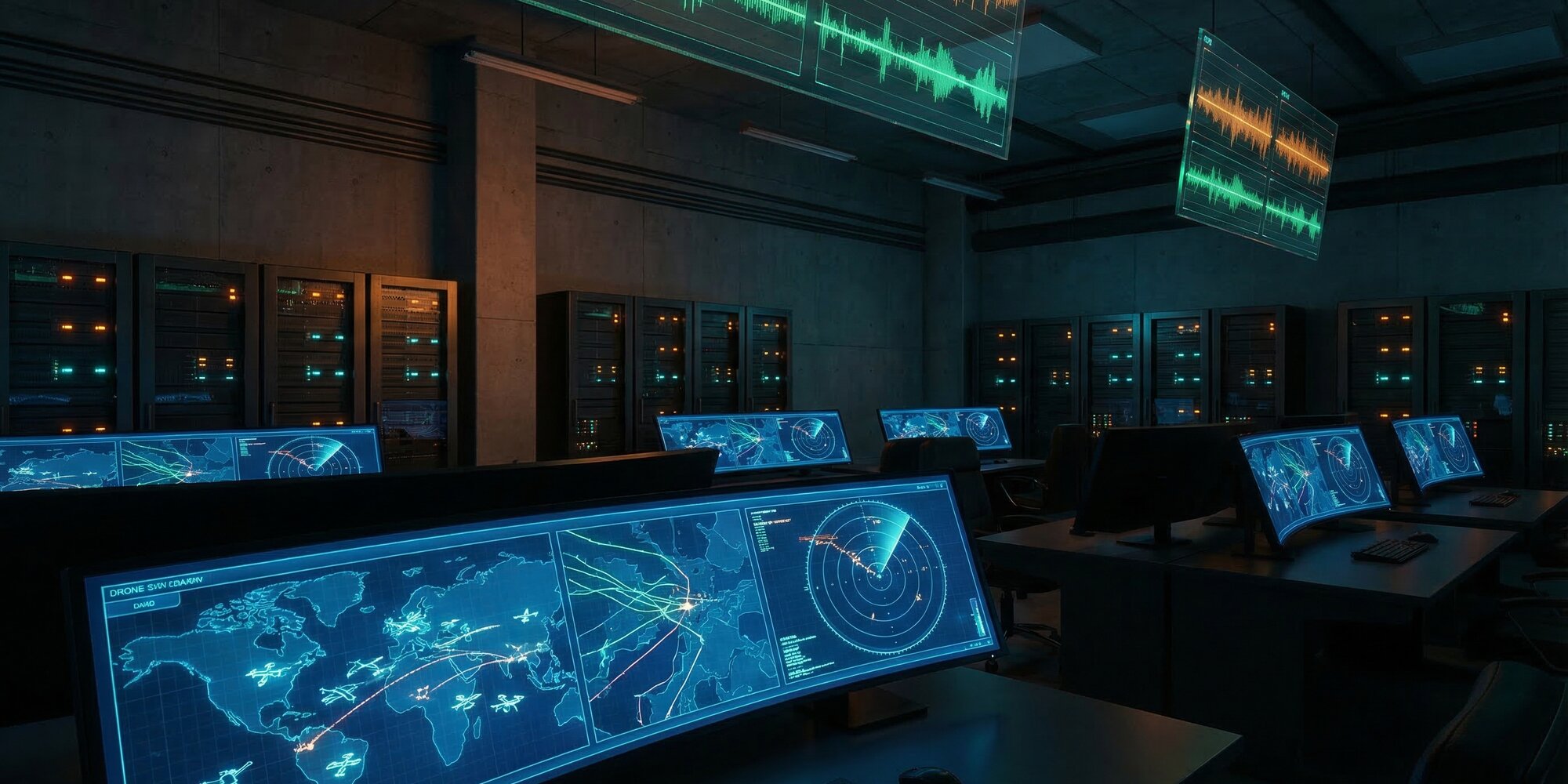
On March 13, 2026, the U.S. Army signed a 10-year, $20 billion enterprise contract with Anduril Industries — collapsing more than 120 separate procurement actions into a single, software-first autonomous defense platform. It is one of the largest technology contracts in Army history, and it arrives at a moment that makes the timing impossible to ignore: Operation Roaring Lion, the ongoing war with Iran, has already seen over 3,000 Iranian drones and 500 ballistic missiles launched against U.S. and allied forces since late February. The message from the Pentagon is unmistakable — the modern battlefield runs on software, and Anduril is now the Army's operating system for it.
What the Contract Actually Buys
The contract, awarded by the Army Contracting Command at Aberdeen Proving Ground, Maryland, is not a single purchase order. It is an enterprise vehicle — a pre-negotiated framework that allows the Army to rapidly draw down Anduril's full commercial technology stack without triggering separate acquisition reviews for each capability. That distinction matters enormously in a wartime context where procurement timelines that previously took weeks can now compress to days.
The consolidated agreement covers Anduril's proprietary Lattice AI suite — its open-architecture command-and-control platform — along with integrated hardware, data and compute infrastructure, and technical support services. Previously, the Department of War managed more than 120 separate procurement actions to access these same capabilities in a fragmented, administratively bloated way. The new enterprise contract eliminates pass-through charges on subcontracts and establishes range pricing and volume discounts that the Army says will generate significant ongoing savings.
"The modern battlefield is increasingly defined by software," said Gabe Chiulli, chief technology officer for the DoD's Office of the Chief Information Officer. "To maintain our advantage, we must be able to acquire and deploy software capabilities with speed and efficiency. Enterprise contracts are a key part of our modernization strategy, allowing us to consolidate software agreements, eliminate redundancies, and accelerate the delivery of critical tools."
The contract runs through March 2036 with a five-year base period and an optional five-year extension. The $20 billion figure represents the maximum potential value, not an obligated amount — but it signals the scope of the Army's intended dependency on the Anduril stack.
Lattice: The AI Platform at the Center of It All
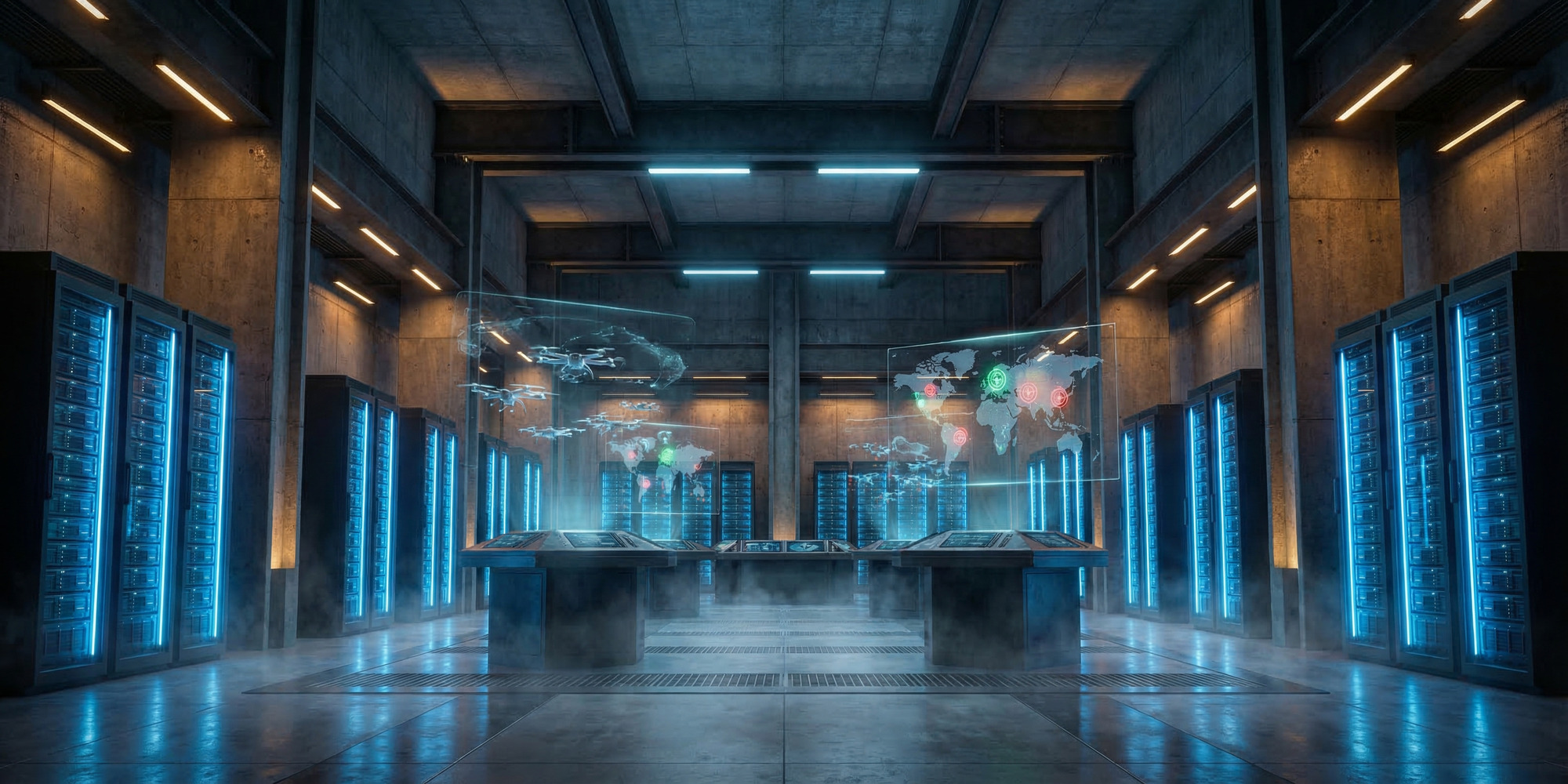
At the heart of the deal is Lattice — Anduril's flagship AI platform and the product that has made the company indispensable to U.S. military operations in the current conflict with Iran. Lattice uses computer vision, machine learning, and mesh networking to fuse real-time data from disparate sensors, platforms, and databases into a single autonomous operating picture. In practical terms, it is the software layer that makes it possible to track, identify, and engage hundreds of simultaneous threats — including drone swarms — faster than any human command structure can process.
The open-architecture design is a deliberate strategic choice. Unlike traditional defense platforms that lock the government into a single vendor's proprietary ecosystem, Lattice integrates with hundreds of joint and Army systems already in the field. That interoperability is exactly what Brig. Gen. Matt Ross, director of Joint Interagency Task Force 401, called out as the contract's central contribution to counter-drone operations.
"This enterprise contract is a critical step in establishing a common framework for counter-UAS interoperability," said Ross. "It provides a foundational command and control capability. The Department of War and interagency partners now possess a clear path to a cohesive and operationally effective ecosystem that gives our warfighters the most advanced tools to defend the homeland."
The emphasis on counter-UAS — counter-unmanned aerial systems — is not incidental. The Iran war has made the C-UAS problem the defining tactical challenge of the current conflict, and one where the U.S. has been exposed as dangerously under-resourced.
The Iran War Context: Why This Contract Couldn't Wait
Operation Roaring Lion, also known as Operation Epic Fury, began in late February when the U.S. and Israel launched coordinated strikes against Iranian nuclear and military infrastructure. Tehran's response has been a relentless drone and missile campaign: more than 3,000 drones and over 500 ballistic missiles fired across the Middle East since the conflict began — a tempo that has strained American air defense stockpiles and exposed the limits of legacy intercept systems.
The U.S. has spent hundreds of Patriot interceptor missiles — each costing $3–4 million — against Iranian Shaheds that cost roughly $30,000 apiece. That asymmetry is unsustainable at scale, and it has accelerated demand for AI-enabled platforms capable of making faster, cheaper intercept decisions. Lattice is explicitly designed for this environment — it identifies and tracks targets in real time, enabling lower-cost kinetic responses and reducing the burden on high-value interceptors.
Army Col. Tony Lindh, the task force deputy director of acquisitions, framed the Anduril contract as a direct response to wartime operational failures. "This is a decisive move against a pervasive and growing threat; we are breaking down the hurdles that have limited our effectiveness in the counter-UAS fight," he said. "For the first time, we have a clear path to true interoperability across the Department and our interagency partners."
The Ghost X on the Battlefield — and What Comes Next
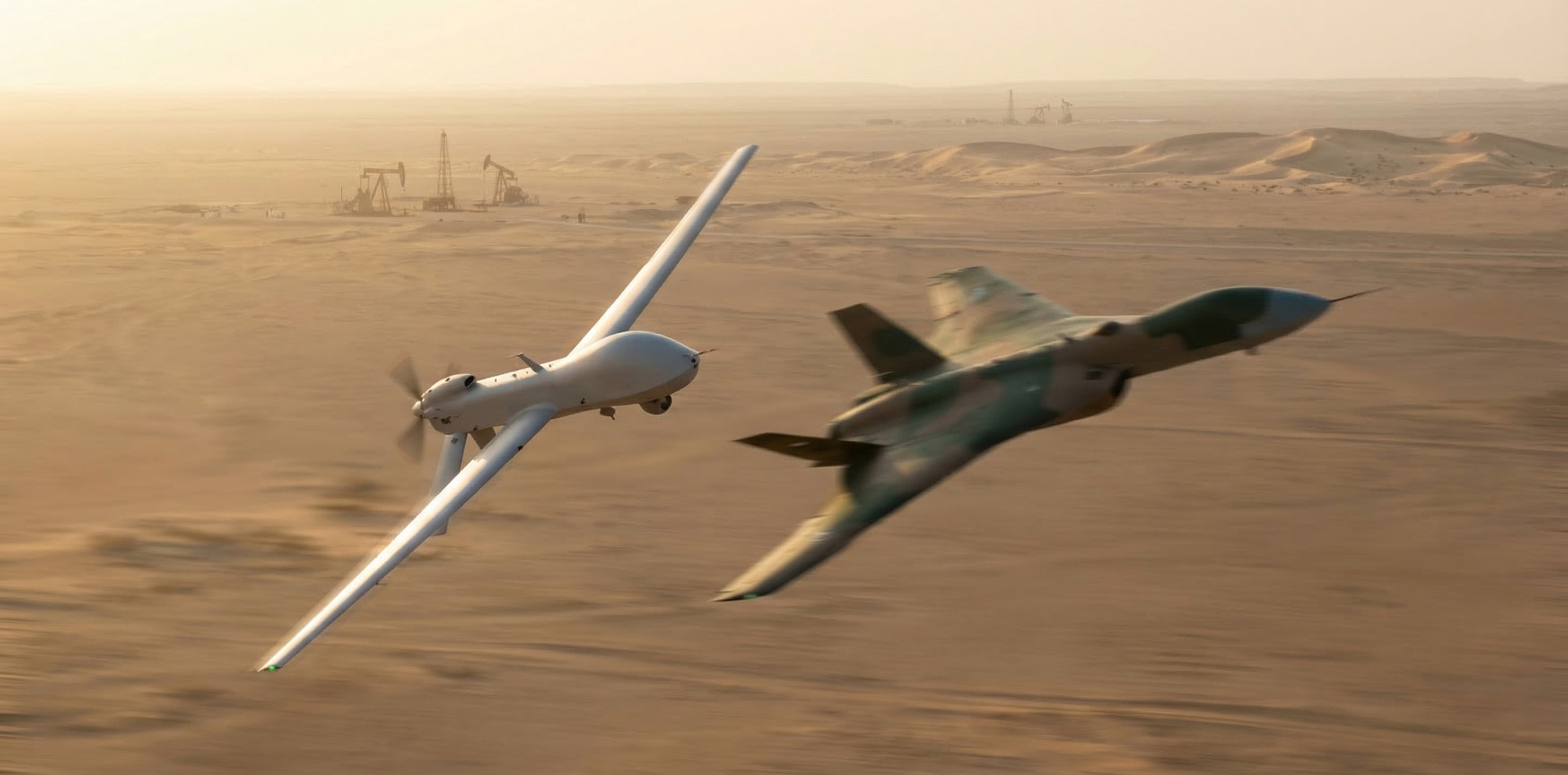
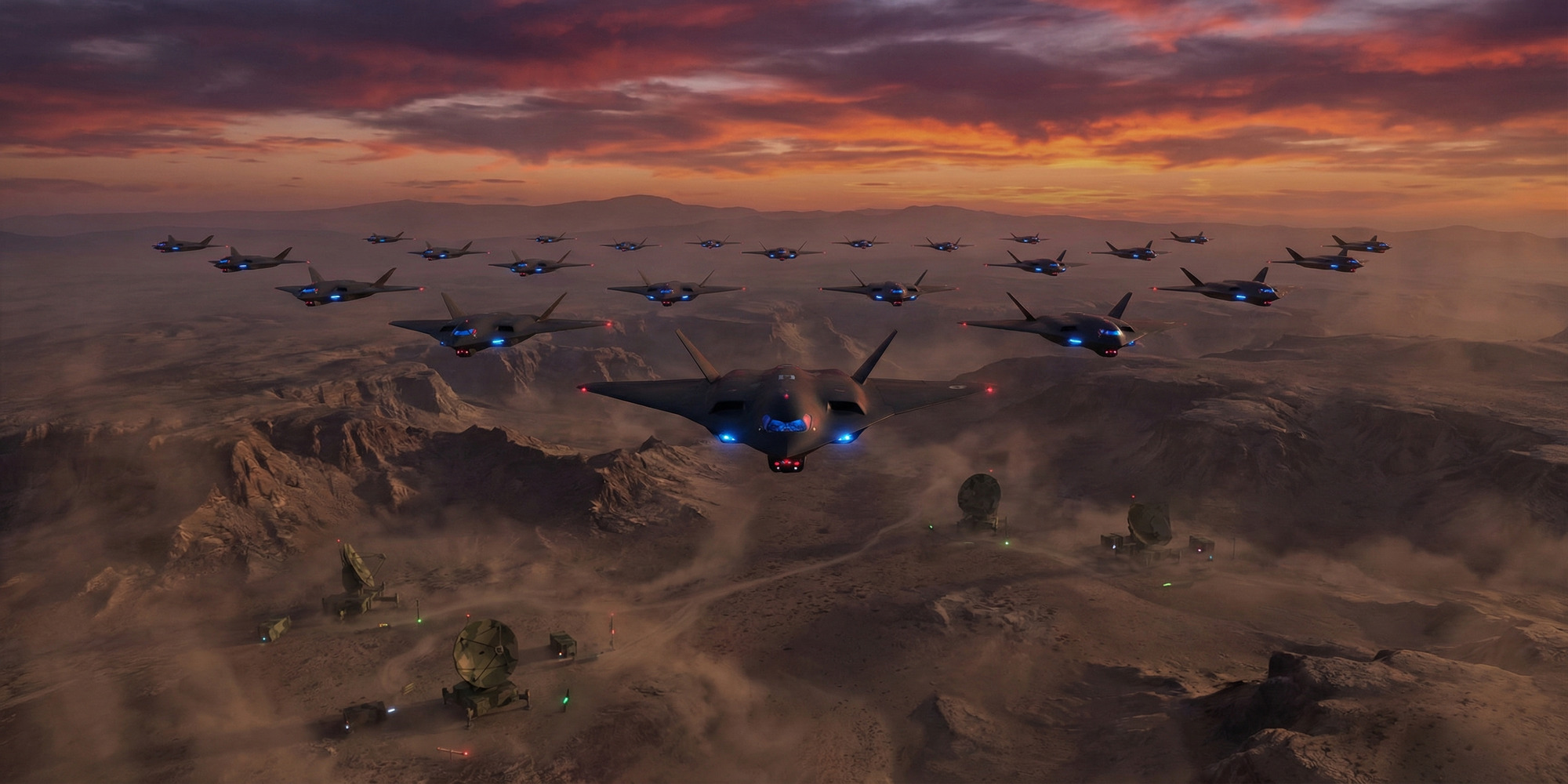
Anduril is not just a software company. Its hardware portfolio — co-developed with the Lattice platform — is now in active use. The Anduril Ghost X, a small uncrewed aerial system designed for tactical ISR and strike missions, has already been deployed at National Training Center rotations. The YFQ-44A, Anduril's fully autonomous fighter drone, completed its first flight in 2025 and is now part of a developing portfolio that includes the Fury collaborative combat aircraft — an unmanned wingman designed to fly alongside manned F-35s.
What the enterprise contract enables is a seamless procurement pathway for all of these products, present and future, under a single contractual vehicle. As Anduril develops new capabilities, the Army can acquire them without restarting the procurement clock from zero — a structural advantage that no traditional defense prime has been able to offer with the same software agility.
$60 Billion and Counting: The Capital Stack Behind Anduril
The Army contract lands against the backdrop of Anduril's most aggressive fundraising round yet. In early March, Bloomberg and The Wall Street Journal reported that the company is raising approximately $4 billion in a new funding round led by Andreessen Horowitz and Thrive Capital, Josh Kushner's firm — a round that would value Anduril at approximately $60 billion. That is nearly double the valuation implied by the company's previous $2.5 billion raise in June 2025, which was led by Founders Fund and 1789 Capital.
For context: Anduril brought in roughly $2 billion in revenue last year, according to reporting by The New York Times. A $60 billion valuation implies investors expect extraordinary growth — and the $20 billion Army contract, combined with continued expansion in the Iran conflict, makes that growth case considerably more concrete. The company is no longer pitching potential. It is delivering at wartime scale.
The fundraising round also cements the Silicon Valley-to-Pentagon pipeline that has come to define defense-tech in the Trump era. Where the previous administration's AI companies spent years navigating ethics committees and regulatory caution, Anduril has operated under a doctrine that co-founder Palmer Luckey has articulated bluntly: that drawing red lines around autonomous weapons is "an untenable position that the United States cannot possibly accept" — a contrast he has drawn explicitly against Anthropic's now-collapsed Pentagon relationship.
Space, Golden Dome, and the Acquisition Machine
Anduril is not consolidating around a single capability. The same week the Army contract was signed, the company announced the acquisition of ExoAnalytic Solutions, a space intelligence firm operating the world's most comprehensive sensor network for tracking geostationary orbit objects. The deal doubles the size of Anduril's space business, adding ExoAnalytic's 130 engineers to an existing team of 120.
The strategic rationale connects directly to the Pentagon's Golden Dome missile defense initiative — a next-generation layered shield designed to intercept hypersonic and ballistic threats. ExoAnalytic's digital signal processing and seeker discrimination technology, which can extract the precise shape and trajectory of a hard-body missile from blurry satellite imagery, is exactly the kind of capability that missile defense requires at engagement speeds. Anduril's SVP of engineering, Gokul Subramanian, has described the company's space mission in unambiguous terms: "We are focused on protecting space, assuring access to space, ensuring custody of space, ensuring that we can track everything."
The arc is now visible. From counter-drone operations in the Middle East to collaborative combat aircraft to space domain awareness and Golden Dome — Anduril is building a vertically integrated autonomous defense stack. The $20 billion Army contract is the institutional foundation that makes that stack a permanent fixture in U.S. military architecture.
What This Means for the Traditional Defense Industrial Base
The Anduril contract is a structural challenge to the traditional defense prime model. Lockheed Martin, Raytheon, Northrop Grumman, and General Dynamics have operated for decades on a procurement paradigm built around hardware programs, fixed costs, and multi-decade upgrade cycles. Software-defined platforms like Lattice — which can update in the field, integrate across platforms, and be priced on usage rather than unit count — operate on an entirely different economic logic.
The Army was explicit that the enterprise contract approach is part of a broader modernization strategy, and that it "will not substitute for competition on any future programs." But the institutional momentum is clear. When the DoD announces that a single startup now provides the foundational C2 platform for counter-drone operations across joint and interagency partners, the competitive calculus for every other defense technology company shifts. The question is no longer whether the defense industry will software-pivot — it is how fast, and whether legacy primes can execute that transition before Anduril locks in the architecture.
For a company that did not exist ten years ago, that is an extraordinary position to occupy. Anduril's next decade — underwritten by a $20 billion Army franchise and $4 billion in fresh capital from Silicon Valley's top investors — will be spent converting that position into something that looks a great deal like institutional permanence.