The bottleneck constraining AI's growth isn't what most people think. It's not the availability of advanced chips. It's not access to training data. It's not even the scarcity of top-tier AI researchers. The real constraint is something far more mundane: electricity.
A single modern AI-focused data center can demand 50 to 100 megawatts of sustained power—equivalent to the electrical load of a small city or major manufacturing plant. Some facilities are pushing 1,500 megawatts. For context, a typical AI hyperscaler annually consumes as much electricity as 100,000 households.
The problem? The U.S. electric grid—and grids worldwide—weren't designed for this. And they're not scaling fast enough to meet demand.
The Numbers Tell the Story
Data centers accounted for roughly 4.4% of total U.S. electricity consumption in 2023. By 2028, that figure is projected to reach between 6.7% and 12%, according to industry forecasts—a consumption range of 325 to 580 terawatt-hours annually. Goldman Sachs Research predicts global data center power demand will increase by 165% by 2030.
The pipeline of new data centers under construction is staggering. If all planned facilities are completed, they will add 140 gigawatts of new load to the grid. To put that in perspective, the entire U.S. data center sector currently draws less than 15 gigawatts.
Almost none of that capacity came online in 2025. It's scheduled to arrive in late 2026 and 2027, meaning a massive surge in electricity consumption is about to hit the grid—and the infrastructure isn't ready.
Capacity Markets Reflect the Strain
The stress is already visible in electricity markets. In the PJM Interconnection—a regional transmission organization serving 13 states and Washington, D.C.—capacity market clearing prices for the 2026-2027 delivery year jumped to $329.17 per megawatt, over ten times higher than the $28.92/MW price in the 2024-2025 delivery year. Industry analysts cite rapid data center growth as a major contributing factor to the spike.
John Moura, Director of Reliability Assessment and System Analysis for the North American Electric Reliability Corporation (NERC), told Reuters: "As these data centers get bigger and consume more energy, the grid is not designed to withstand the loss of 1,500-megawatt data centers. At some level, it becomes too large to withstand unless more generation and transmission resources are added."
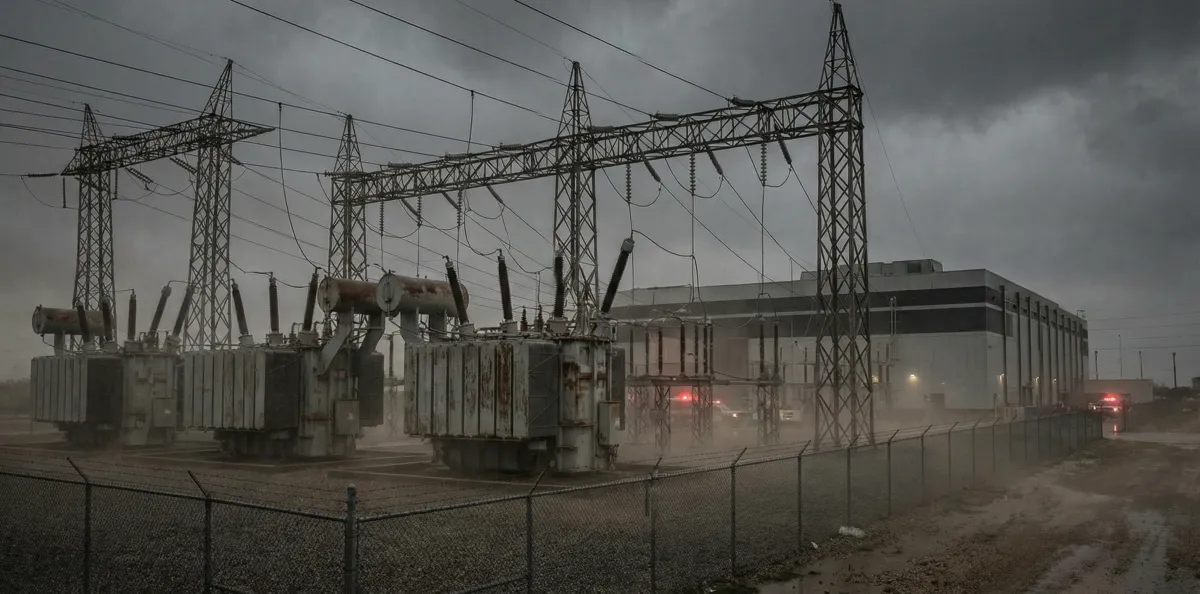
The challenge isn't just generation capacity—it's transmission infrastructure, grid stability, permitting timelines, and local opposition to new power plants and transmission lines. Adding grid capacity takes years. Data centers need power now.
Tech Giants Go Nuclear (Literally)
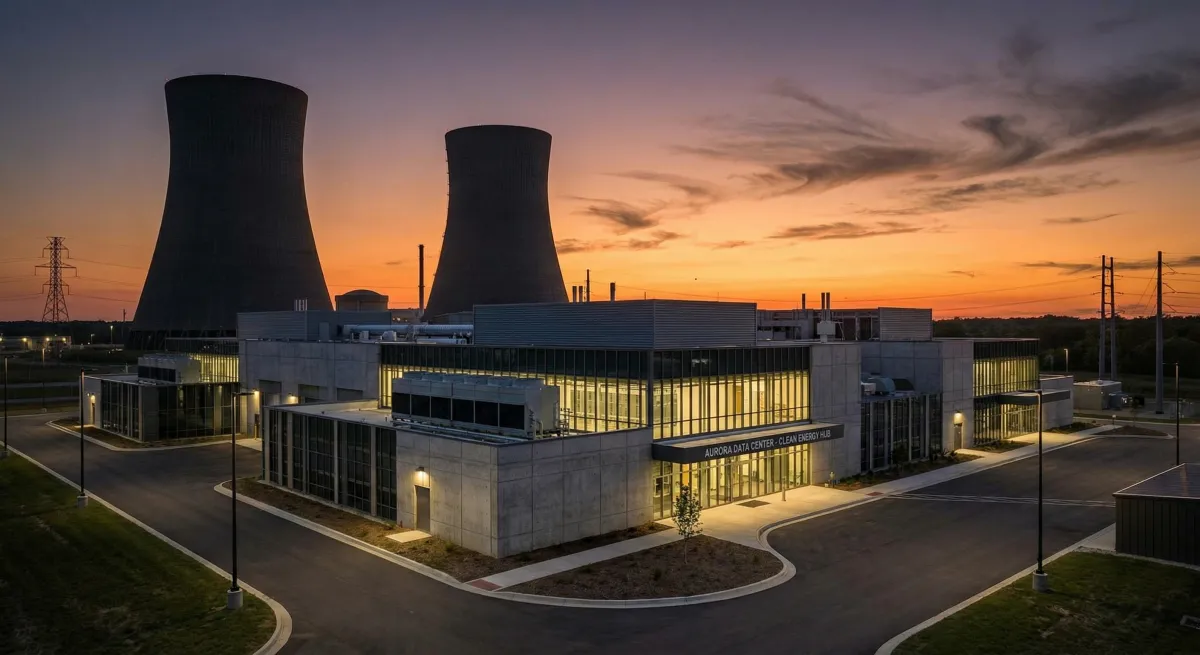
Faced with power scarcity and long timelines for grid upgrades, hyperscalers are taking matters into their own hands. The most dramatic example: Microsoft restarted the Three Mile Island nuclear power plant to deliver 819 megawatts of power exclusively for AI and cloud data center usage.
Three Mile Island, site of the worst nuclear accident in U.S. history in 1979, shut down in 2019 due to economic pressures. Microsoft's deal with Constellation Energy brought Unit 1 (which was not involved in the 1979 incident) back online in a move that would have seemed unthinkable just two years ago.
Google followed suit, announcing a partnership with Kairos Power to deploy an advanced nuclear reactor connected to the Tennessee Valley Authority's grid by 2030. The Hermes 2 reactor will dispatch 50 megawatts of electricity—a smaller-scale project, but indicative of the broader trend toward dedicated power sources.
Amazon, Meta, and other tech giants are also exploring nuclear partnerships and small modular reactors (SMRs), though these projects won't deliver power until the 2030s. The long development timelines mean nuclear isn't a short-term solution—but for companies planning decades ahead, it's increasingly seen as necessary.
The "All of the Above" Strategy
Beyond nuclear, tech companies are pursuing every available option to secure power:
- Co-location with power plants: Building data centers directly adjacent to generation facilities to avoid transmission constraints and grid upgrades. "Co-locating data centers with power reduces the need for new transmission or transmission upgrades, and simultaneously maximizes grid reliability and accelerates deployment," industry analysts note.
- Onsite generators: Meta, xAI, and others are installing large-scale backup generators and running them continuously to supplement grid power—effectively turning data centers into hybrid power facilities.
- Power purchase agreements (PPAs) with renewables: Long-term contracts for wind and solar power, though intermittency issues make these unsuitable as sole sources for 24/7 data center operations.
- Energy storage: Battery systems to smooth out renewable intermittency and provide backup capacity, though current battery technology doesn't scale to multi-gigawatt demands.
The scramble for power is reshaping where data centers can be built. Northern Virginia's Loudoun County—the world's most concentrated data center market—is hitting power capacity limits. Developers are now targeting regions with available electricity: the Pacific Northwest (hydropower), Texas (deregulated market, abundant natural gas), and the Southeast (nuclear and coal baseload).
Implications for the Industry
Power constraints are already affecting AI development roadmaps. Some companies are delaying planned model training runs. Others are optimizing for inference efficiency rather than pushing the frontier of model scale. A few are exploring international locations with more available power—though geopolitical concerns and data sovereignty laws complicate that strategy.
For data center real estate investment trusts (REITs) and wholesale developers, power availability has become the primary site selection criterion—more important than fiber connectivity, tax incentives, or even labor costs. Sites with access to multi-megawatt power allocations are commanding premium valuations.
The power crisis is also accelerating innovation in data center efficiency. Liquid cooling systems—direct-to-chip and immersion cooling—are transitioning from niche solutions to mainstream adoption. These systems can handle the heat density of AI chip clusters far more efficiently than traditional air cooling, reducing overall power consumption by 20-30%.
The Long-Term Outlook
Industry experts warn that grid and generation capacity are not being added fast enough to support the scale of growth many forecasts assume. If current trends continue, power availability will become the binding constraint on AI progress within the next two to three years.
Some analysts are skeptical that all planned data center projects will actually complete. "There's a massive gap between announced projects and projects with firm power commitments," one data center executive told industry media. "A lot of these projects will get delayed or canceled because they can't secure the electricity they need."
The AI power crisis is a watershed moment for the technology industry. For decades, computational capacity scaled predictably—Moore's Law, cloud elasticity, and globalized supply chains meant companies could always buy more compute. That era is ending. The new constraint is physical infrastructure, and it doesn't scale at the speed of software.
The companies that solve the power problem will control the future of AI. Those that don't will find themselves throttled by physics, not algorithms.