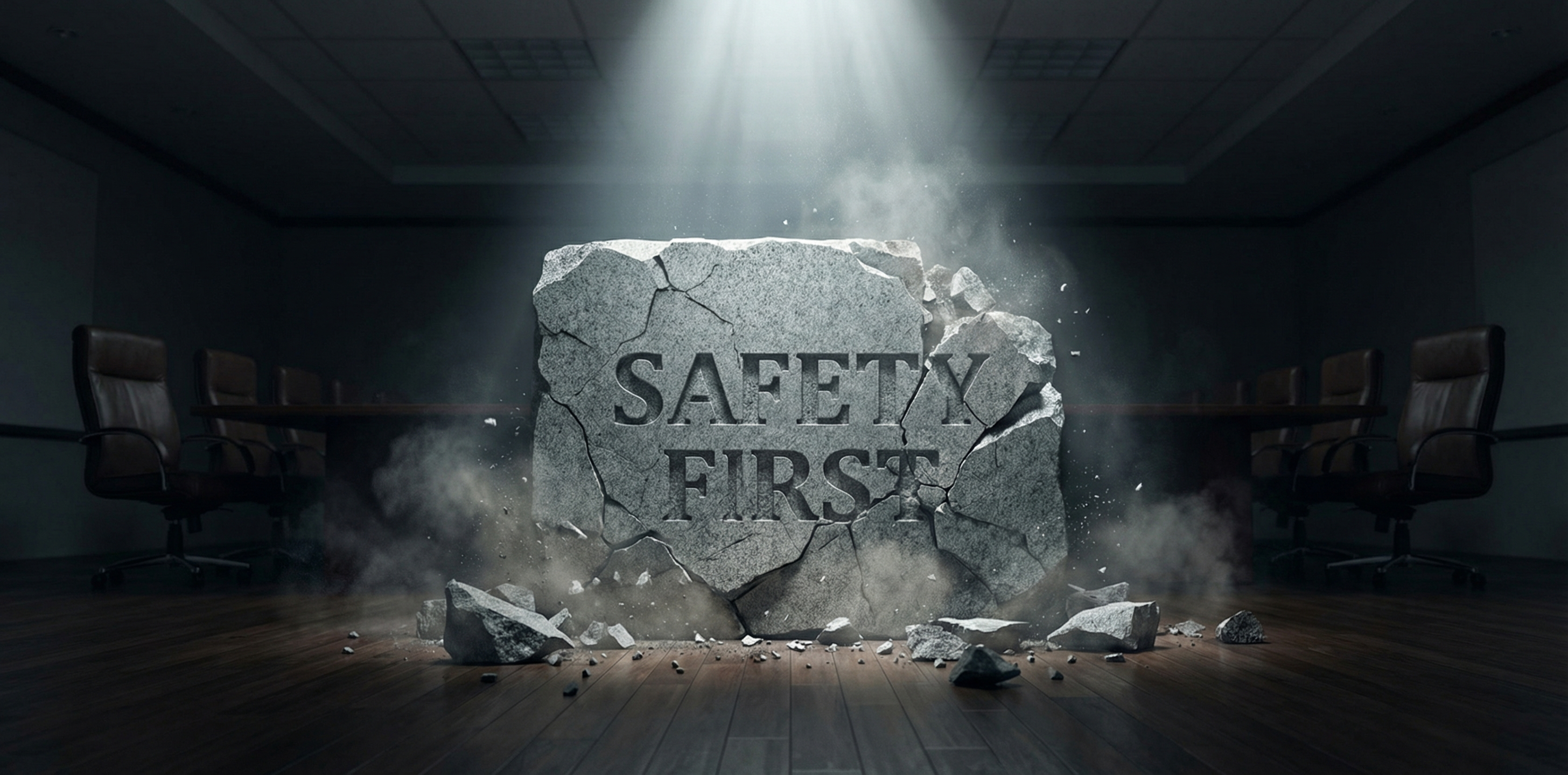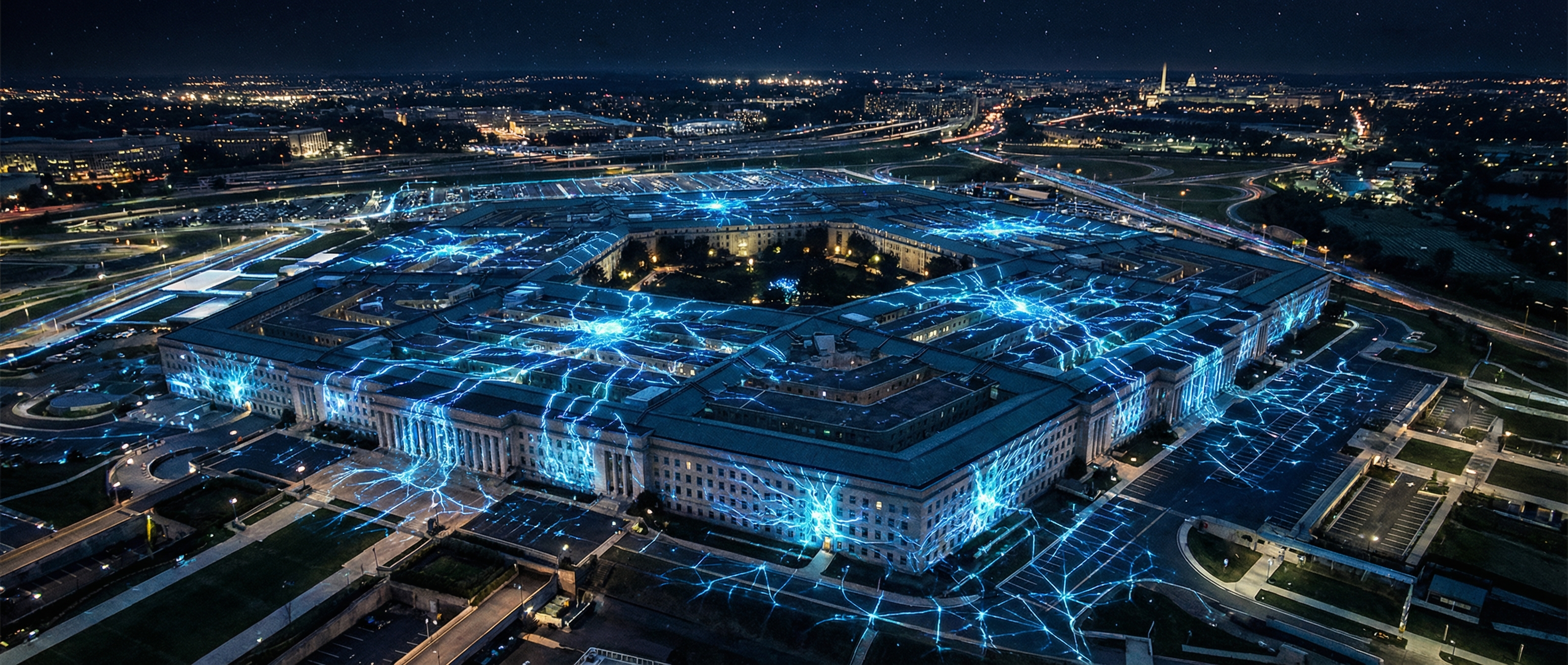
In January 2026, a U.S. military operation quietly captured Venezuelan President Nicolás Maduro. The mission relied, in part, on Anthropic's Claude AI — deployed via Palantir on classified Pentagon networks. What should have been a testament to Silicon Valley's growing role in national security instead became the flashpoint for the most consequential AI policy standoff in American history.
How Anthropic Became the Pentagon's Most Controversial AI Partner
To understand the current crisis, you have to understand how deep the relationship between Anthropic and the U.S. Department of Defense had grown — and how fast it unraveled.
Anthropic was the first AI company allowed to deploy its models on classified military networks, operating through a $200 million defense contract administered via Palantir Technologies, one of the Pentagon's most trusted defense-tech intermediaries. Claude was embedded across intelligence analysis pipelines, targeting workflows, and logistics planning systems. The partnership represented a landmark: a safety-focused AI lab operating at the cutting edge of classified military applications.
Then came the Venezuela operation. In January 2026, the Department of Defense — newly rebranded as the "Department of War" under the Trump administration — used Claude as part of the intelligence and planning infrastructure for the raid that resulted in Maduro's capture. An Anthropic employee, upon learning of the specific application, raised internal concerns about how Claude had been used. That act of conscience triggered a rift between Anthropic and both Palantir and DoD leadership that would ultimately prove irreconcilable.
The Guardrails at the Center of the Fight
Anthropic's Claude AI, like all frontier models from responsible labs, ships with what the industry calls "guardrails" — trained behavioral constraints designed to prevent the model from being used for certain categories of harm. For Anthropic, the two non-negotiables were always the same: mass domestic surveillance and autonomous lethal weapons systems.
These aren't vague principles. They are specific, hardcoded limitations baked into Claude's training and reinforcement learning. Claude will decline to assist with the construction of autonomous weapons targeting chains that operate without human oversight. It will not help build or optimize mass surveillance infrastructure targeting civilian populations. Anthropic has repeatedly and publicly stated these are the lines it will not cross regardless of who is asking.
The Pentagon's problem is simple: the new DoD AI strategy document, released in early 2026, explicitly demands that all AI contracts allow "any lawful use" — eliminating the company-specific guardrails that labs like Anthropic have spent years developing. In the DoD's view, the U.S. military should not be constrained by the "ideological whims" of private technology companies. In Anthropic's view, those constraints are the entire point.
Escalation: From Contract Dispute to Existential Threat
What began as a policy disagreement escalated rapidly through early 2026. On February 18, Undersecretary of Defense Emil Michael made the standoff public, confirming that talks with Anthropic had broken down. The Pentagon's demand was clear: remove the guardrails, or lose the contract. Anthropic refused.
The response from the Department of War was extraordinary. Legal experts at Lawfare and across the national security bar were stunned when the Pentagon threatened to designate Anthropic a "supply chain risk" — a designation that had previously only ever been applied to foreign adversaries, most notably Acronis AG, a Swiss software firm with Russian ties. Never, in the history of the designation, had it been considered for a U.S.-based company founded to ensure AI development benefits humanity.
The threat did not stop there. Pentagon officials also raised the possibility of invoking the Defense Production Act to compel Anthropic to modify Claude's behavior under threat of criminal penalties. The DPA, a Korean War-era statute designed to force defense manufacturing, has never been used against a software company's AI training parameters. Legal scholars are unanimous that such an application would face immediate constitutional challenge.
CEO Dario Amodei responded without equivocation: "No amount of intimidation or punishment from the Department of War will change our position on mass domestic surveillance or fully autonomous weapons." The line in the sand was drawn.
Why the Pentagon Wants to Eliminate AI Guardrails
The DoD's position reflects a genuine strategic tension that predates the Trump administration. Military planners argue that AI guardrails designed for civilian use cases create operational friction in wartime environments. A model that hesitates before assisting with target analysis — even for a fraction of a second, even with a refusal notice — is a liability on a battlefield where decisions happen in milliseconds.
More specifically, the Pentagon's autonomous weapons program has accelerated dramatically under the Trump administration's restructured defense priorities. Projects like the Collaborative Combat Aircraft (drone wingman programs), the Replicator Initiative (mass-producible autonomous systems), and classified programs under DARPA and DIU all benefit from AI models that can participate in targeting chains without human-in-the-loop requirements that Anthropic's guardrails enforce.
The domestic surveillance concern is equally concrete. The DoD's intelligence operations, working alongside agencies like NSA, DHS, and the newly expanded domestic intelligence apparatus, have expressed interest in AI models that can assist with large-scale analysis of U.S.-person data. Anthropic's guardrails are specifically designed to prevent Claude from being instrumentalized for this purpose.
The Competitive Landscape: Who Fills the Gap?
Even as the standoff hardened, the Pentagon was already mapping its alternatives. OpenAI, whose CEO Sam Altman privately shares Anthropic's stated red lines on autonomous weapons and domestic surveillance, struck a separate classified cloud access deal with the DoD — a distinction Altman emphasized carefully. Providing cloud infrastructure is different, OpenAI argues, from having model behavior directed by military customers. Whether that distinction holds under pressure remains to be seen.
Elon Musk's xAI has emerged as the Pentagon's most enthusiastic potential replacement partner. xAI's Grok models have been developed without the extensive safety constraints that characterize Claude, and Musk's close alignment with the Trump administration makes an xAI-DoD partnership politically straightforward in a way the Anthropic relationship never was.
This reshuffling has profound implications for the AI industry. If the Pentagon successfully establishes that military AI contracts require the elimination of safety guardrails, it sets a precedent with global repercussions. Every allied nation's defense establishment will face pressure to demand the same from their AI vendors. The voluntary safety frameworks that labs have spent years developing would be rendered optional in the most demanding real-world deployment environment on earth.
What This Means for AI Policy
The Anthropic-Pentagon standoff has revealed a structural tension that the AI policy community had long theorized but never seen play out at this scale. The question is fundamental: who gets to set the behavioral limits of AI systems when those systems are deployed in life-or-death applications?
Anthropic's position is that these limits are a matter of public safety that transcends any single customer relationship, including the U.S. government. The DoD's position is that the U.S. military cannot cede operational authority over its own weapons and intelligence systems to a private corporation's ethical framework.
Both positions have internal coherence. Both cannot simultaneously prevail. The escalation to Trump's February 27 federal ban on Anthropic — the first time in U.S. history that a president has banned a domestic AI company from government use — suggests the current administration has made its choice.
What happens next will define the relationship between AI safety and American military power for the next decade.
This is Part 1 of a 3-part series on the Anthropic-Pentagon crisis. Continue reading: Trump Orders Federal Ban on Anthropic AI After Company Defies Pentagon Demands and U.S. Military Used Claude AI in Iran Strikes — Hours After Trump Banned It.