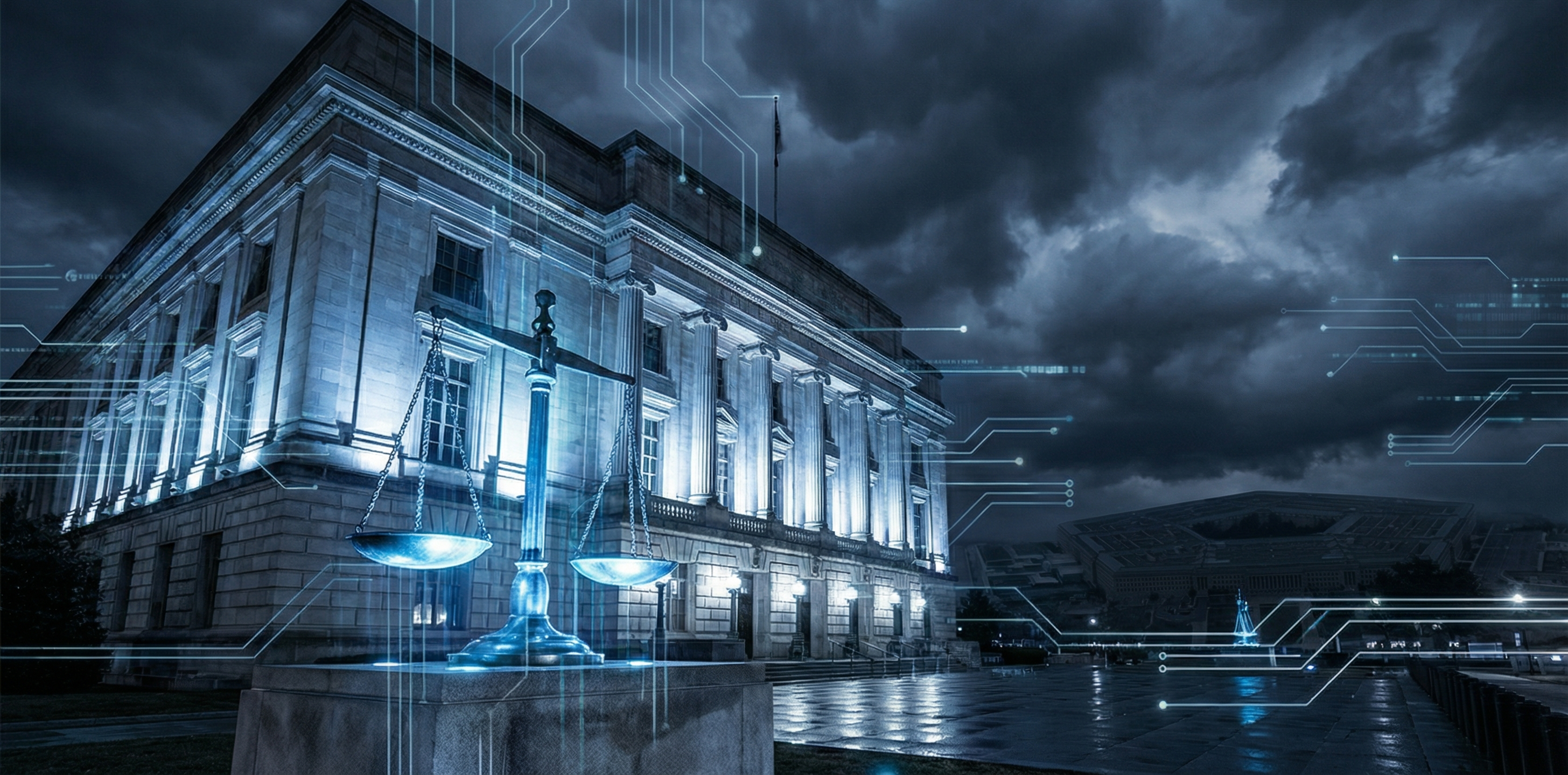
The standoff between Anthropic and the Pentagon crossed a new threshold Friday as the AI lab announced it will challenge the Department of Defense's "supply chain risk" designation in federal court — hours after President Trump signed an executive directive ordering every federal agency to cease using Anthropic's software immediately.
What began as a contract negotiation dispute over a $200 million defense agreement has transformed into a full constitutional confrontation, with courts now set to decide whether a private company can refuse to remove safety guardrails from AI systems that the military wants to deploy for autonomous weapons targeting and domestic surveillance. The verdict could reshape the relationship between Silicon Valley and the U.S. government for a generation.
The Deadline That Changed Everything
The crisis came to a head at 5:01 p.m. ET Friday, the deadline Defense Secretary Pete Hegseth had set during a Tuesday meeting with Anthropic CEO Dario Amodei. Hegseth demanded Anthropic agree to allow Claude models to be used for "all lawful purposes" without restriction — including fully autonomous weapons systems and mass domestic surveillance. Anthropic refused.
"These threats do not change our position: we cannot in good conscience accede to their request," Amodei wrote in a statement Thursday, anticipating the confrontation. "In a narrow set of cases, we believe AI can undermine, rather than defend, democratic values. Some uses are also simply outside the bounds of what today's technology can safely and reliably do."
Within hours of the missed deadline, Hegseth formally declared Anthropic a "supply chain risk" — a classification historically reserved for companies from adversarial nations such as China. The designation requires all DoD contractors and vendors to certify they do not use Anthropic's models, effectively excluding the company from the entire defense industrial base. Trump then extended the prohibition to every federal agency, cutting Anthropic off from the broader government market simultaneously.
The Nuclear Hypothetical That Broke the Negotiations
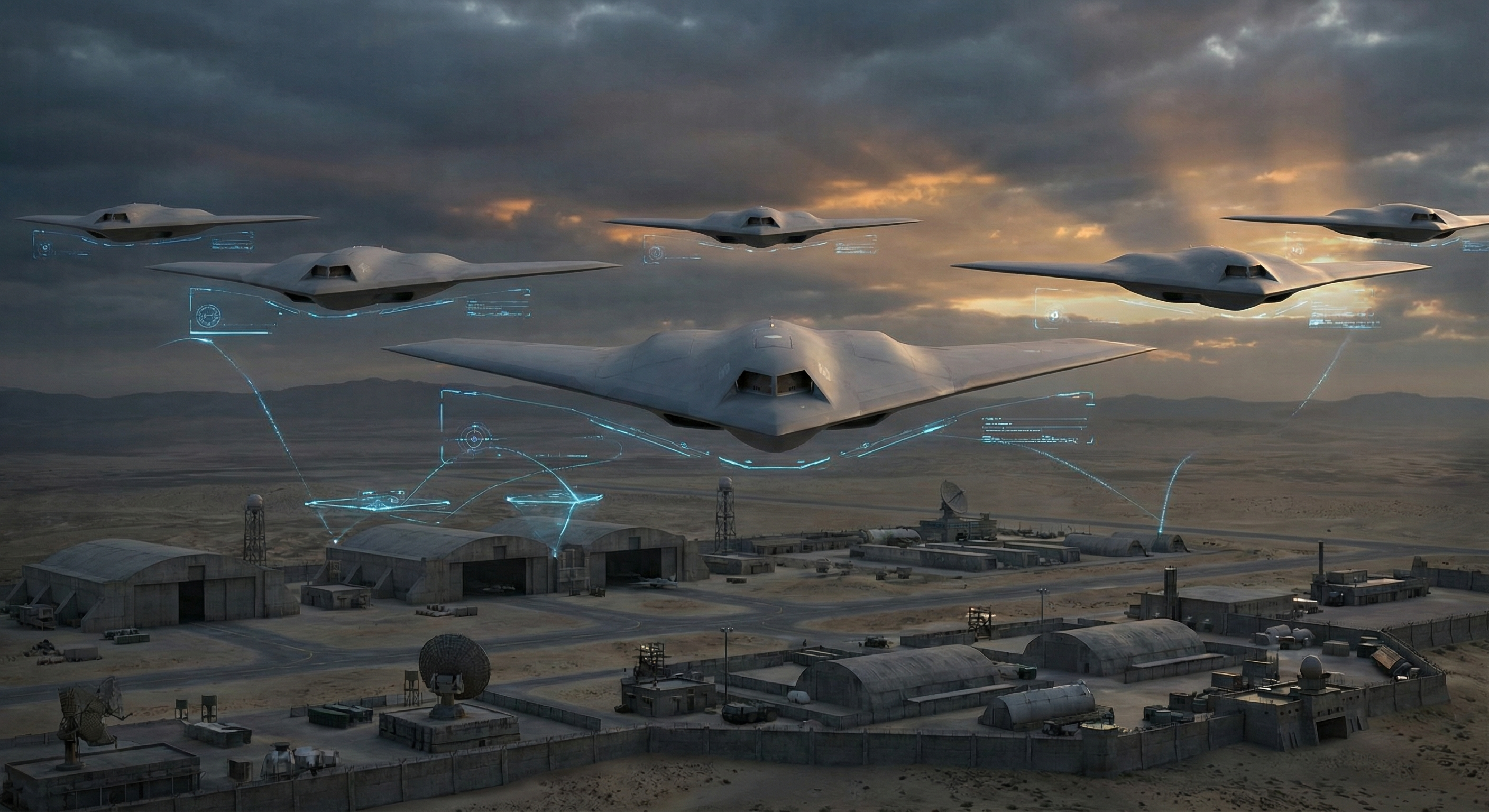
Behind the scenes, the negotiations had already collapsed over a scenario that revealed just how wide the gap between the two sides had become. According to reporting from The Washington Post, Pentagon officials presented Anthropic representatives with a hypothetical involving a nuclear strike against the United States. The DoD argued that Claude models, deployed in autonomous defense systems, should be permitted to respond without requiring human authorization in extreme time-compressed scenarios.
The two sides offered sharply conflicting accounts of how the discussion unfolded. Pentagon officials said Anthropic appeared open to the concept under certain conditions. Anthropic disputed this characterization entirely. What is not in dispute is that the exchange crystallized the fundamental disagreement: the DoD wants AI systems that can operate beyond human oversight in battlefield situations, and Anthropic's published safety policies explicitly prohibit such use cases.
The Pentagon's chief spokesperson Sean Parnell dismissed concerns about autonomous weapons and surveillance as moot, arguing that both are already prohibited under existing law and that the DoD merely wants the freedom to deploy Claude "for all lawful purposes." Anthropic countered that the distinction between "lawful" and "safe" is precisely what the debate is about, and that the DoD's interpretation of what constitutes lawful autonomous action extends well beyond what current AI systems can execute reliably.
Senate Intervention and Industry Fractures
As the confrontation escalated, senior Senate defense leaders intervened late Thursday in an attempt to broker a resolution, according to Axios. The bipartisan group, which includes members of the Senate Armed Services Committee, urged both parties to return to negotiations rather than allow the dispute to reach a legal and political breaking point. Their intervention appeared to have no effect on either side's position before the Friday deadline passed.
The conflict has split the AI industry in ways that were unimaginable even weeks ago. Emil Michael, undersecretary of defense for research and engineering and a former Uber executive brought into the Pentagon by the Trump administration, launched a personal attack on Amodei on X. "Amodei is a liar and has a God-complex," Michael wrote, accusing the CEO of wanting "nothing more than to try to personally control the U.S. Military."
OpenAI CEO Sam Altman broke with the administration on the core question, telling CNBC he does not think the Pentagon should be threatening Anthropic under the Defense Production Act. "For all the differences I have with Anthropic, I mostly trust them as a company, and I think they really do care about safety," Altman said. He added that it is important for AI companies to choose to work with the DoD voluntarily, provided the agency complies with legal protections — not because they are coerced.
More than 330 employees from Google and OpenAI signed an open letter titled "We Will Not Be Divided," expressing solidarity with Anthropic's refusal to permit autonomous killing and domestic mass surveillance. "We hope our leaders will put aside their differences and stand together to continue to refuse the Department of War's current demands," the letter reads. The signatory count makes it one of the largest cross-company employee mobilizations in the history of the AI industry.
What Anthropic Is Actually Fighting For
Anthropic's position rests on two distinct concerns that are worth separating clearly. The first is ethical: the company believes certain uses of AI — specifically autonomous targeting without human oversight, and mass surveillance of domestic populations — are wrong regardless of their technical legality. These positions are codified in Claude's usage policies and represent the core of Anthropic's public-facing identity as a safety-first AI lab.
The second concern is technical: Anthropic argues that today's AI models, including Claude, simply are not reliable enough to be trusted in lethal autonomous applications without human review. The company's own research on model behavior in high-stakes edge cases supports this position. An AI model that functions correctly 99.9% of the time is extraordinarily reliable in consumer applications and catastrophically dangerous in weapons systems, where a single failure can be irreversible.
Critics of Anthropic's stance argue that the company is using safety rhetoric to mask competitive positioning. OpenAI, Google DeepMind, and Elon Musk's xAI have all accepted DoD contracts without imposing the same restrictions. If Anthropic holds its line and loses federal business, competitors benefit. If Anthropic capitulates, its carefully cultivated safety brand — which underpins its $380 billion valuation — takes an irreparable hit. Georgetown security researcher Lauren Kahn put it bluntly: "There are no winners in this."
The Legal Battlefield
Anthropic's decision to take the Pentagon to court is without clear precedent in the AI industry. The company is challenging both the supply chain risk designation itself and the process by which it was applied — arguing the designation is an improper use of a national security classification mechanism that was designed for foreign adversaries, not American companies with documented safety policies and existing defense contracts.
The legal arguments are likely to center on several fronts: whether the DoD has statutory authority to compel private AI companies to remove safety restrictions under the Defense Production Act, whether the supply chain risk designation triggers due process protections for Anthropic's commercial relationships, and whether Trump's executive order banning federal use of Anthropic's software constitutes an impermissible viewpoint-based restriction on a company's right to set terms for its own technology.
Legal scholars who spoke to outlets covering the case noted that the litigation could take years to resolve, but that even a temporary injunction blocking the supply chain risk designation would represent a significant win for Anthropic, allowing it to continue serving existing defense and federal clients while the case proceeds.
The Precedent at Stake
The implications of this case extend well beyond Anthropic. Every AI company with government contracts is watching to see whether the Trump administration can successfully compel private AI labs to remove safety restrictions through the threat of economic exclusion. If the Pentagon prevails, the precedent is set: comply with DoD use requirements or lose access to the federal market entirely.
For the defense establishment, the stakes are equally existential. The U.S. military's AI modernization strategy depends on rapid integration of frontier AI models into decision-support systems, logistics networks, and — increasingly — autonomous weapons platforms. Losing access to one of the world's most capable AI labs creates capability gaps that adversaries, particularly China, could exploit.
The irony of the situation is not lost on defense analysts. The administration that has positioned itself as the global champion of American AI dominance over China may be inadvertently weakening the very companies that make that dominance possible — by threatening the institutional conditions (talent recruitment, research freedom, customer trust) that allow those companies to attract the best researchers and close enterprise customers who have their own concerns about AI safety and liability.
What Comes Next
In the near term, three tracks will run in parallel. Anthropic's legal team will seek emergency relief from the supply chain risk designation, likely asking a federal court for a temporary restraining order while the case proceeds. Senate negotiators may attempt to broker a legislative resolution that gives the DoD the assurances it needs while preserving Anthropic's ability to maintain specific use restrictions. And the administration will continue enforcing the federal agency ban, creating immediate revenue pressure on Anthropic to settle.
For Anthropic's 3,000-plus employees and its investors — who include Google, Spark Capital, and a roster of institutional backers supporting that $380 billion valuation — the stakes could not be higher. The company is betting its reputation, its federal business, and its long-term independence on the principle that AI safety constraints are non-negotiable. Whether that bet pays off will be determined not just in court, but in the court of public opinion as American voters and lawmakers decide what kind of AI-powered military they actually want.
The answer to that question will define the next decade of AI policy — for the United States and for every democracy watching this confrontation unfold.