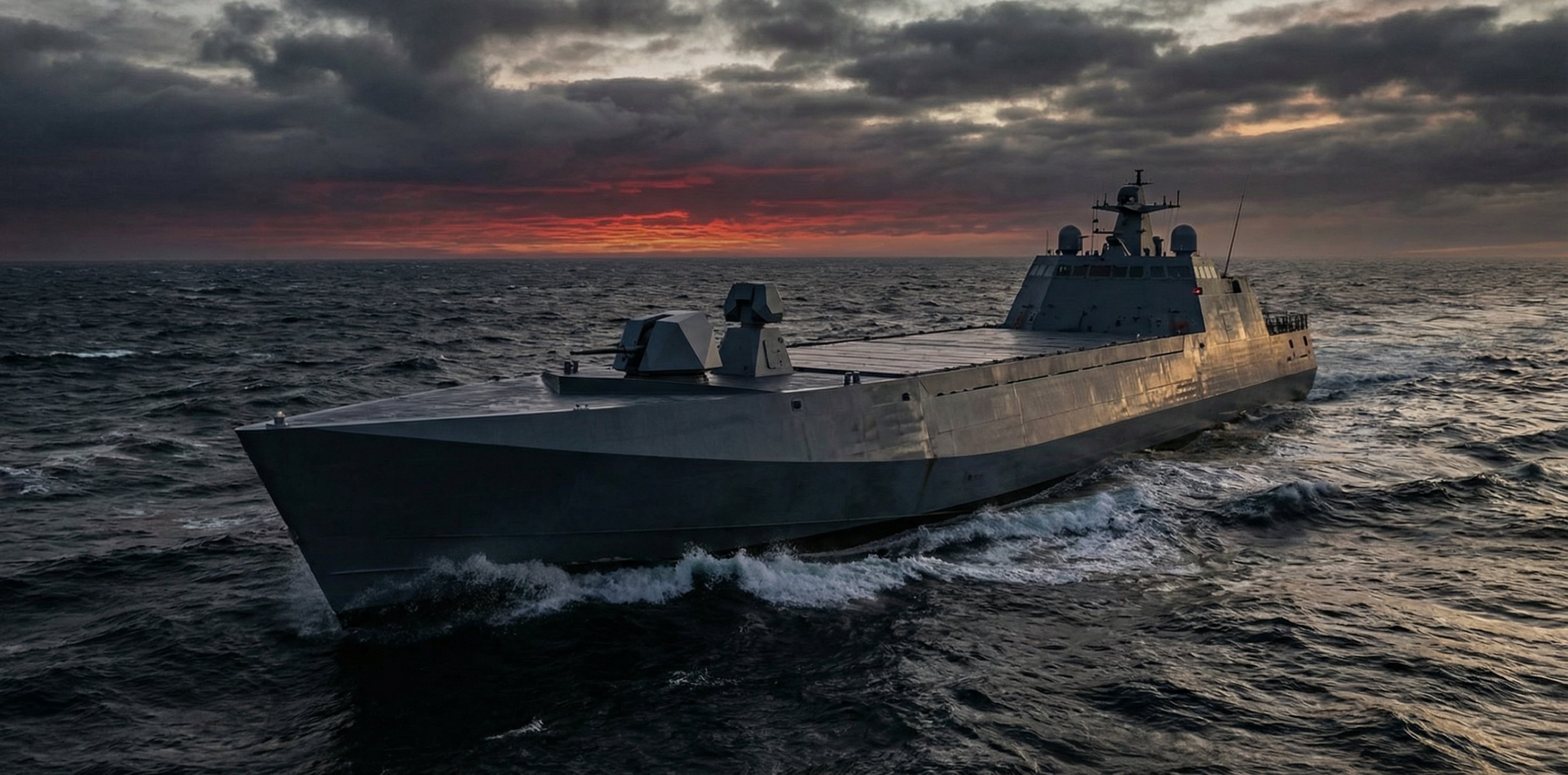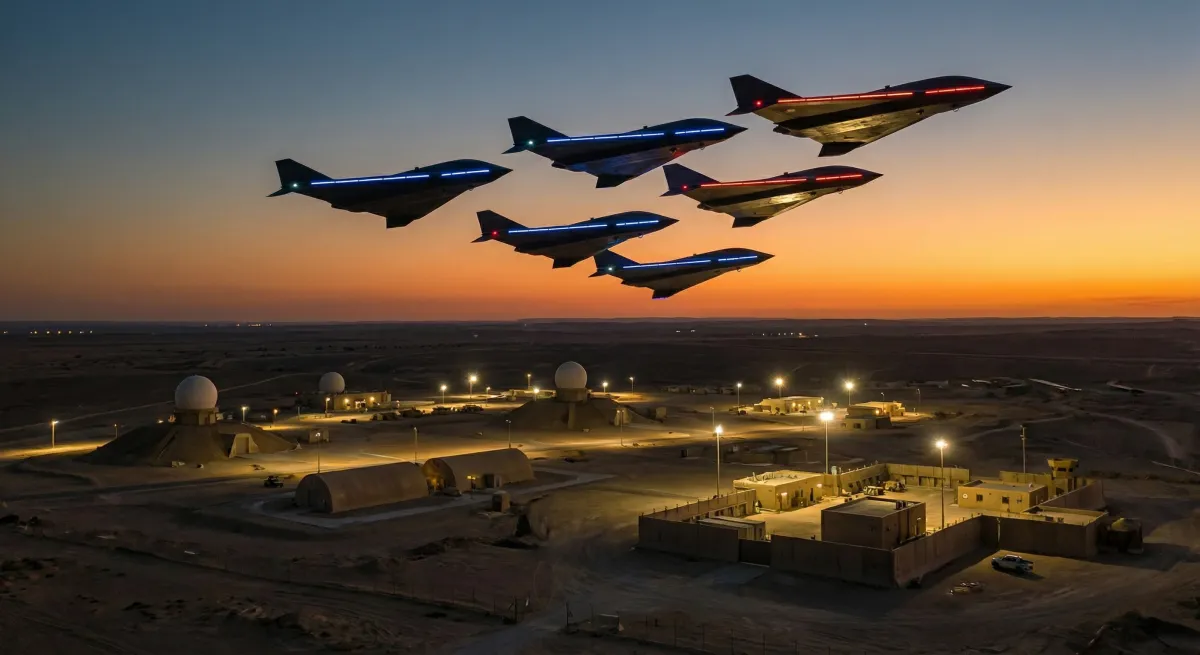
As the United Nations races to establish a regulatory framework for lethal autonomous weapons systems (LAWS) by the end of 2026, military powers around the world are already deploying these "killer robots" in active combat zones. The disconnect between international governance efforts and battlefield reality has never been starker—or more dangerous.
LAWS represent a fundamental shift in warfare: weapons that can select and engage targets without human intervention. Unlike remote-controlled drones that require a pilot, these systems use artificial intelligence to make life-or-death decisions independently. And they're not science fiction—they're operational today.
What Are Lethal Autonomous Weapons Systems?
At its core, a LAWS is a weapon system that, once activated, can identify, track, and engage targets without requiring human approval for each action. This marks a paradigm shift from previous military technologies that focused on increasing range, speed, or precision while keeping humans firmly in the decision loop.
Autonomy vs. Automation: A Critical Distinction
Military experts distinguish between automation and autonomy:
- Automation follows pre-programmed rules and responds predictably to specific triggers. Landmines are automated weapons—they explode when stepped on, indiscriminately. This predictability led to the 1997 Mine Ban Treaty after decades of civilian casualties.
- Autonomy involves systems that can perceive their environment, make decisions, and act based on machine learning or AI, adapting to changing circumstances without human instruction.
This distinction isn't merely technical—it's at the heart of the legal and ethical debate. An autonomous system can theoretically distinguish between a combatant and a civilian. But should we trust algorithms with that responsibility?
The Spectrum of Human Control
Not all autonomous weapons operate the same way. Military analysts categorize them by their level of human oversight:
Human-in-the-Loop
A human operator must authorize every targeting decision. Russia's Marker Robot—a ground combat platform with AI-powered navigation and reconnaissance—can track and follow targets autonomously but requires human authorization for lethal action. This represents the most conservative approach to autonomy.
Human-on-the-Loop
The system operates autonomously but a human monitors and can intervene. South Korea's SGR-A1 sentry robot, deployed in the demilitarized zone with North Korea, can detect, track, and vocally challenge intruders using thermal and optical sensors. While technically capable of firing autonomously, current protocols reportedly require human authorization before engagement.
Human-out-of-the-Loop
The system operates entirely independently after activation. Israel's IAI Harpy loitering munition exemplifies this category. Once launched, it autonomously searches for enemy radar systems within a designated area, selects targets based on electromagnetic signatures, and attacks without further human input—a true "fire-and-forget" weapon.
As systems move further out of the loop, accountability becomes increasingly murky. Who is responsible when an autonomous weapon makes a mistake—the programmer, the commanding officer, the manufacturer, or no one?
The Pentagon's "Replicator" Initiative
In a stark illustration of the governance gap, U.S. Deputy Defense Secretary Kathleen Hicks unveiled the Replicator program in 2023 with an ambitious goal: "to field attritable autonomous systems at scale of multiple thousands, in multiple domains, within the next 18-to-24 months."
That timeline puts mass deployment of U.S. autonomous systems squarely in 2025—well ahead of any international regulatory framework. The program aims to counter China's People's Liberation Army by rapidly integrating autonomous technologies from the private sector across air, land, and sea domains.
The Pentagon's 2026 AI Strategy document doubles down on this approach, emphasizing the need to "ensure we use this disruptive technology to compound the lethality of our military." Exercises that don't meaningfully incorporate AI and autonomous capabilities will be subject to review—a clear signal that autonomy is now a strategic priority, not an experimental concept.
The Case For Autonomous Weapons
Military advocates argue that LAWS offer substantial advantages:
- Force multiplication — A single autonomous system can perform missions that would otherwise require multiple soldiers, expanding operational reach without increasing personnel risk.
- Operating in hostile environments — Autonomous systems can function in areas with chemical, biological, or radiological hazards, or in contested electromagnetic environments where communications with human operators are severed.
- Speed and endurance — Machines don't experience fatigue, fear, or emotion. They can process sensor data faster than humans and maintain performance for extended periods.
- Cost efficiency — The annual cost of maintaining a single U.S. soldier in Afghanistan exceeded $850,000, while robotic systems like the TALON cost a fraction of that to deploy.
- Ethical consistency — Proponents argue that algorithms, unlike stressed human soldiers, won't violate rules of engagement out of fear, anger, or revenge. They may also be more likely to report war crimes without loyalty bias.
The Case Against: Humanity's Red Lines
Critics, including over 3,000 AI researchers and roboticists who signed a 2015 open letter, warn that LAWS threaten fundamental principles of international humanitarian law:
The Principle of Distinction
International law requires combatants to distinguish between military targets and civilians. Computer scientist Noel Sharkey notes that even trained soldiers frequently misidentify civilians under combat stress—a problem that may be worse for algorithms operating on incomplete data.
The Principle of Proportionality
Attacks must balance military advantage against civilian harm. Can an algorithm make nuanced ethical judgments about proportionality when the trade-offs are complex and context-dependent?
The Accountability Gap
International humanitarian law's principle of jus in bello requires that a human be held responsible for civilian deaths. If an autonomous weapon kills civilians, who bears legal responsibility? The commander who deployed it? The engineer who trained the algorithm? The defense contractor? This accountability vacuum violates fundamental principles of justice.
Proliferation and Destabilization
Once developed, autonomous weapons will likely proliferate to smaller nations, non-state actors, and eventually criminal organizations. The technology that enables autonomous targeting can be repurposed for terrorism or oppression. Unlike nuclear weapons, which require rare materials and specialized infrastructure, AI-powered weapons can be built from commercially available components.
The 2026 UN Deadline: Racing Against Deployment
In his New Agenda for Peace, UN Secretary-General António Guterres called for a legally binding treaty prohibiting LAWS that operate without meaningful human oversight, with a target completion date of 2026. This deadline was reaffirmed at the September 2025 Summit of the Future, where member states acknowledged that the dangers of autonomous weapons are "no longer theoretical, but very real and urgent."
Yet the international community remains divided:
- Ban advocates (including Serbia, Kiribati, and the Stop Killer Robots campaign) want a preemptive ban on all LAWS, similar to the treaties banning landmines and blinding lasers.
- Regulation advocates (including the Netherlands and Germany) propose a "dualist" approach: ban certain applications while strictly regulating others through licensing, testing standards, and accountability mechanisms.
- Status quo defenders (including the U.S., Russia, and China) argue that existing international humanitarian law is sufficient and that national militaries can self-regulate through internal policies.
The challenge is clear: governance efforts are years behind technological deployment. Systems like the IAI Harpy have been operational for over a decade. The U.S. Navy's Aegis Combat System has autonomous defensive modes. Loitering munitions with autonomous targeting are already being used in Ukraine, Syria, and the Nagorno-Karabakh conflict.
The Grey Zone: Partial Autonomy and Legal Evasion
Many current systems operate in what experts call a "grey zone" of partial autonomy. The Russian Marker Robot, for example, has autonomous navigation and targeting capabilities but officially requires human authorization for engagement. This allows nations to claim compliance with principles of human control while developing the technological foundation for fully autonomous operation.
The concern is that once these systems are embedded in military doctrine and procurement, the transition to full autonomy becomes trivial—a software update, not a hardware redesign. And once militaries depend on autonomous systems for national defense, political pressure to remove restrictions will be enormous.
As Paul Scharre, author of Army of None, warns: "Once weapons are embedded into military support structures, it becomes more difficult to give them up, because they're counting on it. It's not just a financial investment—states are counting on using it as how they think about their national defense."
What Happens If We Miss the Deadline?
If the international community fails to establish governance by 2026, the most likely outcome is a fragmented landscape of national regulations with minimal interoperability or accountability. Advanced military powers will continue developing and deploying LAWS based on internal policies that are opaque to international scrutiny.
This creates several risks:
- Arms race dynamics — Fear of falling behind will pressure nations to deploy autonomous weapons quickly, potentially before safety and reliability are assured.
- Normalization — What's considered unacceptable today may become routine tomorrow. The longer LAWS operate without major incidents, the harder it becomes to ban them.
- Domestic proliferation — Military technologies routinely flow to law enforcement and border agencies. Autonomous weapons could become tools of domestic surveillance and control.
- Irreversibility — Unlike nuclear arsenals, which can be physically dismantled, autonomous weapons exist primarily as software and know-how that cannot be unlearned.
The Window Is Closing
The 2026 deadline represents a critical juncture. It's the last realistic opportunity to establish international norms and legal frameworks before autonomous weapons become ubiquitous. After that, governance efforts will face the nearly impossible task of rolling back entrenched military capabilities and reversing strategic dependencies.
As one UN official put it: "The question is no longer if LAWS should be governed, but how—and whether we have the collective will to do it before the technology makes the decision for us."
With less than a year remaining before the UN's target date, the gap between diplomatic discussions and battlefield realities continues to widen. Whether 2026 marks a turning point in responsible AI governance or a missed opportunity that defines a new era of warfare may soon become clear.