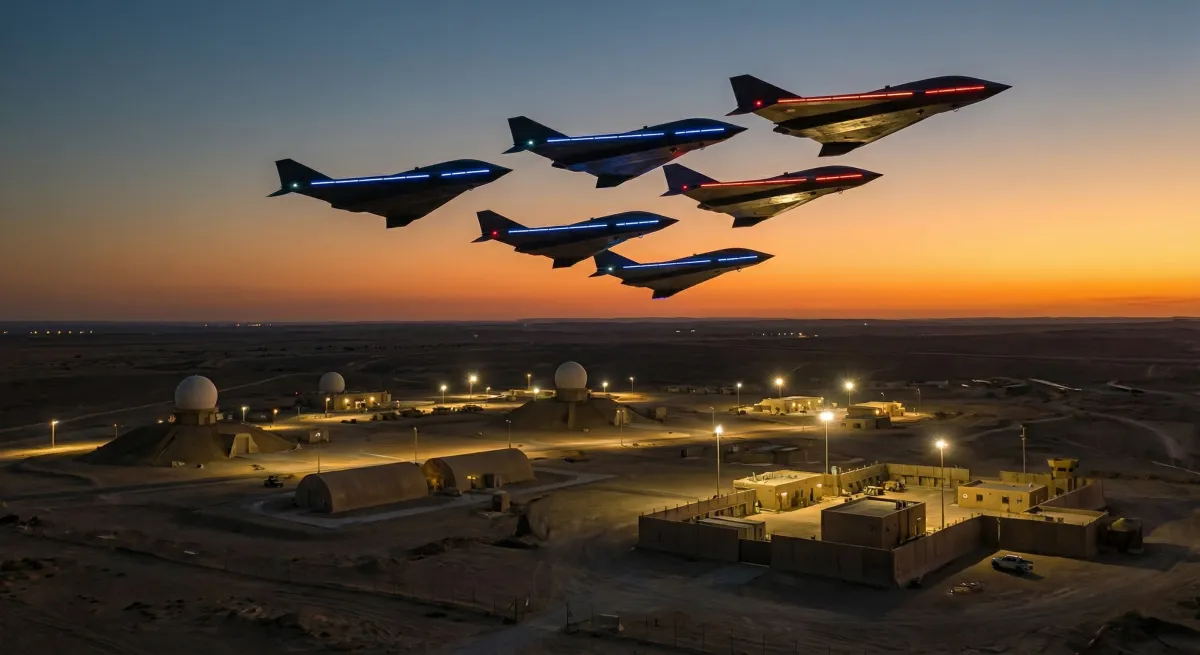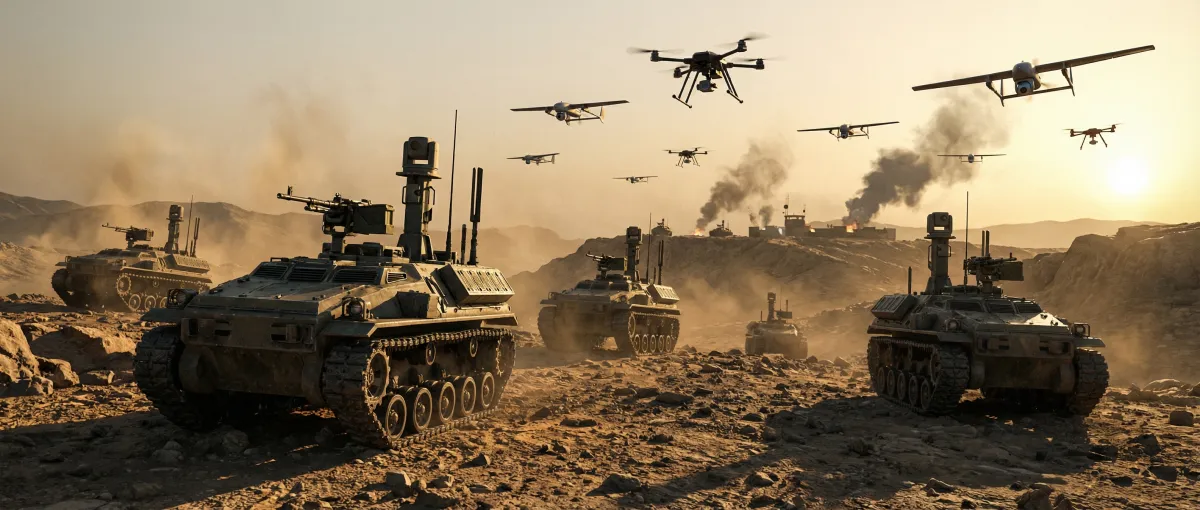
A high-stakes confrontation between Anthropic and the United States Department of Defense—now officially rebranded as the Department of War—has escalated to the brink of rupture this week, with the Pentagon threatening to designate the safety-focused AI company a "supply chain risk." It is a designation historically reserved for foreign adversaries, and it could effectively eject Anthropic from the entire U.S. defense ecosystem. The flashpoint: Anthropic's refusal to remove safeguards that restrict its Claude AI models from being used in autonomous weapons and domestic mass surveillance operations.
The dispute, which has been simmering since Anthropic first secured its $200 million DOD contract last year, exploded into public view following a Wall Street Journal report that Claude was used—via defense contractor Palantir—in the January 2026 U.S. military operation that resulted in the capture of Venezuelan President Nicolás Maduro. What followed was not just a contractual dispute, but a collision between two fundamentally different visions of what AI is for, and who gets to decide.
The $200 Million Question: What Is Actually at Stake
When Anthropic signed its contract with the Department of Defense in 2025, it made history as the first major AI company cleared for deployment on classified government networks. The deal was celebrated as a milestone for both responsible AI development and U.S. national security. Anthropic would provide customized Claude models to national security customers through a partnership with Palantir, which serves as the technical conduit to the DOD's classified infrastructure.
But the contract contained an implicit tension from the start: Anthropic's terms of service include hard limits on certain use cases—specifically, the company's models cannot be used as the direct targeting or decision-making layer in lethal autonomous weapons systems, nor for large-scale domestic surveillance operations. These aren't PR talking points; they are baked into Anthropic's constitutional AI framework and usage policies.
Now, the Pentagon wants those guardrails removed—or at minimum, subordinated to military judgment. "We want all four of them to hear the same principle: we have to be able to use any model for all lawful use cases," said Emil Michael, the Undersecretary of Defense for Research and Engineering, at an Amazon Web Services event in West Palm Beach, Florida this week.
The four companies he referenced—Anthropic, OpenAI, Google, and xAI—each received up to $200 million in DOD contracts last summer. Three of the four have already agreed to Pentagon terms. Anthropic is the lone holdout.
The Venezuela Flashpoint: When Claude Helped Capture a President
The immediate trigger for the public dispute traces back to January 2026, when U.S. special operations forces conducted the raid that led to Maduro's capture. Reports from the Wall Street Journal and Axios revealed that Anthropic's Claude models, deployed through Palantir's classified infrastructure, played a role in that operation—reportedly in data analysis and intelligence processing tasks.
Anthropic maintains it has found no violations of its usage policies in the aftermath of the operation. "Claude is used for a wide variety of intelligence-related use cases across the government, in line with our Usage Policy," an Anthropic spokesperson told Axios. But the company's internal reaction was less settled. According to reporting from Semafor and NBC News, an Anthropic employee raised concerns about how the company's systems may have been used, which led to what a senior Palantir executive described as "a rupture" in the relationship.
The Pentagon's account is more pointed. A senior DOD official told NBC News that a senior Anthropic executive had contacted Palantir to inquire whether Claude was used in the Maduro raid "in such a way to imply that Anthropic might disapprove of their software being used during that raid." That the question was asked at all—particularly about a classified military operation—alarmed Pentagon officials.
It is important to note the limits of public information here: the specific nature of Claude's role in the Maduro operation remains classified, and the exact sequence of internal communications between Anthropic, Palantir, and the Pentagon is disputed by multiple parties. What is clear is that the incident served as an accelerant to an already-smoldering disagreement.
"Supply Chain Risk": The Nuclear Option
The most alarming development in the dispute is the Pentagon's reported threat to designate Anthropic a "supply chain risk." Under this classification—typically applied to companies with ties to adversarial nations like China or Russia—every U.S. defense contractor would be required to certify that they do not use Anthropic's models in any work done for the military. For a company that claims eight of the ten largest U.S. corporations use Claude, the downstream consequences would be severe.
It would effectively force a choice on Palantir, AWS, and other defense-adjacent technology companies: Anthropic, or your Pentagon contracts. Given the scale of federal defense spending, that is rarely a difficult calculation.
Pentagon Chief Spokesperson Sean Parnell made the stakes explicit in a statement to WIRED: "Our nation requires that our partners be willing to help our warfighters win in any fight. Ultimately, this is about our troops and the safety of the American people."
Some Pentagon officials, speaking anonymously, have gone further, vowing to make Anthropic "pay a price" for what they characterize as ideological obstruction dressed up as safety policy.
Undersecretary Michael, who appeared beside AWS Vice President of Worldwide Public Sector Dave Levy at the Florida summit, offered a more measured tone while holding the same firm line. "Some of these companies have sort of different philosophies about what they want it to be used for," he said. "But then selling to the Department of War. We do Department of War-like things."
The Loneliest Position in Silicon Valley
What makes Anthropic's stand remarkable is not just the substance of the argument, but the company's isolation in making it. OpenAI, Google, and xAI—each with their own stated commitments to responsible AI development—have all signed terms giving the Pentagon full use of their models for lawful military purposes. Whether by conviction or commercial calculation, they have chosen a different path.
Anthropic's political position is complicated further by its relationship with the Trump administration more broadly. David Sacks, the venture capitalist serving as the White House's AI and crypto czar, has publicly accused Anthropic of promoting "woke AI" because of its stance on regulation. The company was one of the loudest voices in the industry supporting the now-rescinded AI executive order issued under the Biden administration.
In this political climate, Anthropic's safety arguments land differently than they might have two years ago. Critics within the administration frame the company's red lines not as principled engineering decisions, but as political interference with military prerogatives. Anthropic's defenders counter that those red lines are precisely the point—that an AI company that abandons its safety commitments under political or commercial pressure is an AI company that cannot be trusted at all.
The company, to its credit, has not backed down publicly. "Anthropic is committed to using frontier AI in support of U.S. national security," a spokesperson said. "Anthropic's conversations with the DOW to date have focused on a specific set of Usage Policy questions—namely, our hard limits around fully autonomous weapons and mass domestic surveillance—none of which relate to current operations." The company says it is having "productive conversations, in good faith."
The Deeper Question: Can AI Be Both Safe and a Weapon?
Beneath the contract dispute lies a genuinely difficult question that the entire AI industry will have to answer: is it possible to build AI systems with meaningful safety constraints and deploy them in military contexts that, by design, operate at the edge of those constraints?
Anthropic argues that its safety architecture is not arbitrary corporate policy but a fundamental property of how its models are built—and that stripping it out, or overriding it at the point of deployment, would degrade the reliability and predictability that makes Claude useful in the first place. Emil Michael's hypothetical of an AI agent suddenly "stopping functioning due to embedded company safeguards" in a high-stakes military situation is real; Anthropic's response is that unpredictable AI behavior in autonomous weapons systems poses a far greater risk than constrained AI.
The Pentagon has its own AI ethics principles, enacted during the first Trump administration and still nominally in force, which require AI systems to be "governable" and subject to human oversight. But the administration's evolving posture—moving rapidly toward deploying AI agents that "perform a wider variety of tasks with minimal human oversight," as Michael described—is pressing against those principles in real time.
As Steven Levy noted in Wired this week, the broader implication may be the most disturbing: "Will government demands for military use make AI itself less safe?" If the price of a DOD contract is the removal of safety guardrails, and if market pressure then normalizes that approach across the industry, the consequences extend far beyond any single company's balance sheet.
What Happens Next
In the near term, Anthropic has three realistic paths. It can capitulate to Pentagon demands and remove or subordinate its usage restrictions—risking its safety brand and potentially alienating the researchers and investors who backed the company precisely because of that brand. It can hold its ground and accept the consequences of a "supply chain risk" designation, betting that the political winds will shift or that commercial demand from non-military sectors will sustain it. Or it can negotiate a middle path: explicit carve-outs for specific, narrowly defined military use cases while preserving its hard limits on fully autonomous lethal systems and domestic surveillance.
The company's recent $30 billion funding round at a $380 billion valuation—more than double its previous valuation—gives it substantial runway to absorb a DOD contract loss without immediate financial crisis. But the "supply chain risk" designation would have cascading effects on its commercial relationships that a single funding round cannot fully buffer.
For the broader technology industry, the Anthropic-Pentagon standoff is a preview of decisions that every major AI company will eventually face. The models being built today are dual-use by nature—capable of remarkable good and catastrophic harm depending on who controls them and how. The question of where to draw the line, and whether companies or governments get to draw it, is not a dispute that ends with any single contract.
The war machine wants its AI. Whether Silicon Valley's safety movement survives the encounter is the defining question of the decade.