The United States military is undergoing its most significant tactical transformation since the introduction of armored warfare. In a sweeping strategic shift, the US Army is investing billions to deploy autonomous drones and robotic systems designed to replace human soldiers in the most dangerous battlefield situations—a doctrine the Army's chief technology officer describes as "trading blood for steel."
The strategy is already yielding results. Overland AI's unmanned Ripsaw M5 vehicle recently demonstrated autonomous mine-clearing operations. Soldiers are now 3D-printing replacement drone parts in the field during training exercises. And SpaceX, alongside its wholly-owned subsidiary xAI, is competing in a classified Pentagon contest to develop voice-controlled autonomous drone swarm technology.
The message is clear: American troops will no longer be the first ones facing the enemy. Robots will.
The New Doctrine: Robots Face Enemy First
In an exclusive interview with the "Threat Status" podcast, US Army Chief Technology Officer Alex Miller outlined the fundamental shift in how America fights wars. The Army is "investing heavily in autonomous drones and robotic systems designed to replace soldiers in the most dangerous battlefield situations," Miller explained.
The doctrine isn't incremental—it's revolutionary. Rather than augmenting human capabilities, the goal is to remove humans from direct combat exposure entirely in scenarios where autonomous systems can execute the mission. The Army envisions a future where soldiers operate robotic platforms from behind protective lines, directing swarms of drones and unmanned ground vehicles into hostile territory.
This isn't science fiction. It's current operational doctrine, backed by massive investment and rapid technological deployment.
Lessons from Ukraine
The shift is informed by brutal lessons from the Russia-Ukraine conflict, where drones account for 70-80% of casualties. Both sides deploy thousands of commercial and military drones daily, conducting reconnaissance, directing artillery, and executing direct strikes. Ukrainian forces pioneered tactics using modified DJI consumer drones dropping grenades and anti-tank munitions, while Russian forces responded with their own drone swarms and electronic warfare countermeasures.
The result: traditional infantry tactics have become suicidal. Open-field maneuvers invite instant drone strikes. Armored vehicles are tracked and destroyed within minutes of detection. The side with superior autonomous systems—better AI targeting, faster coordination, more resilient command-and-control—wins decisively.
The US Army is betting its future on being that superior force.
The Technology: From Ripsaw to Voice-Controlled Swarms
The Army's robotic transformation spans ground, air, and coordination layers:
Unmanned Ground Vehicles (UGVs)
Overland AI's Ripsaw M5 represents the cutting edge of autonomous ground combat. The tracked vehicle—derived from the infamous Ripsaw tank featured in viral videos—recently completed fully autonomous mine-clearing operations. Equipped with ground-penetrating radar, computer vision, and AI-powered decision-making, the Ripsaw M5 can detect, classify, and neutralize anti-personnel and anti-tank mines without human oversight.
The implications are profound. Mine clearance is one of the deadliest military tasks, killing or maiming thousands of soldiers annually. An autonomous platform that can clear mines, survive counter-battery fire, and continue operating 24/7 fundamentally changes the calculus of ground warfare.
Autonomous Drones and Swarms
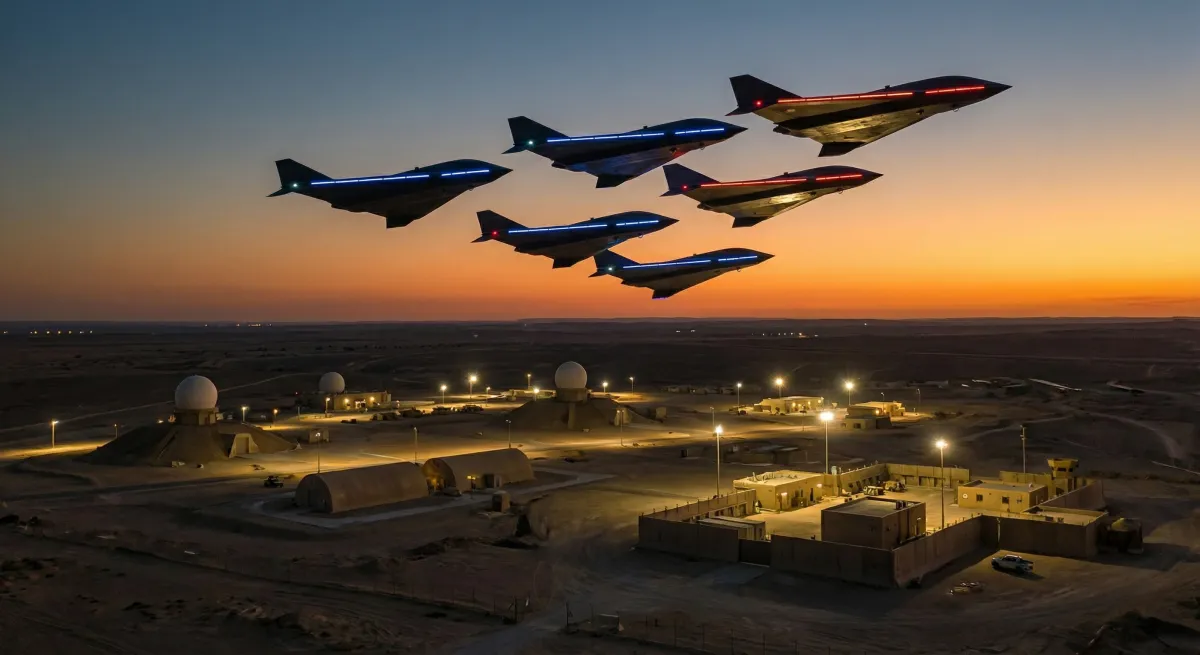
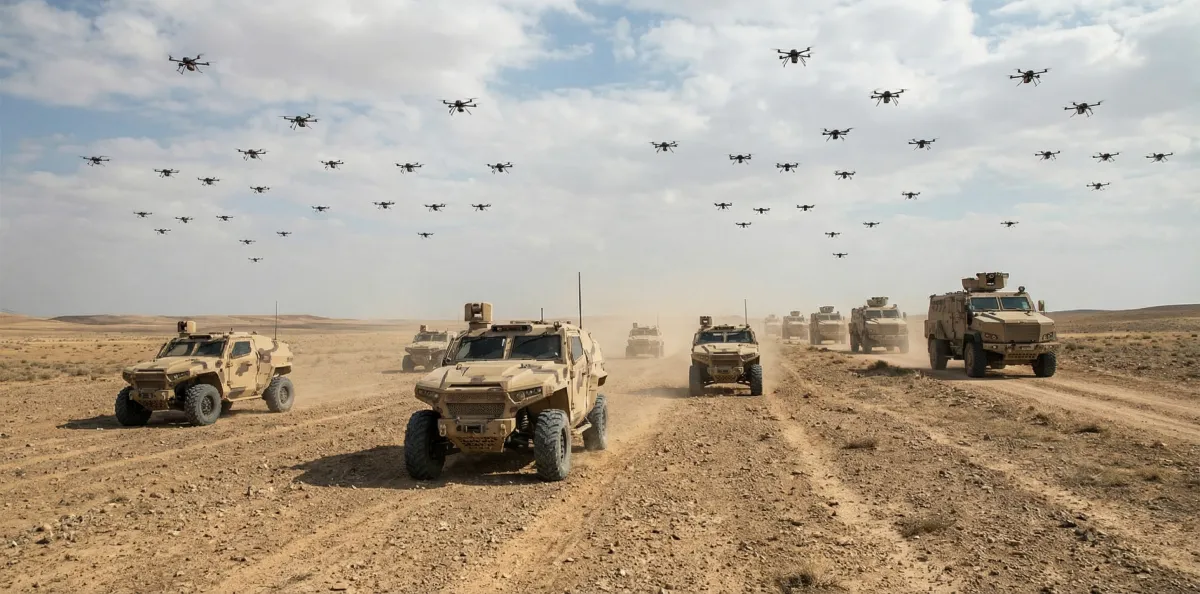
The Pentagon's $1.1 billion Drone Dominance Program aims to deploy over 300,000 autonomous platforms by 2027. These aren't passive reconnaissance drones—they're AI-powered combat systems capable of independent target identification, coordinated swarm attacks, and adaptive mission execution.
Training exercises now routinely feature soldiers operating hundreds of drones simultaneously, with AI managing coordination and target prioritization. When one drone detects an enemy position, the swarm autonomously repositions to surround and engage, while the human operator approves high-level objectives rather than micromanaging individual platforms.
Voice-Controlled Command: The SpaceX/xAI Contest
In a secretive Pentagon competition, SpaceX and xAI are developing voice-controlled autonomous drone swarming technology. According to Bloomberg reports, the program aims to enable soldiers to command drone swarms using natural language instructions—"Survey grid sector 7" or "Engage hostiles in building complex"—with AI translating intent into coordinated multi-drone missions.
The involvement of xAI, Elon Musk's AI startup, suggests the system will leverage large language models (LLMs) to interpret complex tactical instructions. This could enable battlefield commanders to direct swarms with the same ease as commanding human units, while the AI handles the low-level coordination, collision avoidance, and dynamic re-tasking.
If successful, the technology would represent a quantum leap in autonomous warfare: soldiers controlling hundreds of drones as easily as piloting one.
The Industrial Base: 3D Printing and Field Fabrication
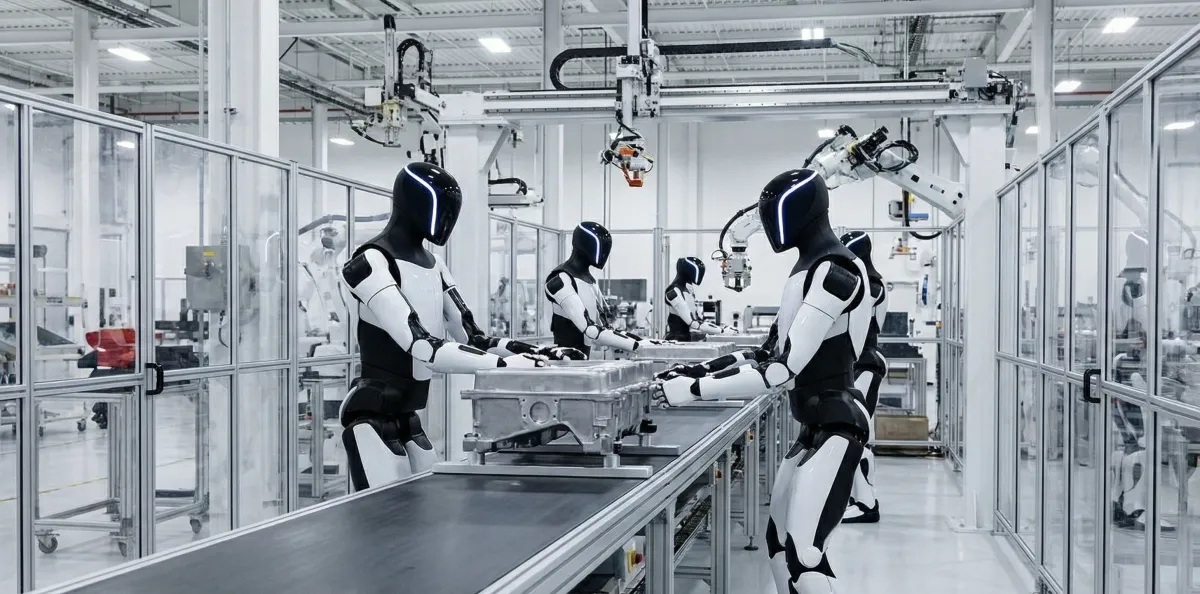
One of the most remarkable developments isn't the robots themselves—it's the Army's ability to maintain them in the field. Soldiers are now 3D-printing drone replacement parts during training exercises, using portable fabrication units to produce propellers, mounting brackets, sensor housings, and other components on-demand.
This capability addresses a fundamental weakness in autonomous warfare: supply chain vulnerability. If drones require factory-built replacement parts, losses can quickly outpace resupply. But if soldiers can print parts in the field using raw materials and open-source designs, the fleet becomes far more resilient.
The Army is experimenting with increasingly sophisticated field fabrication, including circuit board printing, battery pack assembly, and even explosive ordnance production. The vision: forward operating bases that can manufacture entire drones from raw materials, enabling sustained autonomous operations without reliance on vulnerable supply lines.
The Ethical and Strategic Questions
The shift to autonomous warfare raises profound ethical questions. International humanitarian law requires human decision-making in lethal force applications—the so-called "meaningful human control" principle. The Army insists it's maintaining this standard, with humans authorizing strikes and defining rules of engagement, while robots execute within those parameters.
But the line is blurring. As AI systems gain the ability to identify, classify, and engage targets faster than humans can react, the "approval" increasingly becomes a formality. If a swarm of drones detects an enemy convoy and requests authorization to engage, but the convoy will be gone in 15 seconds, the human operator faces a binary choice: approve instantly or lose the opportunity.
Critics warn this creates an "automation bias" where operators rubber-stamp AI recommendations, effectively ceding kill decisions to algorithms.
The Arms Race Accelerates
The US isn't alone in pursuing autonomous warfare. China has invested heavily in drone swarms and AI-powered combat systems. Russia, despite economic constraints, is deploying thousands of loitering munitions and kamikaze drones in Ukraine. Turkey's Bayraktar TB2 drones have become a major export, spreading autonomous strike capability globally.
As more nations field autonomous systems, the risk of escalation increases. Drones can strike with minimal warning and plausible deniability. Swarms can overwhelm defenses through sheer numbers. And AI-powered decision-making compresses timelines, reducing the window for diplomatic de-escalation.
The Army's strategy of "trading blood for steel" may save American lives—but it also accelerates a global shift toward wars fought by machines, with humans increasingly removed from the battlefield.
The Economic and Industrial Implications
The autonomous warfare boom is reshaping the defense industrial base. Traditional prime contractors like Lockheed Martin and Raytheon face competition from tech startups leveraging commercial AI, computer vision, and robotics.
Companies like Anduril, Shield AI, and Overland AI are winning major contracts by offering faster development cycles, lower costs, and software-driven capabilities that can be updated over-the-air. This "Silicon Valley meets Pentagon" dynamic is forcing legacy defense firms to adapt or risk obsolescence.
The talent war is equally intense. Military robotics engineers have become the most sought-after defense specialists, commanding salaries that rival Big Tech compensation. Universities are launching military AI programs, and venture capital is flooding into defense tech startups.
The economic impact extends beyond defense. Autonomous systems developed for military use inevitably find civilian applications—precision agriculture, disaster response, infrastructure inspection. The technologies enabling robotic warfare will reshape entire industries over the next decade.
What Comes Next
The US Army's transformation is just beginning. Current systems require significant human oversight and operate within narrow mission parameters. The next generation will feature far greater autonomy: drones that plan their own routes, identify and prioritize targets without human input, and coordinate multi-day missions with minimal supervision.
The Pentagon is also exploring more exotic concepts:
- Expendable combat robots: Low-cost autonomous platforms designed to be lost in combat, forcing adversaries to expend expensive munitions on cheap targets
- Self-replicating drone swarms: Systems that can manufacture additional drones using captured materials and solar power
- AI-powered cyber-physical warfare: Autonomous units that hack enemy systems while conducting kinetic operations
The ultimate vision: battlefields where human soldiers direct autonomous forces from standoff range, while robots conduct reconnaissance, clear obstacles, and engage enemies—all without putting American lives at risk.
The Human Element
Ironically, the shift to robotic warfare may make human infantry more valuable, not less. As autonomous systems handle high-casualty tasks like mine clearing and frontal assaults, human soldiers can focus on complex missions requiring judgment, cultural awareness, and adaptability—tasks where AI still struggles.
Special operations forces, in particular, are evolving into "robot wranglers," directing swarms of autonomous platforms in support of precision missions. The future soldier isn't a rifleman—it's a technician managing a fleet of armed robots.
Training is adapting accordingly. New Army recruits now learn drone operation alongside rifle marksmanship. Field exercises emphasize multi-robot coordination over squad tactics. And promotion criteria increasingly reward technical proficiency alongside traditional combat skills.
Conclusion: The New Face of War
The US Army's strategy of "trading blood for steel" represents a fundamental reimagining of warfare. Robots will face the enemy first. Autonomous systems will clear minefields, conduct reconnaissance, and engage hostile forces—all while human soldiers operate from protected positions.
The transformation is driven by hard lessons from Ukraine, enabled by rapid advances in AI and robotics, and accelerated by fierce competition with China and Russia. Companies like SpaceX and xAI are bringing Silicon Valley innovation to the battlefield, developing voice-controlled drone swarms that will make autonomous warfare as intuitive as commanding human units.
The technology is here. The doctrine is solidifying. The industrial base is mobilizing. And the next major conflict—whenever and wherever it occurs—will be fought by armies where robots outnumber humans, and the side with superior autonomous systems wins decisively.
Welcome to the age of robotic warfare. The battlefield will never be the same.