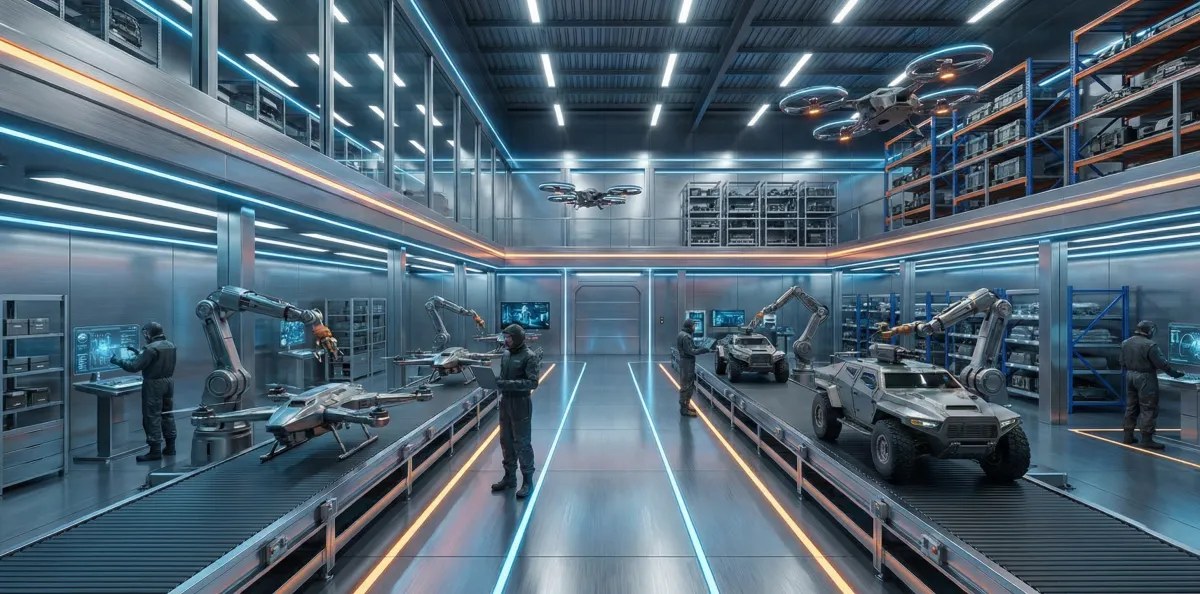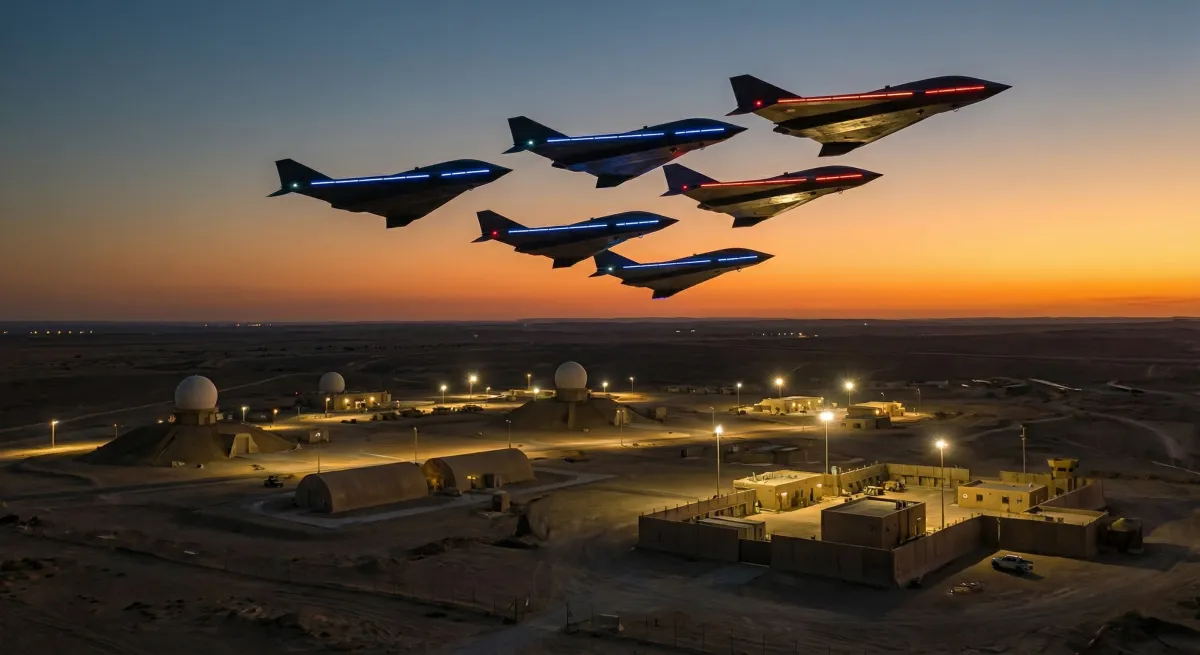
Wales is set to become the United Kingdom's primary hub for autonomous military technology following the signing of a landmark £50 million Defence Growth Deal. The agreement, signed at Cardiff Castle by Defence Secretary John Healey, Welsh First Minister Eluned Morgan, and Secretary of State for Wales Jo Stevens, positions the nation at the forefront of Britain's defense future—with thousands of high-skilled jobs and unprecedented access to military test ranges for autonomous systems.
The Strategic Pivot: Why Wales?
The choice of Wales as the UK's "launchpad for autonomous technology" is no accident. With over 16,000 workers already employed in the aerospace and defense sector and a robust network of small and medium-sized enterprises (SMEs) driving innovation, Wales possesses the industrial foundation necessary for this transformation.
The deal focuses on three critical areas:
- Expanded Test Ranges: Widened access to MOD Aberporth and other military test facilities across Wales
- Air Corridor Expansion: Extended air corridors across central Wales for uncrewed aerial systems testing, developed in collaboration with the Civil Aviation Authority and its military counterpart
- SME Access Revolution: Direct pathways for Welsh small businesses to secure classified defense contracts, bypassing traditional prime contractor gatekeepers
"We pledged a Defence Growth Deal for Wales and this is the UK Government delivering on that commitment," said Defence Secretary John Healey. "Wales is central to the defence of the UK and I am proud to launch this new partnership that will transform the nation into a centre for innovation."
Breaking the Prime Contractor Monopoly
Perhaps the most transformative element of the deal is its assault on the traditional defense contracting hierarchy. Historically, small and medium-sized businesses have been forced to work through major defense primes—companies like BAE Systems, Rolls-Royce, and Thales—to access classified contracts. This created bottlenecks, reduced profit margins for innovators, and slowed the pace of technological advancement.
The Wales Defence Growth Deal changes this paradigm. By ensuring Welsh SMEs receive proper security clearances and direct access to MOD contracts, the government is creating what it calls "a level playing field with major defence companies." This democratization of defense contracting could unlock a wave of innovation from agile, specialized firms that have previously been locked out of the classified ecosystem.
"The backbone of the sector is the huge number of small and medium size companies across the whole of Wales who are the life blood of development and innovation," said First Minister Eluned Morgan. "The dual use nature of the deal means that its benefits will be felt across the wider Welsh economy."
The Technology: From ISR to One-Way Attack Drones
The deal explicitly targets autonomous technology for intelligence, surveillance, reconnaissance (ISR), and one-way attack drones—commonly known as loitering munitions or "kamikaze drones." These platforms have proven transformative in recent conflicts, particularly in Ukraine, where they've demonstrated the ability to disrupt traditional military hierarchies at asymmetric cost ratios.
The expanded test facilities will enable rapid iteration of:
- Autonomous navigation systems for GPS-denied environments
- Swarm coordination algorithms for multi-drone operations
- AI-powered target recognition with human-in-the-loop safeguards
- Counter-drone technologies to defend against adversary autonomous systems
- Long-endurance ISR platforms for persistent surveillance
The focus on "uncrewed systems" across land, sea, and air suggests Wales will become a testing ground for multi-domain autonomous operations—the kind of coordinated, networked warfare that represents the future of military conflict.
Defence Technical Excellence College: Building the Workforce
Technology without talent is useless. Recognizing this, the deal includes plans to establish a Defence Technical Excellence College by September 2027. The institution will train the next generation of defense engineers specifically focused on autonomous capabilities.
This is critical timing. As autonomous systems transition from experimental platforms to core military capabilities, demand for engineers who understand the intersection of robotics, AI, sensor fusion, and military requirements is exploding. The college will create a pipeline of skilled workers tailored to Britain's strategic defense needs.
"Today's deal will shape the future of the defence industry for years to come and will deliver economic growth and thousands of skilled well-paid jobs," said Secretary of State for Wales Jo Stevens.
Strategic Context: Britain's Defense Industrial Strategy
The Wales Defence Growth Deal is part of a broader Defence Industrial Strategy backed by the largest sustained increase in defense spending since the Cold War—with defense budgets set to hit 2.6% of GDP from 2027.
This increase reflects recognition that the global security environment has fundamentally shifted. With conflicts in Ukraine demonstrating the importance of mass-producible, autonomous systems, and tensions rising in the Indo-Pacific, Western militaries are racing to modernize.
Defence Growth Deals—of which Wales is the first—are designed to leverage regional strengths across the UK. Rather than centralizing defense innovation in traditional hubs, the strategy distributes development across the nation, tapping into diverse industrial ecosystems.
Kevin Craven, CEO of ADS (the UK aerospace, defense, security, and space trade association), praised the approach: "Today's Wales Defence Growth Deal dovetails the two core motivations of industry and government alike: building effective deterrence capabilities, while providing high-quality, high-value employment that strengthens local communities."
The Dual-Use Dividend
While the deal focuses on defense applications, the technologies developed will have significant civilian applications. Autonomous navigation, sensor fusion, and AI-powered decision-making systems have uses in:
- Agriculture: Precision farming with autonomous tractors and crop monitoring
- Infrastructure inspection: Autonomous drones for bridges, power lines, and offshore platforms
- Emergency response: Search and rescue operations in hazardous environments
- Logistics: Autonomous delivery systems for remote areas
- Environmental monitoring: Wildlife tracking, pollution detection, and climate research
This dual-use nature means the economic benefits extend far beyond the defense sector, creating a technology cluster with spillover effects across Welsh industry.
Challenges Ahead: Ethics, Regulation, and Integration
Despite the optimism, significant challenges remain. Autonomous weapons raise profound ethical questions about human control in lethal decision-making. While the UK has committed to maintaining "human-in-the-loop" oversight for lethal autonomous systems, the pressure for faster decision-making in contested environments will create tension between safety and effectiveness.
Regulatory frameworks also lag behind technological capabilities. Expanding air corridors for uncrewed systems requires coordination between military and civilian aviation authorities—a complex bureaucratic challenge.
Integration with NATO allies presents another hurdle. For autonomous systems to be effective in coalition warfare, they must be interoperable with allied platforms. This requires standardization of communication protocols, data formats, and command structures—all of which take time to negotiate and implement.
The Global Race for Autonomous Dominance
Britain is not alone in this push. China has invested heavily in autonomous military technology, with companies like DJI dominating the commercial drone market and military applications rapidly advancing. The United States has programs like the Air Force's Collaborative Combat Aircraft and the Army's Robotic Combat Vehicle, while Israel has long led in autonomous ISR platforms.
The Wales deal represents the UK's bet that distributed innovation—empowering SMEs across the country rather than relying solely on major defense primes—can outpace centralized approaches. It's a bold experiment in defense industrial policy.
Economic Impact: Beyond Defense
Almost 4,000 people in Wales are currently employed through MOD industry spending, as part of more than £1 billion spent with the Welsh defense industry. The Defence Growth Deal aims to multiply this impact through:
- Direct employment: Thousands of high-skilled engineering and technical roles
- Supply chain development: Opportunities for manufacturers, software developers, and service providers
- Knowledge spillovers: Technology transfer to civilian industries
- Educational infrastructure: The Defence Technical Excellence College creating a permanent talent pipeline
The deal also includes work on developing sovereign capabilities for critical materials resilience—addressing supply chain vulnerabilities exposed by recent geopolitical tensions.
What This Means for the Future of Warfare
The emphasis on autonomous systems reflects a fundamental shift in military thinking. Traditional platforms—tanks, manned aircraft, surface ships—are increasingly vulnerable to precision strikes. Autonomous systems offer several advantages:
- Attrition tolerance: Losing a drone is acceptable; losing a pilot is not
- Cost asymmetry: Cheap autonomous platforms can threaten expensive traditional assets
- Saturation attacks: Swarms can overwhelm defensive systems through sheer numbers
- Persistent presence: Autonomous ISR provides continuous battlefield awareness
- Reduced human risk: Operating in denied environments without endangering personnel
By positioning Wales as the UK's autonomous defense hub, Britain is betting on this shift—and creating the industrial infrastructure to lead rather than follow.
Timeline and Next Steps
Implementation begins immediately, with several key milestones:
- 2026: Expansion of MOD Aberporth test range capabilities and air corridor approvals
- 2027: Defence Technical Excellence College operational by September
- 2027-2030: Scaling of SME contract awards and platform development
- 2030+: Full operational deployment of Welsh-developed autonomous systems
The £50 million investment will be deployed across infrastructure upgrades, educational programs, and direct support for SME contract access. Additional defense spending increases mean follow-on funding is likely if initial results prove successful.
Conclusion: A Model for Defense Innovation?
The Wales Defence Growth Deal represents more than regional economic development—it's an experiment in how democracies can compete in the global race for military technological superiority. By empowering SMEs, investing in education, and creating specialized infrastructure, the UK is testing whether distributed innovation can match or exceed the centralized approaches of potential adversaries.
If successful, Wales will become a template for defense industrial policy across NATO allies. If it stumbles, the lessons will be equally valuable—showing the limitations of SME-led defense innovation in an era of great power competition.
Either way, the thousands of Welsh workers who will design, build, and test the next generation of autonomous military systems are now at the forefront of a technological transformation that will define 21st-century warfare.
The deal was signed this week. The real work begins now.