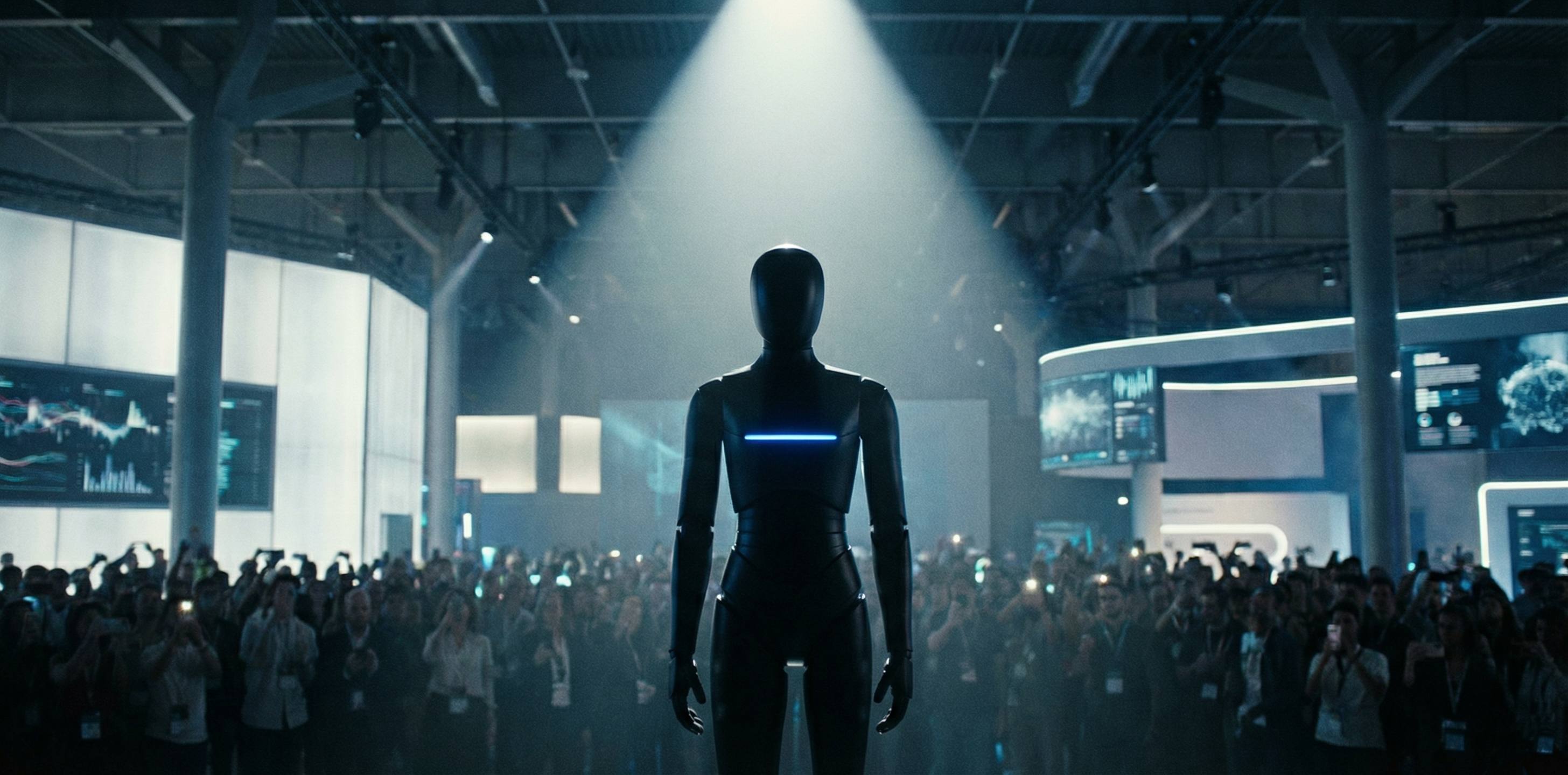
On the evening of February 16, 2026, an estimated 800 million viewers tuned into China's annual Spring Festival Gala — the most-watched television broadcast on the planet. The show's breakout stars weren't pop singers or comedians. They were robots. Specifically, the sleek, white humanoid robots from Chinese startup Unitree Robotics, which performed a jaw-dropping martial arts routine complete with backflips, nunchuck swings, sword choreography, and precision kung fu strikes — all executed inches from child performers and in perfect synchronization.
The internet reacted with a mixture of awe, unease, and — from technology observers — urgent recalibration. Because only twelve months earlier, at the 2025 Spring Festival Gala, China's humanoid robots had performed a wobbly folk dance with handkerchiefs, struggling to maintain balance. In April 2025, a robot marathon made global headlines for all the wrong reasons: stumbling, emitting smoke, and falling apart mid-race.
The leap from those stumbles to coordinated martial arts in twelve months is not just impressive. It is a signal that the robotics race between China and the West has fundamentally accelerated — and that underestimating China's humanoid robot ambition may be one of the most consequential technological miscalculations of our time.
What Happened on That Stage
The performance, titled "Warriors of Light," featured Unitree's G1 and H1 humanoid robots alongside young martial artists from China's wushu tradition. Powered by advanced AI algorithms and 3D LiDAR sensors, the robots executed a sequence of moves that previously would have been considered impossible for a machine: drunken boxing stances, backward obstacle avoidance while in motion, clean aerial backflips landing on bent knees, and the choreographed wielding of swords and nunchucks just feet from human co-performers.
The technical achievements embedded in that performance deserve unpacking. Balance during dynamic kicking and flipping motions requires real-time torque adjustments across dozens of joints simultaneously — a challenge that has stymied roboticists for decades. The fact that Unitree's robots executed these motions in an unscripted stage environment, with live performers, ambient vibration from audience applause, and no safety nets, marks a genuine engineering milestone.
"People should absolutely be taking these robots seriously," Reyk Knuhtsen, analyst at SemiAnalysis, told CNBC in the days following the performance. "After this spring gala demonstration, they're becoming visibly more lean, fluid, and capable. As we watch them push the physical boundaries humans are capable of, it becomes apparent they can achieve human-level actions, and eventually superhuman-level performances."
From 85% Market Share to 20,000 Robots This Year
The gala moment didn't emerge from a vacuum. China has been building an overwhelming structural advantage in humanoid robotics for the past several years, and the numbers are stark.
According to analysis from Barclays, of the roughly 15,000 humanoid robot installations globally in 2025, China accounted for more than 85% — compared to just 13% in the United States. That lopsided market share reflects not just manufacturing scale, but a vertically integrated supply chain that Western competitors cannot easily replicate.
"The fundamental advantage that China has is a nearly vertically integrated robotics value chain: from the rare earths and high-performance magnets to the physical components, and the batteries," Zornitsa Todorova, Head of Thematic FICC Research at Barclays, explained to CNBC. This integration means Chinese manufacturers can iterate faster, price lower, and scale more aggressively than any Western counterpart.
Unitree, whose robots starred at the Gala, announced plans to ship between 10,000 and 20,000 humanoid robots in 2026 alone — a staggering jump from previous years. The company's G1 humanoid is currently priced at just $13,500, a fraction of what comparable Western systems cost. Tesla's Optimus, for comparison, is projected to eventually reach $20,000 or below only when production scales to one million annual units — a target that remains years away.
Government backing amplifies the private sector's momentum. Beijing has made robotics a strategic national priority, routing subsidies, research funding, and preferential procurement through state channels. Local governments in manufacturing hubs like Shenzhen, Shanghai, and Hangzhou have established dedicated robot industrial parks and provided favorable land-use terms to hardware startups.
The AI Engine Under the Hood
The physical acrobatics are impressive, but they are not the whole story. What makes China's 2026 robot surge qualitatively different from earlier years is the integration of AI reasoning and real-time adaptive control.
The 2026 Gala performance was not scripted in the conventional sense. While the broad choreography was pre-planned, the robots continuously adapted their joint torques, balance corrections, and step placements in real time using onboard AI inference. This is the difference between an animatronic ride at a theme park and a genuinely responsive robotic system.
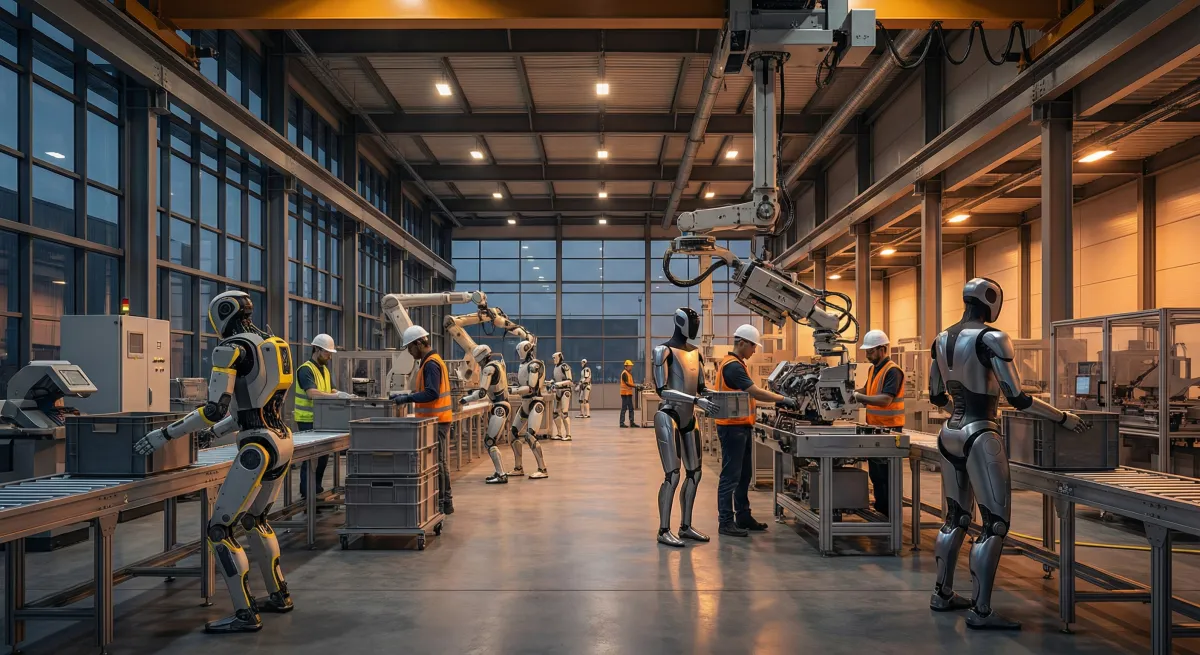
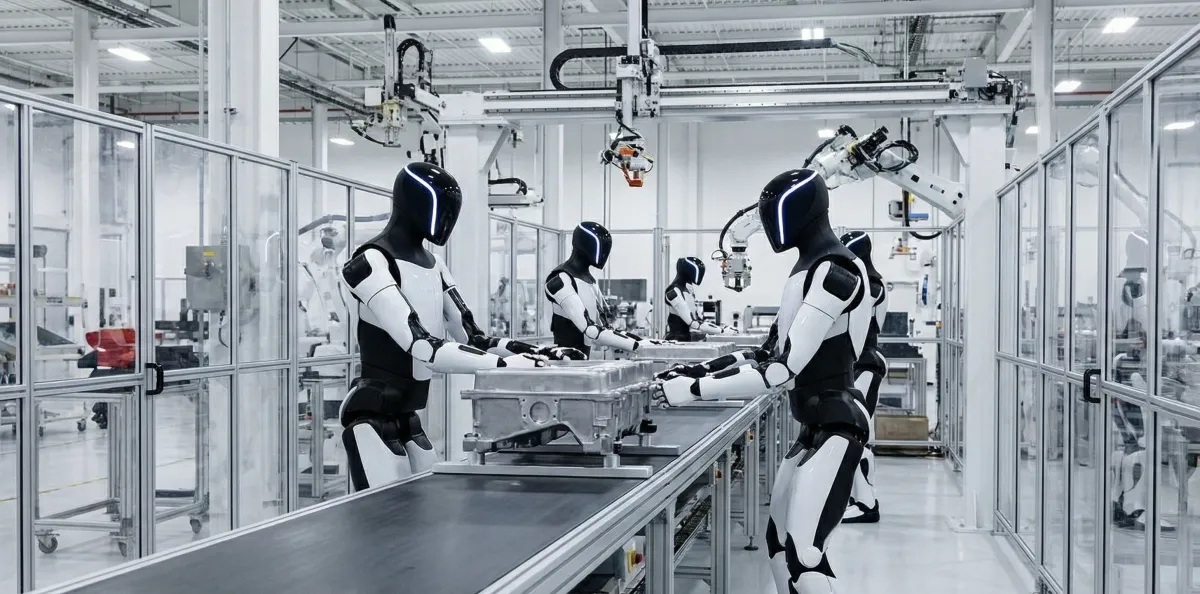
Omdia chief analyst Lian Jye Su noted that "the enhanced dexterity shown in routines like aerial flips and weapon handling signals strong potential for economic impact in physically demanding tasks that involve delicate tool handling and precise movements." The implication is that the same dexterity that makes for a spectacular TV performance also translates directly to industrial applications — assembly lines, warehouses, construction, and agriculture.
However, analysts are also careful to note the distinction between performance dexterity and practical utility. "They still need to prove reliability in unstructured, human-centric environments for delicate tasks like healthcare or household assistance," Su cautioned. A robot that can execute a flawless backflip on a controlled stage still struggles to fold a towel or navigate a cluttered living room without extensive additional training.
This is the next frontier for China's robotics companies: moving from controlled demonstrations to reliable deployment in messy, unpredictable real-world settings. The AI model improvements required for this leap — better reasoning, longer task-completion horizons, the ability to chain multiple subtasks together — are as much a software challenge as a hardware one.
"The AI model race is still undecided, and that will be the defining factor in the end, as the robot will only be as useful as its model," SemiAnalysis's Knuhtsen told CNBC. "I think this is where a lot of economic value lies, and it's steadily improving."
What This Means for the U.S.-China Tech Race
The Spring Festival Gala performance landed at an awkward moment for the West. American robotics companies — Boston Dynamics, Apptronik, 1X, Agility Robotics — have made genuine progress on their own humanoid platforms in 2025 and 2026. Tesla's Optimus program remains the most high-profile Western humanoid effort, with Elon Musk projecting that Optimus will help Tesla become the most valuable company in history.
But the structural dynamics favor China in the near term. Western companies must source components from global supply chains that China helps anchor. They face higher labor costs, slower manufacturing iteration cycles, and, in some cases, regulatory complexity that slows deployment in sensitive environments.
The United States government has begun to recognize the strategic stakes. Defense agencies are monitoring humanoid robotics as a dual-use technology with potential military applications. Congressional briefings on the China robotics lead have intensified. And the Department of Commerce is considering whether certain robotic AI systems should be subject to export control frameworks similar to those applied to advanced semiconductors.
For private investors, the Gala performance triggered a wave of interest in Chinese humanoid robot companies, many of which remain private or listed on Chinese domestic exchanges with limited Western accessibility. Unitree, in particular, has seen a surge in inquiries from global investors seeking exposure to its rapid growth trajectory.
The Audience Reaction: Admiration, Unease, and Something in Between
Social media in China and globally lit up in the hours after the Gala performance. Chinese viewers celebrated the moment as evidence of national technological achievement — a counterpoint to years of Western narrative that framed China as a copier rather than an innovator. Videos of the kung fu robot performance accumulated hundreds of millions of views across Weibo, WeChat, Douyin, and international platforms.
Western reactions were more mixed. Technology observers expressed genuine admiration at the pace of improvement. Labor economists highlighted the performance's implicit message about automation's potential reach into physically demanding jobs. Defense analysts flagged the dual-use implications of agile, AI-guided humanoid systems that can handle weapons.
The Guardian's headline captured the ambivalence neatly: "China's Dancing Robots: How Worried Should We Be?" The answer depends significantly on one's vantage point. For manufacturers worried about labor costs, these robots represent salvation. For workers in physically demanding jobs, they represent disruption. For geopolitical strategists, they represent an accelerating technological competition whose outcome remains genuinely uncertain.
The Road Ahead: From Stage to Shopfloor
The Spring Festival Gala may be theater, but its implications for 2026 and beyond are entirely real. China's government and private sector have now signaled, on the world's largest stage, that humanoid robots are no longer a curiosity. They are a product. They are a platform. And they are advancing faster than most Western observers assumed possible.
Unitree's target of 10,000–20,000 shipments in 2026 — at prices Western competitors cannot match — means that within twelve months, Chinese humanoid robots will be operating at meaningful scale in factories, logistics facilities, and potentially public-facing service environments. The institutional knowledge and deployment experience that accumulates from those installations will compound into a structural advantage that becomes harder to close with each passing quarter.
What happens in AI model capability development will be equally decisive. If Chinese robotics companies can couple their hardware scale advantage with best-in-class on-device AI reasoning, the performance gap with Western humanoids could widen rather than narrow. Conversely, if Western AI labs maintain a significant lead in foundation model quality — and that lead translates effectively to robotics control — the hardware cost disadvantage may prove less determinative than the current moment suggests.
Either way, the 2026 Spring Festival Gala will be remembered as a watershed moment. Not because robots performing kung fu on live television is, in itself, commercially significant. But because it announced, to an audience of 800 million people, that China's humanoid robot industry has crossed the threshold from demonstration to delivery — and that the rest of the world needs to take that seriously.
The robots took their bow. The race just got real.