Tesla Optimus Gen 3 Enters Mass Production: The $20K Humanoid Robot Hits Factory Floors
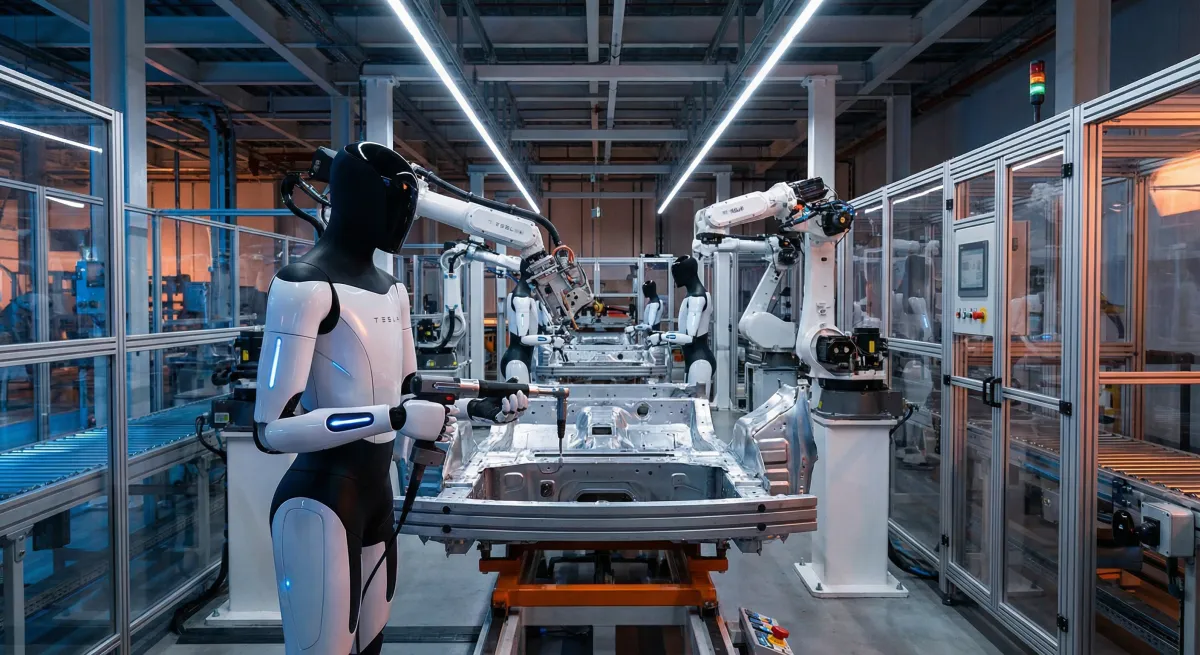
On January 21, 2026, Tesla officially commenced mass production of the Optimus Gen 3 humanoid robot at its Fremont, California factory—marking the beginning of what Elon Musk calls the "Physical AI" era. With production targets of 100,000 to 300,000 units in 2026 and a retail price between $20,000 and $30,000, Tesla is betting it can do for humanoid robotics what it did for electric vehicles: make them affordable, scalable, and ubiquitous.
From Prototype to Production Line
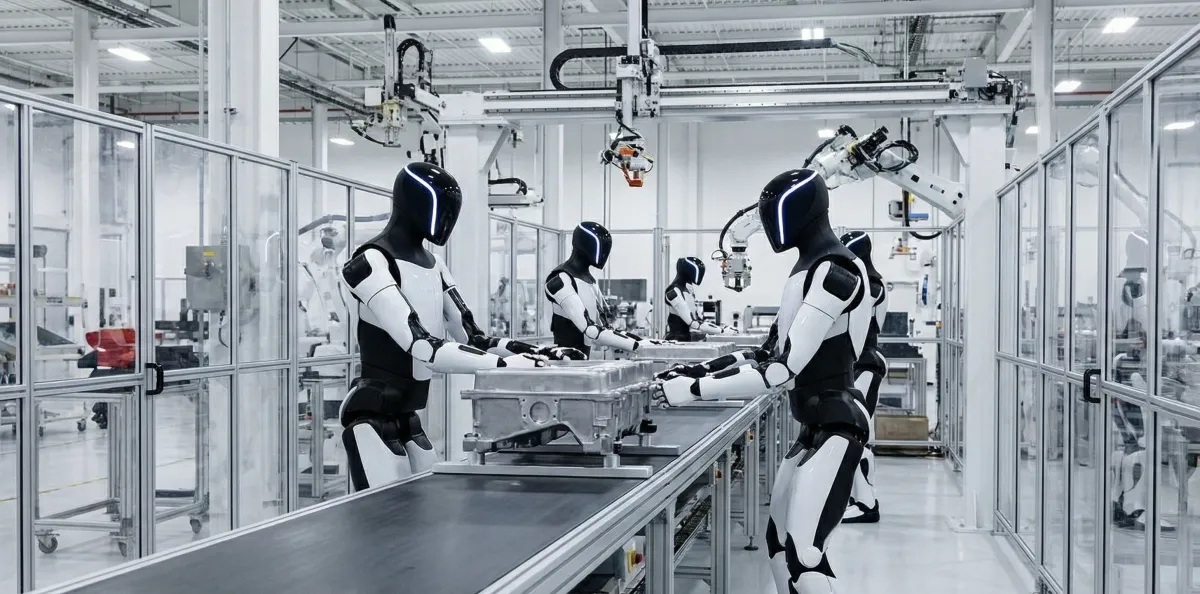
Tesla's path to humanoid robot production began in August 2021, when Elon Musk unveiled the Optimus concept at Tesla's AI Day. What started as a human in a spandex suit became a working prototype by 2022, an improved Gen 2 model in 2023, and now a production-ready Gen 3 variant rolling off assembly lines alongside Tesla vehicles. The company is repurposing portions of its Fremont facility—previously dedicated to Model S and Model X production—to manufacture humanoid robots at automotive scale.
Optimus Gen 3 stands 5'11" (180cm) tall, weighs approximately 125 pounds, and is powered by the same AI architecture that enables Tesla's Full Self-Driving (FSD) system. The robot features 40+ degrees of freedom, actuated hands capable of handling delicate objects, and onboard compute running Tesla's custom neural networks. Unlike research platforms from Boston Dynamics or academic labs, Optimus is designed for mass manufacturing from day one—prioritizing cost reduction and reliability over cutting-edge performance.
The $20K Target: Making Humanoids Affordable
Tesla's most audacious claim is that it can produce Optimus for $20,000 to $30,000 per unit at scale. For context, Boston Dynamics' Atlas—still a research platform—costs an estimated $150,000+. Figure AI's humanoid targets commercial viability but hasn't disclosed pricing. Chinese manufacturers like Unitree offer lower-cost humanoids ($16,000 for the G1), but with limited capabilities compared to Tesla's vision.
Tesla's cost advantage stems from vertical integration. The company manufactures its own actuators, motors, battery packs, and AI chips. It leverages automotive supply chains for structural components, sensors, and electronics. And it applies lessons from vehicle manufacturing—design for manufacturability, continuous iteration, and aggressive cost engineering—to robotics in ways traditional defense contractors and research labs cannot match.
At $20,000, Optimus becomes economically competitive with human labor in developed markets. A robot that works 24/7 with minimal downtime, doesn't require benefits or vacation, and can be financed like capital equipment offers a compelling business case for logistics, manufacturing, and warehouse operators facing chronic labor shortages. Tesla is positioning Optimus not as a technological marvel, but as a practical economic solution.
Deployment Strategy: Internal First, External Later
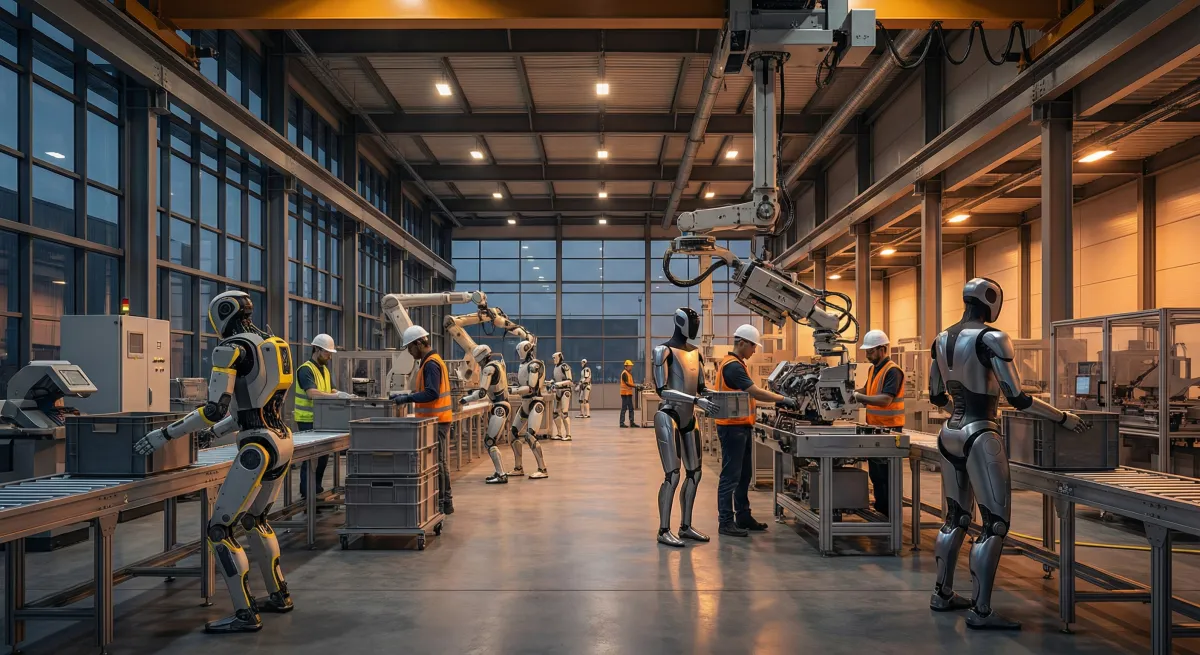
Tesla's initial deployment strategy mirrors its approach with autonomous vehicles: test internally, iterate rapidly, then scale externally. Early Optimus units are being deployed within Tesla factories to perform tasks like parts sorting, quality inspection, material transport, and equipment setup. By using its own facilities as proving grounds, Tesla can refine hardware, software, and operational workflows before selling to external customers.
This strategy also addresses regulatory and safety concerns. Operating robots in controlled industrial environments with trained staff reduces liability risks compared to deploying in third-party facilities or consumer settings. Tesla can gather real-world performance data, identify failure modes, and push software updates continuously—the same iterative development model that has defined its vehicle business.
External sales are expected to begin in late 2026 or early 2027, prioritizing manufacturing and logistics customers. Tesla has not committed to consumer availability, though Musk has repeatedly stated that household robots remain a long-term goal. For now, the focus is proving unit economics and operational reliability in industrial applications where the value proposition is clearest.
The Competition: Figure AI, Boston Dynamics, and China
Tesla isn't alone in the humanoid robotics race. Figure AI, backed by OpenAI, NVIDIA, Amazon, and Microsoft, is developing Figure 02, a general-purpose humanoid designed for warehouse and manufacturing deployment. The company has raised hundreds of millions and is targeting commercial pilots in 2026. Agility Robotics' Digit robot is already deployed at Amazon facilities for package handling. Boston Dynamics continues advancing Atlas, though the company hasn't announced commercial availability.
China represents the most significant competitive threat. Chinese manufacturers hold an estimated 90% of the global humanoid robot market by unit volume, driven by companies like Unitree, Fourier Intelligence, and UBTech. These firms benefit from low-cost domestic supply chains, government subsidies, and rapid iteration cycles. Unitree's G1 sells for $16,000—undercutting even Tesla's target price—and has demonstrated impressive durability, including completing 130,000+ steps in -47.4°C temperatures.
Where Tesla differentiates is software and ecosystem integration. Optimus leverages Tesla's Full Self-Driving AI, cloud infrastructure, and data collection capabilities. The company is betting that superior intelligence, learning capabilities, and operational support justify premium pricing over hardware-focused Chinese competitors. Whether this strategy succeeds depends on whether customers value AI sophistication enough to pay more—or whether low-cost alternatives capture market share first.
Technical Capabilities and Limitations
Optimus Gen 3's capabilities are impressive but not yet comparable to human workers in all tasks. The robot can walk on uneven surfaces, navigate stairs, manipulate objects with articulated hands, and perform repetitive assembly tasks. It uses computer vision to identify parts, detect obstacles, and coordinate movements. Battery life is estimated at 4-8 hours depending on workload, requiring recharging between shifts.
However, significant limitations remain. Dexterity lags far behind human hands—tasks requiring fine motor control, tactile feedback, or improvisation remain challenging. Autonomous decision-making is constrained to structured environments with known tasks; unexpected situations still require human oversight. And despite claims of Full Self-Driving-level AI, Optimus operates under supervision in semi-autonomous modes rather than full autonomy.
Safety systems are critical. Optimus includes emergency stop mechanisms, force-limiting actuators, and collision avoidance systems designed to prevent injury if it contacts human workers. But real-world deployment will reveal edge cases and failure modes that testing cannot anticipate. The first industrial accident involving a humanoid robot will trigger intense regulatory scrutiny—a risk Tesla is keenly aware of given its history with autonomous vehicle incidents.
Labor Market Implications
The arrival of affordable humanoid robots raises profound questions about the future of work. Manufacturing, logistics, and warehouse sectors employ millions of workers globally in roles that humanoid robots could theoretically perform. If Tesla hits its production targets and costs decline further, the economic case for robotic labor becomes overwhelming in sectors facing labor shortages, rising wages, and high turnover.
Proponents argue that robots will handle dangerous, repetitive, or physically demanding tasks that humans don't want, freeing workers for higher-value roles requiring judgment, creativity, and interpersonal skills. Critics counter that displaced workers lack pathways to these roles, and that automation concentrates wealth among capital owners while gutting middle-class employment.
The United Auto Workers union has called for a "robot tax" to fund retraining programs for displaced manufacturing workers. Some economists advocate universal basic income as automation erodes traditional employment. Others argue that historical technological transitions—from agriculture to manufacturing, manufacturing to services—show labor markets adapt, albeit painfully, to automation waves.
What's certain is that 100,000 humanoid robots in 2026 won't transform labor markets overnight. But if production scales to millions of units annually—Tesla's stated ambition—the cumulative impact on employment, wages, and economic inequality will be impossible to ignore. Policymakers, businesses, and workers need to prepare now, not after displacement accelerates.
Regulatory and Ethical Challenges
Humanoid robots operating in factories and warehouses currently face minimal regulatory oversight. Existing industrial safety standards cover robotic arms and automated machinery, but humanoids—which move freely, interact with humans, and make autonomous decisions—don't fit neatly into existing frameworks. Regulators will need to develop new standards addressing human-robot interaction, fail-safe mechanisms, liability allocation, and certification processes.
Ethical questions also loom. Should robots be designed to mimic human appearance and behavior, potentially triggering psychological responses that complicate human-robot relationships? How much autonomy should robots have in decision-making, especially in environments where errors could cause harm? And who is liable when a humanoid robot injures a worker or damages property—the manufacturer, the operator, or the software developer?
Tesla's approach—deploying internally first—delays some of these questions but doesn't avoid them. Once Optimus enters external commercial use, regulators, insurers, and customers will demand answers. Tesla's history of regulatory friction with NHTSA over autonomous vehicle safety suggests the company may face similar scrutiny as humanoid deployment scales.
The Road to One Million Units
Elon Musk has set an ambitious long-term goal: one million Optimus robots per year. Achieving this would require Tesla to scale humanoid production to levels comparable with its vehicle output—a manufacturing feat no robotics company has approached. It would also require proving demand exists at scale, that unit economics remain viable as production ramps, and that operational reliability meets industrial standards.
The challenges are immense. Supply chain constraints, component shortages, quality control at volume, and software reliability all threaten production timelines. Tesla's track record shows it can scale manufacturing—Model 3 and Model Y production reached hundreds of thousands of units annually—but vehicles and humanoid robots differ fundamentally in complexity and operational requirements.
If Tesla succeeds, it will fundamentally reshape manufacturing, logistics, and labor markets. Affordable, capable humanoid robots would accelerate automation across industries, drive competitors to match or beat Tesla's costs, and force societies to confront the economic and social implications of widespread robotic labor. If it fails, Optimus will join the list of ambitious Tesla projects—solar roof tiles, full self-driving, semi-truck production—that took far longer to deliver than promised.
Conclusion: The Humanoid Inflection Point
Tesla's Optimus Gen 3 represents an inflection point in humanoid robotics: the transition from research prototype to mass-manufactured product. Whether it succeeds or fails, the attempt itself signals that general-purpose bipedal robots are no longer science fiction or distant research goals. They are engineering challenges that can be tackled with automotive manufacturing techniques, artificial intelligence, and aggressive cost optimization.
The next 24 months will determine whether Tesla's bet pays off. If Optimus proves reliable, cost-effective, and scalable, competitors will rush to match it. If it struggles with technical challenges, cost overruns, or market skepticism, the humanoid robotics timeline could extend by years. But the race has begun, and for better or worse, the era of the humanoid workforce is starting.