Warehouse Robotics Go Mainstream: How $11B Market and RaaS Models Are Transforming Logistics
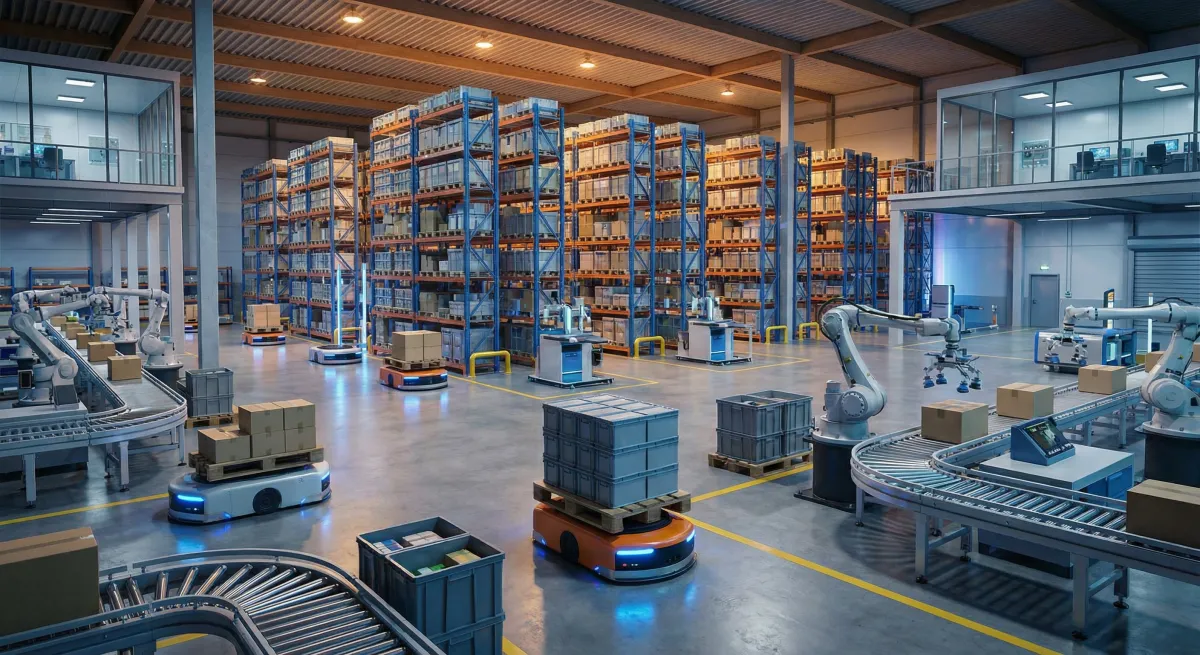
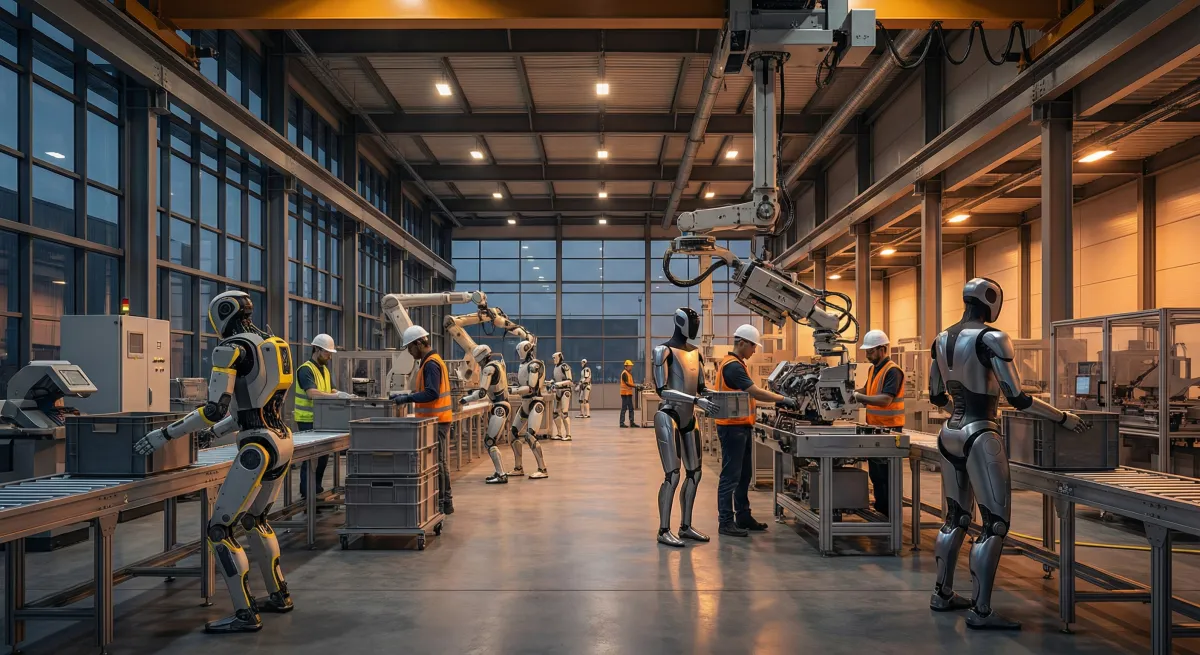
Walk into a modern warehouse in 2026, and you're likely to see more robots than humans on the floor. What was once the domain of experimental pilots and tech-forward logistics giants has become standard infrastructure. The warehouse robotics market reached $11 billion this year, growing at 15% annually, driven by e-commerce demand, labor shortages, and a new business model that's made automation accessible to companies of all sizes: Robotics-as-a-Service.
Amazon's Robot Army Hits One Million
In July 2025, Amazon announced it had deployed over one million robots across its fulfillment network—a milestone that underscores the scale and velocity of warehouse automation. The company operates eight distinct robot systems, each handling specific tasks in the order fulfillment pipeline. Sequoia, Amazon's Automated Storage and Retrieval System (ASRS), sorts inventory into high-density vertical storage. Cardinal, a robotic arm equipped with AI vision, loads packages onto carts. Sparrow picks individual items from bins using computer vision and adaptive gripping. And Proteus, Amazon's first fully autonomous mobile robot (AMR), navigates warehouse floors alongside human workers, transporting carts without requiring safety cages or restricted zones.
Amazon's Shreveport, Louisiana fulfillment center exemplifies this multi-robot approach. The facility operates ten times more robots than traditional warehouses, coordinating Sequoia, Robin, Cardinal, Sparrow, Proteus, Hercules, Titan, and automated packaging systems into an integrated workflow. The result: 25% faster order processing and reduced fulfillment time from click to ship by up to 75 minutes during peak periods. These aren't marginal gains—they represent fundamental improvements in logistics economics that competitors must match to remain viable.
The Autonomous Mobile Robot Explosion
While Amazon grabs headlines, the broader AMR market is experiencing explosive growth. Autonomous Mobile Robots—self-navigating vehicles that transport goods without fixed infrastructure like floor tracks—are projected to grow from $3.4 billion in 2026 to $17 billion by 2035, a compound annual growth rate of 19.5%. Unlike their predecessors, Automated Guided Vehicles (AGVs), which follow magnetic strips or wires, AMRs use computer vision, LIDAR, and simultaneous localization and mapping (SLAM) to navigate dynamically. This means they can adapt to changing layouts, avoid obstacles in real time, and operate in environments shared with human workers.
Companies like Locus Robotics, inVia Robotics, and Vecna Robotics have built businesses around deploying AMRs for order picking—the labor-intensive process of retrieving items from shelves and bringing them to packing stations. Rather than workers walking miles per shift pushing carts, AMRs bring products directly to stationary picking stations. The efficiency gains are dramatic: Locus reports productivity improvements of 2-3x compared to manual picking, with accuracy rates above 99.5%. For warehouses operating on razor-thin margins, these improvements translate directly to profitability.
Robotics-as-a-Service: Automation Without the Capital Expense
One of the most significant shifts in warehouse automation is the rise of Robotics-as-a-Service (RaaS). Traditionally, deploying robots required massive upfront capital expenditure—purchasing hardware, installing infrastructure, and hiring specialized staff to maintain systems. RaaS flips this model: companies subscribe to robots on a monthly basis, paying for productivity rather than equipment. The robotics provider handles deployment, maintenance, software updates, and support, while customers pay a fee tied to usage metrics like picks per hour or pallets moved.
This subscription model removes the financial barriers that kept smaller logistics operators from automating. A mid-sized e-commerce fulfillment center can now deploy a fleet of AMRs for a few thousand dollars per month, scaling up during peak seasons and down during slower periods. The flexibility is particularly valuable in an industry characterized by seasonal volatility—Black Friday demand looks nothing like mid-January—and RaaS allows companies to match robot capacity to actual workload without carrying idle assets.
RaaS also shifts robots from capital expenditure (CapEx) to operating expenditure (OpEx), a distinction with significant financial implications. CapEx requires board approval, long procurement cycles, and depreciation schedules. OpEx comes out of operating budgets, can be approved by warehouse managers, and appears as a recurring cost alongside labor and utilities. For publicly traded companies, this accounting treatment can improve balance sheet metrics. For private operators, it accelerates deployment timelines from years to weeks.
AI-Powered Fleet Orchestration
Deploying robots is one challenge; coordinating hundreds of them simultaneously is another. Early warehouse automation systems operated in silos—robotic arms worked independently, AGVs followed fixed routes, and human workers filled the gaps. Modern warehouses require centralized orchestration platforms that manage robot fleets as unified systems, dynamically assigning tasks, optimizing routes, and balancing workload across machines and people.
AI-powered fleet orchestration platforms use machine learning models trained on historical warehouse data to predict demand patterns, identify bottlenecks, and allocate resources in real time. When an e-commerce site experiences a surge in orders for a specific product, the orchestration system automatically directs more AMRs to the relevant storage zones, prioritizes picking tasks, and adjusts packing station assignments. This level of coordination is impossible with manual management and represents a key differentiator between warehouses that deploy robots and those that deploy robots effectively.
Ocado, the UK-based online grocery company, acquired 6 River Systems in 2025 specifically to integrate the company's AMR technology and fleet orchestration software into its warehouse operations. The acquisition reflects a broader industry recognition that software—not hardware—is the competitive advantage in automated logistics. Robots are becoming commoditized; the intelligence layer that coordinates them is not.
E-Commerce Demand and Labor Shortages Drive Adoption
Two macroeconomic forces are accelerating warehouse automation: relentless growth in e-commerce and persistent labor shortages. Online shopping continues to capture market share from physical retail, increasing demand for warehouse space and labor. Simultaneously, warehouse jobs—physically demanding, repetitive, and often low-paid—struggle to attract workers in tight labor markets. The combination creates a supply-demand mismatch that automation directly addresses.
During the COVID-19 pandemic, many warehouses operated at unsustainable staffing levels, relying on temporary workers and overtime to meet order volumes. As the economy normalized, retention became a critical challenge. Warehouse worker turnover rates frequently exceed 40% annually, creating constant recruiting and training costs. Robots don't quit, don't require benefits, and maintain consistent productivity regardless of shift length or seasonal stress. For warehouse operators, automation isn't just about efficiency—it's about operational stability.
Critics argue that warehouse automation displaces workers, particularly in communities where logistics jobs provide stable employment. The reality is more nuanced. While robots reduce the need for entry-level picking and packing roles, they create demand for technicians, data analysts, and systems integrators. Amazon, despite deploying a million robots, continues to hire hundreds of thousands of warehouse workers annually. The jobs are changing—less walking, more monitoring and exception-handling—but they haven't disappeared. The industry's challenge is ensuring that displaced workers have pathways to these new roles, which often require technical training that traditional warehouse jobs do not.
Regional Dynamics: Asia-Pacific Leads Growth
While North America and Europe dominate current warehouse robotics deployments, Asia-Pacific is the fastest-growing market, with adoption rates exceeding 16% annually. China, in particular, has emerged as both a major consumer and producer of warehouse automation technology. Chinese e-commerce giants like Alibaba and JD.com operate some of the world's most advanced automated fulfillment centers, deploying domestically manufactured robots at scale.
China's robotics industry benefits from vertical integration across the supply chain—electronics manufacturing, motor production, sensor fabrication, and software development all exist within the country's industrial ecosystem. This allows Chinese robotics companies to price aggressively while iterating rapidly on hardware and software. Western logistics operators increasingly source AMRs and robotic arms from Chinese manufacturers, reversing historical patterns where automation technology flowed from the U.S. and Europe to Asia.
Technical Challenges: The Last-Mile Problem for Warehouse Robotics
Despite rapid progress, warehouse robotics still faces technical limitations. Manipulation—the ability to grasp, pick, and place objects—remains challenging for robots, especially when dealing with irregular shapes, soft materials, or items in unpredictable orientations. Amazon's Sparrow robot represents state-of-the-art picking technology, but it still struggles with certain product categories that human hands handle effortlessly. Fabrics, tangled cables, and fragile items require dexterity, tactile feedback, and judgment that current robotic grippers lack.
Another challenge is adaptability. Warehouses are dynamic environments where layouts change, product mixes shift, and unexpected obstacles appear. AMRs handle navigation well in structured spaces, but edge cases—spills on the floor, equipment left in aisles, unpredictable human behavior—still require human intervention. Fleet orchestration systems must maintain "human-in-the-loop" oversight for exception handling, limiting full autonomy.
Lastly, integration remains complex. Most warehouses operate legacy Warehouse Management Systems (WMS) built decades ago, and retrofitting these systems to communicate with modern robots requires middleware, API development, and extensive testing. Companies deploying robotics often underestimate the software engineering effort required to make robots and existing systems work together seamlessly. This integration complexity is one reason RaaS providers emphasize turnkey solutions—they handle the technical headaches so customers don't have to.
What's Next: Humanoids, AI, and the Warehouse of 2030
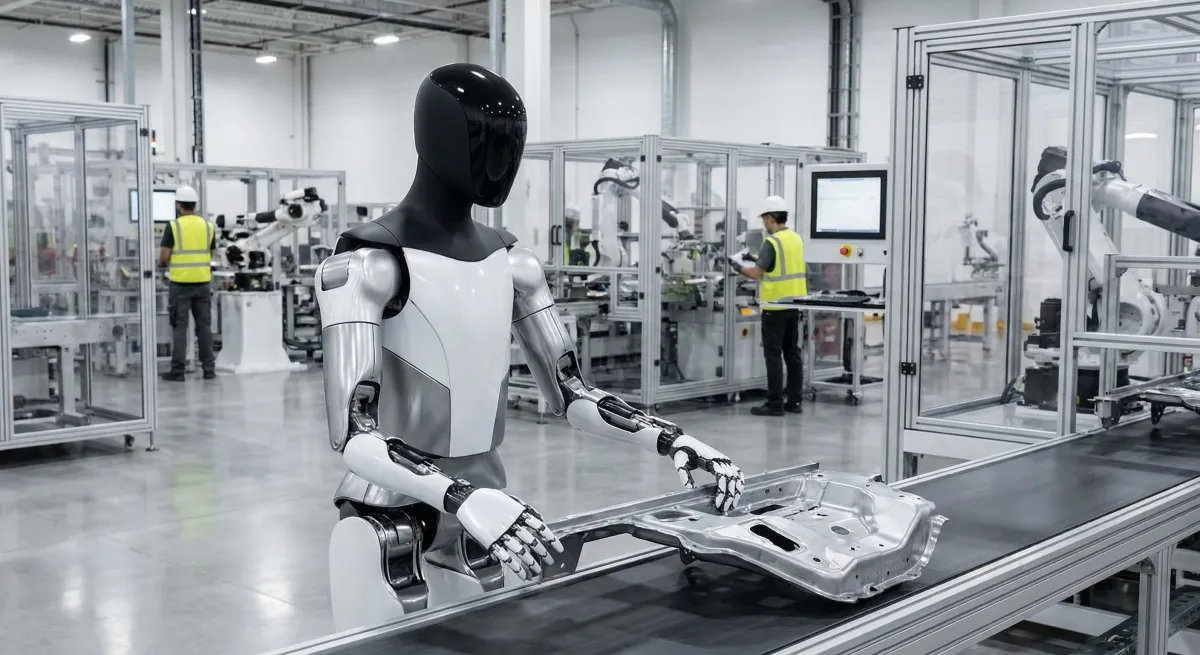
Looking ahead, warehouse robotics is poised for another wave of innovation. Humanoid robots—bipedal machines designed to operate in environments built for humans—are entering pilot deployments. Amazon is testing Agility Robotics' Digit, a humanoid robot capable of walking, climbing stairs, and manipulating objects with articulated arms. If humanoids prove viable, they could handle tasks that currently require specialized infrastructure, like retrieving items from high shelves or navigating tight spaces designed for human workers.
AI foundation models, the same technology powering large language models, are being adapted for robotics. These models enable robots to learn tasks from demonstration rather than explicit programming, accelerating deployment and reducing reliance on robotics specialists. Startups like Covariant and Vicarious (acquired by Alphabet) are building AI systems that allow robots to generalize across object types, gripping strategies, and environmental conditions.
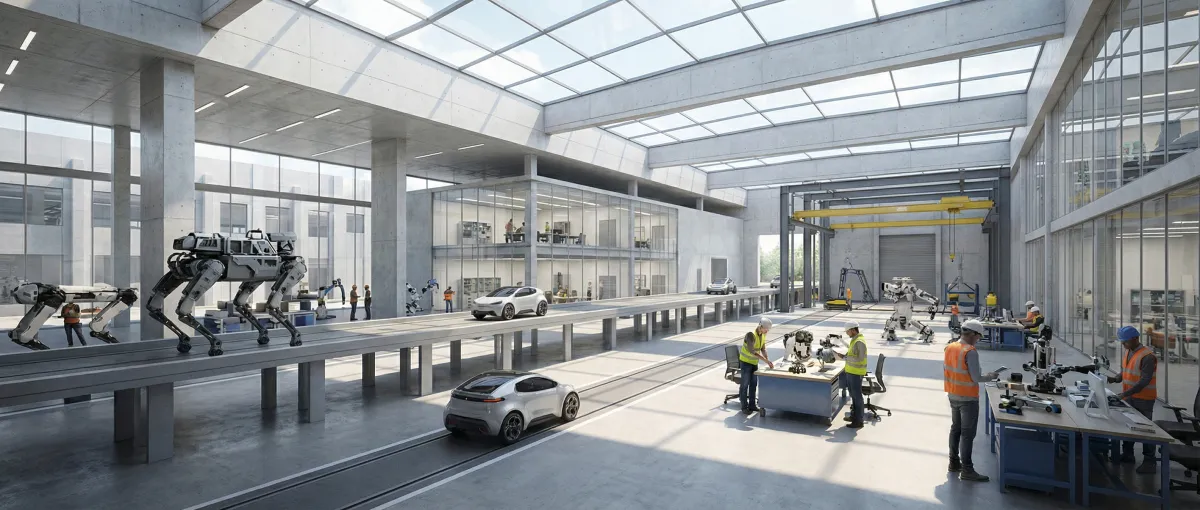
Finally, the next generation of warehouses will likely be designed with robots in mind from the ground up, rather than retrofitting automation into human-centric layouts. This means wider aisles for AMRs, standardized bin sizes for robotic picking, and dense vertical storage accessible only to machines. The warehouse of 2030 may look more like a data center—rows of automated systems with minimal human presence—than the bustling fulfillment centers of today.
Conclusion: Automation Is No Longer Optional
Warehouse robotics has crossed the chasm from early adoption to mainstream deployment. With an $11 billion market growing double digits annually, subscription-based business models lowering barriers to entry, and proven ROI from industry leaders like Amazon, automation is no longer a competitive advantage—it's table stakes. Companies that delay risk falling behind competitors who can fulfill orders faster, cheaper, and more reliably. The robots aren't coming; they're already here, and the logistics industry is being rebuilt around them.