The US Commerce Department has drafted sweeping rules that would require Washington's explicit approval before a single advanced AI chip — whether from Nvidia, AMD, or any other American manufacturer — could ship to any country on earth. Not just China. Not just adversaries. Every country. Even small orders of fewer than 1,000 chips would need a federal license under the proposal, according to documents reviewed by Reuters and reported by Bloomberg. The rules have not been finalized and could change significantly before publication, but their existence signals a fundamental shift in how the United States intends to manage the global AI hardware supply chain for the rest of this decade.
The Draft Rules: What They Actually Say
The proposed framework, described in detail by Reuters based on a document it reviewed, establishes a tiered licensing system calibrated to the scale of each chip purchase. The tiers aren't arbitrary — they reflect Washington's concern that small shipments can be aggregated into large AI supercomputing clusters, and that the line between a legitimate commercial installation and a strategic military asset is increasingly blurry.
Under the draft framework, even small chip installations of fewer than 1,000 chips would require a license, though the review process at that scale would be relatively basic. For orders reaching 100,000 chips, buyers would need to provide government-to-government security assurances — meaning the purchasing company's home government would need to formally guarantee the chips' end use to the US government. Orders approaching 200,000 chips — the scale at which meaningful AI training clusters can be built — would potentially require on-site visits from US export control officials, plus a commitment from the purchasing country to invest in US-based AI data center infrastructure.
There is also a technical constraint embedded in the draft: to qualify for a licensing exemption, recipients would need to run software that prevents the chips from being linked to other chips to form a "cluster" — the industry term for large-scale GPU interconnects that power serious AI training. In other words, the US would not just control how many chips go where, but attempt to technically prevent those chips from being networked into the supercomputing architectures that matter most for frontier AI.
This Is Not Biden's AI Diffusion Rule — And That Matters
To understand why these draft rules are significant, it helps to understand what came before them. The Biden administration's AI Diffusion Rule, unveiled in January 2025, sorted the world into three tiers: close allies with near-unrestricted access, a middle tier of countries with caps and conditions, and a restricted tier including China and Russia. The intent was to keep the most powerful AI infrastructure concentrated in the US and routed through a small number of American cloud computing companies. The Trump administration formally rescinded that rule in May 2025, less than a week before it was set to go into effect, calling it "burdensome, overreaching, and disastrous."
The new draft does not revive the AI Diffusion framework. A Commerce Department spokesperson was emphatic about that distinction, posting on X that the department would not be "returning to the AI diffusion rule" and framing the new approach as an extension of the deal-making model it pioneered with Saudi Arabia and the United Arab Emirates. According to TechCrunch, those bilateral agreements — where countries received chip access in exchange for commitments to invest in American AI infrastructure — are now being formalized into a regulatory structure.
The philosophical difference matters enormously. Biden's diffusion rule tried to preserve American AI dominance by keeping chips at home. Trump's draft approach tries to preserve it by making American chips available everywhere — but only on Washington's terms, with investment strings attached. The US doesn't want to be the country that can't sell AI chips. It wants to be the country whose chips are essential everywhere, and which can use that essentiality as leverage.
The China Complication
The draft rules arrive at a peculiar moment in the US-China chip saga. In December 2025, the Trump administration gave Nvidia a provisional greenlight to ship H200 chips to Chinese buyers — subject to Commerce Department approval of individual customers. That decision was widely interpreted as a commercial concession dressed up as national security oversight. But those shipments have remained largely stalled, as the national security requirements attached to individual customer approvals have proven difficult for Chinese buyers to satisfy. After nearly a year of uncertainty about market access, Nvidia has effectively redirected its TSMC manufacturing capacity away from China-bound H200 production and toward its next-generation Vera Rubin platform, according to reporting by the Financial Times.
The proposed new rules would bring China formally under the same permitting umbrella as everyone else, while preserving the existing hard restrictions on blacklisted countries — Russia, and the adversarial end of the China tech ecosystem. For Chinese firms that don't make the individual-customer approval list, there is a readily available alternative: Huawei's Ascend chips, which are already powering Chinese AI development at scale. The draft rules can gate US silicon globally, but they cannot gate ingenuity — and the longer US chips remain inaccessible to Chinese labs, the more competitive Huawei's domestic alternatives become.
The Strategic Logic — And Its Risks
"The rule could help the US government address chip diversion to China and ensure a more secure buildout of the most powerful AI supercomputers," said Saif Khan, a former national security official in the Biden administration who is now at the Institute for Progress. But Khan flagged a critical concern: "The license requirements are overly broad, applying globally, raising concerns that the administration intends to use the controls as negotiation leverage with allies rather than for security."
Khan's concern cuts to the heart of the strategic tension. The draft rules give Washington extraordinary power to extract investment commitments from allies as the price of chip access. The Saudi Arabia deal — where the kingdom secured access to advanced AI chips in exchange for major investment pledges in US data center infrastructure — is explicitly cited as the model. If Germany, Japan, South Korea, or the UK want to build out sovereign AI data centers with American chips, they may now need to negotiate bilateral deals that bring investment dollars back to American shores.
That leverage is real, but it cuts both ways. TechCrunch noted that making it harder to source chips from the US could push companies to seek alternatives — a risk that is especially acute as global chip companies outside the US continue developing more capable hardware. The chip market is not perfectly inelastic. If the permitting process for US chips becomes slow, uncertain, or politically fraught, some buyers will route around it. Huawei's Ascend 910B and 910C are already capable enough for many inference workloads. Europe has its own chip ambitions. Alibaba, Baidu, and ByteDance have internal silicon programs that would accelerate if US supply became less reliable.
The irony is sharp: the very controls designed to preserve American semiconductor dominance could, if poorly calibrated, accelerate the diversification away from American silicon that US policymakers most fear.
What This Means for Nvidia and AMD
For Nvidia, the draft rules are both threat and opportunity. The threat is obvious: any friction in the global sales process is friction on Nvidia's revenue. The company's dominance in the AI chip market — still north of 80% share for GPU-based AI training — is built on the ability to sell globally and at scale. A federal licensing regime for every transaction adds administrative burden, deal uncertainty, and potential delays to what is currently a high-velocity procurement market.
The opportunity is subtler. If the US government makes itself the official approval body for AI chip sales worldwide, it implicitly enshrines US chips as the standard for global AI infrastructure. Every country that goes through the approval process is, in effect, opting into the US-led AI stack. That's a form of lock-in that Beijing would very much like to avoid — and that Washington is betting it can achieve.
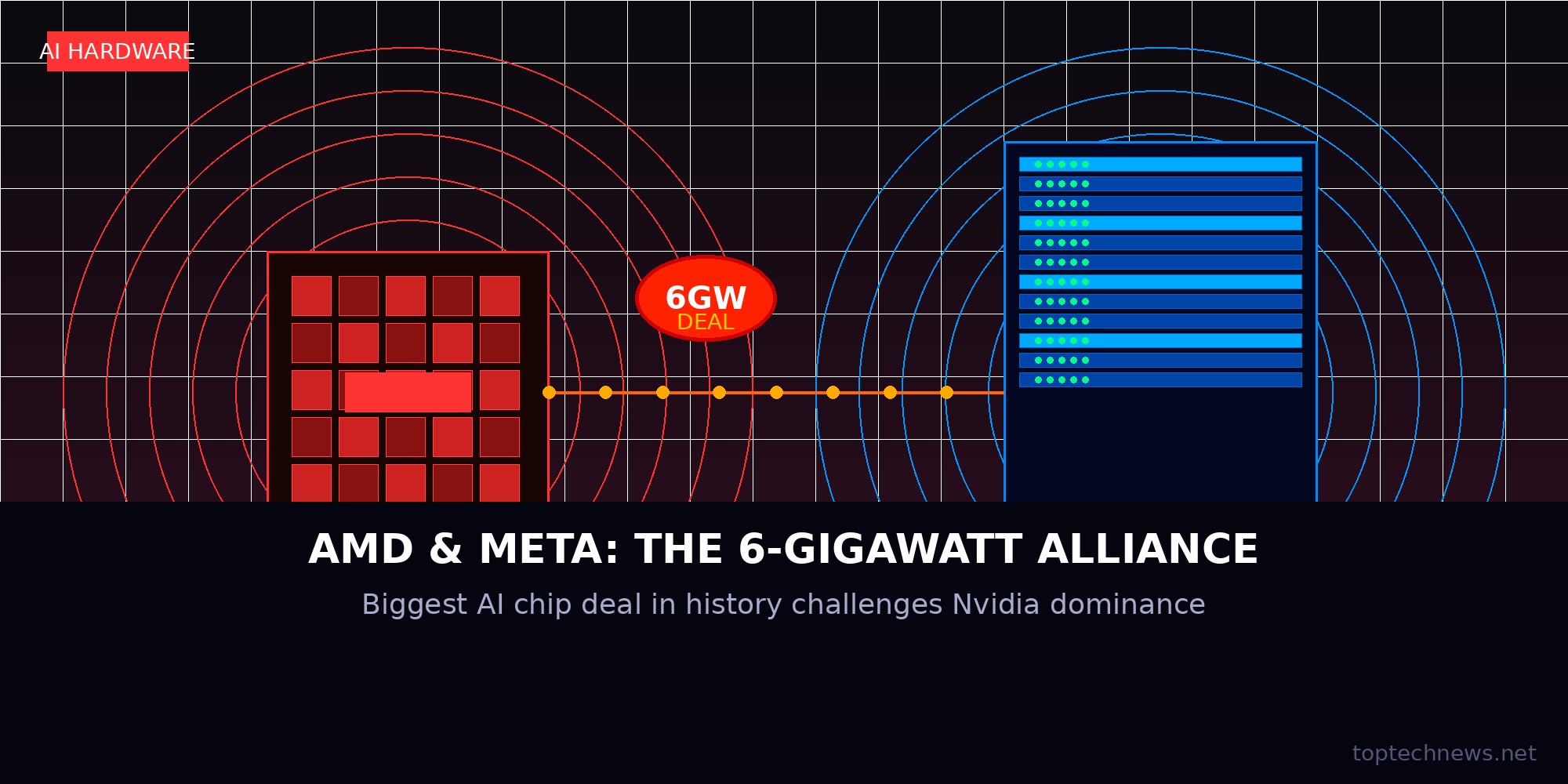
For AMD, the calculus is similar, but the stakes are somewhat lower given its smaller market share in AI accelerators. AMD's 6GW deal with Meta — the largest AI hardware procurement in history — is a US-to-US transaction unaffected by export rules. But AMD's international growth ambitions, particularly in Asian hyperscaler markets, would be directly subject to the new licensing regime.
Timeline: What Comes Next
The draft rules are not final. Commerce Department officials were explicit that internal discussions are ongoing and that the final framework could look meaningfully different from what Reuters described. The department's statement on X specifically committed to not returning to Biden's AI Diffusion rule structure, suggesting some flexibility in the final design.
What's clear is that some form of formalized global chip oversight is coming. The Trump administration has already used ad hoc deal-making to manage chip flows to Saudi Arabia and the UAE. Scaling that approach to the entire world requires a regulatory framework. The question isn't whether Washington will try to become the global gatekeeper for AI silicon — it's how tightly it will hold that gate, and whether the rest of the world accepts the toll or finds another road.
For the chip industry, the implications are profound. ASML's High-NA EUV tools can manufacture chips of unprecedented capability — but if those chips can't flow freely to buyers worldwide, the commercial model underpinning the entire advanced semiconductor ecosystem comes under stress. Fabs build capacity based on demand projections. Demand projections assume market access. A world where every chip sale requires a federal license is a world where those projections become significantly harder to make — and where the geopolitical risk premium on AI hardware infrastructure gets baked into every enterprise capital allocation decision.
Washington is betting it can hold the reins. The question the chip industry is quietly asking is whether the horse will cooperate.