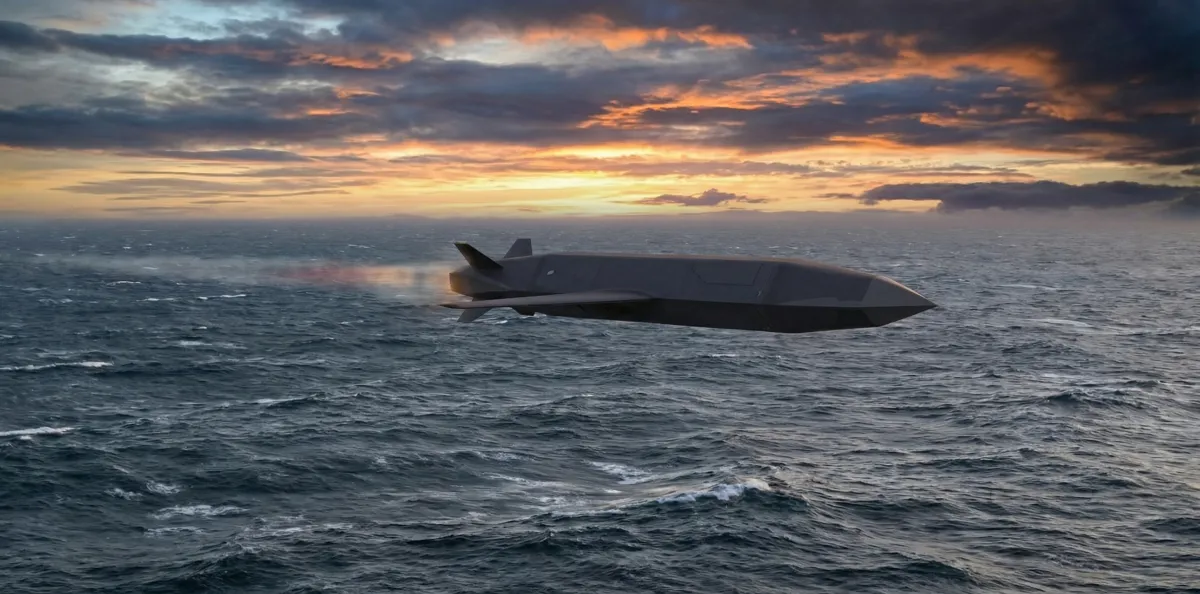
In September 2024, defense tech startup Anduril Industries unveiled a weapon system that challenges decades of assumptions about how missiles should be designed, manufactured, and deployed: the Barracuda-M family of autonomous cruise missiles. Unlike traditional military procurement programs that take years and billions to field new weapons, Anduril designed Barracuda from the ground up for hyper-scale production, rapid upgrades, and software-defined reconfigurability.
The result: a cruise missile that requires 50% less time to produce, uses 95% fewer tools, and contains 50% fewer parts than legacy systems—while matching or exceeding their performance. And it's modular, meaning capabilities can be swapped in and out as threats evolve, without redesigning the entire weapon.
If Anduril's manufacturing claims hold, Barracuda could solve one of the Pentagon's most pressing problems: the U.S. military doesn't have enough missiles. And the ones it has are too expensive to mass-produce.
The Three Barracuda Variants
Anduril's Barracuda family consists of three configurations, each optimized for different mission profiles:
Barracuda-100
The smallest variant, designed for short-range strike missions and drone suppression. Compact enough to be deployed from smaller aircraft or ground launchers.
Barracuda-250
Mid-range platform balancing payload, range, and cost. Intended for tactical strike and anti-ship missions.
Barracuda-500
The flagship variant, with a range exceeding 500 nautical miles and designed for cargo launch from C-17 and C-130 transport aircraft using the Air Force's "Rapid Dragon" palletized munition deployment system. This allows strategic bombers and transports to launch dozens of cruise missiles without entering enemy air defense range.
All three variants share common subsystems—propulsion, guidance, communication, and control—making them interchangeable on production lines and simplifying logistics, training, and upgrades.
Software-Defined Hardware
Traditional cruise missiles are hardware-defined: once built, their capabilities are fixed. Upgrading sensors or adding new guidance modes requires physical modification or complete replacement.
Barracuda flips this model. It's software-defined, meaning mission profiles, targeting algorithms, and even flight behavior can be updated via software patches—just like updating a smartphone. New threats emerge? Push an over-the-air update to the missile inventory. Need a different warhead configuration? Swap the modular payload section in minutes.
Anduril VP for Air Dominance and Strike Diem Salmon described Barracuda as "air-breathing, software-defined expendable Autonomous Air Vehicles (AAVs)"—a deliberate framing that positions them not as traditional munitions, but as programmable platforms.
Autonomous and Collaborative
Barracuda missiles are designed to operate autonomously and collaboratively. They can coordinate with other Barracudas in flight, acting as decoys, sensor nodes, or strike packages. A single operator could launch a swarm of Barracudas, each assigned different roles:
- Lead missile — Navigates and identifies targets
- Decoy missiles — Confuse air defenses with false signatures
- Strike missiles — Execute final attack on confirmed targets
- Sensor relays — Provide real-time battlefield intelligence to command
This is the future of air combat: not individual weapons, but coordinated swarms that adapt in real-time to enemy countermeasures.
Performance Specifications
Despite the modularity and cost focus, Barracuda doesn't compromise on performance:
- Speed: Up to 500 knots (~575 mph), depending on launch mode
- Maneuverability: 5g turns, enabling evasive maneuvers and terminal strike patterns
- Payload: Over 100 pounds per missile
- Range: Barracuda-500 exceeds 500 nautical miles; smaller variants proportionally less
- Propulsion: Small turbojet engines (subsonic, air-breathing)
For comparison, the Tomahawk cruise missile—the U.S. Navy's workhorse—travels at subsonic speeds (550 mph), has a 1,000+ mile range, and costs $2 million per unit. Anduril hasn't disclosed Barracuda pricing, but industry analysts estimate it could be produced for a fraction of Tomahawk's cost due to simplified manufacturing.
Hyper-Scale Production: Arsenal-1
Anduril's production strategy is inseparable from its missile design. The company is building Arsenal-1, a 5-million-square-foot factory in Ohio designed for software-defined, high-volume weapons manufacturing. Barracuda is the flagship product.
Traditional defense contractors like Raytheon and Lockheed Martin produce missiles in low volumes—dozens or hundreds per year—using labor-intensive assembly processes. Anduril is targeting thousands of missiles per year using automation, modular design, and rapid iteration.
The 50% reduction in production time and 95% reduction in tooling comes from:
- Common subsystems — Shared components across all variants reduce supply chain complexity
- Additive manufacturing — 3D-printed parts replace machined components, cutting lead times
- Automated assembly — Robotic production lines operate 24/7 with minimal human oversight
- Modular architecture — Plug-and-play sections eliminate custom fitting and integration
The U.S. Missile Shortage
Why does any of this matter? Because the Pentagon has a missile problem.
In a high-intensity conflict—say, a Taiwan Strait scenario—the U.S. military would burn through its cruise missile inventory in days to weeks. Tomahawks, JASSMs, and Long-Range Anti-Ship Missiles (LRASMs) are expensive, slow to produce, and stockpiled in quantities insufficient for sustained operations.
China, by contrast, has invested heavily in mass-producible munitions. In a missile exchange, the side with deeper magazines wins. The U.S. has better individual weapons; China has more of them.
Barracuda is Anduril's answer: a weapon designed not for exquisite precision in limited quantities, but for overwhelming volume at acceptable performance. It's the "good enough, fast enough, cheap enough" philosophy applied to weapons systems.
Rapid Dragon and Cargo Launch
The Barracuda-500's cargo-launch capability is a game-changer for U.S. air strategy. The Rapid Dragon system allows C-130 and C-17 cargo planes—aircraft that usually haul supplies, not weapons—to deploy cruise missiles from disposable pallets dropped out the back ramp.
This turns every transport aircraft into a long-range strike platform. A single C-17 could carry dozens of Barracuda-500s, fly within 500 miles of a target area, and unleash a coordinated missile swarm—all without specialized bombers or fighter escorts.
It's asymmetric warfare: use cheap, ubiquitous cargo planes to overwhelm expensive air defenses with expendable, autonomous missiles.
International Interest: Poland's Barracuda-500M
In November 2025, Poland's state-owned defense conglomerate PGZ announced plans to license-produce the Barracuda-500M domestically. The move signals international confidence in Anduril's design and manufacturing philosophy.
Poland's interest is strategic: as a NATO frontline state bordering Russia and Belarus, it needs affordable, mass-producible standoff weapons to deter aggression. Barracuda fits that requirement better than expensive Western alternatives or risky Russian imports.
The deal requires U.S. government approval (foreign military sales restrictions), but if approved, it would mark Anduril's first international production partnership—and validate the hyper-scale manufacturing model beyond U.S. borders.
Challenges and Skepticism
Not everyone is convinced Anduril can deliver on its promises:
1. Unproven at Scale
Anduril has conducted prototype tests, including a successful surface-launch of a Barracuda-500 in October 2025. But prototype performance doesn't guarantee production reliability. Can they actually build thousands per year? Can they maintain quality control at that volume?
2. Software Vulnerabilities
Software-defined weapons are updateable—but also hackable. If an adversary compromises Barracuda's firmware or command-and-control systems, they could neutralize entire missile inventories. Traditional hardware-defined weapons don't have this attack surface.
3. Cost Transparency
Anduril hasn't publicly disclosed unit costs. "Cheaper than Tomahawk" is a low bar ($2 million per missile). If Barracuda costs $1 million, it's still expensive for mass production. If it costs $200,000, it's transformative.
4. Pentagon Bureaucracy
Even if Barracuda works as advertised, defense procurement is slow. Raytheon and Lockheed have decades of institutional relationships, congressional lobbying, and supply chain integration. Anduril is the new kid. Getting from "cool tech demo" to "multi-billion-dollar DoD contract" is a political and bureaucratic gauntlet.
The Broader Trend: Defense Innovation
Barracuda is part of a larger shift in defense technology. Startups like Anduril, Shield AI, and Kratos are challenging incumbents with software-first, rapid-iteration approaches borrowed from Silicon Valley.
Traditional defense contractors optimize for program longevity (decades-long development cycles justify stable revenue). Startups optimize for speed and cost (get something working fast, iterate based on real-world feedback).
Barracuda exemplifies this philosophy: modular, updateable, mass-producible, and designed for a future where quantity has a quality all its own.
If Anduril succeeds, the defense industry will never be the same. If it fails, it'll be a cautionary tale about overpromising and underdelivering in a sector where "good enough" can mean the difference between victory and defeat.
Either way, Barracuda is the most interesting missile program in a generation.
Related Articles
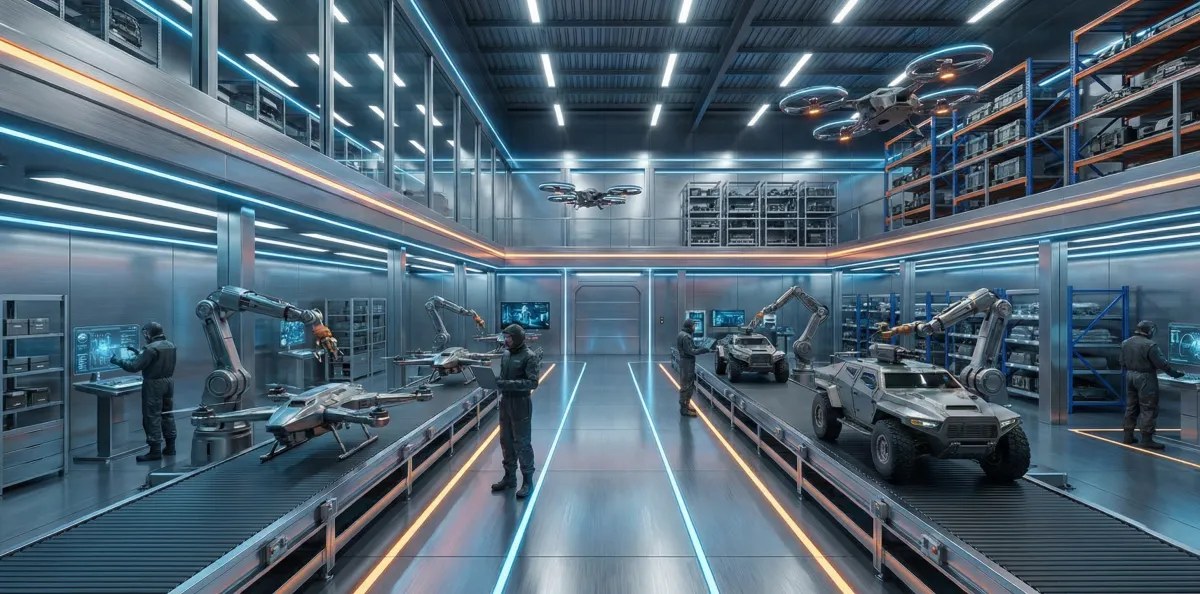
Anduril's Arsenal-1: Inside the $30B Startup Building a Factory to Mass-Produce Autonomous Weapons
Anduril is building a 5-million-sq-ft factory in Ohio designed for hyperscale weapons production. Barracuda is the flagship product.
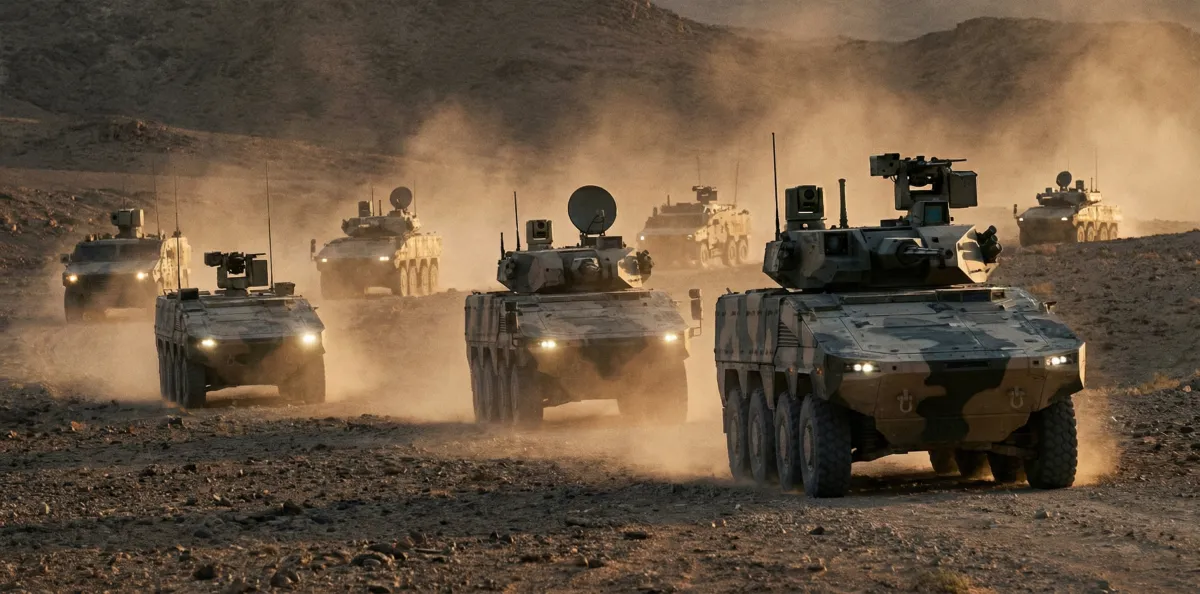
US Army Commits $9.8B to Autonomous-First Combat Strategy
The Pentagon is betting on drones, unmanned vehicles, and AI-powered systems. Barracuda fits this autonomous future.
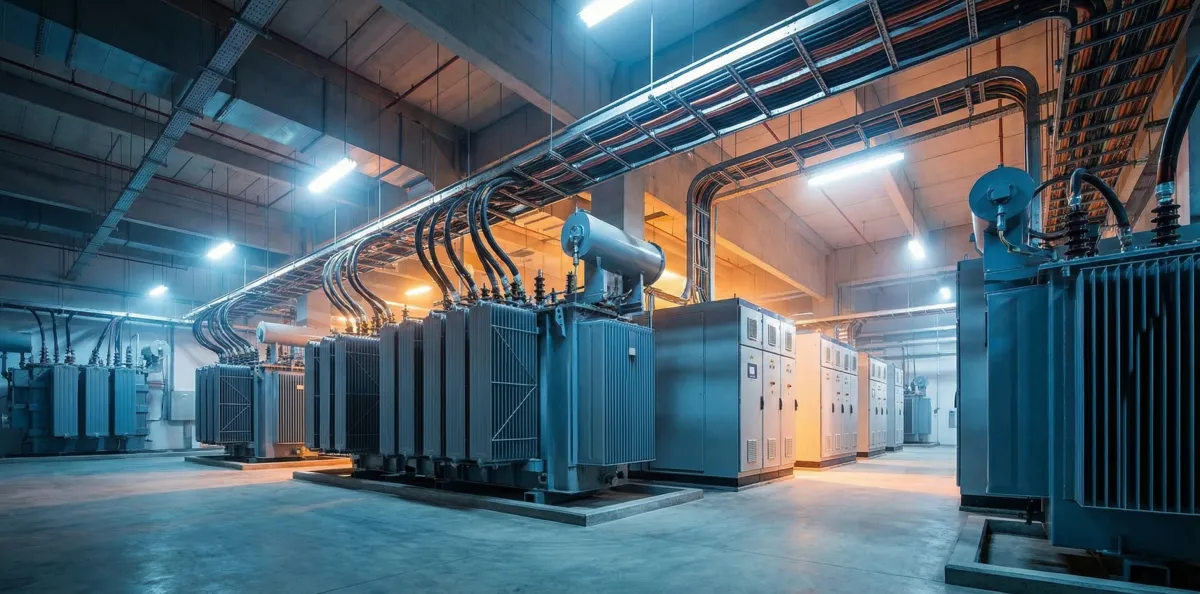
The AI Power Crisis: Why Data Centers Can't Find Enough Electricity
Autonomous weapons like Barracuda require massive AI training infrastructure. Power is the constraint.