Anduril's Barracuda: The Modular Cruise Missile Built Like Software
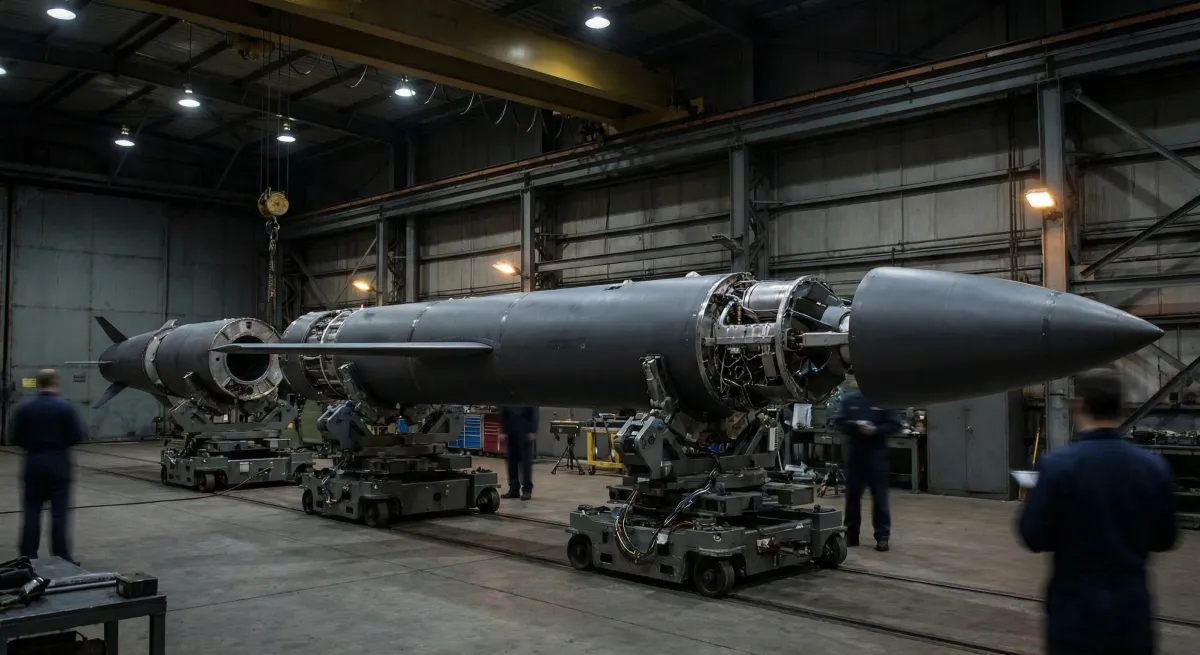
When Anduril Industries unveiled its Barracuda family of cruise missiles in September 2024, the defense contractor wasn't just announcing a new weapon system—it was demonstrating a fundamentally different approach to military manufacturing. Built with 50% fewer parts and 95% fewer tools than traditional cruise missiles, the Barracuda represents what happens when Silicon Valley engineering principles meet weapons production.
Three Variants, One Modular Platform
The Barracuda family consists of three variants—the Barracuda-100, -250, and -500—each designed for different mission profiles but sharing a common modular architecture. The flagship Barracuda-500 delivers impressive specifications: speeds exceeding 500 knots (approximately 575 mph), 5g maneuverability, a payload capacity of over 100 pounds, and a range surpassing 500 nautical miles.
Unlike traditional defense programs that take years to modify or upgrade, Barracuda's software-defined architecture allows for rapid capability updates. The system's autonomous operation enables missiles to collaborate in swarms, sharing targeting data and coordinating strike patterns without continuous human input. This represents a significant departure from conventional munitions that rely on pre-programmed flight paths or constant external guidance.
Manufacturing Revolution: From Aerospace to Artillery
Anduril's production approach borrows heavily from consumer electronics rather than traditional aerospace manufacturing. By reducing part count by 50% and slashing required tooling by 95%, the company has cut production time in half compared to legacy cruise missile programs. This isn't just about cost savings—it fundamentally changes how quickly the United States can scale weapons production in response to threats.
The modular design means components can be manufactured in parallel rather than sequentially, dramatically reducing bottlenecks. When a new sensor package or propulsion upgrade becomes available, it can be integrated across the entire Barracuda family without redesigning the entire missile. This "plug-and-play" philosophy stands in stark contrast to programs like the Tomahawk cruise missile, which requires extensive modification cycles for capability upgrades.
Flexible Deployment: Air, Land, and Sea
Barracuda's versatility extends beyond its modular components to its launch platforms. The system supports air-launched operations from fighter aircraft, cargo-launched deployment using the Rapid Dragon palletized munition system (allowing transport planes like the C-130 to function as missile carriers), and surface-launched operations from ground vehicles or naval vessels.
This multi-domain capability addresses a critical Pentagon priority: distributing strike assets across more platforms rather than concentrating them in expensive, vulnerable systems. A C-130 transport plane equipped with Rapid Dragon and loaded with Barracuda missiles suddenly becomes a long-range strike platform at a fraction of the cost of a bomber aircraft.
International Interest and Production Scaling
Poland has emerged as an early international partner, exploring domestic production of Barracuda systems. This represents a significant shift from traditional Foreign Military Sales, where U.S. allies purchase American-made weapons. By enabling allied production, Anduril is building a distributed manufacturing base that could prove crucial during extended conflicts when domestic production might be overwhelmed.
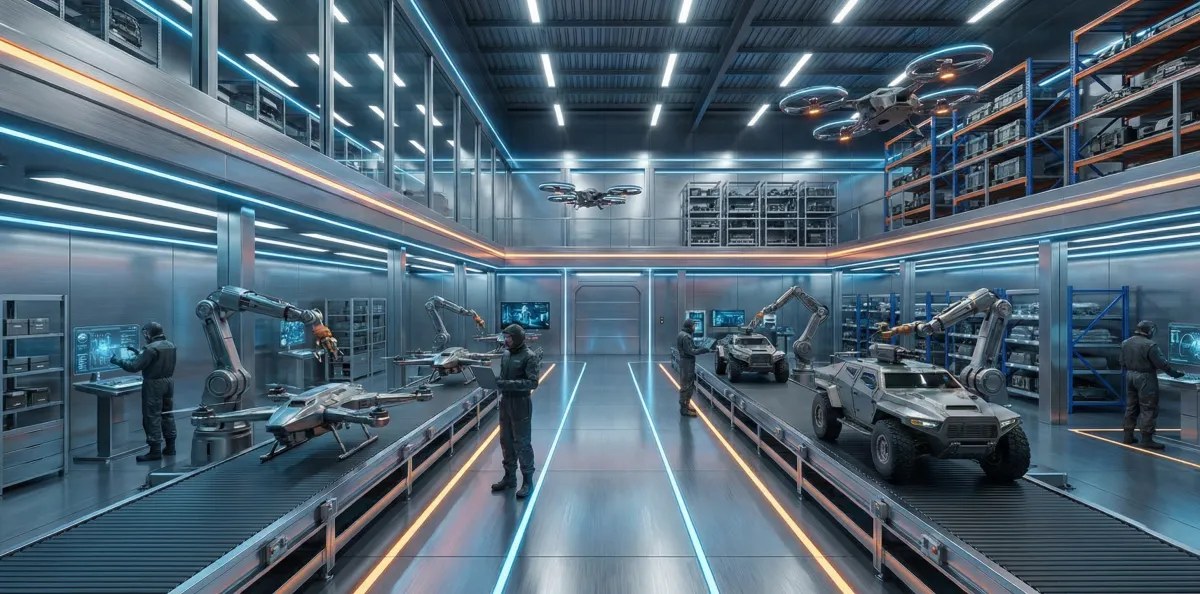
The company's Arsenal-1 manufacturing facility, capable of producing tens of thousands of autonomous systems annually, provides the infrastructure to scale Barracuda production rapidly. Anduril claims the facility can surge production in response to demand without requiring years of retooling—a claim that will be tested as orders materialize.
The Software-Defined Weapons Debate
Barracuda's autonomous capabilities have reignited debates about the role of artificial intelligence in weapons systems. While Anduril emphasizes that human operators retain ultimate authority over targeting decisions, the missile's ability to adapt flight paths, select secondary targets, and coordinate with other systems raises questions about the level of autonomy appropriate in lethal systems.
Proponents argue that autonomous systems reduce civilian casualties by improving target discrimination and allowing last-second abort decisions. Critics counter that software-defined weapons lower the threshold for military action by making strikes cheaper and easier to execute, potentially leading to more frequent use of force.
Competing in a Crowded Market
Barracuda enters a competitive landscape that includes Lockheed Martin's JASSM family, Raytheon's Tomahawk, and emerging systems from Northrop Grumman and Boeing. What distinguishes Anduril's approach is the company's willingness to challenge traditional acquisition models, offering rapid prototyping, commercial pricing structures, and aggressive timelines that legacy contractors struggle to match.
The real test will come as Barracuda transitions from prototype to production. Defense programs regularly promise revolutionary capabilities and affordable pricing during development, only to encounter delays and cost overruns during manufacturing. Anduril's track record with earlier systems like the Lattice command-and-control software and Ghost autonomous drones suggests the company can execute, but cruise missiles represent a significant scale increase in complexity and production volume.
The Future of Expendable Weapons
Barracuda reflects a broader Pentagon strategy of fielding larger quantities of lower-cost, "attritable" munitions rather than relying solely on exquisite, expensive weapons. If Anduril delivers on its production cost and timeline promises, Barracuda could reshape how the U.S. military approaches strike warfare—emphasizing mass, flexibility, and rapid adaptation over individual platform sophistication.
The Ukraine conflict has demonstrated the importance of munitions stockpiles and production capacity, with both sides exhausting precision-guided weapons faster than anticipated. Barracuda's simplified production and modular design directly address lessons from that war, prioritizing manufacturability alongside performance. Whether this approach proves effective in practice will depend on testing, operational deployment, and—ultimately—performance in combat conditions that no simulation can fully replicate.