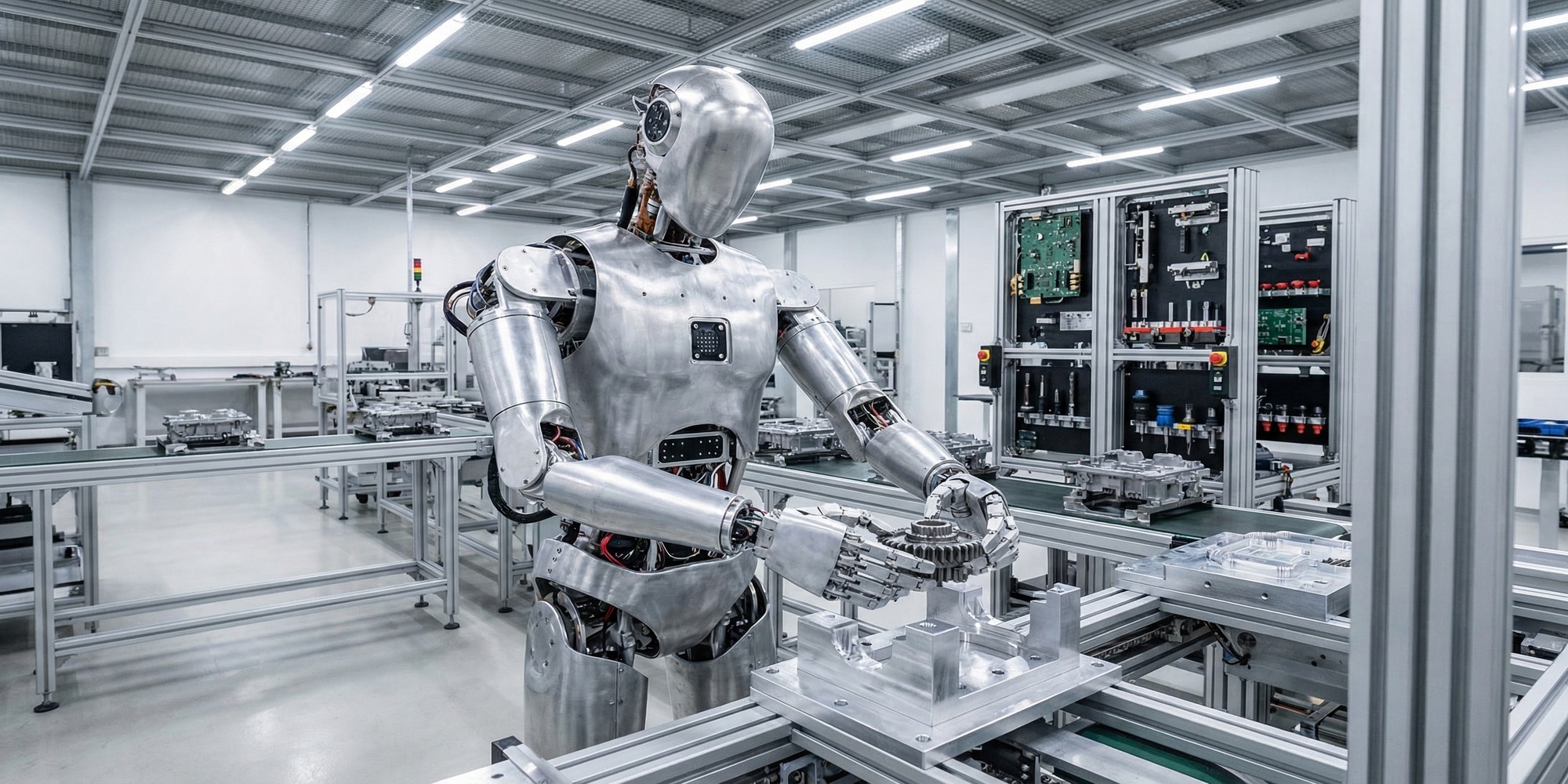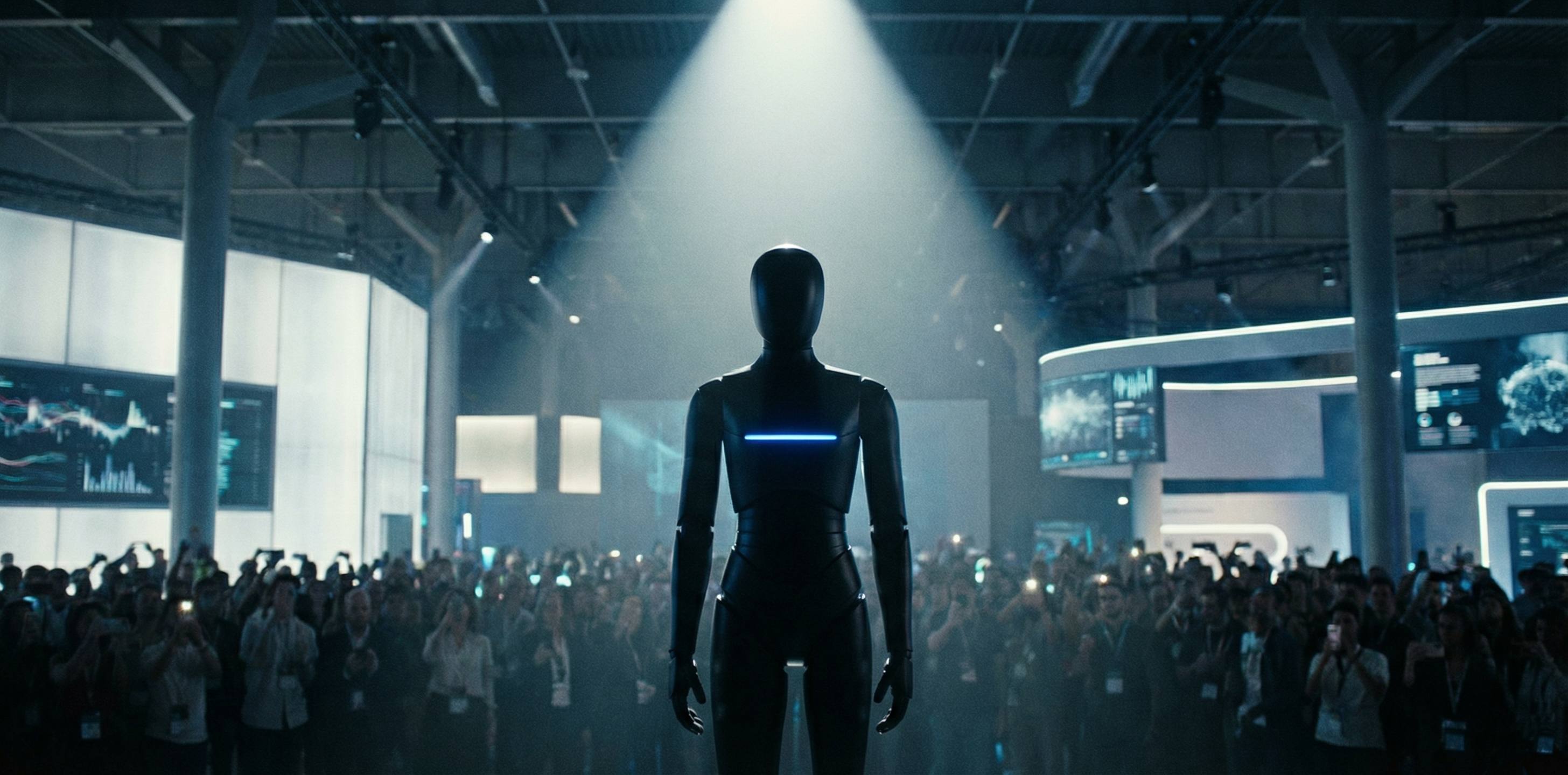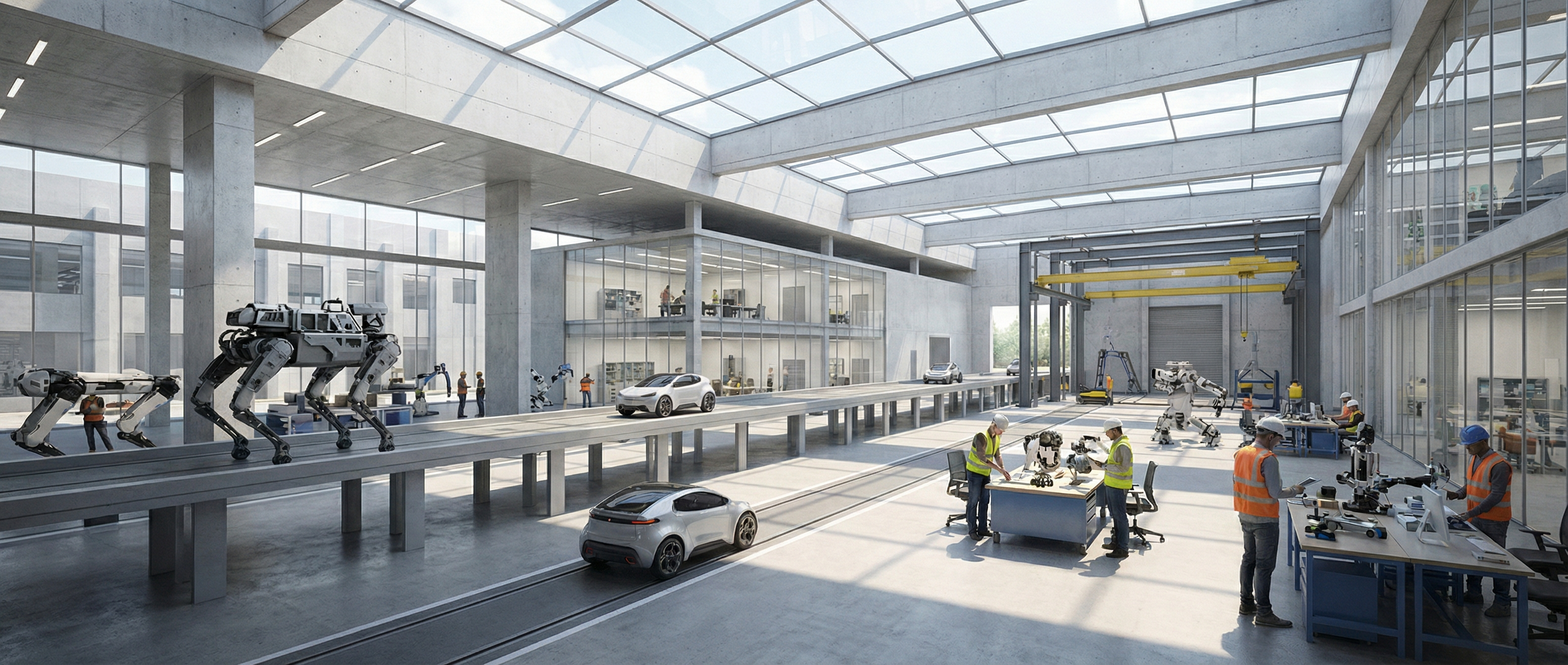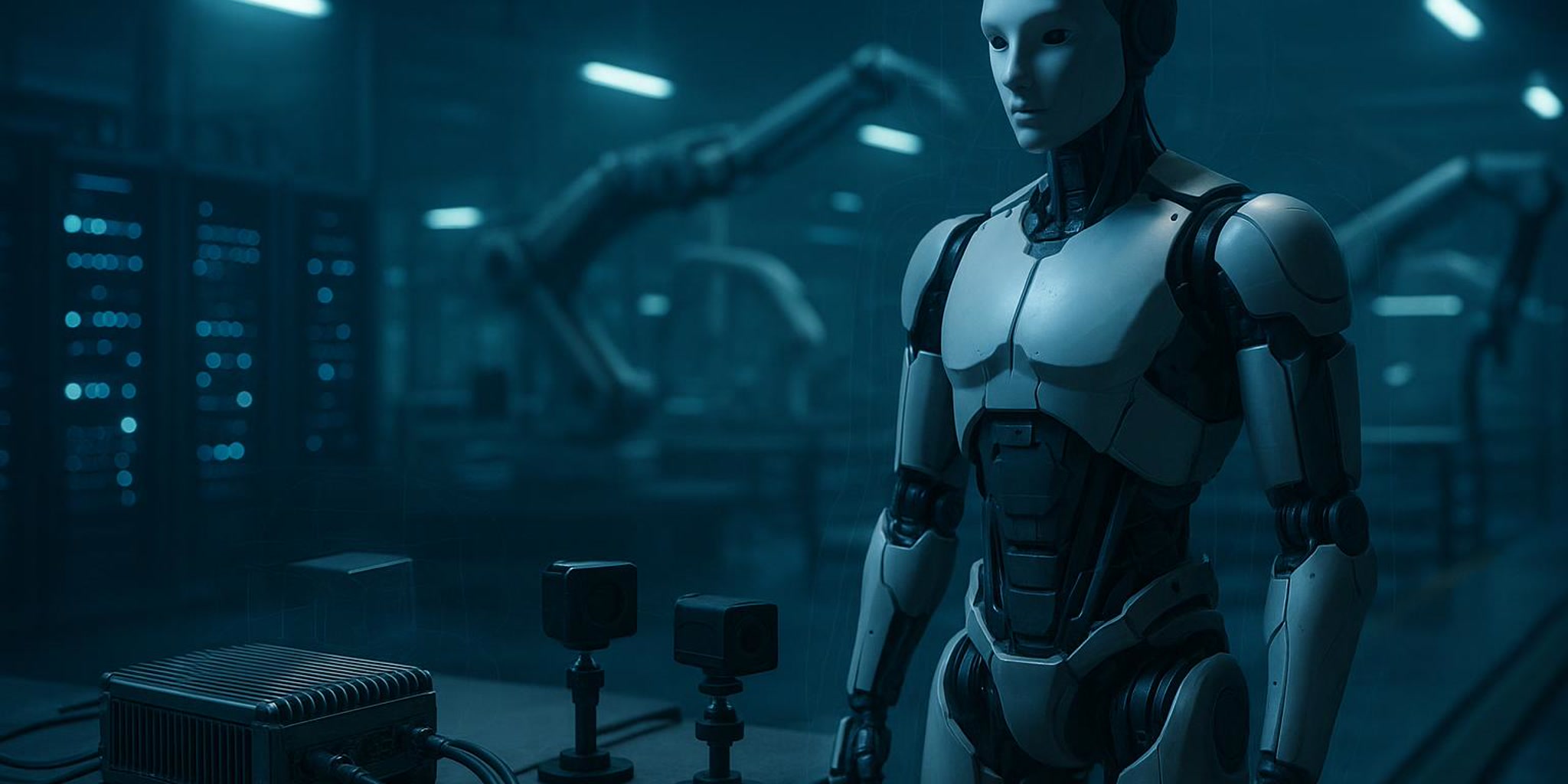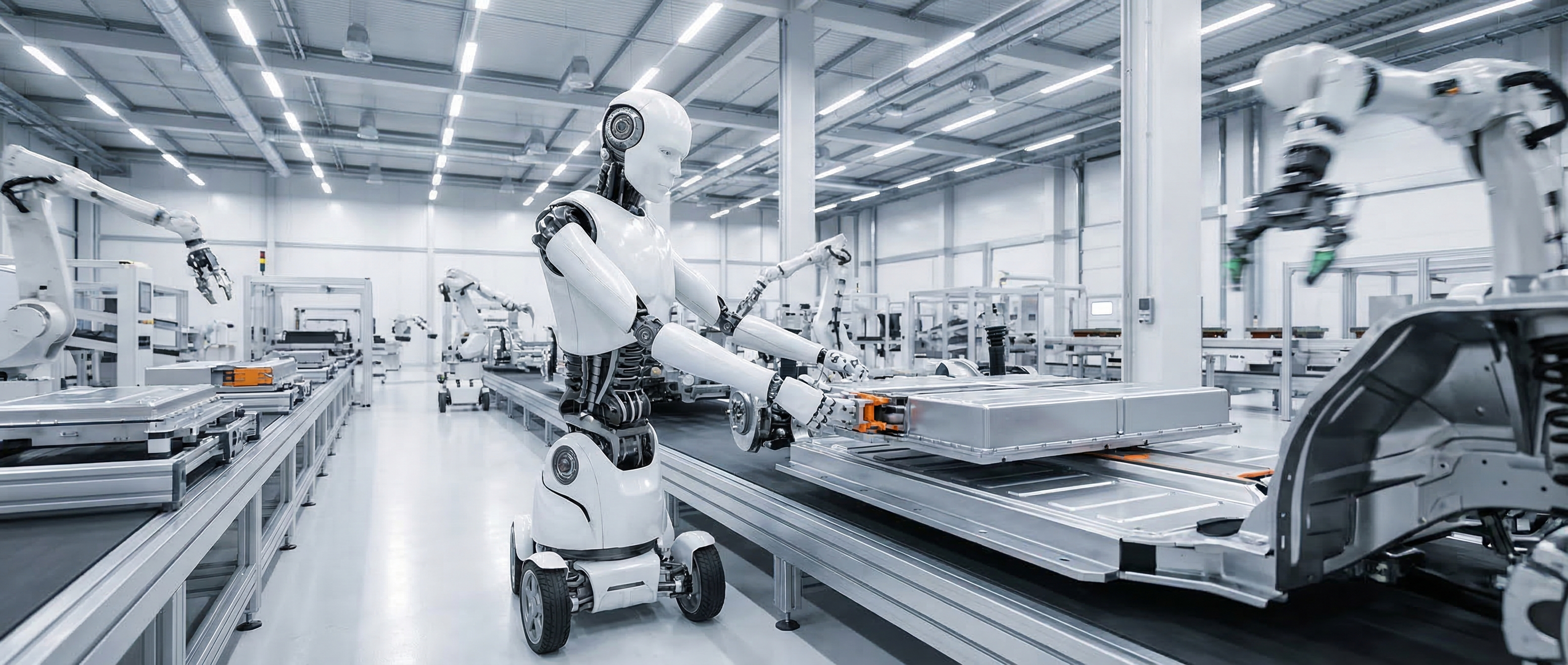
On March 9, 2026, BMW announced that a humanoid robot had taken its place on the production line at its Leipzig, Germany plant — the first of its kind in active manufacturing in the country. The machine in question is AEON, built by Hexagon Robotics, and its debut in Saxony is not just a milestone for BMW. It is the clearest signal yet that the physical AI wave that began on American factory floors has crossed the Atlantic — and that European manufacturers are no longer watching from the sidelines.
The Leipzig Moment
The announcement was deliberate in its timing. BMW published the deployment on March 9, framing it as the latest phase in what the company calls its "physical AI" strategy — the convergence of advanced robotics and AI at the production layer. AEON began theoretical assessments and laboratory testing at Leipzig in December 2025. By the time BMW made the announcement, the robot had already been operational on the high-voltage battery assembly line for three months.
AEON, built by Hexagon Robotics, the physical AI division of Swedish measurement technology group Hexagon, is not a conventional legged humanoid. Where its legs would end in feet, they end in wheels — a deliberate design choice that allows it to move across flat factory surfaces at up to 2.5 meters per second while retaining the ability to step over obstacles. Its torso accepts interchangeable gripping tools, hands, and scanning devices without structural modification. That modularity is central to its industrial pitch: AEON is not a demo unit built to perform a single scripted task. It is designed to be genuinely multi-functional across a real plant.
The robot carries 22 integrated sensors, including peripheral cameras, time-of-flight, infrared, SLAM navigation cameras, and microphones, giving it 360-degree spatial awareness. Onboard computing runs on NVIDIA Jetson Orin hardware, and the vast majority of its locomotion training was done in simulation using NVIDIA's Isaac platform — a method that compressed what would have been months of physical training into weeks. The robot was built in collaboration with NVIDIA, Microsoft, and precision actuator maker Maxon.
At Leipzig, AEON is currently supporting high-voltage battery assembly and component production — repetitive, physically demanding work that requires positional precision. A broader test deployment is planned for April, with full pilot integration scheduled for summer 2026.
The Spartanburg Blueprint
The Leipzig deployment did not happen without precedent. BMW's confidence in deploying a humanoid robot in its home market traces directly to what unfolded at its plant in Spartanburg, South Carolina — and what happened there was quietly remarkable.
Over an 11-month pilot program, BMW deployed Figure AI's Figure 02 humanoid robots on the Spartanburg production line. The task assigned to the robots was the precise positioning of sheet metal for welding — a job that is repetitive, ergonomically demanding for human workers, and unforgiving of error. According to New Atlas, the Figure 02 fleet ran 10 hours a day, five days a week for the duration of the program. By the end of the pilot, the robots had contributed to the production of more than 30,000 BMW X3s, moved 90,000 components, and logged 1.2 million steps over 1,250 operating hours.
Those numbers matter because they were achieved inside a live production environment — not a controlled lab or a parallel test line — alongside human workers, under real production pressure. BMW's Senior Vice President of Production Network, Michael Nikolaides, called the Spartanburg results the proof of concept that made Leipzig possible: "The successful first deployment of humanoid robots at our BMW Group plant in Spartanburg in the USA proves that a humanoid robot can function not only under controlled laboratory conditions but also in an existing automotive manufacturing environment."
Nikolaides is also, notably, BMW's incoming CEO, taking the top job on May 14, 2026. The Leipzig announcement was one of the last major moves from his tenure as production chief. The signal is clear: the executive who built BMW's physical AI program from pilot to production is about to run the whole company.
Why Automakers Are Leading the Physical AI Race
The concentration of humanoid robot deployments in automotive manufacturing is not coincidental. It reflects the structural overlap between what it takes to build an electric vehicle and what it takes to build a humanoid robot. Both depend on electric motors, battery systems, and sensor-driven control loops. Tesla recognized this years ago, and the logic has extended to Hyundai, BMW, and others.
Automotive plants are also, from a deployment standpoint, close to ideal environments for early-stage humanoid robots. They are structured, well-mapped, and consistent. The tasks are well-defined. A Deloitte survey of more than 3,200 global business leaders found that 58% are already using physical AI in some capacity, with 80% planning to do so within two years — and manufacturing leads every other sector in adoption intent.
The broader physical AI stack is also converging fast. NVIDIA has released Cosmos and GR00T open models for robot learning and reasoning, alongside the Blackwell-powered Jetson T4000 module for robotics computing. Siemens and NVIDIA announced plans to build what they're calling an Industrial AI Operating System. Google brought its robotics software unit Intrinsic fully in-house, out of Alphabet's "Other Bets" and into Google's core — a move explicitly positioning Google to offer manufacturers a vertically integrated stack: DeepMind AI models, Intrinsic deployment software, and Google Cloud infrastructure beneath it all.
The $5-Per-Hour Labor Question
Beneath the technical milestones, the deployment calculus for humanoid robots is ultimately economic. And here, the numbers are beginning to concentrate minds in HR departments and boardrooms alike.
Hyundai's Boston Dynamics, which briefed analysts during CES 2026, indicated that Atlas could initially sell for $130,000 to $140,000 — a price point that, according to Samsung Securities analyst Esther Yim, would allow manufacturers to recover their investment within two years. Once production surpasses 10,000 units, the price could fall by as much as 50 percent. At $100,000, the operational cost of an Atlas unit would come to roughly $5.10 per hour — below the US federal minimum wage of $7.25, and sharply below the $20 to $38 hourly labor costs typical in automotive plants.
In late February, Hyundai announced it would invest $6.3 billion to build its first dedicated robot factory in South Korea, alongside an AI data center and hydrogen plant. The company's shares rose as much as 7 percent on the announcement. Atlas is already operating autonomously inside Hyundai's manufacturing facility in Georgia. Full commercial kitting deployment for vehicle component assembly is planned for 2028, with complex assembly work targeted for 2030.
Tesla's Optimus has been public about targeting 1 million units per year at $20,000 per unit at scale — a price that would make the economics of humanoid labor adoption nearly universal across manufacturing. That target remains aspirational for now, but the directional pressure it creates on competitors is real. Morgan Stanley estimates the humanoid robot market could reach $5 trillion by 2050, with more than one billion units potentially in use.
China's Hardware Floor
Any honest analysis of the physical AI race has to reckon with China's cost structure — because it is structurally different from anything Western manufacturers are operating at today. According to research firm Omdia, Chinese humanoid robots accounted for the vast majority of the roughly 13,000 humanoid units shipped globally in 2025. China controls approximately 70% of the global lidar sensor market and leads in the production of harmonic reducers — the precision gears critical to robot joint movement. That supply chain dominance has driven hardware costs to levels that Western manufacturers cannot currently approach.
Unitree Robotics currently offers its latest humanoid model for $4,900. AgiBot prices a scaled-down version at approximately $14,000. At that end of the market, the economics of deployment are not two-year ROI calculations — they are nearly immediate. The strategic implication for BMW, Hyundai, and other Western manufacturers is that they are racing to establish physical AI competencies and deployment infrastructure before Chinese competitors — who already have the cost advantage — also close the gap on software quality and industrial reliability.
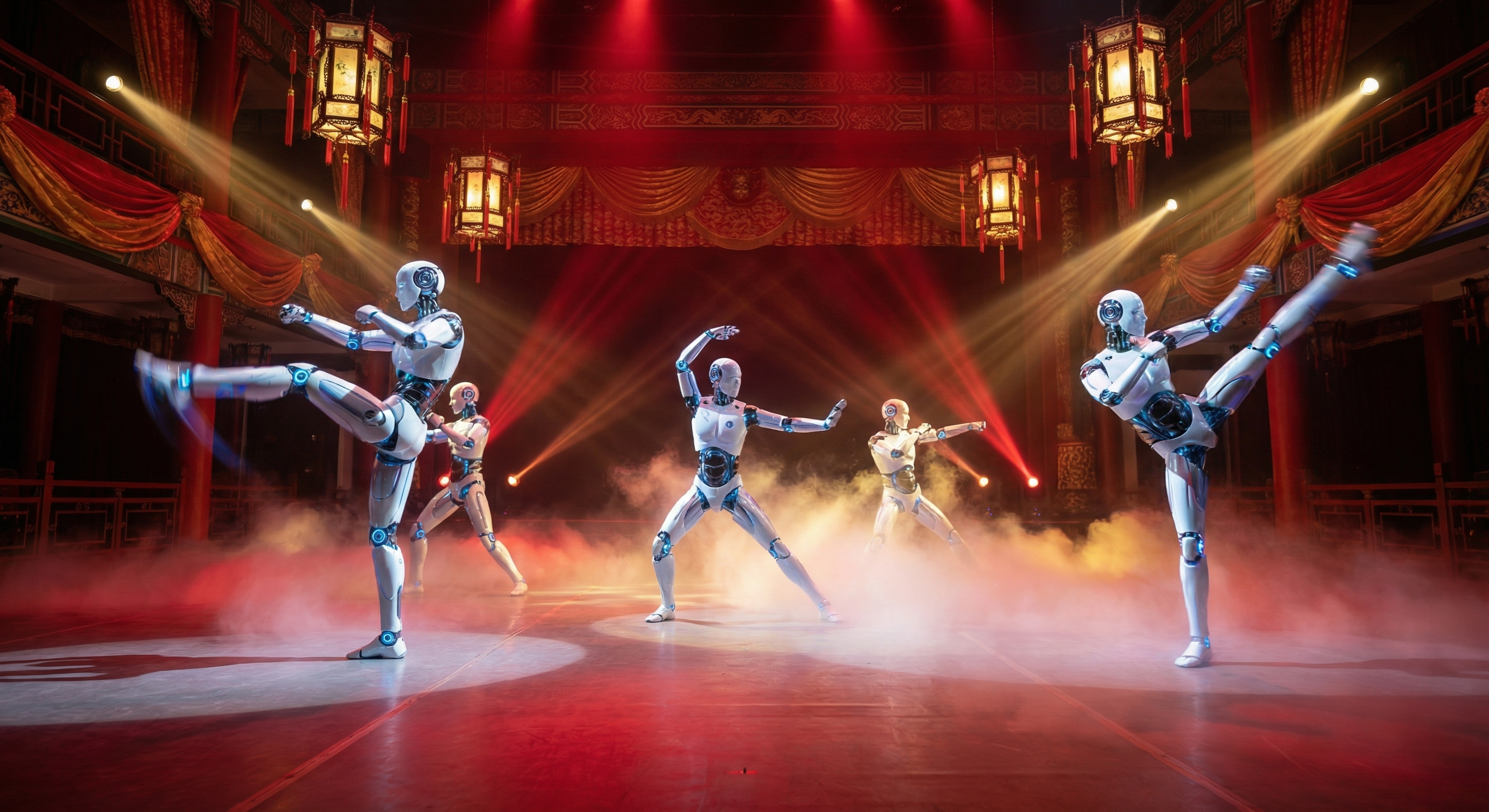
The Spring Festival Gala in February, at which humanoid robots from multiple Chinese startups performed kung fu routines and aerial flips before hundreds of millions of viewers, was a cultural statement as much as a technical one. China accounted for over 80% of global humanoid robot installations in 2025 and over half the world's industrial robots. The question is not whether Chinese humanoids will penetrate global manufacturing. It is whether Western companies will have the deployment experience and integration depth to compete when they do.
What European Manufacturers Are Watching
BMW's Leipzig deployment lands in a European manufacturing context under significant strain. German industry has been navigating energy cost pressures, supply chain restructuring, and the EV transition simultaneously. The broader European automotive sector has recorded tens of billions of dollars in losses as the transition stutters. In that environment, a technology that can reduce labor costs by half or more while operating 24 hours a day carries urgency beyond the abstract.
BMW has established a Center of Competence for Physical AI in Production in Munich, designed to standardize how the company evaluates and scales humanoid deployments across its plant network. That institutional infrastructure — a centralized competence center, a defined evaluation methodology, a succession of real-world pilots — is exactly what separates an organization building genuine capability from one running publicity exercises.
The incoming BMW CEO has built this program from the ground up. The Spartanburg data gave the company verifiable proof that humanoids can function under production conditions. Leipzig is the deliberate extension of that proof into Europe. Summer 2026 will be the first test of whether AEON can deliver at scale on the battery assembly line — and if it does, the template for physical AI in European automotive manufacturing will have been set.
The robots have arrived. The question now is how fast the learning curve drops.