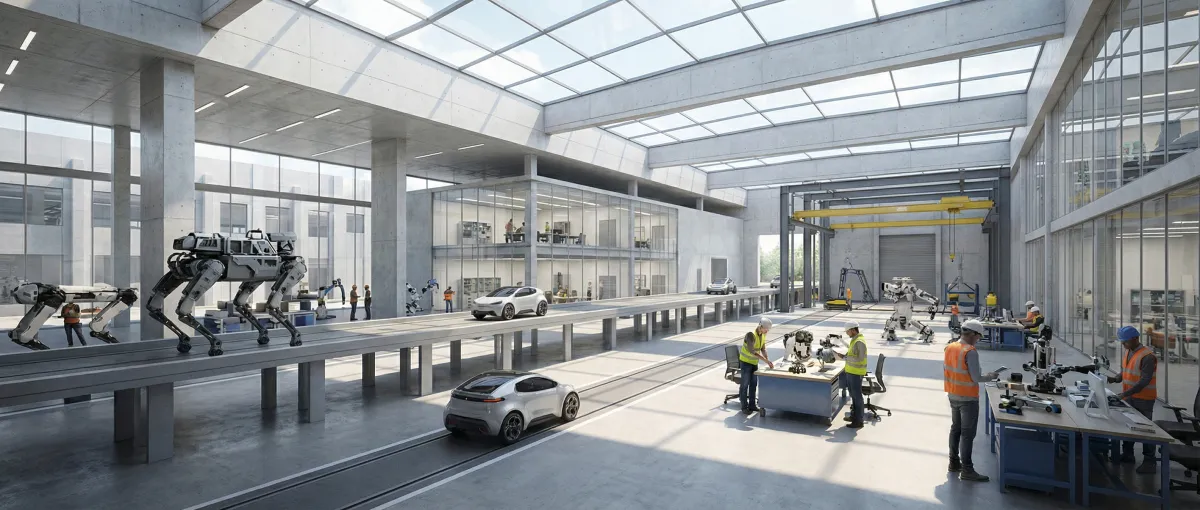
Carnegie Mellon University officially opens its Robotics Innovation Center (RIC) today — a 150,000-square-foot facility that marks the most significant expansion of the world's oldest and most influential robotics research institution. The $2 billion unicorn FieldAI has already signed on as the center's inaugural corporate tenant, embedding a NASA Jet Propulsion Laboratory spinout with $405 million in venture backing directly into Pittsburgh's academic robotics core.
The timing is deliberate. Autonomous systems have moved from research curiosity to national strategic priority in under five years. The RIC opens as the United States, China, and Europe pour billions into robotics R&D, competing to shape the next generation of industrial automation, autonomous logistics, and — increasingly — defense applications. For Pittsburgh, a city that traded steel mills for software labs, this is the clearest statement yet that "Roboburgh" is a permanent identity, not a marketing slogan.
What the RIC Actually Is
The Robotics Innovation Center sits at Hazelwood Green, a 178-acre redevelopment site on the banks of the Monongahela River — the same land where Raj Rajkumar, now a George Westinghouse Professor of electrical and computer engineering at CMU, tested the university's first autonomous vehicles decades ago. The symbolism is intentional.
The facility is purpose-built for the demands of modern robotics research — not a retrofitted building but a ground-up design with specialized environments that most university labs lack:
- Indoor and outdoor test tracks for ground vehicles, capable of accommodating full-size autonomous cars driving through the building
- Water-based testing tanks for autonomous underwater vehicles (AUVs) — critical for deep-sea and military underwater systems research
- Aerial test volumes for drone and UAV development
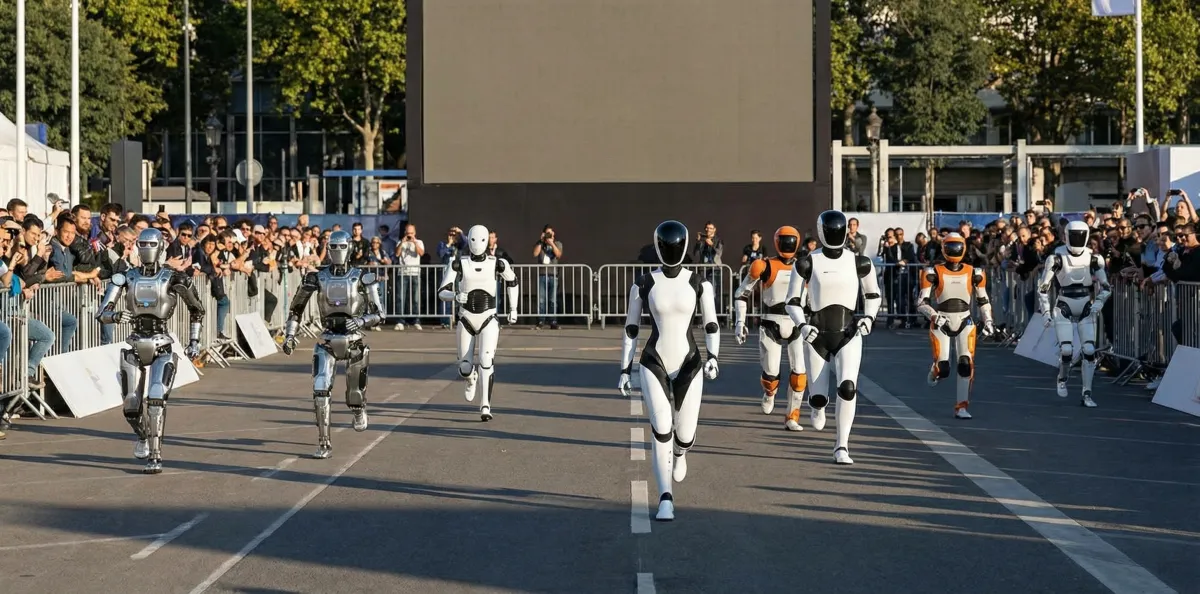
- Dedicated legged robotics labs for bipedal and quadrupedal platforms
- Industry co-location suites for corporate partners embedded alongside CMU research teams
"The Robotics Innovation Center offers Carnegie Mellon researchers new opportunities to develop and test robotics, automation and physical AI in the real world," said Martial Hebert, dean of CMU's School of Computer Science. "Scientists from across the university will tackle challenges ranging from agriculture and manufacturing to search and rescue and exploration. A new generation of world-changing research will happen inside the RIC."
The center was made possible by a lead gift from the Richard King Mellon Foundation and is designed to function as a co-location hub — academia and industry side by side, not separated by licensing agreements and IP transfer delays.
FieldAI: The $2 Billion First Tenant
The choice of FieldAI as the RIC's inaugural corporate tenant tells you everything about the strategic ambition of this facility. This is not a startup with a demo reel and a seed check. FieldAI raised $405 million across two consecutive rounds (including a $314 million round in August 2025), counts Bezos Expeditions, NVIDIA Ventures (NVentures), Khosla Ventures, and Intel Capital among its investors, and carries a valuation north of $2 billion.
The company was founded by a team from NASA's Jet Propulsion Laboratory, where they pushed the limits of autonomous navigation in DARPA challenges alongside — and against — CMU teams. The competitive dynamic turned into collaboration: FieldAI and CMU share deep technical roots in precisely the kind of field robotics the new center is designed to accelerate.
What does FieldAI actually build? The company's core technology is Field Foundation Models (FFMs) — a class of physics-first AI models designed specifically for embodied intelligence. Unlike large language models retooled for robotics, FFMs are built from the ground up to handle uncertainty, risk, and physical constraints. The practical result: robots that can navigate unknown environments without GPS, pre-defined maps, or human intervention.
"We've always believed that the best robotics technology comes from blending cutting-edge research with real-world deployment," said FieldAI CEO Ali Agha. "The RIC's indoor and outdoor testing labs are purpose-built for the kind of work we do every day. It's where fundamental research meets the challenges of the field, and that's where breakthroughs happen."
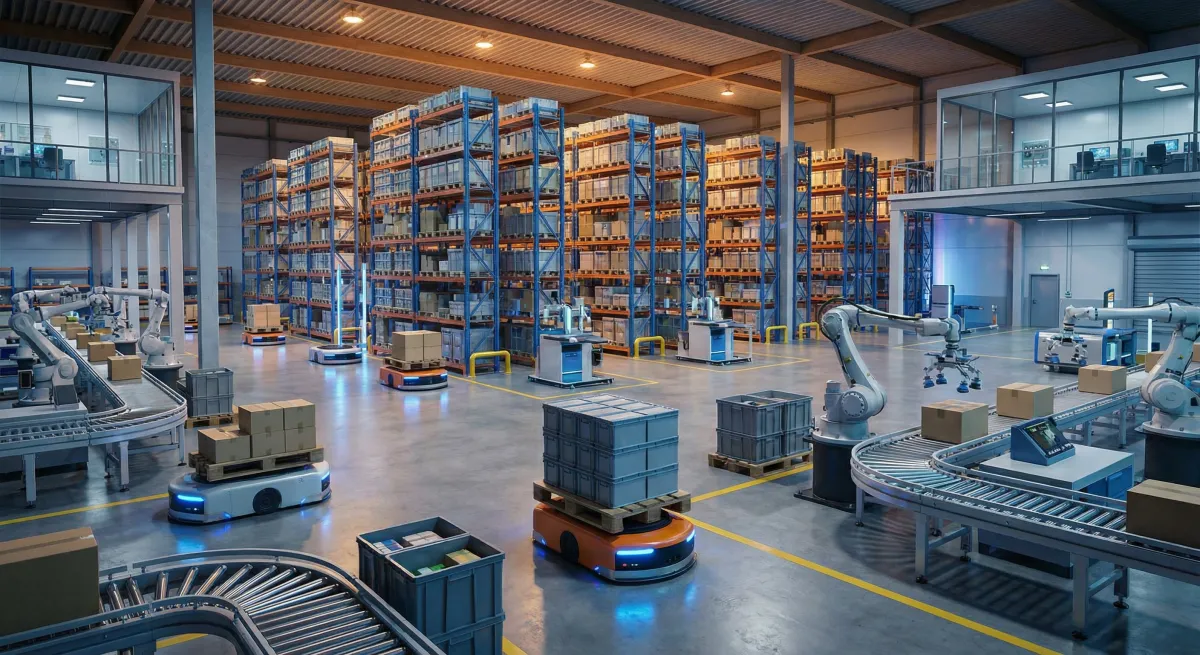
FieldAI's systems are already deployed across hundreds of real-world industrial sites — construction, energy, manufacturing, urban delivery, inspection — in the U.S., Europe, and Japan. The CMU co-location accelerates that deployment flywheel by giving the company direct access to robotics talent pipelines, shared testing infrastructure, and research collaboration that would cost multiples more to replicate independently.
The Roboburgh Thesis
Pittsburgh's evolution from steel capital to robotics hub has been underway for decades, but the RIC crystallizes what has been an organic process into a deliberate institutional strategy.
The numbers tell the story. The Pittsburgh robotics ecosystem now comprises more than 250 advanced technology companies, employing over 7,300 workers across 18 industry verticals including autonomous transportation, defense, healthcare, agriculture, space, and manufacturing. The city hosts over 80 robotics and AI companies with active Department of Defense relationships through the Pittsburgh Defense Robotics and Innovation Coalition.
IEEE's IROS 2026 (International Conference on Intelligent Robots and Systems) — the world's premier academic robotics conference — will be held in Pittsburgh later this year, a milestone that acknowledges the city's standing as a global center of autonomous systems research.
"When a company valued at $2 billion with $405 million in backing decides to expand its footprint into Pittsburgh and anchor at Carnegie Mellon University's Robotics Innovation Center, it is not a courtesy — it is a calculation," said Audrey Russo, president and CEO of the Pittsburgh Technology Council. "They are here because the talent, the CMU research infrastructure, and the faculty paired with the depth of this robotics ecosystem are unmatched."
Raj Rajkumar — who was testing autonomous vehicles on the Hazelwood Green site when the surrounding area was still transitioning from steel — frames the moment with unusual clarity: "This building represents the ongoing renaissance from being a steel city to a high tech hub. For robotics, Carnegie Mellon is the place. This is a new chapter in the book I would title, 'Roboburgh.'"
The Defense Dimension
Any analysis of the RIC that ignores its defense implications is incomplete. CMU's Robotics Institute was founded in 1979 with early support from the Office of Naval Research. The institute's field robotics work has always had a dual-use character — the same systems designed for search and rescue, nuclear cleanup, and space exploration are directly applicable to military operations.
FieldAI's platform is deployed in what the company describes as "complex and dangerous environments, such as nuclear cleanup sites and unmapped industrial zones" — exactly the environments that defense planners care about for reconnaissance, logistics, and force protection missions. The company's DARPA challenge heritage connects it directly to DoD research priorities in autonomous subterranean and off-road navigation.
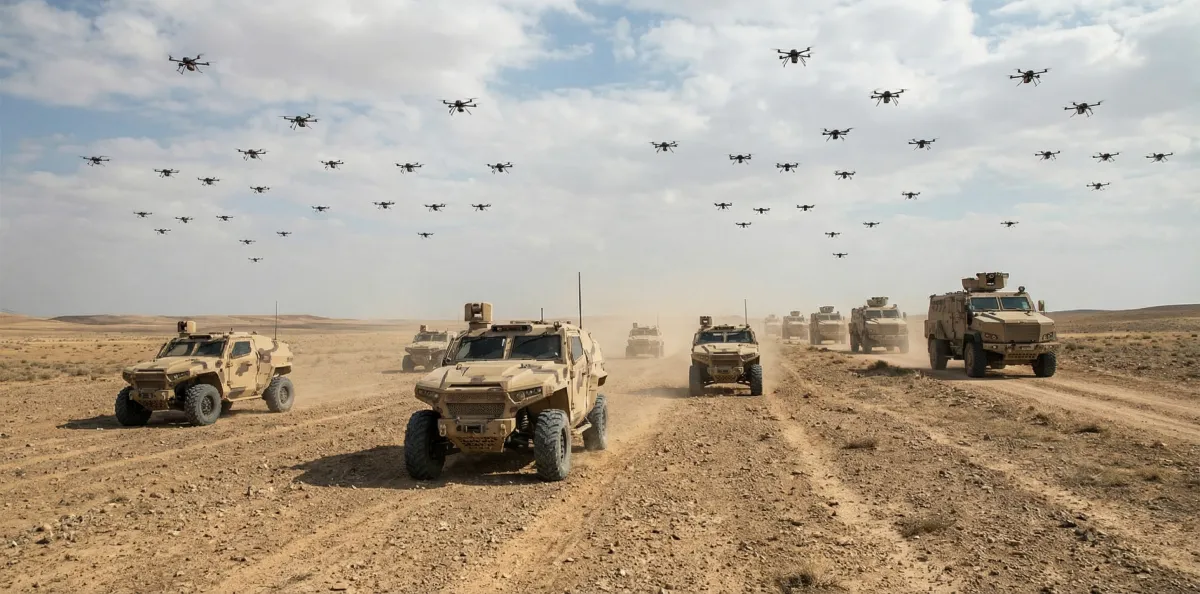
This context matters as the U.S. military accelerates its autonomous systems programs. The Army's "Robots First" strategy — directing autonomous platforms to lead in certain high-risk mission profiles — creates demand for exactly the kind of GPS-denied, map-free navigation that FieldAI's FFMs deliver.
The CMU research pipeline, spanning autonomous underwater vehicles (relevant to Navy undersea operations), drones and UAVs, ground vehicle autonomy, and human-robot teaming, feeds directly into DoD acquisition programs. The RIC's specialized testing environments — particularly underwater tanks and all-terrain outdoor tracks — fill infrastructure gaps that most defense contractors and university labs lack.
Implications for the Autonomous Systems Industry
The RIC's opening represents more than a ribbon-cutting. It signals a structural shift in how robotics R&D is organized — away from the traditional model of isolated academic labs publishing papers and licensing IP, toward co-located industry-academia ecosystems where the cycle time from research to deployment compresses dramatically.
This model is already proven in biotech (Cambridge's Kendall Square, San Francisco's Mission Bay) and semiconductors (imec in Leuven, Taiwan's Hsinchu Science Park). Robotics has been slower to adopt it, partly because hardware development timelines are longer, and partly because the field lacked the kind of critical mass that makes co-location valuable. Pittsburgh now has that critical mass.
For companies building autonomous systems, the RIC creates a talent funnel that compounds over time. CMU graduates have founded or co-founded dozens of robotics companies, and the RIC's industry-adjacent research environment will accelerate that trend. For the broader ecosystem, the concentration of testing infrastructure means that companies can validate systems faster and at lower cost than building their own facilities.
The deepest implication may be competitive. The U.S. is in an explicit race with China across multiple robotics categories — humanoid platforms, industrial automation, military drones, autonomous vehicles. China's advantage has historically been manufacturing scale and supply chain integration. America's advantage is foundational research and software. The RIC is an institutional bet that keeping those research advantages sharp — and bridging them to commercial deployment faster — is how the U.S. maintains its edge in the decade ahead.
What Comes Next
FieldAI is the first of what CMU describes as a "series of planned corporate residencies" at the RIC. Additional industry tenants are expected to be announced over the coming months as the center reaches operational capacity. The model will be selective — not every company with a robotics product qualifies; the intent is to curate partnerships that generate genuine research collaboration, not just office space with a university brand.
For Theresa Mayer, CMU's vice president for research, the fundamental goal is acceleration: "By connecting our robotics research directly with the companies putting it to work, we strengthen the vital ties between academia and industry — accelerating innovation, informing new discoveries and ensuring that breakthrough technologies move more rapidly from lab to impact right here in Pittsburgh."
The RIC opens as the autonomous systems industry enters its most consequential period. From the factory floor to the seafloor, from warehouse logistics to battlefield reconnaissance, the question is no longer whether autonomous systems will reshape industries — it's which institutions, companies, and countries will define how they do it.
Carnegie Mellon, standing on the site where Pittsburgh's industrial past meets its technological future, is placing its bet on today.