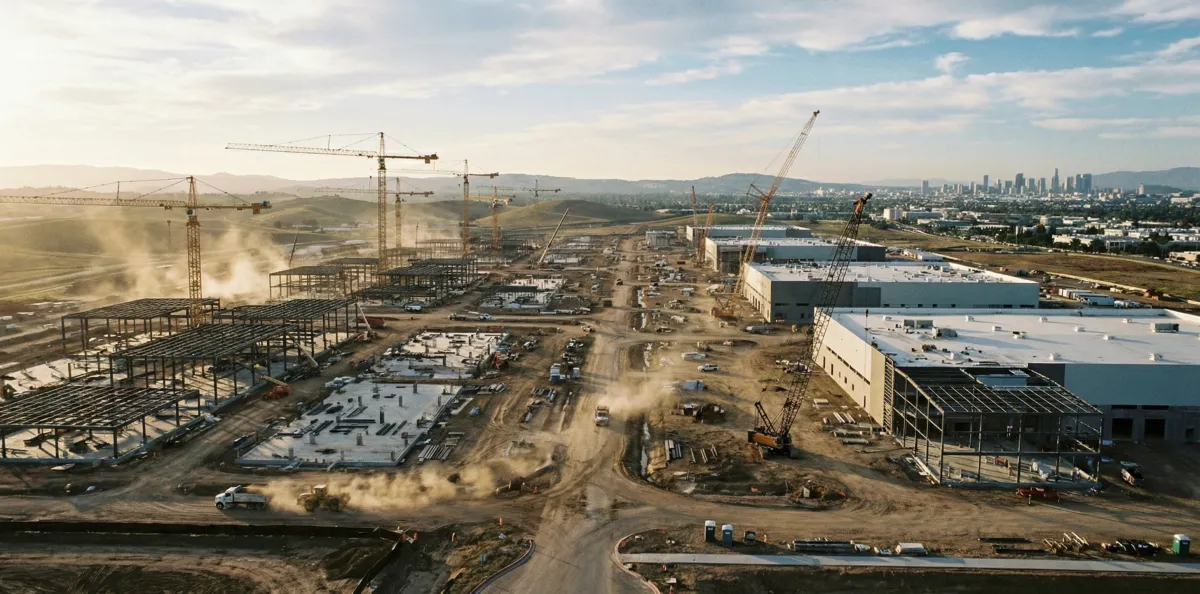
In commercial real estate, location has always been king. Proximity to highways, airports, and urban centers drove land values for decades. But AI is rewriting the rules. The hottest commodity in real estate today isn't a downtown office tower or a prime retail corner—it's something far less glamorous: flat, uninteresting acreage with megawatt-scale electrical grid connections.
Welcome to the data center land rush, where "powered land"—sites pre-loaded with utility agreements, permits, and substation access—is selling for $1 million+ per acre. Some parcels in Northern Virginia and Phoenix have traded for $2-3 million per acre, exceeding the per-acre price of Manhattan office buildings.
The reason? Power is the new scarcity. And land that comes with it is suddenly worth more than the buildings you put on it.
The $1.2 Trillion Real Estate Buildout
According to JLL, the data center sector is experiencing an infrastructure investment supercycle requiring up to $3 trillion by 2030. Roughly 100 gigawatts of new capacity is expected to come online between 2026 and 2030, equating to $1.2 trillion in real estate asset value creation.
That's more construction activity than the cumulative value of every office tower, hotel, and shopping mall built in the U.S. over the past decade—concentrated entirely in data center infrastructure.
The bottleneck isn't capital. Hyperscalers like Microsoft, Amazon, and Google have committed $400+ billion in 2026 capex alone. The bottleneck is land with sufficient power capacity to support 100+ megawatt facilities.
What Is 'Powered Land'?
Powered land isn't just vacant acreage. It's a site that has:
- Electrical substation access — Direct connection to transmission lines capable of delivering 50-200 MW
- Utility power purchase agreements — Pre-negotiated capacity reservations with the local utility
- Environmental permits — NEPA clearances, water rights, and zoning approvals for industrial facilities
- Fiber connectivity — Proximity to backbone internet routes for low-latency network access
- Redundant power feeds — Multiple grid connections to ensure uptime during outages
Securing all of this can take 3-5 years and cost tens of millions in legal, engineering, and utility infrastructure fees. Developers who complete this process and deliver "shovel-ready" powered sites command massive premiums because hyperscalers can break ground immediately instead of waiting years for permits.
The Supply-Demand Mismatch
The industry needs 40,000 acres of powered land over the next five years—more than twice the current global supply. Every major data center market is facing the same constraint: there isn't enough land with adequate power capacity.
Northern Virginia, the world's largest data center market, has seen land prices spike 400% since 2020. Sites that sold for $200,000 per acre in 2018 are now fetching $1 million+. Phoenix, Dallas, Atlanta, and Chicago are experiencing similar price inflation as hyperscalers compete for the few remaining parcels with megawatt-scale grid access.
Why the Traditional Markets Are Tapped Out
Established data center hubs like Northern Virginia have a different problem: they're running out of power. Dominion Energy's service territory in Loudoun County has reached grid capacity constraints, forcing new projects to wait for substation upgrades or seek sites farther from fiber backbones.
The result is geographic diversification. Hyperscalers are expanding into secondary markets—Portland, Columbus, Des Moines—that historically lacked the fiber density and latency advantages of Northern Virginia but now offer what matters most: available power.
The Developer Pivot: From Buildings to Land Banking
Real estate giants like Hines, traditionally known for constructing office towers and mixed-use developments, have pivoted to a new strategy: land banking. Instead of building data centers, they're securing powered sites and selling or leasing them to hyperscalers at massive markups.
The economics are compelling. A developer who spends $50 million securing permits, utility agreements, and substation connections for a 100-acre site can sell it for $150-200 million—a 3-4x return without ever pouring concrete.
This shift reflects a fundamental change in data center economics: the land entitlement is now worth more than the building. Hyperscalers can construct facilities in 12-18 months, but securing power capacity can take 5+ years. The scarcity is in grid access, not construction expertise.
Power-First Site Selection
Traditional data center site selection prioritized fiber connectivity, tax incentives, and proximity to urban centers. Today, the decision tree starts with one question: How much power can the site deliver, and how fast?
Sites are now priced per megawatt of available capacity, not per square foot. A 50-acre parcel with 200 MW of grid access is worth far more than a 100-acre site with only 50 MW—even if the larger site has better fiber connectivity or lower land costs.
This "power-first" model is repricing land across the U.S. Rural sites near hydroelectric dams, nuclear plants, or wind farms—locations that would have been ignored a decade ago—are now prime data center real estate because they offer stranded power capacity.
The Secondary Market Boom
As primary markets like Northern Virginia, Silicon Valley, and Phoenix hit capacity limits, secondary and tertiary markets are booming:
- Columbus, Ohio — Abundant coal plant retirements freeing up transmission capacity; AEP grid reliability
- Des Moines, Iowa — Wind power availability and low electricity costs ($0.03/kWh vs. $0.10+ in California)
- Eastern Oregon — Hydroelectric power from Columbia River dams; cheap renewable energy
- Omaha, Nebraska — Central U.S. location, low land costs, municipal power utility partnerships
These markets lack the fiber density and talent pools of traditional hubs, but they offer something hyperscalers can't find elsewhere: gigawatt-scale power availability.
The REITs Left Behind
Ironically, traditional data center REITs like Equinix and Digital Realty are struggling to compete in this new environment. Their business model—leasing colocation space in owned facilities—doesn't align with hyperscalers' land-banking strategy.
Hyperscalers want to own their infrastructure and secure long-term power capacity. They're bypassing REITs and going directly to developers who can deliver powered land at scale. As a result, data center REIT stocks have underperformed despite record industry demand—a sign that the value is shifting from building owners to land controllers.
The Environmental and Political Backlash
The land rush isn't without opposition. Local communities in Northern Virginia, Phoenix, and Oregon are pushing back against data center projects, citing:
- Grid strain — Fear that data centers will drive up residential electricity costs or cause outages
- Water consumption — Cooling systems can consume millions of gallons per day, straining drought-prone regions
- Tax revenue vs. jobs — Data centers pay property taxes but employ few local workers compared to factories or offices
Some jurisdictions are imposing moratoriums on new data center construction until grid capacity expands. Others are requiring developers to fund substation upgrades or pay impact fees to offset infrastructure costs.
The Nuclear and Renewable Land Play
As covered in our analysis of tech giants' nuclear partnerships, hyperscalers are exploring co-location with power generation. Sites adjacent to nuclear plants, solar farms, or wind installations are commanding premiums because they offer dedicated, on-site power generation without relying on congested transmission grids.
Microsoft's Three Mile Island deal is the clearest example: the company secured a 20-year exclusive power contract, effectively privatizing 835 MW of nuclear generation. Other hyperscalers are pursuing similar strategies—securing land near power plants to guarantee long-term capacity.
What's Next: The $50 Billion Land Play
The powered land market is projected to be a $50+ billion asset class by 2030, with institutional investors, private equity, and real estate funds all competing to secure sites before hyperscalers lock them up.
For commercial real estate, the lesson is clear: in the age of AI, the most valuable asset isn't a building—it's a grid connection. The data center boom is rewriting the rules of location, valuation, and development strategy in ways the industry hasn't seen since the Interstate Highway System reshaped logistics real estate in the 1960s.
If you own flat land near a substation, you might be sitting on a gold mine.
Related Articles
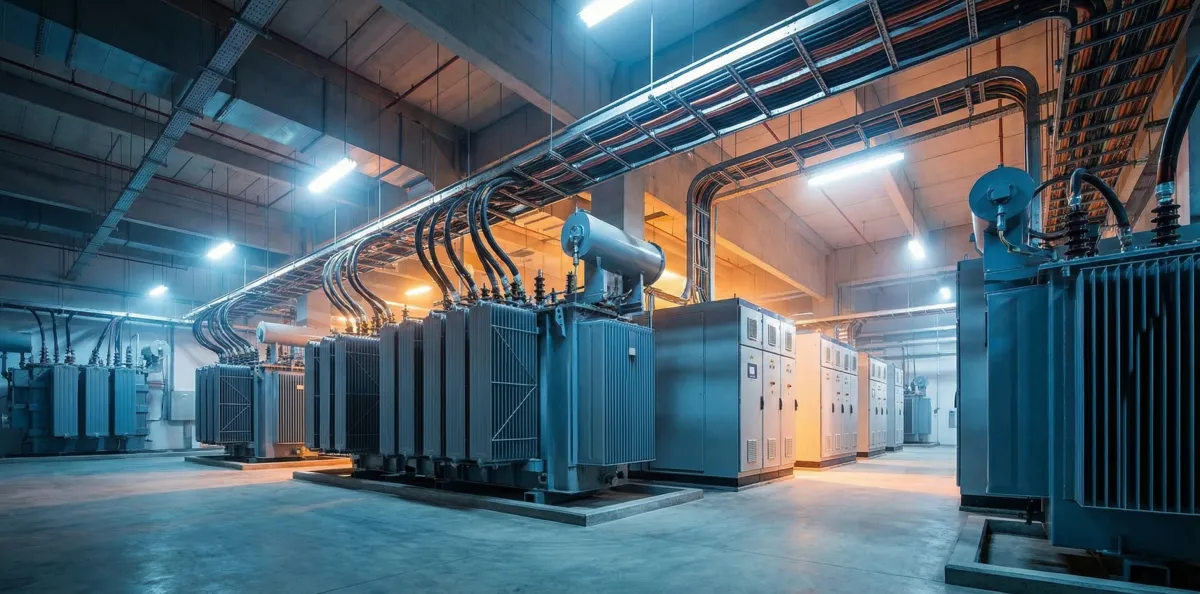
The AI Power Crisis: Why Data Centers Can't Find Enough Electricity
AI facilities consume 50-100 MW. Power scarcity is driving the real estate land rush.
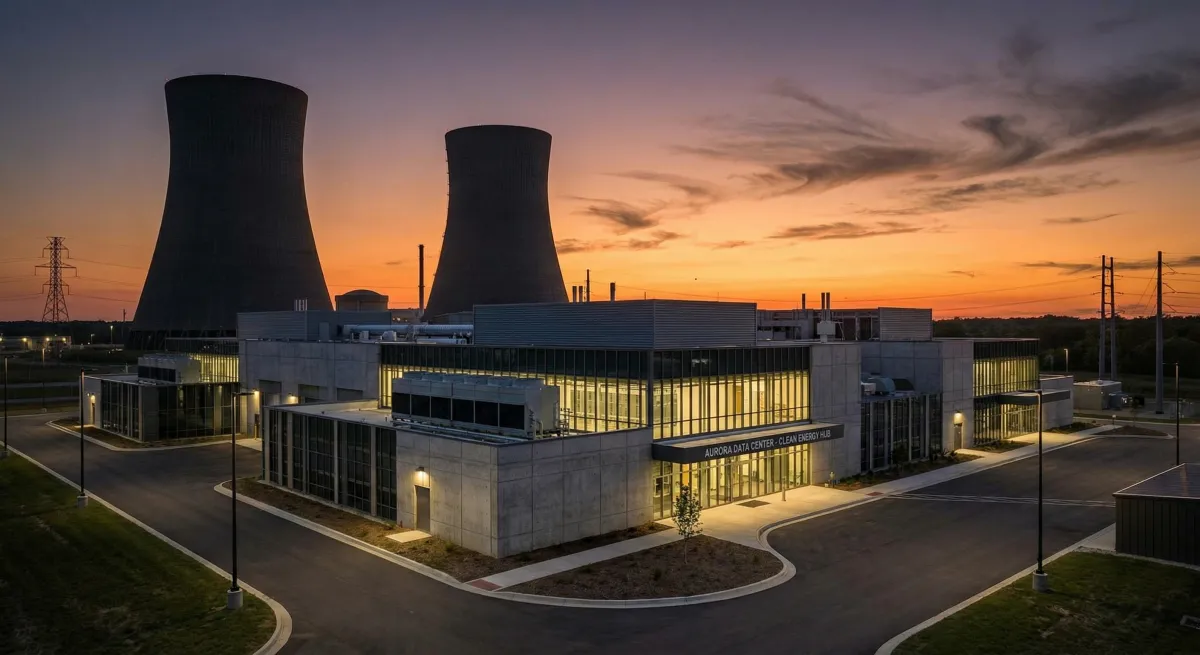
Big Tech Goes Nuclear: Microsoft, Google, and Amazon Bet on Atomic Power for AI Data Centers
Hyperscalers securing sites near nuclear plants for dedicated power generation.
The Hyperscaler Data Center Boom: Why Big Tech Is Building Faster Than Ever
$400B in 2026 capex. Land availability is the biggest constraint to hyperscale expansion.