
For the past two decades, the cloud computing model has been straightforward: centralize everything. Build massive hyperscale facilities, pack them with thousands of servers, and let users access compute over the internet. It worked brilliantly for email, storage, and web apps.
But it doesn't work for autonomous vehicles that need to make split-second decisions. It doesn't work for factory robots coordinating in real time. It doesn't work for augmented reality apps that require sub-10-millisecond response times. And it doesn't work when billions of IoT sensors generate more data than can be efficiently shipped to distant cloud regions.
That's why the data center industry is undergoing its most dramatic architectural shift since virtualization: the move to edge computing—distributed micro facilities deployed close to users and devices. The edge computing market is projected to reach $18.8 billion by 2026, growing to $51 billion by 2032, driven by 5G networks, IoT proliferation, and latency-sensitive applications that can't tolerate cloud round-trips.
The Latency Problem
Cloud data centers are fast—but not fast enough for applications where milliseconds matter. A round-trip from a device in Los Angeles to an AWS region in Northern Virginia takes 60-100 milliseconds. For a video call or file download, that's imperceptible. For an autonomous vehicle navigating traffic at 60 mph, 100ms is the difference between stopping in time and a collision.
Edge computing solves this by placing compute resources within a few miles—or even a few hundred feet—of end users. Standalone 5G cores now steer traffic to base-station micro data centers, trimming round-trip latency below 10 milliseconds. Asian telecom operators had installed 1.8 million edge-enabled 5G sites by mid-2025, enabling factory automation pilots and remote-surgery experiments that require real-time responsiveness.
5G as the Edge Computing Catalyst
5G isn't just faster mobile internet—it's the infrastructure backbone for edge computing. Unlike 4G LTE, which routes traffic through centralized gateways, 5G allows operators to deploy multi-access edge computing (MEC) nodes directly at cell towers and small-cell sites.
This enables ultra-low-latency applications:
- Autonomous vehicles — Real-time sensor fusion, obstacle detection, and route optimization processed locally instead of in distant cloud
- Industrial IoT — Factory floor robots and predictive maintenance sensors communicating with sub-millisecond latency
- Smart cities — Traffic management, public safety surveillance, and environmental monitoring processed at the edge
- AR/VR — Mixed reality applications requiring instant rendering and minimal motion-to-photon delay
Vapor IO, a leader in edge colocation, raised $100 million in late 2023 specifically to build micro data centers across the United States to support 5G and IoT applications. The company's edge facilities are deployed at cell tower sites, enabling single-digit-millisecond latency for mobile applications.
The Hardware Challenge: Shrinking Hyperscale
Building edge data centers isn't just about miniaturization—it's about bringing hyperscale design principles (redundancy, cooling efficiency, security) to facilities that might be 1/1000th the size of a traditional data center.
Edge facilities range from shipping-container-sized micro data centers to rack-scale deployments inside retail stores and factory floors. They must operate with minimal human oversight, withstand harsh environmental conditions, and provide the same uptime guarantees as centralized cloud regions.
Hardware vendors have responded with purpose-built edge infrastructure. HPE's acquisition of Athonet in 2023 integrated edge computing with private 5G networks, enabling enterprises to deploy dedicated low-latency infrastructure without relying on public carriers. Hardware now accounts for over 43% of the edge computing market, including edge nodes, gateways, sensors, and routers designed for distributed deployment.
Key Edge Computing Use Cases
Autonomous Vehicles: Self-driving cars generate 4+ terabytes of sensor data per day. Sending all of it to the cloud is impractical—edge computing enables local processing for navigation, object detection, and decision-making, with only summary data uploaded to central systems.
Healthcare: Remote surgery pilots and real-time health monitoring require sub-10ms latency. Edge deployments at hospitals and clinics enable AI-powered diagnostics and telemedicine without cloud dependency.
Retail: In-store analytics, inventory tracking, and personalized customer experiences powered by edge AI—processing video feeds and sensor data locally without sending streams to distant cloud.
Energy Grids: Smart grid management requires real-time monitoring and response to demand fluctuations. Edge computing enables distributed control systems that react faster than centralized cloud architectures.
The Economics of Distributed Infrastructure
Edge computing introduces new cost dynamics. Instead of benefiting from hyperscale economies (cheap power, bulk hardware, centralized operations), edge deployments are distributed, expensive per-rack, and operationally complex.
But for latency-sensitive applications, there's no alternative. A robotics manufacturer can't rely on cloud processing if a 100ms delay causes production line failures. A healthcare provider can't risk remote surgery with unreliable internet connectivity.
The result is a two-tier data center model: hyperscale cloud for batch processing, storage, and training; edge infrastructure for real-time inference, control systems, and latency-critical applications.
Security and Management at Scale
Managing thousands of distributed edge nodes is fundamentally different from operating a few centralized data centers. Edge facilities are physically vulnerable (deployed in retail locations, cell towers, factories), often lack on-site IT staff, and must be remotely monitored and patched.
Zero-trust security models are becoming standard for edge deployments, with every device authenticated and encrypted. Over-the-air updates, remote diagnostics, and AI-powered anomaly detection help operators manage fleets of edge sites without dispatching technicians for routine maintenance.
The 5G + AI Convergence
AI at the edge is the killer app. Facial recognition in crowds, predictive maintenance for industrial equipment, and real-time language translation all require edge inference—running AI models locally instead of calling cloud APIs.
5G's low latency enables these applications to scale. Instead of sending video streams to the cloud for processing (expensive and slow), edge nodes run AI models on-site, sending only alerts or summary data upstream. This reduces bandwidth costs, improves privacy, and enables applications that can't tolerate cloud latency.
What's Next: Edge Meets Hyperscale
The future isn't purely centralized cloud or purely distributed edge—it's a hybrid. Hyperscale facilities will continue to grow for training, storage, and batch processing. Edge deployments will handle real-time inference, control systems, and latency-critical workloads.
The challenge for data center operators is managing infrastructure that spans both worlds—orchestrating workloads across thousands of edge nodes and centralized cloud regions, optimizing for latency, cost, and reliability.
Edge computing is redefining what "the cloud" means. The next generation of applications won't be built in giant warehouses in Northern Virginia. They'll be running on micro data centers at every cell tower, factory floor, and street corner.
Related Articles
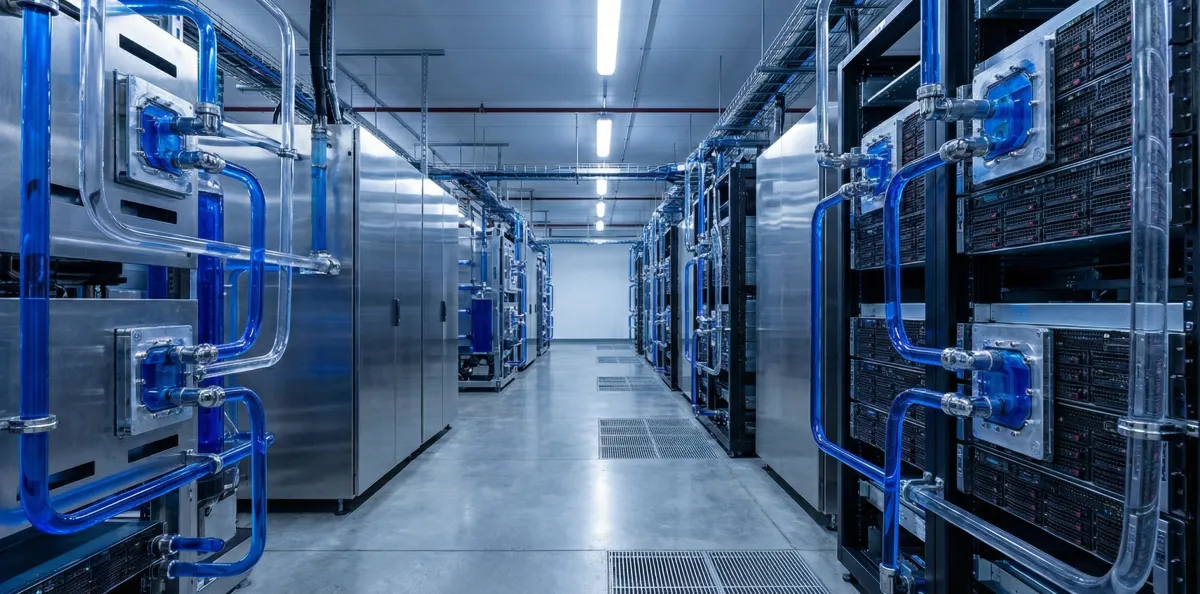
The Liquid Cooling Revolution: Why Air-Cooled Data Centers Can't Keep Up with AI
40% of data centers adopting liquid cooling by 2026. Direct-to-chip systems handle 300W/cm² heat flux.
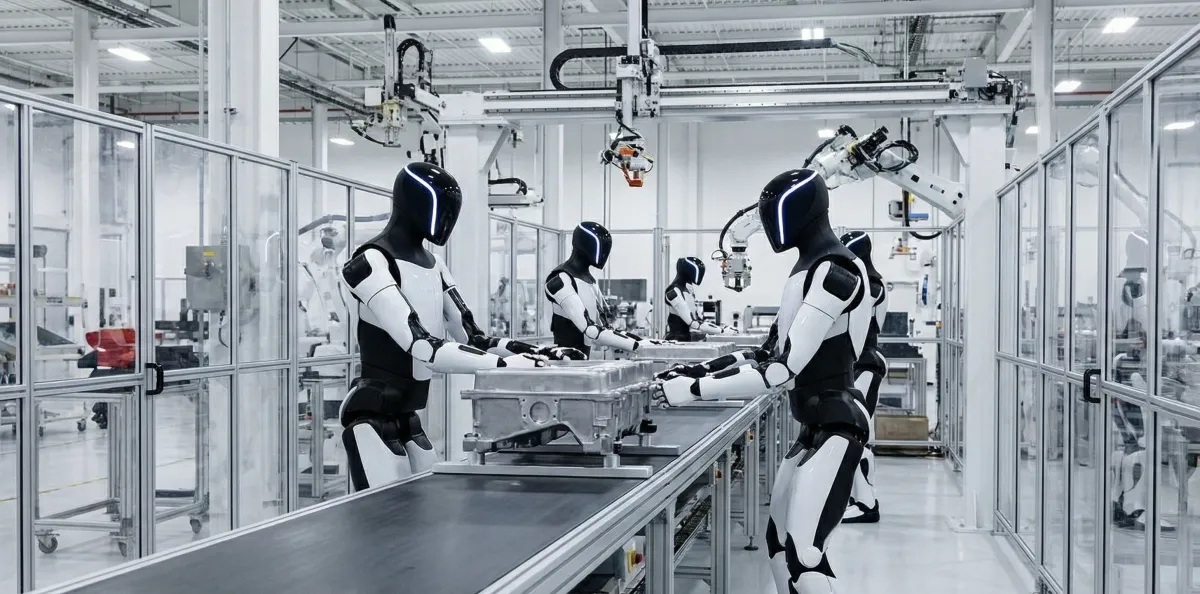
The Humanoid Robot Race Heats Up: Tesla, Apptronik, and China Battle for Market Dominance
100K+ humanoids shipping in 2026. Edge computing enables real-time robot coordination.
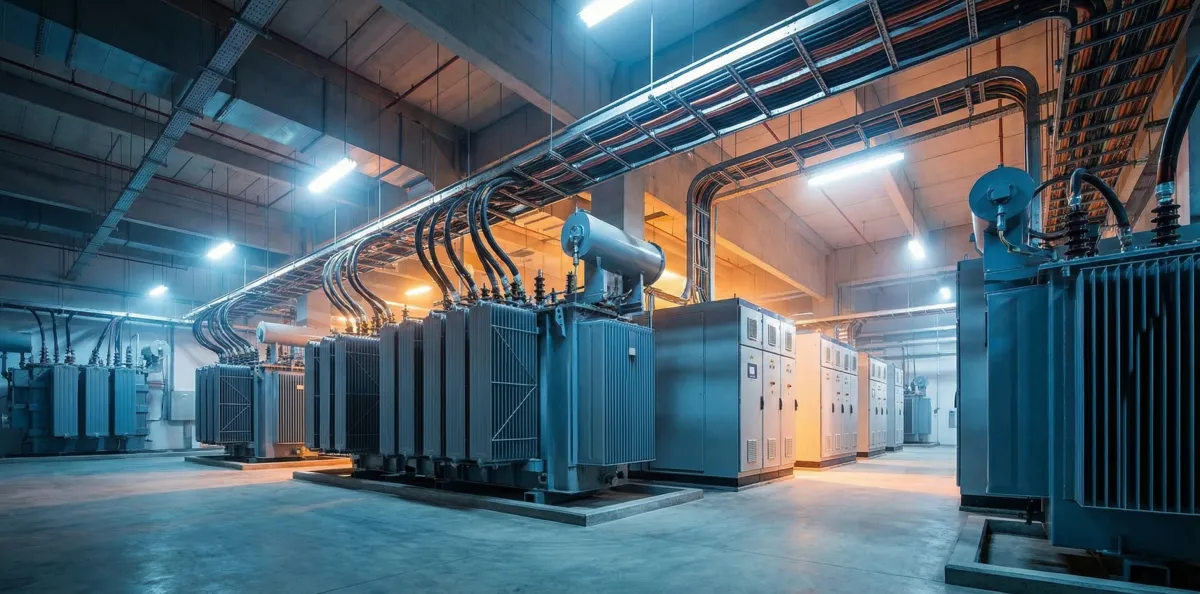
The AI Power Crisis: Why Data Centers Can't Find Enough Electricity
Data centers consume 50-100 MW per facility. Edge deployments ease pressure on centralized grid capacity.