NVIDIA used the closing days of GTC 2026 to answer a question that enterprise IT teams have been asking for two years: when does Blackwell come to the rest of us? The answer is the RTX PRO 4500 Blackwell Server Edition — a single-slot, passively cooled GPU that packs 10,496 CUDA cores, 32GB of GDDR7 memory, and 1.6 petaFLOPs of FP4 compute into a 165-watt form factor that fits in virtually every enterprise server built in the last five years. It ships now, from Dell, HPE, Lenovo, Cisco, and Supermicro, and it is designed to make the argument that CPU-only enterprise infrastructure is simply not viable for the AI workloads now landing on every organization's roadmap.
One Slot, One 16-Pin Connector, One Generational Shift
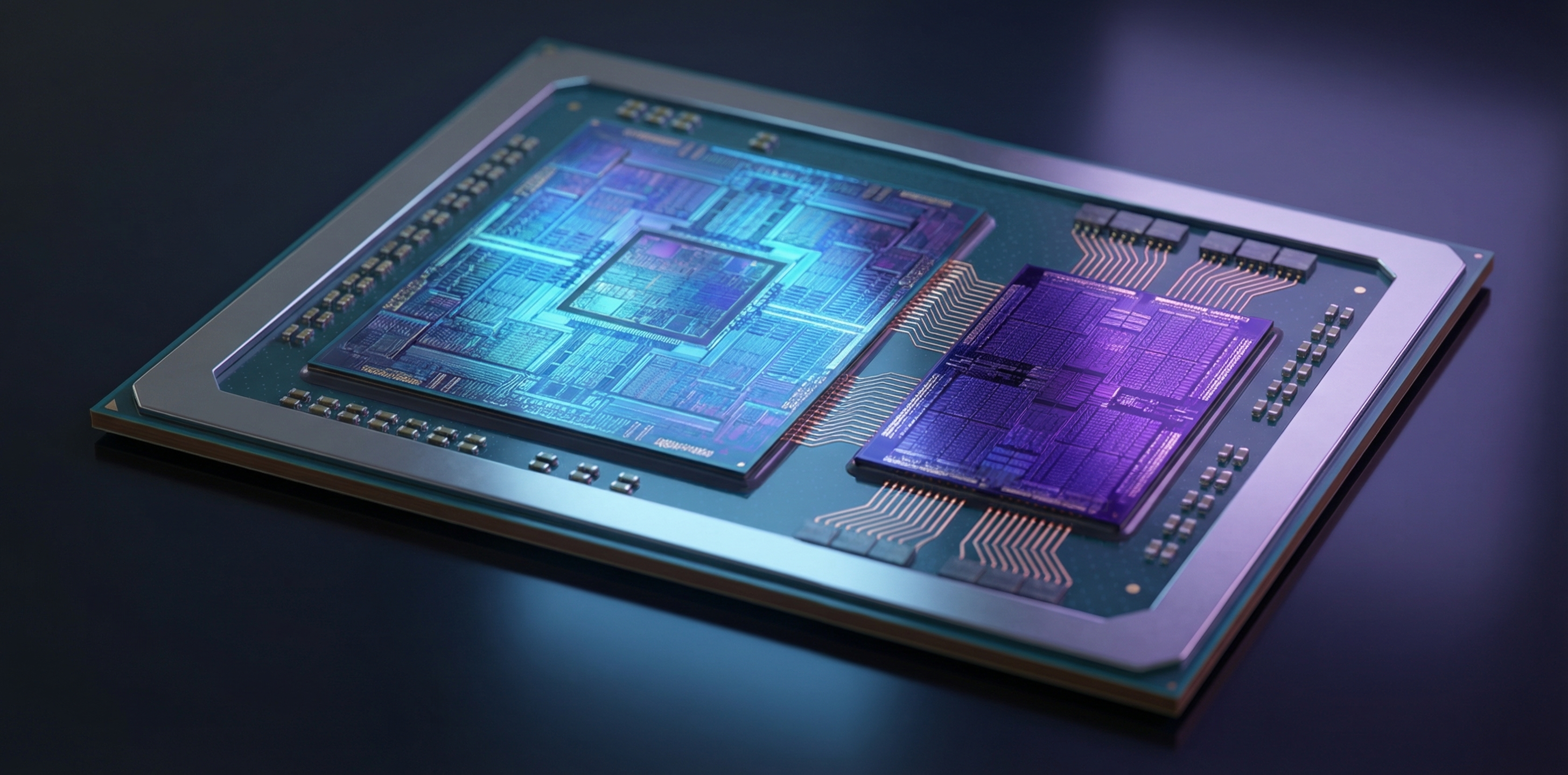
The RTX PRO 4500 Blackwell Server Edition is built on the GB203 die — the same Blackwell silicon powering NVIDIA's GeForce RTX 5080 — but reconfigured for single-slot server deployment. The full-height, full-length (FHFL) passive card draws power through a single 16-pin connector and relies on server airflow for cooling. There are no active cooling fans, no blower design, no dual-slot requirement. That last point is not trivial: enterprise servers are often populated densely, and moving to GPU acceleration traditionally meant either upgrading chassis or accepting significant density tradeoffs. NVIDIA has eliminated that friction.
The technical profile of the card is striking for its power envelope. At 165 watts, the RTX PRO 4500 Blackwell delivers 1.6 petaFLOPs at FP4 precision, 811 teraFLOPs at FP8, 406 teraFLOPs at FP16/BF16, and 51 teraFLOPs at FP32. The card carries 32GB of GDDR7 memory on a 256-bit bus interface, with 800GB/s of memory bandwidth. For context, NVIDIA's previous enterprise workhorse — the L4 — ran at 72 watts and offered far narrower compute headroom. The RTX PRO 4500 Blackwell nearly doubles the thermal envelope to deliver an order-of-magnitude improvement across multiple workload categories.
For organizations that need workload partitioning, the card supports Multi-Instance GPU (MIG) segmentation into up to two GPU instances, each provisioned with 16GB of GDDR7. The card also includes three NVENC and three NVDEC engines for accelerated video encoding and decoding — a capability that matters significantly in the vision AI and intelligent video analytics deployments NVIDIA is explicitly targeting.
The Benchmark Argument: Why CPU-Only Infrastructure Cannot Compete
NVIDIA's product announcement framed the RTX PRO 4500 Blackwell Server Edition directly against CPU-only infrastructure, and the performance delta it claims is not incremental. Against a dual-socket AMD EPYC 9654 system with 192 virtual CPUs, a configuration of eight RTX PRO 4500 Blackwell GPUs delivers up to 100x higher performance for vision AI video understanding tasks — specifically validated on video summarization using NVIDIA's Cosmos Reason 2 model.
For vector database workloads — now central to enterprise RAG pipelines and semantic search infrastructure — the same eight-GPU configuration delivers up to 50x higher performance over CPU-only systems, benchmarked on 33 million vectors indexed in Milvus v2.5.25 using cuVS CAGRA against CPU HNSW indexing. The TCO case is equally direct: Apache Spark accelerated with NVIDIA RAPIDS cuDF delivers up to 5x faster query performance and 10x better total cost of ownership on 10 terabytes of data versus CPU execution.
The SLM (small language model) inference benchmark tells a generational story. Against the NVIDIA L4 — still the most widely deployed enterprise AI inference card in the installed base — the RTX PRO 4500 Blackwell delivers a 10x improvement for SLM AI inference running NVIDIA's Nemotron Nano 9B model. That gap matters because SLM inference at the edge is the dominant enterprise AI workload of 2026. Every organization running private AI assistants, document intelligence pipelines, and agentic automation tools is doing so on small-to-medium models — and the L4's performance ceiling has been a visible bottleneck.
The Strategic Context: Blackwell's Downmarket Push
The RTX PRO 4500 Blackwell Server Edition is the most visible expression of a consistent NVIDIA strategy: after establishing Blackwell at the hyperscale tier with HGX and NVL configurations, push the same architecture down the stack into enterprise and edge deployments before competitors can offer validated alternatives at those price points and form factors.
NVIDIA's GTC 2026 keynote, delivered by Jensen Huang earlier this week, announced $1 trillion in expected revenue from 2025 through 2027 and framed compute demand as having increased "one million times" over recent years. The RTX PRO 4500 Blackwell Server Edition is designed to capture the next tier of that demand — not the hyperscalers who are already ordering Vera Rubin at scale, but the tens of thousands of enterprise organizations who are trying to figure out how to run AI workloads on infrastructure they already own or can procure through standard IT channels.
NVIDIA explicitly positions this GPU as part of its Enterprise AI Factory validated design — a reference architecture for building production AI infrastructure that now includes RTX PRO Server configurations. It is also featured in the NVIDIA AI Data Platform, a customizable reference design for building modern storage and inference systems for enterprise agentic AI deployments. Both programs give enterprise buyers a certified, pre-validated integration path rather than requiring custom architecture work.
An OEM Ecosystem Built for Day One
One of the most significant signals in the RTX PRO 4500 Blackwell Server Edition launch is not the GPU itself but the breadth of the launch partner list. Cisco, Dell, HPE, Lenovo, and Supermicro are all shipping systems. A second tier of OEM partners — Aivres, ASRock Rack, ASUS, Compal, Foxconn, and GIGABYTE — rounds out a list that effectively covers the global enterprise server supply chain.
This matters for procurement velocity. Enterprise IT organizations do not buy accelerators as standalone components; they buy validated, supported systems from their existing vendor relationships. A GPU that ships day one from Dell PowerEdge and HPE ProLiant configurations, purchasable through existing enterprise agreements, has a materially different adoption path than one requiring custom procurement. Lenovo's ThinkSystem product guide for the RTX PRO 4500 Blackwell already details integration into PCIe Gen5 x16 configurations, with full documentation for enterprise deployment teams.
Red Hat's developer documentation confirms support for NVIDIA RTX PRO 4500 Blackwell Server Edition within OpenShift environments, running CUDA 13.0 on driver version 580.126.16. For enterprises standardized on Red Hat AI infrastructure, this removes a significant integration barrier and confirms the card as a validated component in enterprise Kubernetes-based AI workload environments.
Edge AI Deployments: The Real Battleground
The specification choice that deserves the most analytical attention is not the raw compute but the 165-watt TDP combined with passive cooling. NVIDIA is explicitly targeting deployments where dedicated GPU cooling infrastructure does not exist — retail locations, manufacturing floors, telecommunications edge nodes, hospital imaging systems, and the distributed enterprise footprint where running a full-scale data center GPU is neither practical nor cost-justified.
These are precisely the environments where vision AI is generating the most enterprise value in 2026. Real-time video analytics for retail shrink reduction, quality control inspection in manufacturing, patient monitoring in clinical settings, and traffic management in smart city infrastructure all require GPU-class inference at locations far from centralized data centers. The RTX PRO 4500 Blackwell Server Edition is designed to occupy that role — sitting in a standard 1U or 2U server, drawing server airflow rather than requiring dedicated GPU cooling, and delivering Blackwell-generation inference performance at workloads that previously required expensive dedicated appliances or cloud inference pipelines with latency constraints.
The NVIDIA Metropolis platform integration is central to this positioning. Metropolis is NVIDIA's software stack for intelligent video analytics, and the RTX PRO 4500 Blackwell's validated 4x performance improvement over the L4 for video summarization tasks using NVIDIA Cosmos Reason 2 gives Metropolis deployments a clear upgrade path that does not require replacing entire infrastructure stacks.
Competitive Landscape: The Pressure It Applies
The RTX PRO 4500 Blackwell Server Edition arrives in a market where AMD's Instinct MI series has been making headway in hyperscale AI training, and Intel's Gaudi 3 has been pitched at enterprise inference use cases. Neither competitor has yet answered NVIDIA's single-slot, passive-cooled positioning for the enterprise server market with a comparable product at comparable performance density. AMD's MI300X targets the large-batch inference and training market at datacenter scale; Intel's Gaudi 3 is positioned for mainstream inference but in a dual-slot active-cooled configuration that imposes the same density constraints the RTX PRO 4500 Blackwell sidesteps.
No pricing has been announced for the RTX PRO 4500 Blackwell Server Edition. Enterprise pricing for GPU accelerators is typically negotiated through OEM vendor agreements rather than published list prices, which means the competitive calculus will play out in enterprise procurement cycles over the coming quarters. What NVIDIA has done with this launch is establish the performance and form factor benchmark — placing the burden on competitors to match both the compute density and the integration breadth before enterprise buyers lock in their AI infrastructure decisions for 2026 and 2027.
What to Watch Next
Three developments will determine how aggressively the RTX PRO 4500 Blackwell Server Edition penetrates the enterprise market in the near term. First, pricing transparency: enterprise IT teams cannot model ROI against the performance benchmarks until the card carries a purchasable price point. Second, software maturity: NVIDIA's performance claims are validated on specific frameworks (Milvus, Apache Spark with cuDF, NVIDIA Nemotron Nano 9B, Cosmos Reason 2) — whether enterprise buyers can achieve comparable gains on their own workloads will depend on how well NVIDIA's software stack supports the actual enterprise AI tooling in deployment today. Third, supply availability: GTC 2026 has revealed enormous demand for every tier of Blackwell silicon, and prioritization decisions between HGX-scale hyperscale orders and RTX PRO Server-scale enterprise orders will affect how quickly the installed base builds.
What is clear at launch is that NVIDIA has answered the enterprise edge AI infrastructure question with a technically credible, partner-backed product. The RTX PRO 4500 Blackwell Server Edition is not a compromise or a trimmed-down version of the AI compute story — it is a deliberate architectural decision to bring Blackwell-generation performance to the full width of the enterprise market. Whether the deployment velocity matches the ambition of the launch will be the story to watch over the next six months.