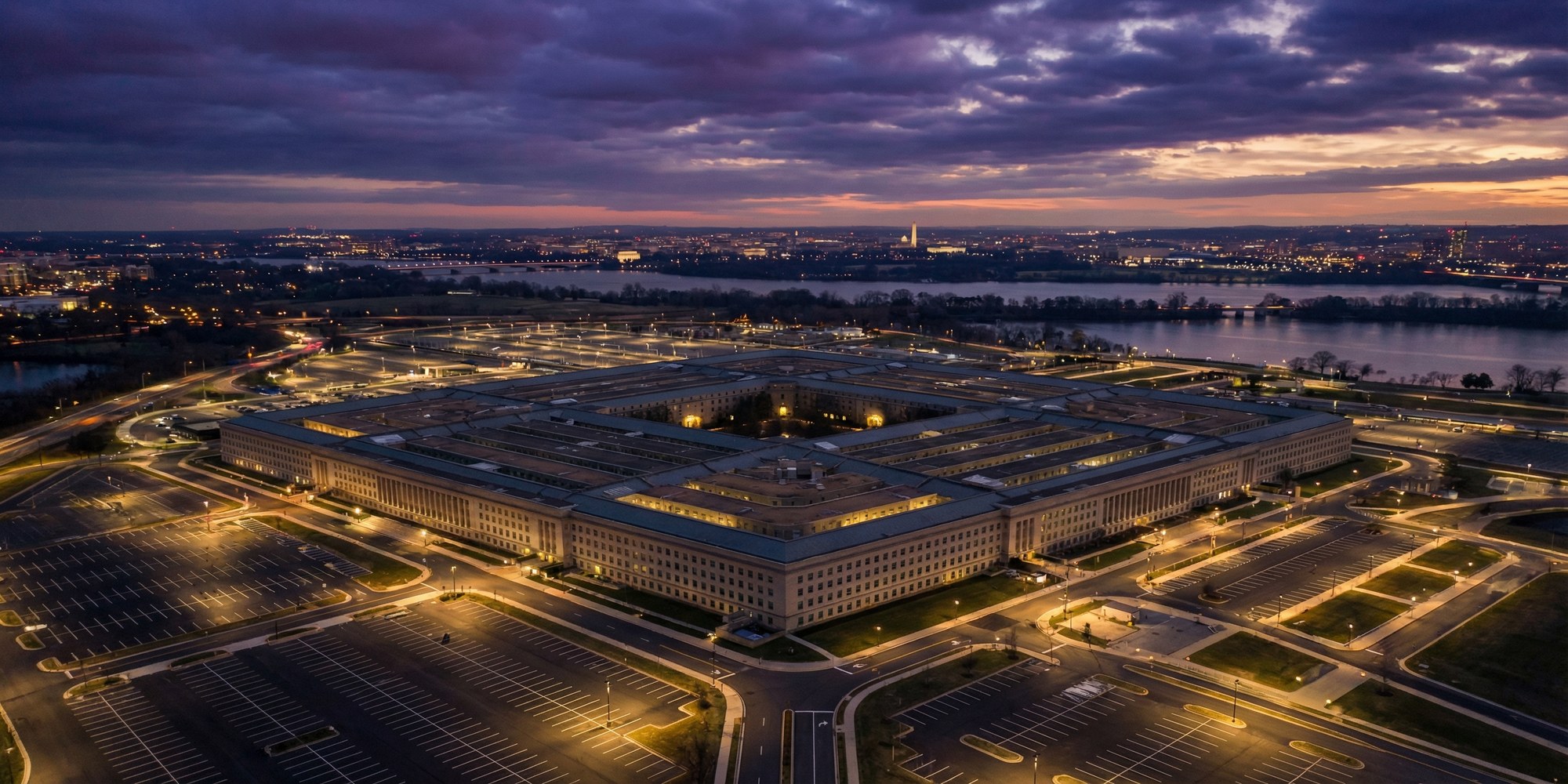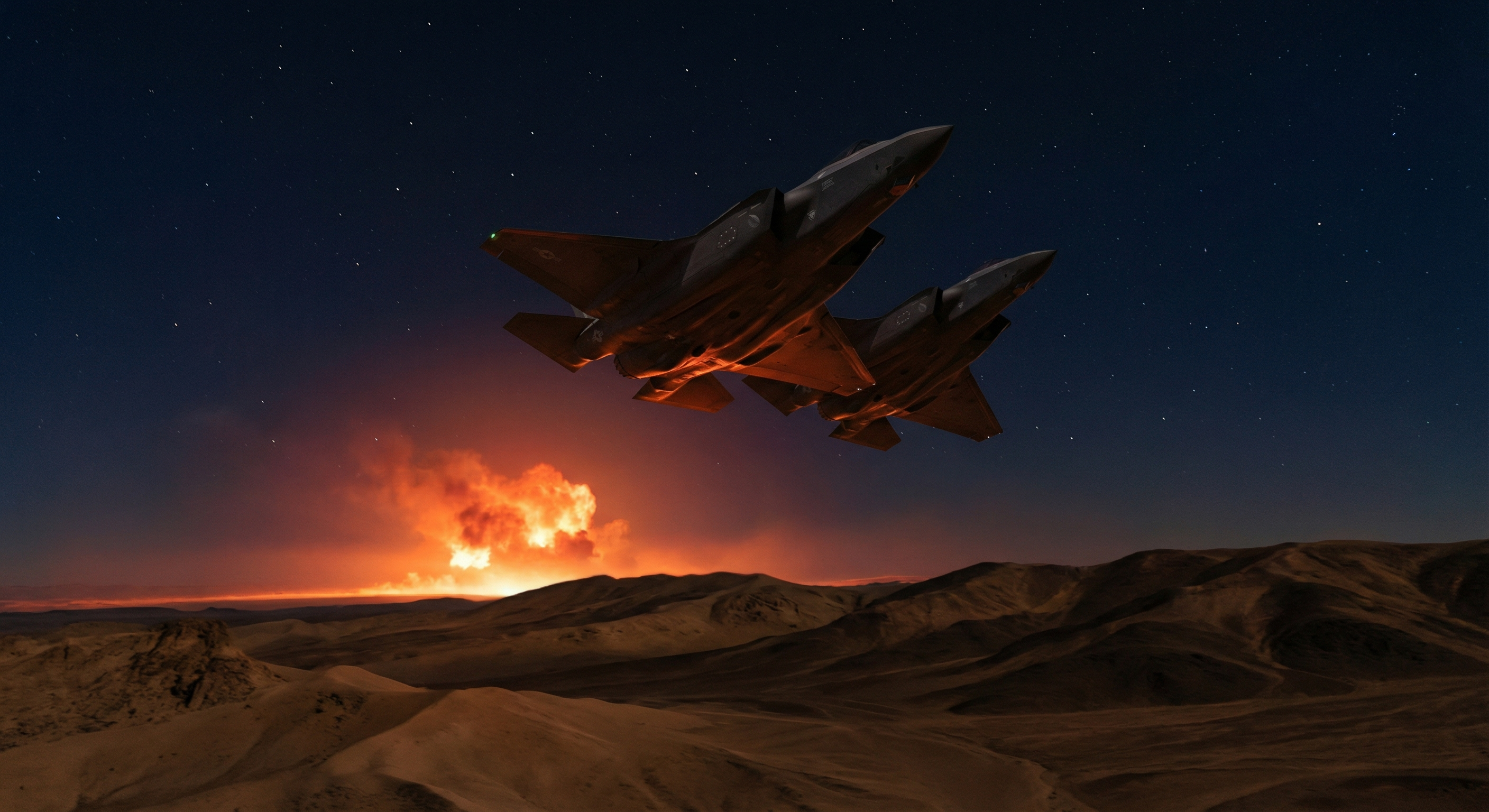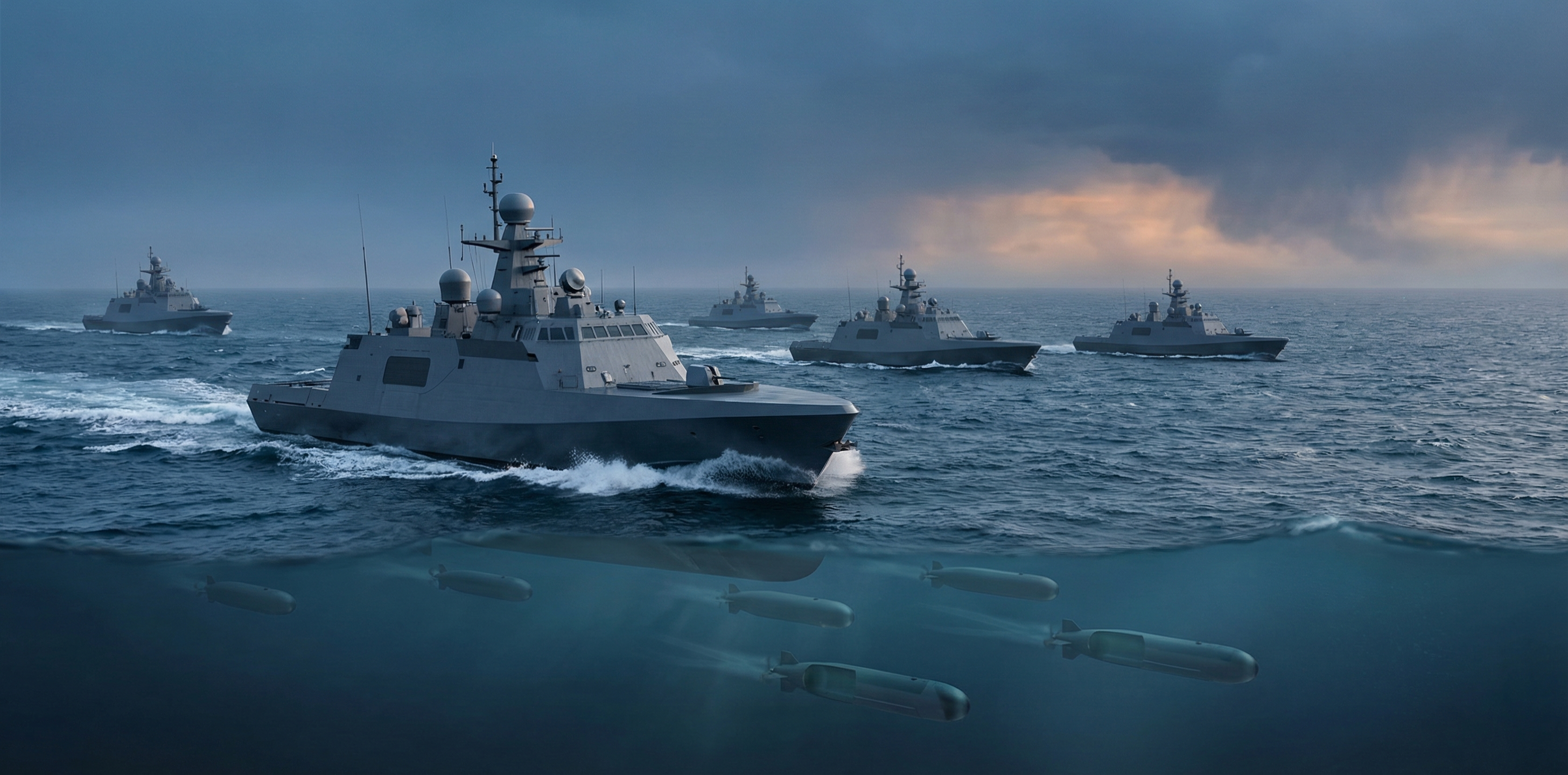
The Pentagon has quietly released its spending blueprint for $153 billion in One Big Beautiful Bill reconciliation funds — and it is the most aggressive single investment in autonomous warfare in American history. Drones by the thousands. Robot warships in every ocean. AI-piloted strike aircraft. Autonomous ground vehicles built to breach enemy lines without a human inside. What was once the language of defense futurism is now line items in a congressional filing.
The Rush to Obligate: Why the Pentagon Is Moving at Warp Speed
The spending plan, an unclassified 85-document submission obtained by Defense One, covers $153.3 billion across 261 individual program allocations. The money flows from the One Big Beautiful Bill Act — the sweeping reconciliation legislation passed in 2025 — which pushed total Pentagon and military-related spending past the trillion-dollar threshold for fiscal year 2026.
Technically, the Pentagon has until September 2029 to spend it. But the administration is not waiting. The department is racing to obligate as much as possible by September 30, 2026 — the end of the current fiscal year. The reason, according to Mark Cancian, senior adviser at the Center for Strategic and International Studies, is bluntly political: "Getting the money obligated protects it politically. Otherwise, a future Democratic Congress could try to rescind the money by arguing that DOD can't spend it."
That urgency is reshaping how contracts are being structured. The document states the Pentagon "is working to accelerate execution into FY 2026 if that can be done without sacrificing effectiveness." Critics warn that moving $150 billion through a procurement system that has never once passed a financial audit is a recipe for waste. Supporters counter that the urgency is strategic, not just political — and point to Russia's use of cheap drones in Ukraine and China's accelerating autonomous systems programs as evidence that the U.S. cannot afford to wait.
The Air and Sea Drone Revolution: Billions Flowing to Unmanned Systems
The largest cluster of autonomous-systems spending — outside of missile defense — targets low-cost, high-volume drone production across every domain. The core logic is straightforward: cheap, autonomous, and disposable beats expensive, crewed, and irreplaceable in high-intensity conflict.
The Navy gets the biggest single allocation in this category: $2.1 billion to expand deployment of medium drone boats like the Sea Hunter, the 132-foot unmanned surface vessel that can operate for months without a crew. An additional $1.5 billion goes toward small surface drones — the kind of fast, cheap platforms that have already demonstrated devastating effectiveness in the Black Sea, where Ukrainian maritime drones have repeatedly struck Russian naval vessels at a fraction of the cost of a conventional warship engagement.
Underwater, the Navy receives $1.3 billion for new autonomous submarine drones and payloads. This is the quietest line item in the document — literally. Undersea autonomous systems are where the most sensitive classified programs operate, and the unclassified plan almost certainly represents a fraction of what is actually being funded in that domain.
In the air, the Collaborative Combat Aircraft program — the Air Force's AI-piloted loyal wingman drone — receives a combined $789.4 million, with $678 million of that funded directly from the One Big Beautiful Bill. The CCA program is designed to pair autonomous strike aircraft with crewed F-35s and F-22s, multiplying combat power without multiplying pilot risk.
The plan also allocates $1.4 billion to expand the industrial base for drone manufacturing — a recognition that the bottleneck is not design but production. The U.S. defense industrial base is simply not set up to produce tens of thousands of cheap drones at the rate modern warfare now demands. That gap between capability and production volume is something companies like Anduril have been specifically built to close.
Separately, the plan designates $145 million for "development of artificial intelligence to enable one-way attack unmanned aerial systems and naval systems" — the government's careful bureaucratic phrasing for AI-guided kamikaze drones, the category of weapon that has already transformed the character of conflict from Nagorno-Karabakh to Gaza to Ukraine.
The Defense Innovation Unit Gets Its Biggest Budget Ever
Perhaps the most consequential structural change in the spending plan is what it does to the Defense Innovation Unit. The DIU — the Pentagon's commercial technology accelerator, originally created in 2015 to bridge the gap between Silicon Valley and the military — receives a budget of $2 billion, nearly doubling its previous allocation of $1.3 billion.
This is not just a funding increase. It is a bet that the traditional defense acquisition process — which can take 10 to 20 years to field a new weapons system — is incompatible with the pace of technological change. The DIU operates under different authorities that allow it to move faster, work with non-traditional contractors, and adapt commercial technology for military use in months rather than decades.
The plan pairs the DIU increase with $500 million for the newly created Defense Autonomous Warfare Group, tasked specifically with preventing bureaucratic delays in delivering critical autonomous systems to the front lines. And $650 million goes to joint multi-domain collaborative autonomy programs — the technical initiative to make sea, air, and land drones talk to each other and execute coordinated missions with minimal human involvement.
That last item is arguably the most strategically significant. Individual drones are dangerous. Swarms of drones that can coordinate across domains — a submarine drone surfacing a sensor relay for an aerial strike drone that cues a ground vehicle — are a fundamentally different kind of weapon.
Land Robots and the Army's $74 Million Ground Fighter
The Army's centerpiece in the autonomous systems budget is the Autonomous Ground Fighting Vehicle program, which receives $74 million. The AGFV is designed as a crewless or optionally-crewed armored fighting vehicle capable of breaching enemy positions, conducting reconnaissance, and providing direct fire support — the most dangerous tasks in ground combat — without putting soldiers inside.
The $74 million figure looks modest next to the Navy's multi-billion-dollar drone fleet investments, but it represents a significant acceleration of a program that has been slowly developing since the mid-2010s. The Army's "Robotic and Autonomous Systems Strategy" — which TTN covered in depth earlier this year — has been pushing toward autonomous-first ground combat doctrine, and the AGFV is the platform that would make that doctrine real.
The OBBB plan also includes $250 million to advance a broader AI ecosystem across the services, and $124 million for AI capability improvements at the Test Resource Management Center — the facility that evaluates whether autonomous systems actually work before they are fielded. That second allocation matters more than it looks: one of the persistent challenges in autonomous weapons development is that simulation testing does not reliably predict real-world performance, and the Pentagon has been burned before by systems that worked in the lab and failed in the field.
Golden Dome and the $24.4 Billion Missile Defense Bet
The single largest allocation in the entire spending plan — $24.4 billion for the Golden Dome missile defense initiative — is also the most technically ambitious. The program aims to build a layered defense against ballistic missiles, cruise missiles, and hypersonic weapons that could threaten the continental United States.
The breakdown is revealing about where the technical challenges are. $5.6 billion goes to space-based interceptors designed to destroy hypersonic missiles during their boost phase — before they can maneuver to evade ground-based defenses. This is the hardest problem: boost-phase intercept requires interceptors in orbit, which creates its own arms-control and liability complications. $2.2 billion is allocated for "acceleration of hypersonic defense systems," an acknowledgment that the U.S. is currently behind China and Russia in deployed hypersonic missile capability and needs to catch up fast. The plan also includes $2 billion for new ground-based radars and $250 million for directed-energy weapons — lasers and other systems designed to provide cheaper per-intercept costs than kinetic missiles.
Shipbuilding, Minerals, and the Industrial Base Reality Check
Autonomous systems require something that technology alone cannot provide: supply chains. The spending plan's $5 billion allocation for critical minerals — $3 billion in FY2026 and $2 billion in FY2027 — reflects a hard-nosed recognition that rare earth elements, lithium, cobalt, and the dozens of other materials needed for modern weapons systems are currently sourced primarily from China or from supply chains that pass through Chinese processing facilities.
The plan also includes $450 million to apply AI and autonomy to shipbuilding — a "digital architecture" initiative for shipyards that would use AI to forecast materials needs, predict maintenance requirements, optimize construction schedules, and manage the workforce more efficiently. The U.S. Navy's current shipbuilding backlog and the persistent delays plaguing major programs like the Virginia-class submarine have made modernizing shipyard operations a national security priority, not just an industrial efficiency project.
Traditional shipbuilding also gets direct investment: $4.6 billion for a second Virginia-class submarine and $5.4 billion for new guided missile destroyers. These are not autonomous systems, but they are the platforms that autonomous systems — undersea drones, surface vessels, aircraft launched from ship decks — will operate around and in support of.
The Execution Problem: Can the Pentagon Actually Spend $153 Billion Effectively?
The most honest section of the analysis is not the spending plan itself but the criticism surrounding it. Greg Williams of the Project On Government Oversight identified the core tension precisely: "One thing that the president and industry representatives often complain about is the unpredictability of demand for defense purchases. They say that makes things more expensive, and it provides a disincentive to invest in production capacity. In this case, we are exacerbating that problem by not having a predictable schedule for these expenditures."
The Aerospace Industries Association, by contrast, expressed cautious optimism. Margaret Boatner, AIA's vice president of national security policy, said the organization was "encouraged by the emphasis on key priorities like industrial base modernization, shipbuilding, and munitions" — the sectors where the U.S. has most visibly fallen behind in production capacity. The question is whether funneling an additional $150 billion into a system that has structural production constraints will accelerate capability or simply create a larger backlog at higher cost.
History offers a sobering precedent. Post-9/11 defense spending surges funded significant capability development but also produced hundreds of billions in waste, fraud, and programs that were never fielded. The Pentagon has never passed a financial audit. Its acquisition system remains one of the most criticized bureaucracies in American government. And it is now being asked to obligate $153 billion in a single fiscal year while simultaneously overhauling that acquisition system.
What is different this time — what makes the autonomous systems bet more credible than past surges — is that the technology has genuinely matured. The components of autonomous warfare: AI inference on edge hardware, GPS-denied navigation, low-cost sensor fusion, swarm coordination algorithms — are not laboratory demonstrations. They are commercially available and battle-tested. The question is not whether autonomous weapons work. It is whether the institution purchasing them can move fast enough to matter.