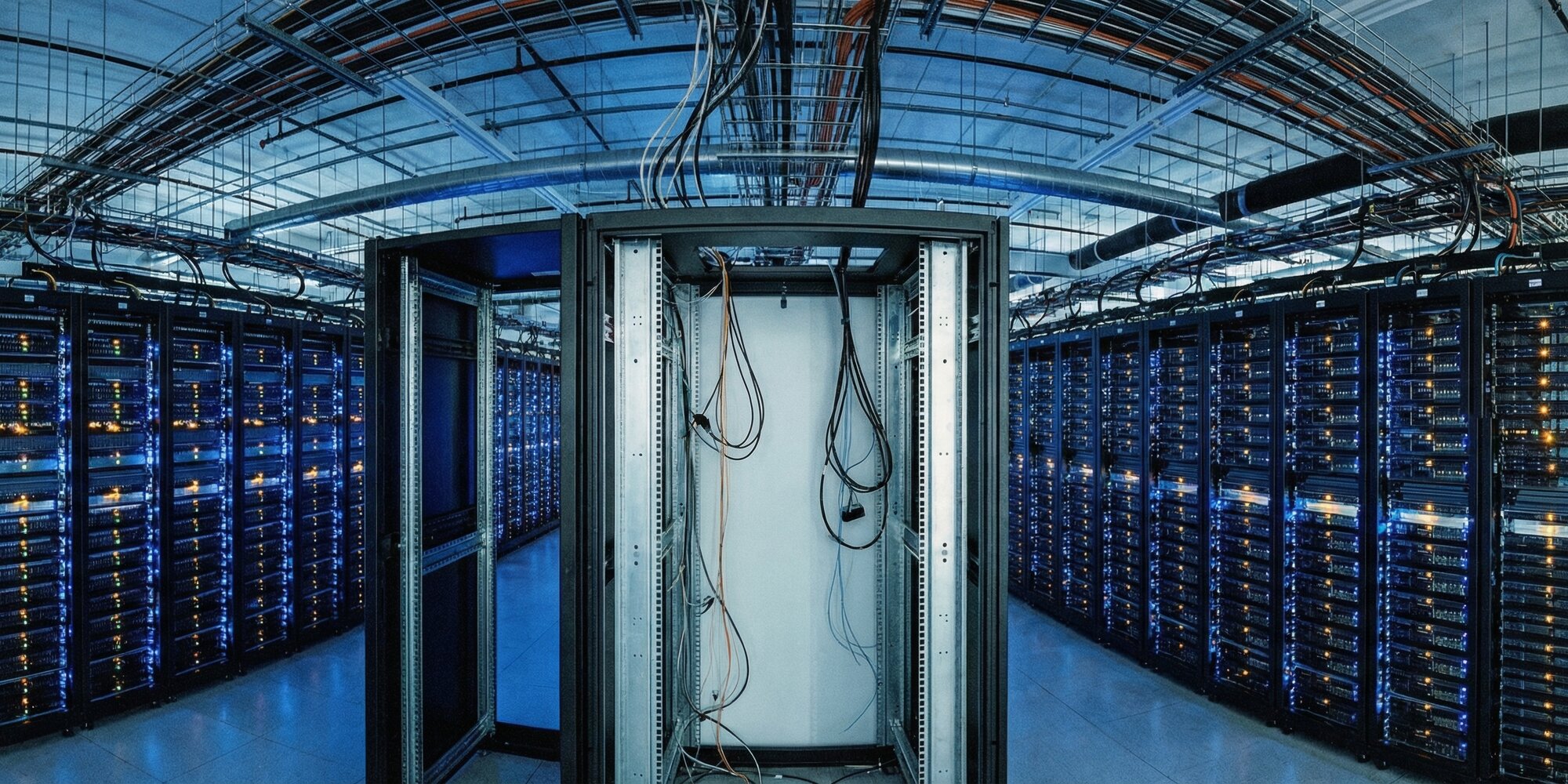
The decision seemed simple enough from OpenAI's perspective: why commit to a data center that would be stocked with yesterday's chips? When Bloomberg first reported that Oracle and OpenAI had abandoned their planned expansion of the Stargate facility in Abilene, Texas — a site that could have grown to 2 gigawatts of compute capacity — the immediate narrative focused on financing friction and demand uncertainty. Those factors are real. But the deeper story is more consequential: AI hardware is now upgrading faster than AI infrastructure can be built, and that gap is producing a structural crisis that no amount of debt financing can paper over.
One Simple Reason OpenAI Walked Away
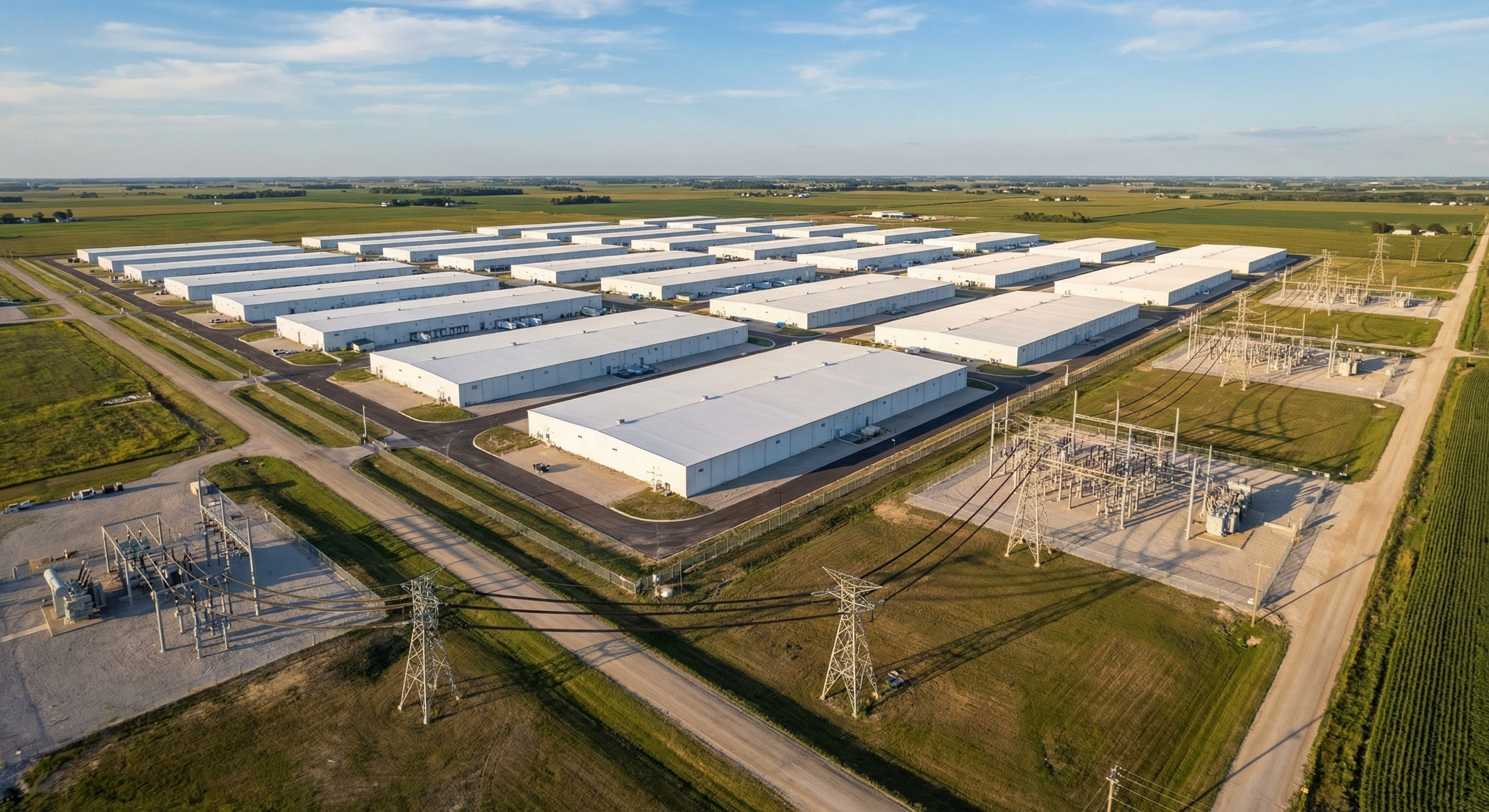
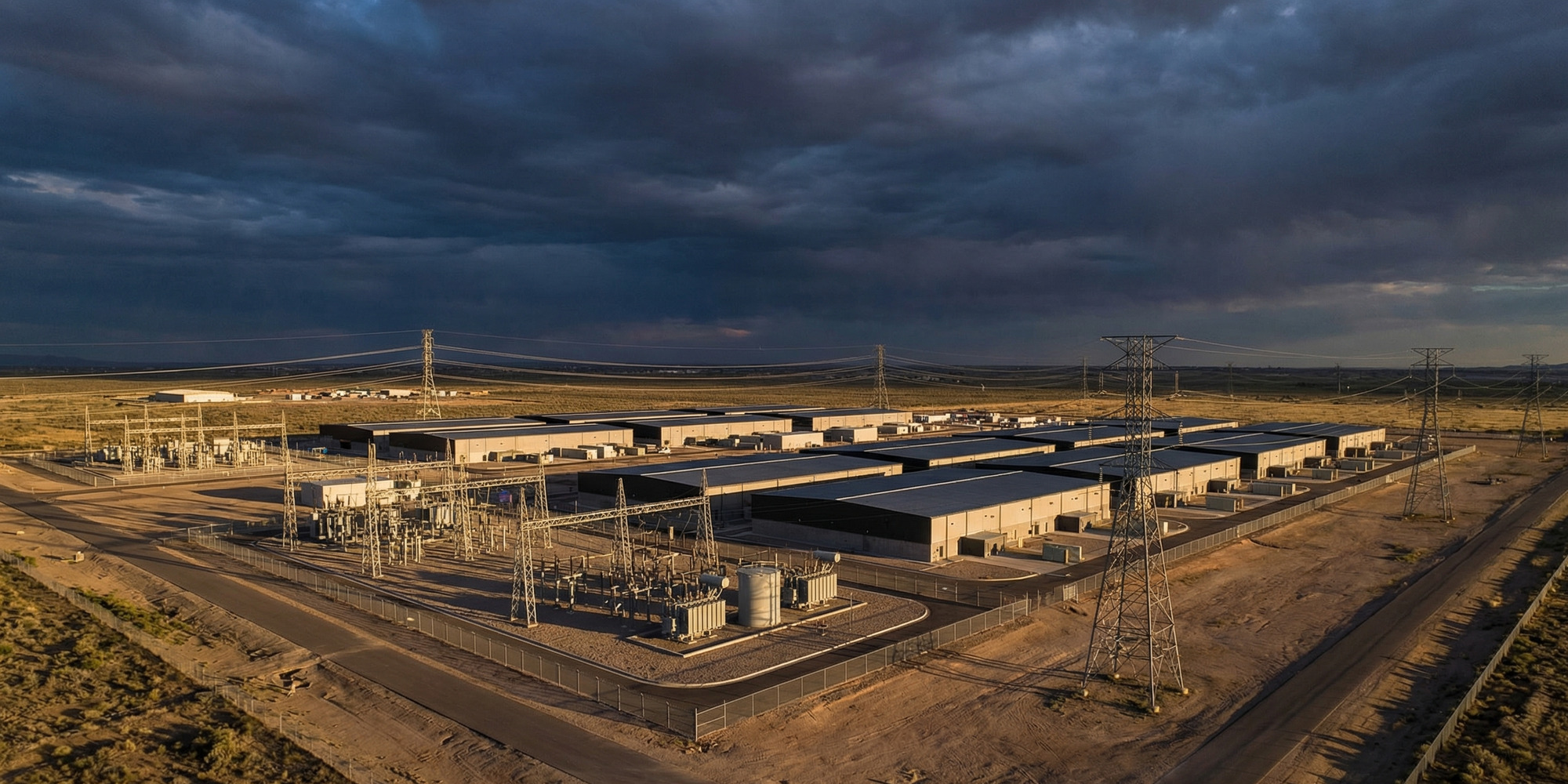
The Abilene site, a roughly 1,000-acre campus in west Texas, is currently being built out to approximately 1.2 gigawatts of capacity. That project remains on track. What collapsed was the planned expansion — an additional buildout that would have more than doubled the facility's footprint.
According to CNBC's reporting, OpenAI's rationale for walking away was not primarily financial. The company wants clusters equipped with Nvidia's next-generation Vera Rubin processors — not the Blackwell GPUs already ordered and slated for the existing Abilene site. The power for that existing site isn't even projected to come fully online for another year. By that point, Vera Rubin — which Nvidia unveiled at CES in January and already has in production — will deliver five times the inference performance of the Blackwell architecture. In the hyper-competitive world of frontier AI benchmarks, five-times better performance is not a marginal upgrade. It is a competitive generation gap.
The logic from OpenAI is cold but defensible: why lock in gigawatts of capacity around Blackwell when Vera Rubin clusters are coming, each delivering a step-change in the capability-per-dollar equation that directly affects model performance rankings, developer adoption, and ultimately revenue?
The Treadmill No One Planned For
This is the core of the structural problem. For most of its history, Nvidia operated on a roughly two-year cadence for major data center GPU generations — Volta, Ampere, Hopper, each separated by roughly 24 months. That pace was fast but manageable. Data center developers, hyperscalers, and cloud providers could plan a facility's hardware lifecycle with reasonable confidence.
Under CEO Jensen Huang, Nvidia has compressed that to an annual cycle. Hopper gave way to Blackwell. Blackwell is already giving way to Vera Rubin. Rubin Ultra is already on the roadmap. Each generation offers meaningfully better inference and training performance — not incremental gains, but often multiples. That's extraordinary progress. It is also, for infrastructure investors and operators, a planning nightmare.
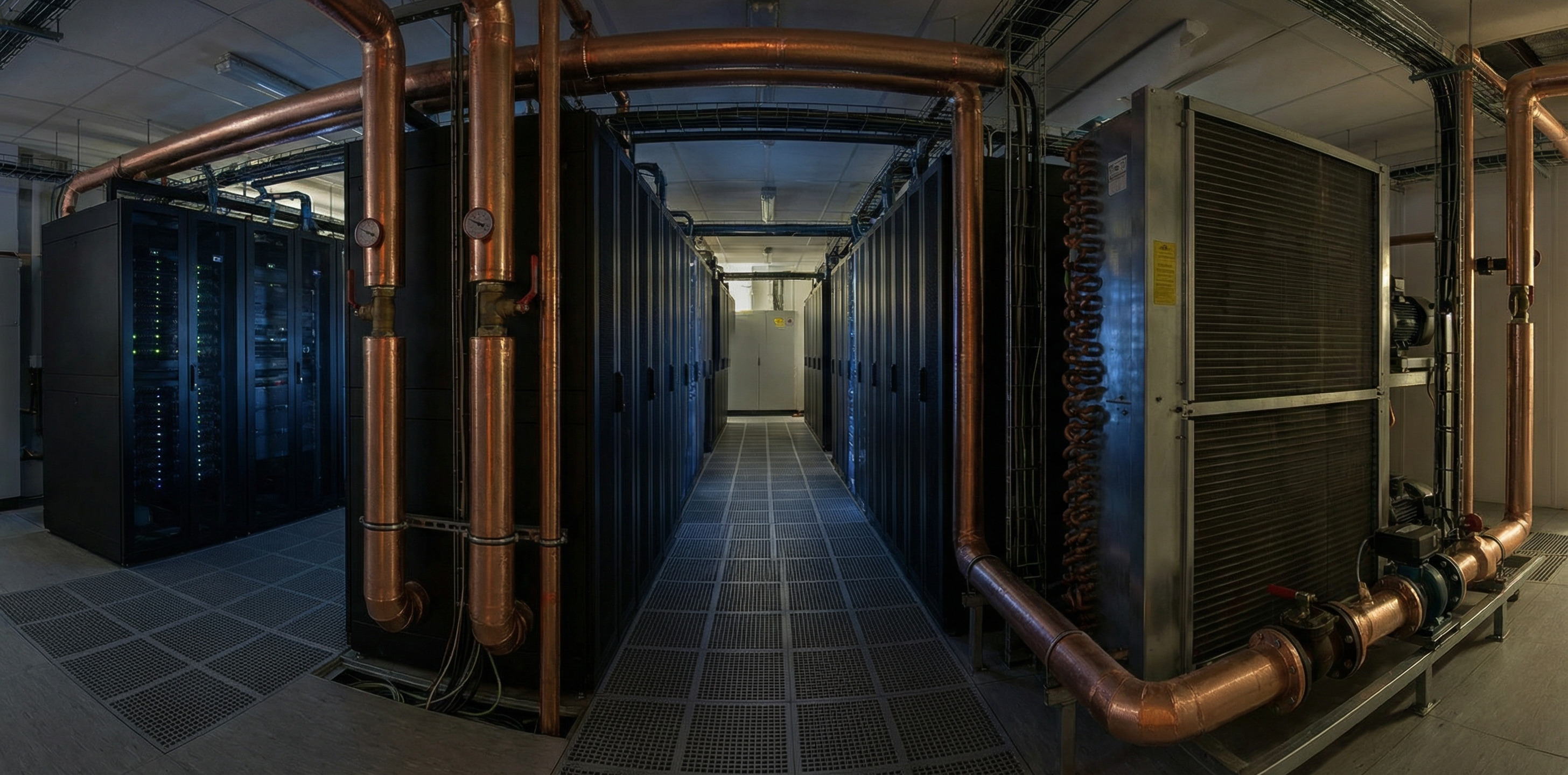
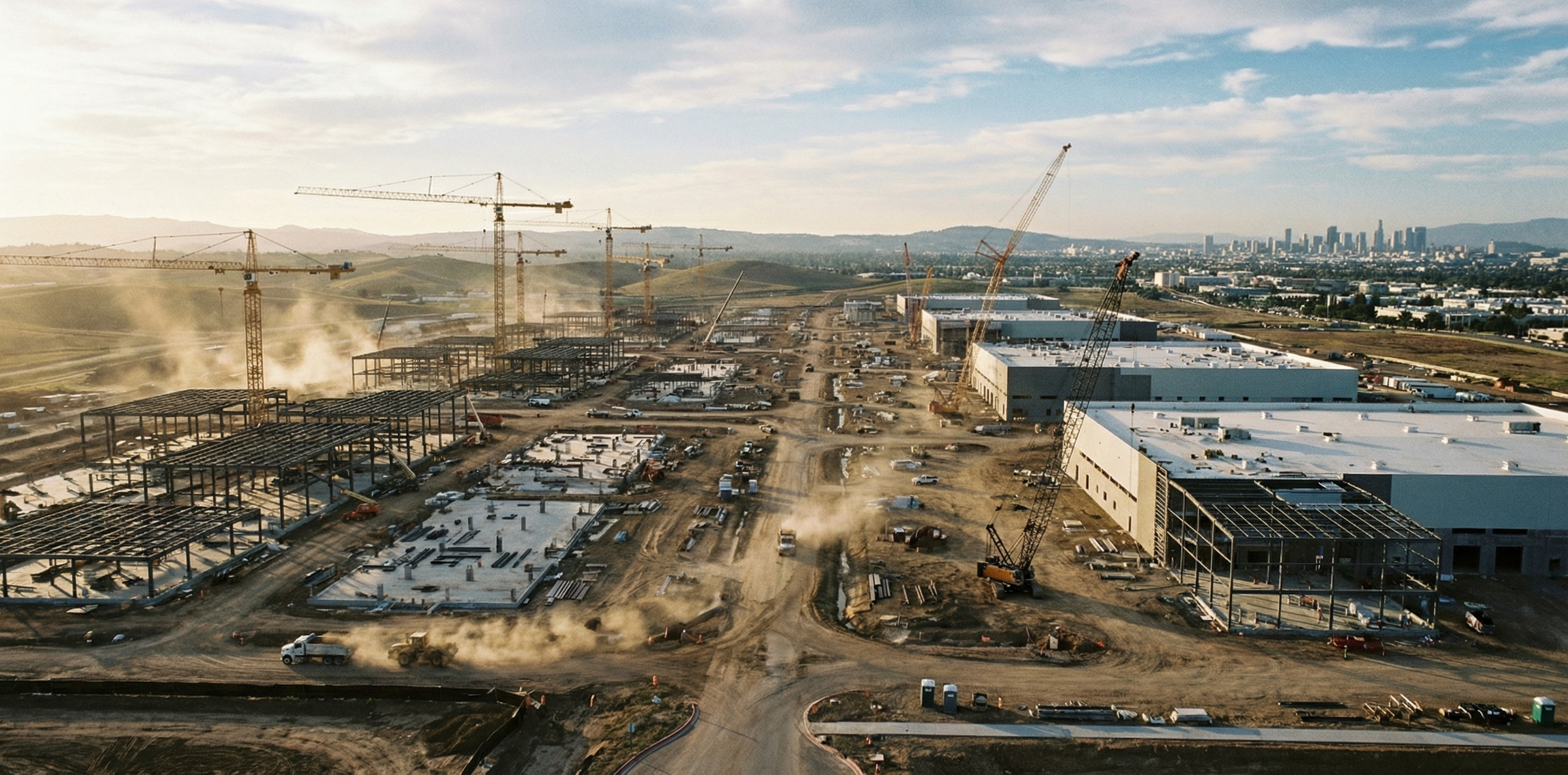
The build timeline for a hyperscale data center — securing land, obtaining permits, connecting grid power, constructing the facility, and standing up the mechanical and electrical systems — runs a minimum of 12 to 24 months from commitment to operational capacity. In some constrained markets, it's longer. That timeline has not compressed at anything close to the pace of GPU iteration. The result is a structural mismatch: by the time a facility built around today's chips is ready to run, the chips it was designed for may already be one or two generations behind.
For most industries, being one generation behind in hardware is an acceptable operational condition. For frontier AI developers competing on benchmark rankings and inference cost per token, it is not. The smallest improvements in model performance can cascade into enormous differences in developer adoption and commercial success — differences that are closely tracked, widely published, and directly monetized.
Oracle's Particular Exposure
Every hyperscaler building AI infrastructure faces some version of this challenge. Oracle's situation is uniquely acute because of how it is financing the buildout. According to Fortune, Oracle has accumulated more than $100 billion in debt to fund its AI infrastructure ambitions — a strategy distinct from competitors like Google, Amazon, and Microsoft, which are financing their expansions primarily from the cash flows of their core businesses.
In February, Oracle announced plans to raise an additional $50 billion in debt and equity to continue the buildout. The company has also reported negative free cash flow — a metric that, combined with the debt load, has rattled Wall Street. Oracle's stock had lost more than half its value from its September peak before this week's earnings report; it had fallen 23% year-to-date as of Tuesday's close.
The financial structure creates a specific risk: Oracle committed to the debt, secured the sites, ordered the hardware, and hired the staff — based on the assumption that its anchor customer, OpenAI, would grow with it. When OpenAI concluded that the chips being ordered would be sub-optimal relative to what Nvidia would ship a year later, that calculus broke down. Oracle is now holding the bill for infrastructure its primary customer no longer wants to expand into.
Adding to the pressure, CNBC reported that Blue Owl, an Oracle financing partner, has declined to fund an additional facility and is cutting up to 30,000 jobs. The financing pipeline that underpins Oracle's expansion strategy is showing visible strain.
Nvidia Steps In — and Helps Meta Step Up
The abandoned Abilene expansion did not remain unclaimed for long. According to The Register and The Dallas Morning News, Nvidia moved quickly after the OpenAI departure became known. The chip company put down a $150 million deposit with Crusoe — the developer of the Abilene expansion site — and began working to attract Meta as a replacement tenant.
Meta's appetite for compute capacity has been well-documented. On its Q4 2025 earnings call, CEO Mark Zuckerberg announced intentions to invest up to $135 billion in capital expenditures in 2026, with a significant portion targeting GPU compute. Negotiations between Meta and Crusoe for the expansion site are ongoing, with the outcome still uncertain — but the fact that Nvidia itself is brokering the deal, and putting skin in the game with a nine-figure deposit, speaks to how seriously all parties are taking both the opportunity and the risk of leaving the capacity untenanted.
Nvidia's intervention is not purely altruistic. The chip company benefits directly when large facilities get built and filled with its hardware. A failed mega-campus in Texas would be a visible data point against the pace of AI infrastructure investment — not something Nvidia wants circulating on Wall Street.
Oracle's Earnings Offer a Counter-Narrative — For Now
Oracle reported its fiscal third-quarter results Tuesday, and the numbers were unambiguously strong. Total revenue came in at $17.19 billion, up 22% year-over-year and ahead of the $16.91 billion consensus. Cloud infrastructure revenue hit $4.9 billion, representing 84% year-over-year growth — an acceleration from the 68% pace in the prior quarter. Oracle raised its fiscal 2027 revenue guidance to $90 billion, roughly $3 billion above prior consensus.
The market responded with relief. Shares jumped nearly 10% in after-hours trading, eventually closing up 9.2% the following session. Credit default swap pricing, a measure of the company's credit risk, fell to its lowest point since early February.
"Oracle's quarter is a beat and a stress-test result for the AI trade," Emarketer analyst Jacob Bourne told Reuters. "As the most debt-exposed major player in AI infrastructure, Oracle is the canary in the coal mine, and this report suggests there's underlying health in AI spending beyond the hype."
Notably, Oracle's leadership did not directly address the reduced scale of the Abilene expansion during the earnings call. Executives focused instead on the strength of demand signals and the company's ability to manage costs — trying to reassure investors that the fundamental thesis behind the buildout remains intact even as the specific Texas situation illustrates its fragility.
The Industry-Wide Implication
The Stargate situation is the most visible articulation of a problem that extends well beyond one company's balance sheet. Every major infrastructure deal being signed today is a commitment to hardware that will be commercially deployed 12 to 24 months from now. Every one of those deals carries the risk that the hardware the facility was designed around has been superseded by the time the power comes online.
The collective ambition of the industry is not small. The eight largest hyperscalers — Google, Amazon, Meta, Microsoft, Oracle, Tencent, Alibaba, and Baidu — are expected to spend a combined $710 billion on data center infrastructure. Much of that capital is being committed right now, against specific hardware roadmaps. If Nvidia's annual upgrade cycle continues, and if AI developers continue to prioritize latest-generation chips over sunk infrastructure costs, the industry will face recurring version conflicts between committed facilities and demanded hardware.
This creates a new set of questions that the infrastructure investment community is only beginning to grapple with. How do you write a data center financing agreement when the anchor tenant's hardware preference may shift before the building is complete? How do you model depreciation on a facility whose primary asset — the GPU clusters inside it — may be commercially suboptimal within 18 months of installation? And what happens to the equity and debt that financed those assets?
None of these questions have clean answers yet. The Abilene situation is the first major public stress test of what happens when those questions collide with real money. It will not be the last.
What Comes Next
For Oracle, the immediate pressure is managing investor confidence while the debt-funded buildout continues. The Q3 earnings beat provides breathing room, but the fundamental tension between its financing model and the pace of hardware obsolescence has not been resolved — it has only been temporarily soothed by strong cloud revenue growth.
For the broader industry, the Stargate story is a forcing function for a conversation about how AI infrastructure gets designed, financed, and contracted in a world where the hardware inside it is refreshing annually. The models that worked for prior data center generations — long-term leases, multi-year hardware contracts, stable depreciation schedules — may need fundamental rethinking.
Nvidia, meanwhile, has little incentive to slow its upgrade cadence. Faster chips mean more revenue, more demand, more competitive moat. The hardware treadmill will keep accelerating. The question is whether the infrastructure industry can build the financial and contractual models to run alongside it — or whether the gap between build time and upgrade cycles will keep producing orphaned capacity and stranded billions.