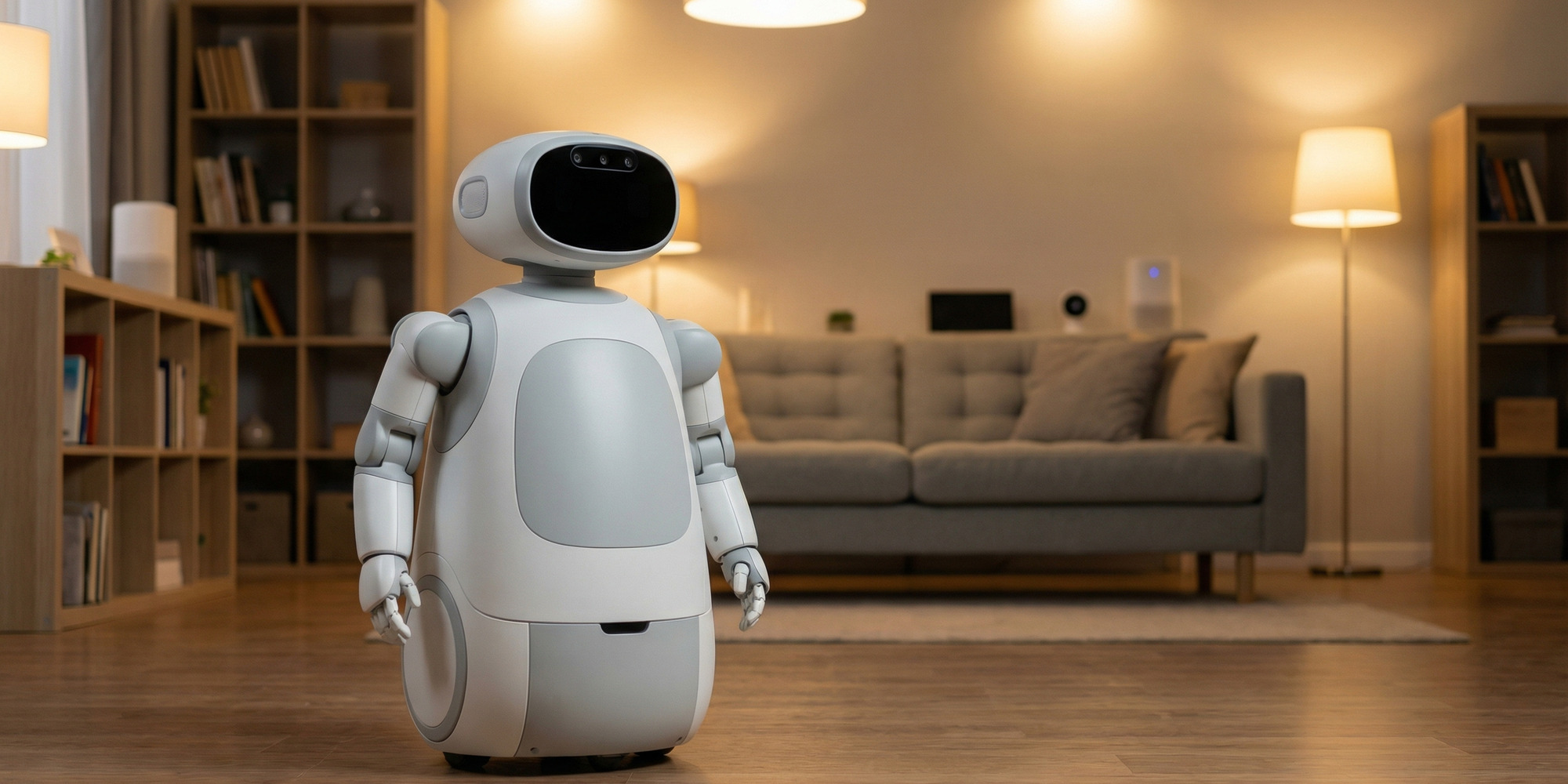
Amazon has acquired Fauna Robotics, the New York-based startup behind Sprout — a 42-inch-tall humanoid robot designed for everyday home and office tasks. Announced via LinkedIn posts by co-founders Rob Cochran and Josh Merel on March 24, the deal brings roughly 50 Fauna employees into Amazon's Personal Robotics Group and marks the company's second robotics acquisition in as many weeks. Combined with Amazon's earlier acquisition of RIVR, the wheeled-legged delivery robot maker formerly known as Swiss-Mile, the moves represent the most aggressive robotics acquisition spree in Amazon's history.
What Fauna Robotics Built — and Why Amazon Wanted It
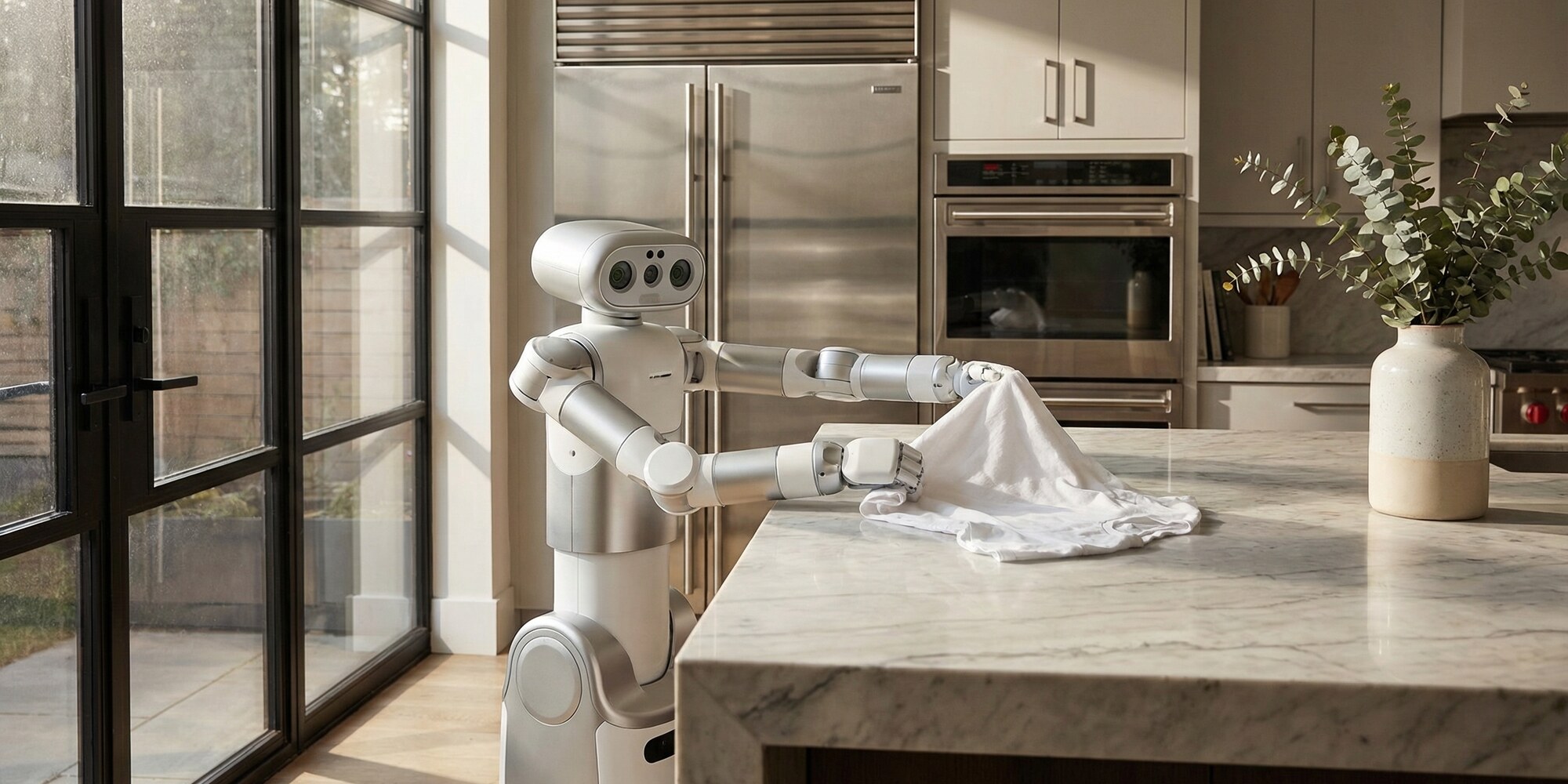
Fauna Robotics launched in New York City in February 2024 with a deceptively simple mission: "build capable, safe and fun robots for everyone." The company's flagship product, the Sprout Creator Edition, is deliberately smaller than the humanoids dominating industry headlines. At 42 inches tall — roughly the height of a seven-year-old child — Sprout is engineered to be non-threatening in home environments, capable of navigating furniture-cluttered spaces, and designed for practical consumer tasks: picking up toys, fetching items, assisting with light household chores.
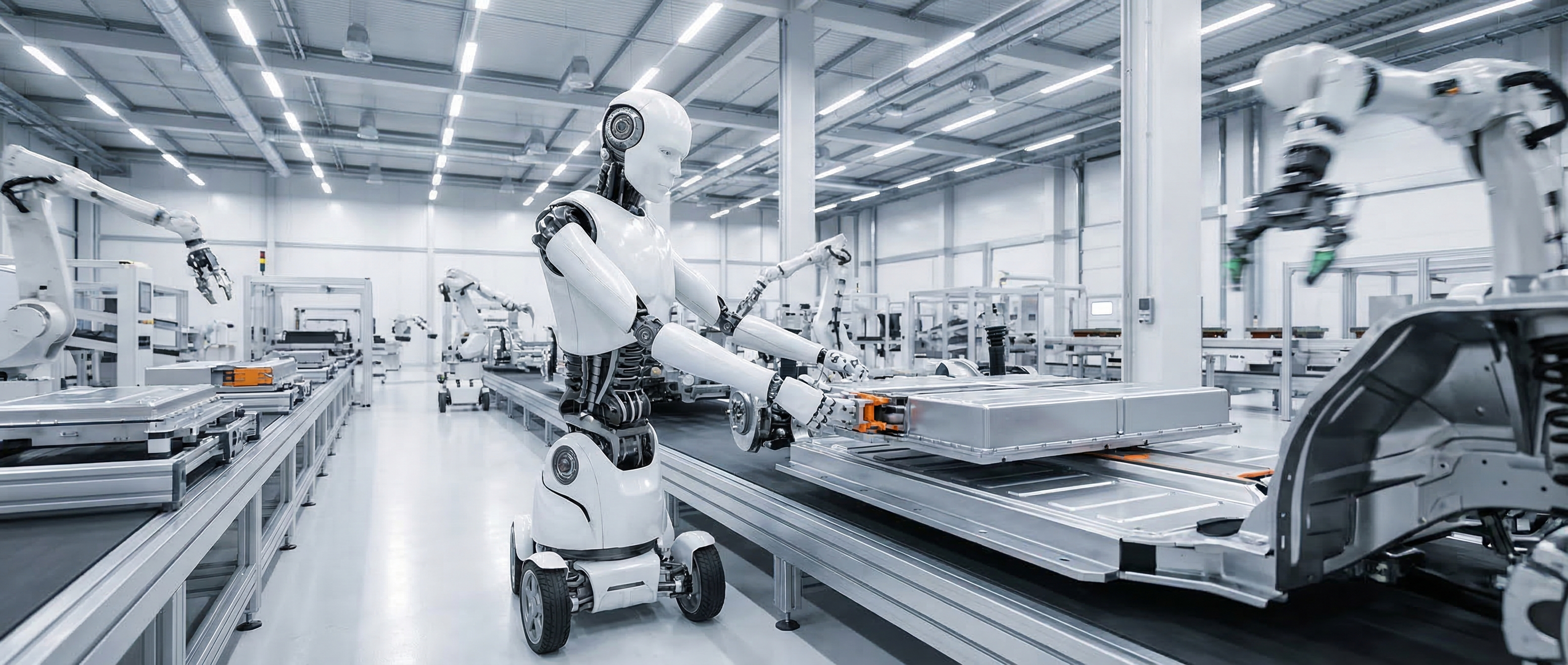
That design philosophy sets Fauna apart from the current generation of industrial humanoids being deployed in warehouses and factories. Where Tesla's Optimus, Figure's 02, and Agility's Digit are purpose-built for manufacturing environments with an emphasis on payload and uptime, Sprout was conceived for the living room — a fundamentally different engineering challenge that requires social legibility, safe contact behavior, and a form factor that doesn't alarm children or pets.
In his LinkedIn announcement, Cochran framed the acquisition as a natural next chapter: "Looking back at how far we've come in just two years, I am immensely proud of everything our team has accomplished." CTO Josh Merel was equally forward-looking, describing the next phase as "accelerating Fauna's vision" with Amazon's resources behind it.
According to Bloomberg's reporting, Fauna will continue offering Sprout to outside researchers, preserving the startup's connection to the academic robotics community that has been central to its R&D approach. The company's roughly 50 employees will join Amazon's Personal Robotics Group — a division that, until now, has largely focused on warehouse automation and logistics.
The Personal Robotics Group: Amazon's Home Robot Ambitions, Formalized
Amazon's interest in home robotics is not new. The company has been running robotics operations at scale since acquiring Kiva Systems in 2012, has deployed hundreds of thousands of Proteus, Sequoia, and Sparrow robots across its fulfillment network, and has been explicit about viewing robotics as a core capability rather than a cost-reduction tool. But warehouse automation and consumer robotics are separated by an enormous design chasm.
The Personal Robotics Group exists to close that gap. By routing Fauna into this division rather than its established logistics robotics organization, Amazon is signaling that Sprout's trajectory is toward the consumer market — not internal deployment. An Amazon spokesperson told Bloomberg the company is "excited about Fauna's vision to build capable, safe and fun robots for everyone," and elaborated: "Together with Amazon's robotics expertise and decades of experience earning customer trust in the home through our retail and devices businesses, we're looking forward to inventing new ways to make our customers' lives better and easier."
That framing — "decades of experience earning customer trust in the home" — is a deliberate reference to Amazon's Alexa ecosystem, its Ring security cameras, and its sprawling consumer electronics portfolio. The implication is that a home robot is not a standalone product but an extension of Amazon's existing home presence. Whether Sprout eventually integrates with Alexa, operates independently, or becomes the chassis for something entirely new is not yet public, but the strategic direction is unmistakable.
RIVR First, Fauna Second: A Week That Changed Amazon's Robotics Posture
The Fauna acquisition landed less than a week after Amazon quietly acquired RIVR — the Zurich-based startup formerly known as Swiss-Mile that builds wheeled-legged robots capable of navigating unstructured outdoor environments, including the last 50 feet of package delivery. An Amazon spokesperson described the RIVR deal as reflecting "our commitment to a continued investment in research" and efforts to improve safety for delivery personnel.
The two acquisitions address completely different segments of the robot opportunity, which is exactly the point. RIVR gives Amazon a platform for autonomous doorstep delivery — robots that can traverse driveways, steps, and uneven terrain to get packages to the door without human drivers. Fauna gives Amazon a platform for inside-the-home utility, once that package has been delivered. Together, they trace a continuous arc from the delivery van to the living room.
The sequencing also suggests organizational deliberateness. These are not opportunistic acqui-hires. Amazon has been assembling a robotics portfolio with specific capability gaps in mind, and the pace is accelerating. In a market where humanoid startups have raised billions in venture capital at speculative valuations — Physical Intelligence raised $400M, Figure raised $675M across rounds, Apptronik has closed a $350M Series A — Amazon's strategy of acquiring mature prototypes with real products and working teams is notably different from the VC funding approach. Amazon is buying demonstrated capability, not a pitch deck.
Why 42 Inches Matters More Than It Sounds
The design choice to build Sprout at 42 inches tall is not an aesthetic decision. It reflects hard-won insights about human-robot interaction that the consumer robotics research community has been accumulating for years.
Full-height humanoids — typically 5.5 to 6 feet tall and weighing between 130 and 180 pounds — present meaningful safety concerns in home environments with children, elderly residents, or pets. Their momentum in a fall or unexpected collision carries real injury risk, which is one reason the peer-reviewed safety literature has flagged LLM-driven home robots as not yet ready for unsupervised domestic deployment. A smaller, lighter robot reduces those risks substantially.
There are also practical geometry advantages. A 42-inch robot can access most kitchen countertops from certain angles, navigate standard doorways without clearance anxiety, fit under tables, and occupy far less visual and physical space in a room. It can be stored in a closet. These are not trivial considerations for consumer adoption — the history of smart home hardware is littered with products that were too obtrusive, too loud, or too visually dominant to achieve mainstream acceptance.
Fauna's bet is that the right form factor for a home robot looks more like a child-height companion than a factory-floor laborer. Amazon's acquisition is, implicitly, an endorsement of that thesis.
The Competitive Landscape Amazon Is Entering
Amazon is not stepping into an empty market. Samsung has been developing its own home robot concept. LG unveiled its CLOiD humanoid platform earlier this month. Apple is reportedly exploring personal robotics as a post-iPhone platform. And Chinese manufacturers including Unitree — which is pursuing an IPO — are producing humanoid hardware at costs that Western startups cannot currently match.
What Amazon brings that most competitors lack is distribution. Amazon has the world's most sophisticated consumer logistics network, direct relationships with hundreds of millions of households through Prime, and a proven track record of taking hardware products — from Kindle to Echo to Ring — from prototype to mass market. If Fauna's Sprout reaches commercial viability, Amazon does not need to build a new retail channel. It already has one.
The company also brings robotics engineering depth that Fauna, as a roughly 50-person startup, could not access independently. Amazon's warehouse robotics teams have accumulated more real-world robot-hours than almost any organization on the planet, and the lessons learned from deploying autonomous systems at fulfillment center scale — sensor calibration, edge-case handling, maintenance cycles, safety systems — translate meaningfully to consumer product development even when the operating environment changes dramatically.
What to Watch For
The Fauna acquisition is an acquisition, not a product launch. Sprout will not appear in Amazon's consumer lineup this year, and possibly not next year either. Consumer robotics development cycles are long, regulatory frameworks for home robots are still nascent, and Amazon has publicly positioned the move as a research-oriented investment rather than an imminent commercial push.
The tells to watch for over the next 12 to 18 months: whether Fauna begins appearing in Amazon's device hardware announcements; whether Sprout's "outside researchers" access expands into a broader developer program (a classic Amazon platform play); and whether Amazon begins acquiring or licensing underlying AI models for robot dexterity and manipulation — the specific technical bottleneck that separates capable warehouse robots from home-ready companions.
The acquisition also sets up a fascinating competitive dynamic with Google, which has invested heavily in robotics through DeepMind and its physical AI research programs, and with Apple, whose rumored home robot project would represent an even more direct head-to-head battle for the living room.
For now, Amazon has placed its bet. The company spent a decade building trust in the home through speakers and doorbells. It's now trying to put that trust on wheels — and legs.