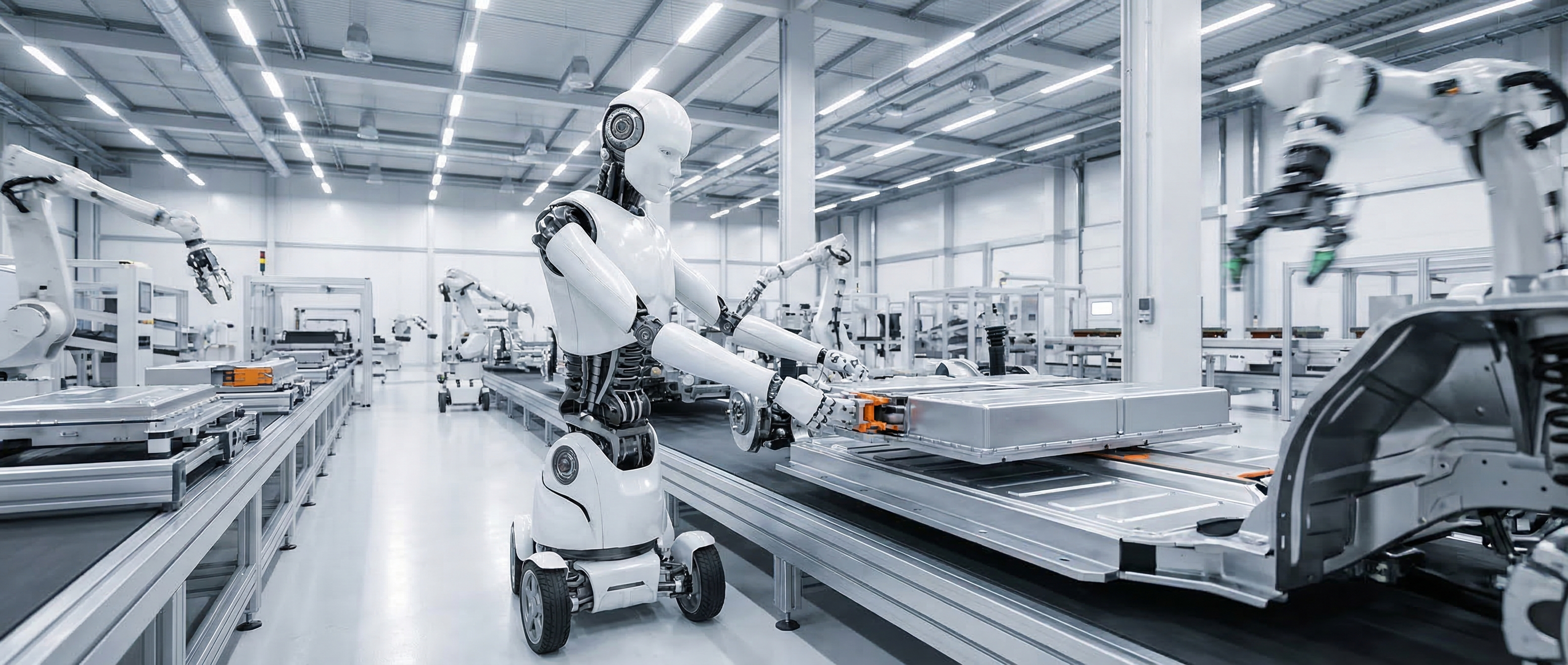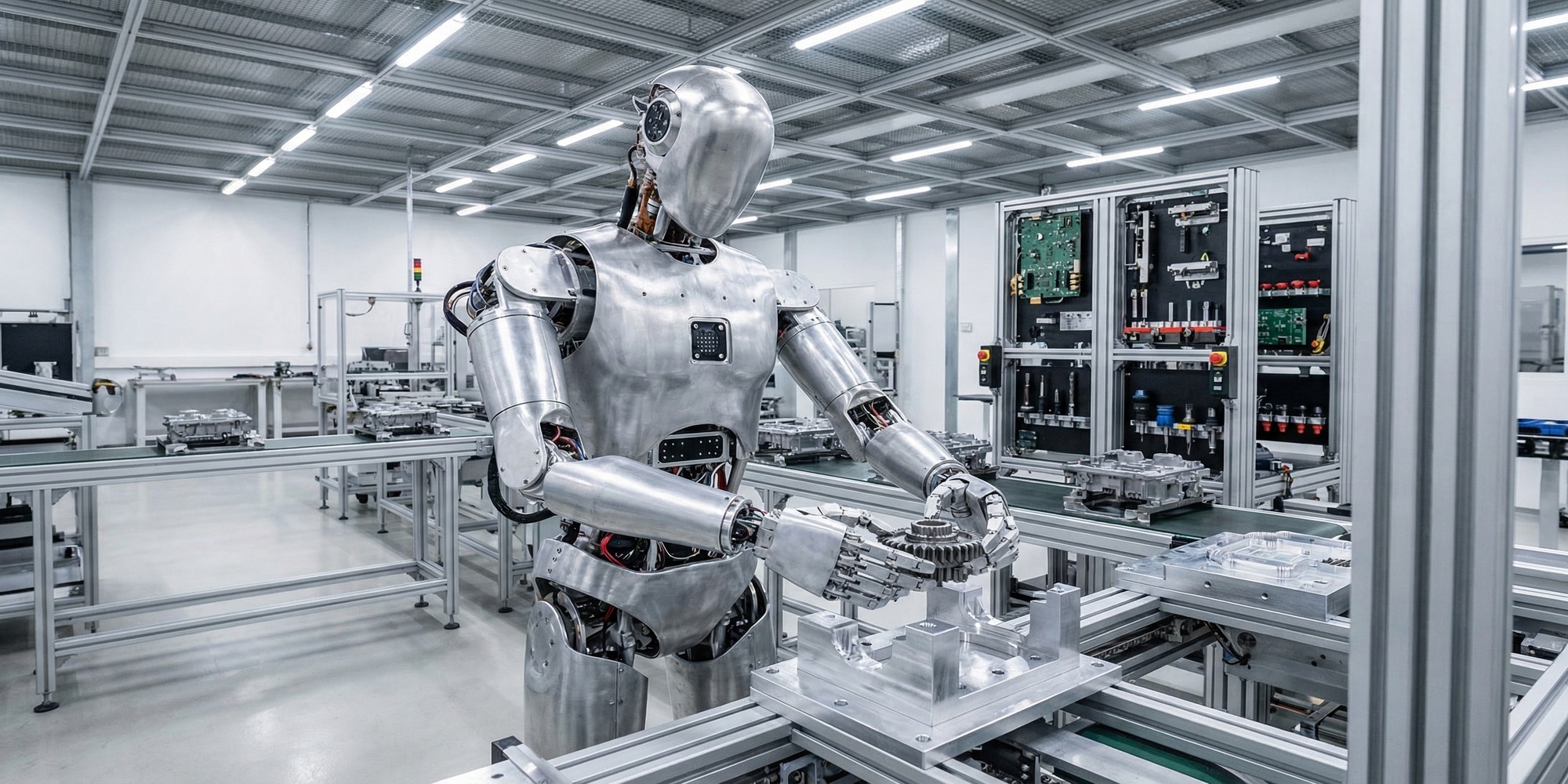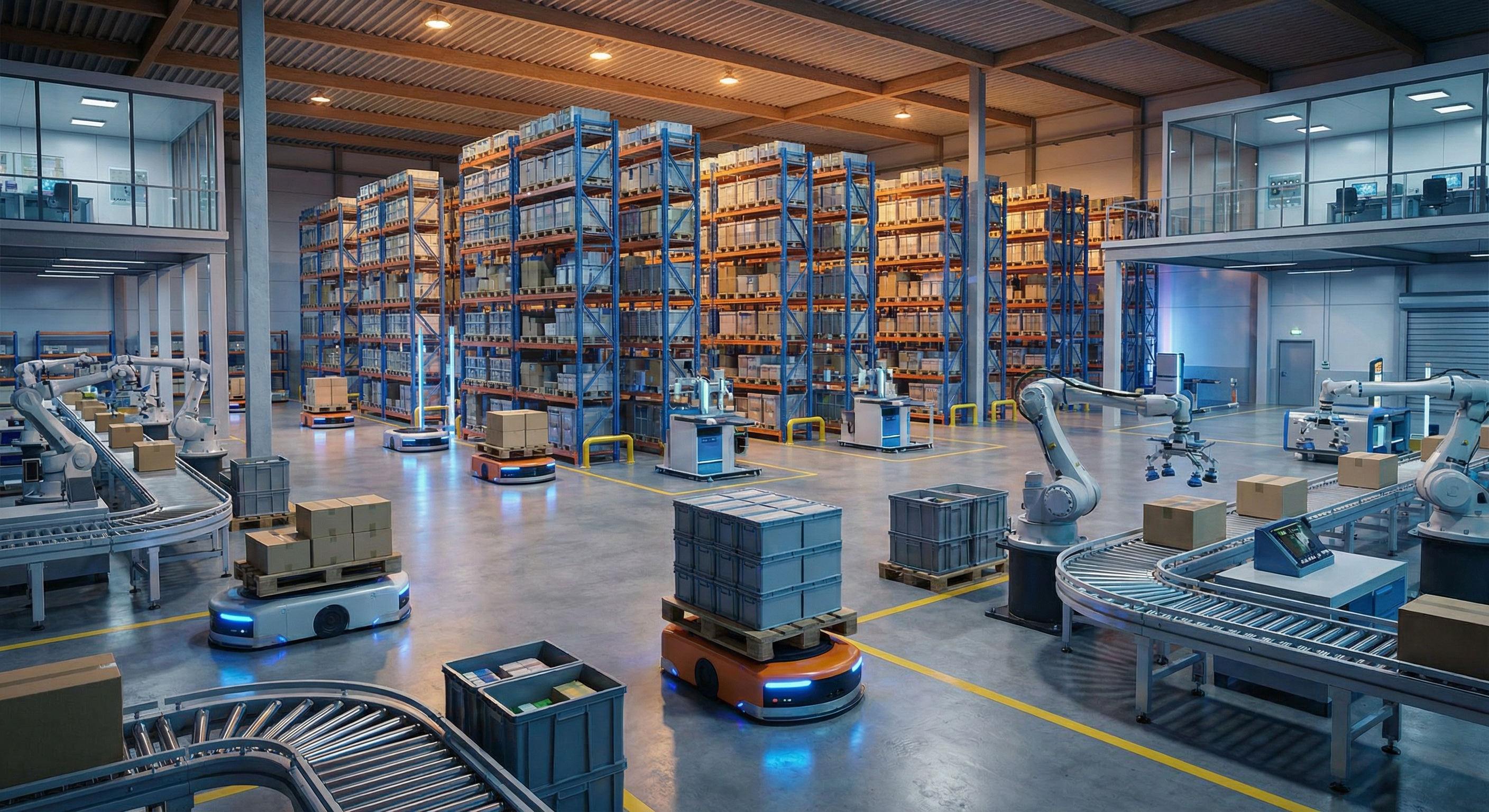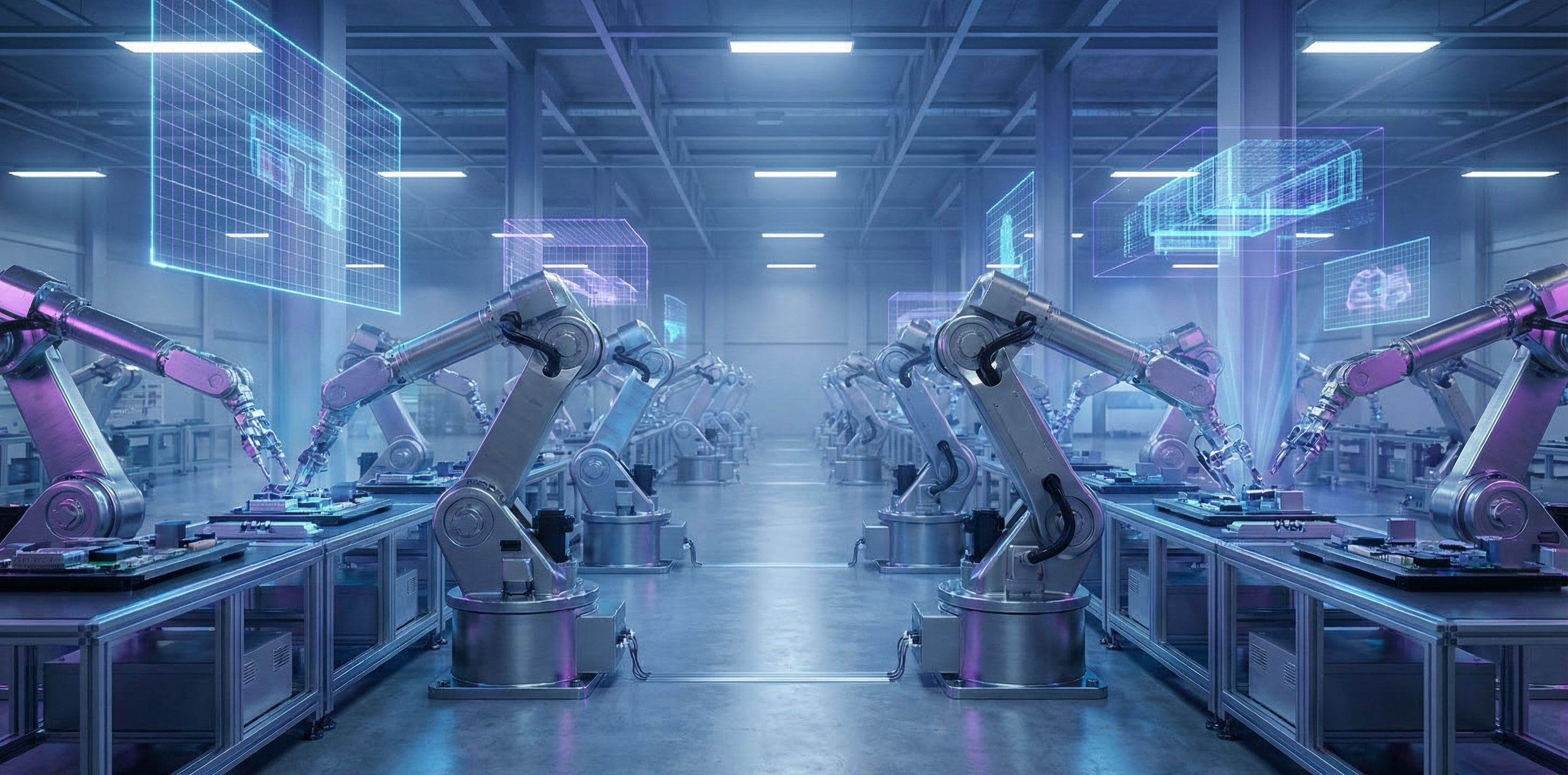
Jensen Huang walked onto the GTC 2026 stage in San Jose and declared, without qualification, that "Physical AI has arrived." Standing before an audience of thousands — with 110 robotics companies projected behind him and a humanoid robot named Olaf performing dexterous manipulation tasks in real time — he made the case that NVIDIA is no longer just a chip company. It wants to be the operating system for every intelligent machine on earth. The question worth asking: how much of what he unveiled is shipping today, and how much is a carefully staged preview of 2028?
What "Physical AI" Actually Means
The term "physical AI" refers to AI systems that perceive, reason about, and act within the physical world — robots, autonomous vehicles, and machines that close the loop between sensing and doing. It's distinct from the language models and cloud inference systems that have defined the AI conversation for the past three years. Those models read and write. Physical AI drives forklifts, welds car bodies, and navigates city streets.
NVIDIA's pitch is that deploying physical AI at scale requires the same thing that deploying cloud AI did: a unified platform. In cloud AI, that platform is CUDA plus an H100 plus a hyperscaler. In physical AI, NVIDIA is proposing that the stack be: Cosmos (world simulation), GR00T or Alpamayo (foundation models), Isaac Lab (robot training infrastructure), Jetson Thor or DGX (edge and datacenter compute), and DriveOS or Halos (safety certification layer). The ambition is total. The execution is uneven — some of this exists, some of it ships later in 2026, and some is a sketch.
The Foundation Models: What's Available Now vs. What's Coming
Three foundation models anchored Huang's physical AI announcements, and it matters to distinguish their availability clearly.
Cosmos 3 is the most foundational — a world model that unifies synthetic world generation, vision reasoning, and action simulation. Its purpose is to give robots a simulated environment to train in before touching real hardware. Cosmos is generally available now via the NGC catalog. This is the piece of the stack NVIDIA has been building longest, and it's real.
Isaac GR00T N1.7 is a vision-language-action (VLA) model for humanoid robots — it's the model that lets a robot watch a task once and replicate it through generalized dexterous reasoning rather than hard-coded programming. N1.7 is in early access with commercial licensing on HuggingFace. That "early access" qualifier is significant: it means production deployments are happening, but the model is not yet fully hardened for the range of industrial conditions it will eventually face.
GR00T N2 is the more impressive announcement — and the one that's furthest from deployment. Based on the DreamZero research architecture, it uses a "World Action Model" that lets robots complete unfamiliar tasks more than 2× as often as leading VLA models. It currently ranks first on MolmoSpaces and RoboArena benchmarks. NVIDIA targets a release by end of 2026. That's a roadmap, not a product.
For autonomous driving, Alpamayo 1.5 takes driving video, ego-motion history, navigation context, and natural language prompts and outputs traceable driving trajectories. More than 100,000 developers have downloaded the Alpamayo portfolio since launch — a genuine adoption signal in an industry that often mistakes developer downloads for production deployments.
Autonomous Vehicles: Uber, 28 Cities, and a 2027 Deadline
The most concrete near-term commitment in Huang's keynote was the expanded NVIDIA-Uber partnership. According to NVIDIA's official announcement, Uber will deploy a fleet of Level 4 autonomous vehicles running NVIDIA DRIVE Hyperion hardware and DRIVE AV software in Los Angeles and the San Francisco Bay Area in the first half of 2027. By 2028, that deployment expands to 28 cities across four continents.
That's an aggressive timeline. The first-half-2027 window gives Uber and NVIDIA roughly 14 months from GTC to commercial operations in two of the most complex urban driving environments in the United States. San Francisco, in particular, has been a graveyard of robotaxi ambition — Cruise's permit suspension and Waymo's careful, years-long ramp-up are the benchmarks being implicitly compared against. Huang called this "the ChatGPT moment of self-driving cars." That framing is worth holding lightly: the ChatGPT moment happened because a product surprised people by working. The Uber 2027 launch will be judged by whether it works.
Beyond Uber, NVIDIA announced new AV platform partnerships with BYD, Hyundai, Nissan, and Geely, joining an existing roster that includes GM, Mercedes, and Toyota. Isuzu and TIER IV are deploying autonomous buses on NVIDIA's DRIVE AGX Thor chip. Mobility platform partners Bolt, Grab, and Lyft are also part of the ecosystem. The breadth is genuine. The Halos OS safety architecture — featuring ASIL-D-certified DriveOS and an NCAP 5-star safety stack — suggests NVIDIA is serious about the regulatory certification work that autonomous deployment actually requires.
Industrial Robotics: Two Million Robots Getting AI Brains
The most immediately actionable announcements at GTC 2026 came from the industrial robotics partnerships. NVIDIA's official press release confirmed that FANUC, ABB Robotics, YASKAWA, and KUKA — whose combined installed base exceeds 2 million industrial robots worldwide — are integrating NVIDIA Omniverse libraries and Isaac simulation frameworks into their virtual commissioning solutions. Jetson modules are being built directly into robot controllers for real-time AI inference at the edge.
ABB's implementation is the most developed. RobotStudio HyperReality, built on NVIDIA Omniverse, reduces deployment costs by up to 40% and accelerates time-to-market by 50% — it launches in H2 2026. The mechanism is straightforward: factory operators build and test robot workflows in a photorealistic digital twin before deploying to physical hardware. Errors that would cost hours of downtime and physical damage get caught in simulation.
FieldAI and Skild AI are building what the brief calls "generalized robot brains" on Cosmos world models — meaning robots that can handle novel situations rather than only the specific tasks they were programmed for. FieldAI's announcement details their approach to applying Cosmos for industrial customers who need robots to operate in unstructured environments. This is the harder problem — and the more valuable one. A robot that can only do one task is a single-use tool. A robot with a generalized brain is a general-purpose worker.
Humanoid Robots: From Research to Production Push
Eleven humanoid robot companies appeared on stage at GTC 2026: 1X, AGIBOT, Agility, Agile Robots, Boston Dynamics, Figure, Hexagon Robotics, Humanoid, Mentee, NEURA Robotics, and Noble Machines. Of these, AGIBOT, Humanoid, LG Electronics, NEURA Robotics, and Noble Machines have specifically adopted the Isaac GR00T N models for industrial humanoid deployment — meaning commercial licensing, not just research partnerships.
The distinction between "using NVIDIA's platform" and "commercially deploying with commercial licensing" is real. Boston Dynamics and Figure are deeply integrated with NVIDIA's compute and simulation stack. But the path from GTC announcement to factory floor deployment has historically been measured in years, not quarters. The companies to watch are those with active commercial contracts — AGIBOT, which is deploying in Chinese manufacturing environments, and Agility Robotics, whose Digit humanoid is being piloted in Amazon fulfillment centers.
Healthcare robotics also got meaningful coverage: CMR Surgical and Medtronic are both named as NVIDIA platform partners, and Hexagon Robotics is building industrial autonomy solutions on the stack. PeritasAI is specifically targeting surgical operation coordination with multi-agent intelligence running on NVIDIA infrastructure.
The Platform Strategy: Why NVIDIA Is Positioned to Win
The $1 trillion AI infrastructure revenue projection Huang cited — combining Blackwell and Vera Rubin systems through 2027 — is the financial context for understanding why NVIDIA is investing so heavily in physical AI. Cloud AI created the first trillion. Physical AI, if it follows a similar adoption curve, is the next one.
What NVIDIA has that no competitor currently matches is vertical integration across the full physical AI stack: specialized chips (Jetson Thor for edge, DGX for training), simulation infrastructure (Cosmos, Isaac Lab 3.0, Newton Physics Engine 1.0), foundation models (GR00T N1.7, Alpamayo 1.5), developer tooling (Omniverse, NGC catalog), and safety certification (Halos OS, ASIL-D). The partnership with T-Mobile and Nokia to build AI-RAN infrastructure — turning 5G networks into distributed AI computers for physical AI data collection — extends that stack into connectivity.
Isaac Lab 3.0, currently in early access, adds large-scale robot learning on DGX infrastructure, multiphysics simulation via the Newton Physics Engine, and dexterous manipulation support. The developer page provides early access enrollment. Combined with GR00T N model access through NVIDIA's developer portal, the toolchain for training physical AI systems is more complete today than it was even six months ago.
What's Still Theoretical
Three announcements from GTC 2026 warrant skepticism proportional to their ambition. Vera Rubin Space-1 — orbital AI data centers extending NVIDIA compute to space — was announced as available "later," which in practice means its timeline is undefined. Space-based computing faces regulatory, launch, and thermal challenges that make it a meaningful long-term bet but not a near-term product.
GR00T N2, despite its benchmark rankings and impressive benchmark claims, is expected by end of 2026 — in an industry that frequently slips model release timelines by six to twelve months.
And the Uber 2027 deployment, while the most concrete of the three, carries execution risk that the press release doesn't fully capture. Launching commercial Level 4 service in Los Angeles and the Bay Area in 14 months requires not just functional AI but regulatory approval, fleet procurement, insurance frameworks, and operational infrastructure in two jurisdictions that have historically been cautious with autonomous vehicle permits.
None of this invalidates what NVIDIA unveiled at GTC 2026. The platform is real. The partnerships are real. The commercial licensing of GR00T N1.7 is real. Huang's proclamation that every industrial company will become a robotics company is the kind of prediction that sounds hyperbolic and then, two years later, turns out to have been conservative. But the distance between "physical AI has arrived" and "physical AI is running at scale in factories and city streets" remains a distance measured in time, capital, and regulatory tolerance. Jensen Huang knows this. He's just betting his company's next decade on clearing it.