Three weeks after the Precision Strike Missile fired its first shots in anger over Iran, the Pentagon is moving to ensure it never runs short again. On March 25, the Department of War signed framework agreements with Lockheed Martin, BAE Systems, and Honeywell Aerospace — deals designed to quadruple production of the PrSM, the THAAD interceptor, and the critical components that connect them all. The message is blunt: Operation Epic Fury revealed what a sustained high-intensity conflict actually burns through, and the industrial base has to catch up.
Three Contracts, One Doctrine
The Pentagon's announcement was packaged under the banner of the "Arsenal of Freedom" — a phrase that has become shorthand inside the Department of War for the effort to place the U.S. defense industrial base on what officials call a "wartime footing." Michael Duffey, Under Secretary of Defense for Acquisition and Sustainment, was direct: "Through this agreement, we are actively building the Arsenal of Freedom with speed and urgency. By empowering industry to invest in the factory floor, we are building a decisive and enduring advantage for our warfighters to outpace any potential adversary."
The three framework agreements differ in scope but converge on the same strategic logic. Lockheed Martin's deal with the Department of War targets the PrSM directly — unlocking production rates four times higher than current capacity, contingent on Congress granting up to seven years of multi-year contracting authority. Separately, BAE Systems and Lockheed jointly signed an agreement to quadruple infrared seekers for the Terminal High Altitude Area Defense interceptor — the precision guidance brain inside each kill vehicle. And Honeywell Aerospace signed a deal to ramp production of navigation systems, electronic warfare packages for fighter aircraft, Advanced Medium-Range Air-to-Air Missile components, and the Assure actuator that controls missile maneuvers in flight.
Taken together, the three agreements represent the most concentrated single-day munitions commitment since the early stages of the Ukraine conflict redefined how Western governments think about stockpile depletion.
What Operation Epic Fury Actually Proved
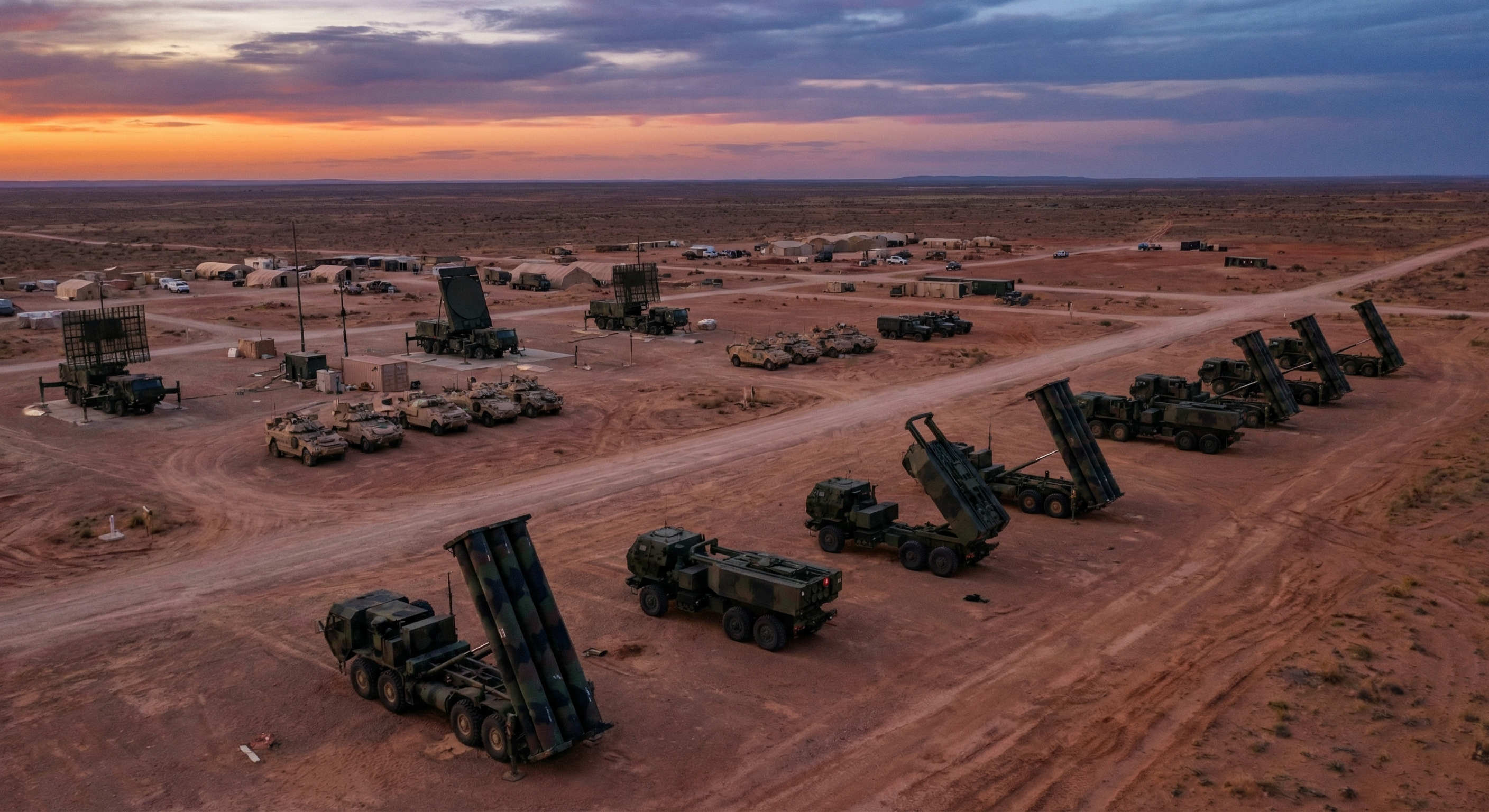
The catalyst is hard to separate from the context. On March 4, U.S. Central Command confirmed the first combat use of the PrSM — fired from HIMARS launchers positioned in open desert terrain as part of Operation Epic Fury. Video released the same day showed the long-range munitions streaking skyward, confirming what the Army had been quietly preparing for since at least 2025: that the PrSM would eventually need to earn its combat record.
It did. The PrSM's GPS-enhanced guidance system, its 250-mile standoff range, and its fragmentation warhead all performed against Iranian targets in what the Pentagon described as a multi-domain strike campaign that destroyed over 2,000 military objectives. CENTCOM Commander Adm. Brad Cooper did not suppress his enthusiasm: "I just could not be prouder of our men and women in uniform leveraging innovation to create dilemmas for the enemy."
The PrSM was designed as the successor to the Army Tactical Missile System (ATACMS), which is approaching its operational sunset. It received Milestone C approval from the Army in July 2025 — the gate that signals readiness for full-rate production. Operation Epic Fury accelerated that timeline from theoretical to urgent. Lockheed CEO Jim Taiclet put it plainly: "We are working closely with the Department of War and the U.S. Army to scale production to meet operational demand and ensure the joint force has the capabilities needed to deter and defeat emerging threats."
THAAD: From 96 to 400 Interceptors Per Year
The THAAD production surge is arguably the higher-stakes commitment. In January 2026, Lockheed and the Pentagon had already signed a framework agreement to increase annual THAAD interceptor production from 96 to 400 — a more than fourfold jump. The March 25 BAE Systems deal completes the supply chain logic by quadrupling the infrared seekers that give each THAAD kill vehicle its terminal homing capability.
BAE's THAAD seeker uses advanced sensors to lock onto incoming ballistic missiles traveling at speeds up to 17,000 miles per hour — threats that conventional kinetic or proximity-fuzed interceptors cannot reliably defeat. The kill is achieved through direct impact: pure kinetic energy, no explosive warhead. That hit-to-kill architecture makes the seeker the most technically demanding and production-constrained component in the entire THAAD system.
BAE CEO Tom Arseneault framed the March 25 agreement as a supply chain signal, not just a contract: "This new multiyear agreement provides a long-term demand signal that gives us the confidence to further invest in expanding our capacity. We remain focused on rapidly delivering superior technology at scale to help our warfighters maintain a decisive advantage." BAE will produce the seekers at facilities in Nashua, New Hampshire, and Endicott, New York.
The seven-year contract structure for both the THAAD seeker and the PrSM agreements is deliberate. Short-duration contracts historically prevent defense suppliers from making capital-intensive investments — new production lines, expanded workforces, supplier development — because the demand signal is too uncertain. Multi-year authority, once approved by Congress, locks in procurement volumes that justify those investments. Duffey made the logic explicit: "This agreement with BAE Systems sends a clear, stable, long-term demand signal. We are providing the certainty our partners need to invest, expand and hire. This is how we place the industrial base on a wartime footing."
The $35,000 Problem
Underneath the production announcements is a more uncomfortable arithmetic. The PAC-3 MSE interceptor — which works in concert with THAAD as part of the layered U.S. missile defense architecture — carries an estimated price tag of approximately $4 million per round. An Iranian Shahed drone costs roughly $35,000. That is a 114-to-1 cost exchange ratio, in favor of the aggressor.
Iran is reportedly producing those Shahed drones at a rate of approximately 10,000 per month. The math has drawn increased scrutiny about the sustainability of the U.S. interceptor stockpile under sustained attrition — particularly as Operation Epic Fury has stretched into its fourth week with no defined endpoint. Quadrupling THAAD and PAC-3 production doesn't solve the cost-exchange problem directly; it does address the inventory depletion problem, which is a prerequisite for any longer-term solution.
The broader strategy appears to be layered. Alongside the interceptor ramp-up, the Pentagon has been expanding its directed-energy and lower-cost counter-drone capabilities — but those programs remain years from operational deployment at scale. For now, the high-end interceptors are what's available, and the priority is ensuring they remain so.
PrSM Increment 2: The Maritime Extension
The production surge coincides with a significant capability expansion for the PrSM family. Just one week before the framework agreements were signed, Lockheed successfully tested PrSM Increment 2 — a variant equipped with a seeker designed to home in on moving maritime targets. The test, which saw the missile fly over 200 miles from a HIMARS launcher, marks the first step toward a land-based anti-ship capability using a platform already embedded in Army and allied European ground forces.
PrSM Increment 2 shares common baselines with the Increment 1 system that debuted in Operation Epic Fury, and both variants are compatible with HIMARS and the M270A2 Multiple Launch Rocket System. The maritime-strike extension is strategically significant: as the Strait of Hormuz closure demonstrated, naval chokepoints can be contested by land-based fires if the range and guidance are sufficient. A ground-launched missile that can strike relocating surface ships from 250 miles expands the Army's role in what has traditionally been a naval mission domain.
Two more Increment 2 test flights are scheduled for 2026. If they succeed, Lockheed expects to move rapidly toward integration under the quadrupled production framework already in place for Increment 1.
The Industrial Base Beneath the Headlines
The scale of the industrial commitment Lockheed has already made is worth noting. According to the company, it has invested more than $7 billion since President Trump's first term to expand capacity across priority systems — approximately $2 billion of that specifically directed at munitions production acceleration. These investments, in facilities, tooling, supplier development, and workforce expansion, are what enable the production quadrupling now being contractually locked in.
Honeywell's piece of the puzzle is less visible but equally important. Navigation systems, actuators, and electronic warfare components are the enabling layer that turns raw missile airframes into precision munitions. Honeywell's agreement covers the Assure actuator — which controls flight surfaces to maneuver missiles mid-flight — as well as AMRAAM components and navigation packages used across multiple platforms. Supply chain fragility in components like these has historically been the limiting factor when prime contractors attempt rapid production ramp-ups, making Honeywell's commitment a critical structural element of the entire Arsenal of Freedom strategy.
Separately, Lockheed has a January 2026 agreement to increase PAC-3 MSE production from 600 to 2,000 interceptors annually over seven years — filling out the lower-tier layer of the missile defense stack that operates below THAAD's high-altitude envelope.
What It Signals Beyond Iran
The Pentagon has been careful to frame these agreements in terms of deterrence as much as warfighting. The Arsenal of Freedom language — evoking the World War II Arsenal of Democracy — is deliberate: it frames industrial mobilization not as a reaction to a single conflict but as a permanent strategic posture.
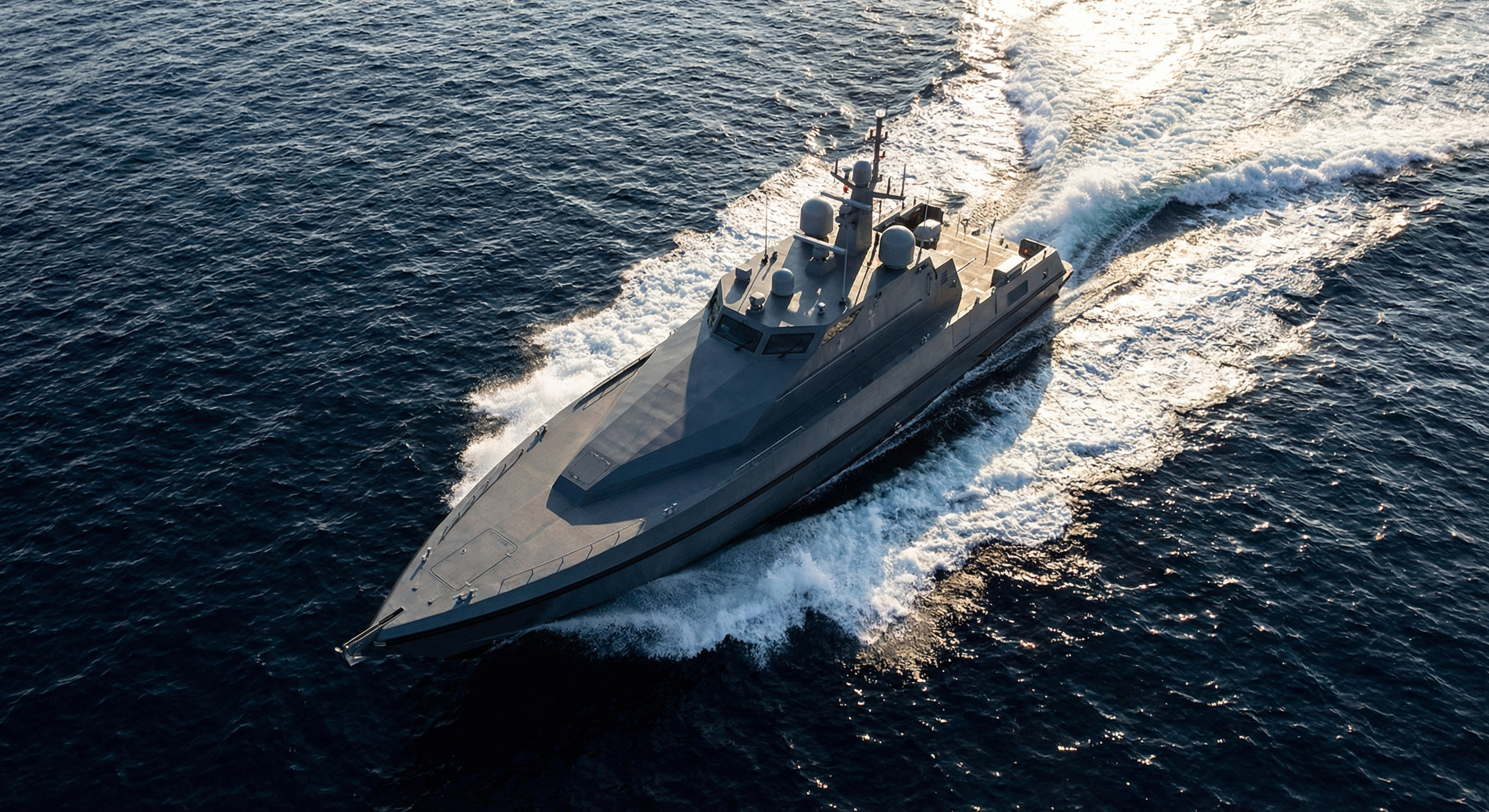
The timing of these commitments, taken alongside the combat debut of autonomous naval vessels in the same conflict and the Army's accelerating push into autonomous aviation, suggests a coherent procurement doctrine emerging in real time: fight with advanced systems now, learn from combat, immediately scale production. Operation Epic Fury is functioning as both a shooting war and a live test environment — the results feeding directly back into acquisition strategy.
The multi-year contract structures, if Congress grants the authority, will create a defense industrial pipeline that persists well beyond the current Iran conflict. Whatever the political outcome of the war, the U.S. missile production infrastructure will emerge from it substantially larger than it entered.