For years, the Pentagon promised drone boats would transform naval warfare. On Thursday, they did — quietly, in a conflict most Americans hadn't been tracking closely. The Department of Defense confirmed that the Global Autonomous Reconnaissance Craft, a five-meter uncrewed speedboat built by Maryland-based BlackSea, has been conducting maritime patrols as part of Operation Epic Fury, the ongoing U.S. military campaign against Iran. It is the first time Washington has officially confirmed using autonomous surface vessels in an active conflict zone — and it comes despite a string of technical failures that would have quietly killed most military programs.
The GARC Goes to War
The confirmation came in a statement from Tim Hawkins, a Pentagon spokesperson for U.S. Central Command. In response to questions from Reuters, Hawkins said the GARC had "successfully logged over 450 underway hours and more than 2,200 nautical miles during maritime patrols in support of Operation Epic Fury." The vessels are being used for surveillance, not offensive strikes — at least as far as the Pentagon has confirmed publicly. "The GARC is an emerging capability and part of a fleet of surface drones operated by U.S. 5th Fleet to enhance awareness of what's happening in regional waters," Hawkins said.
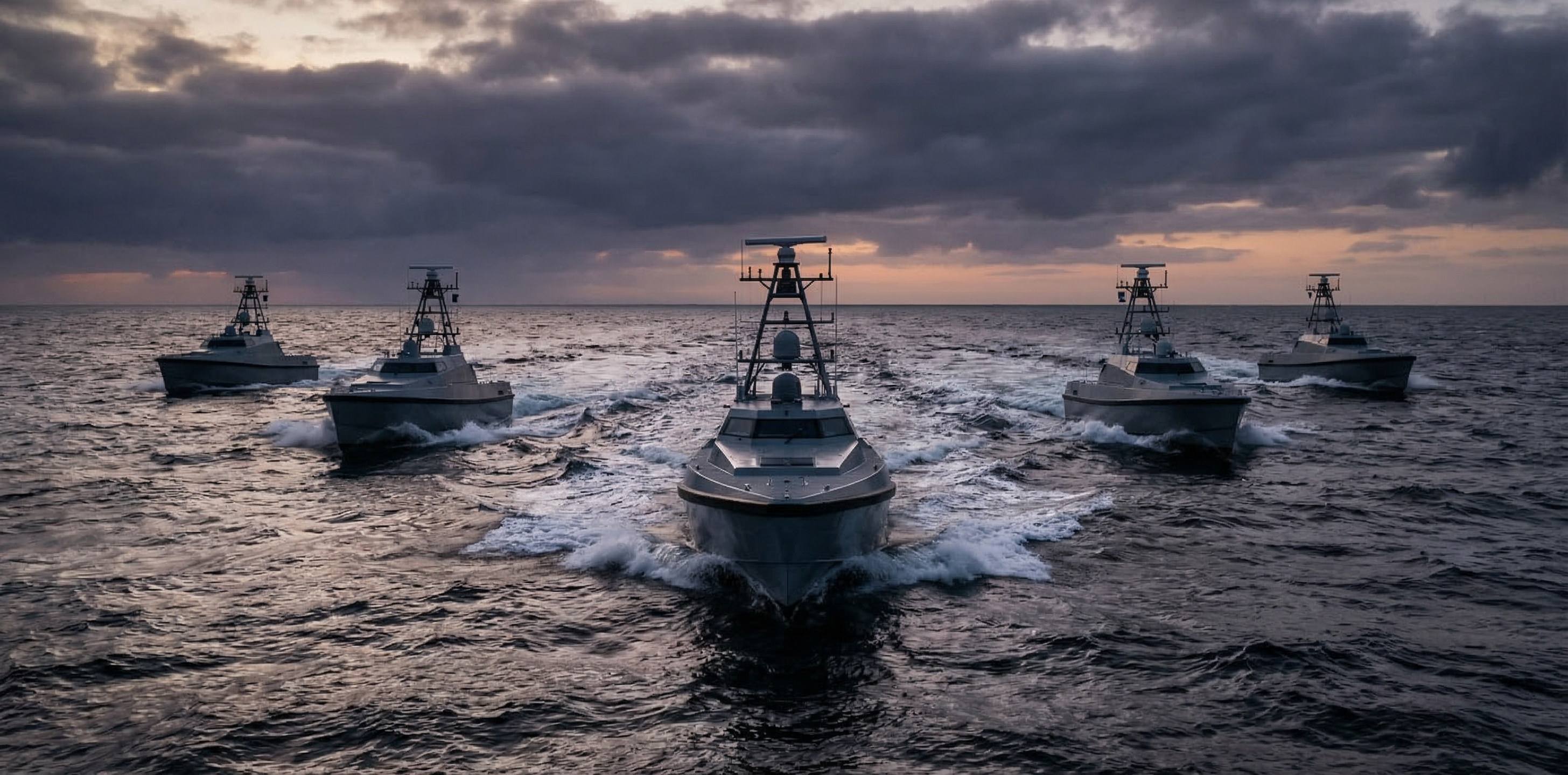
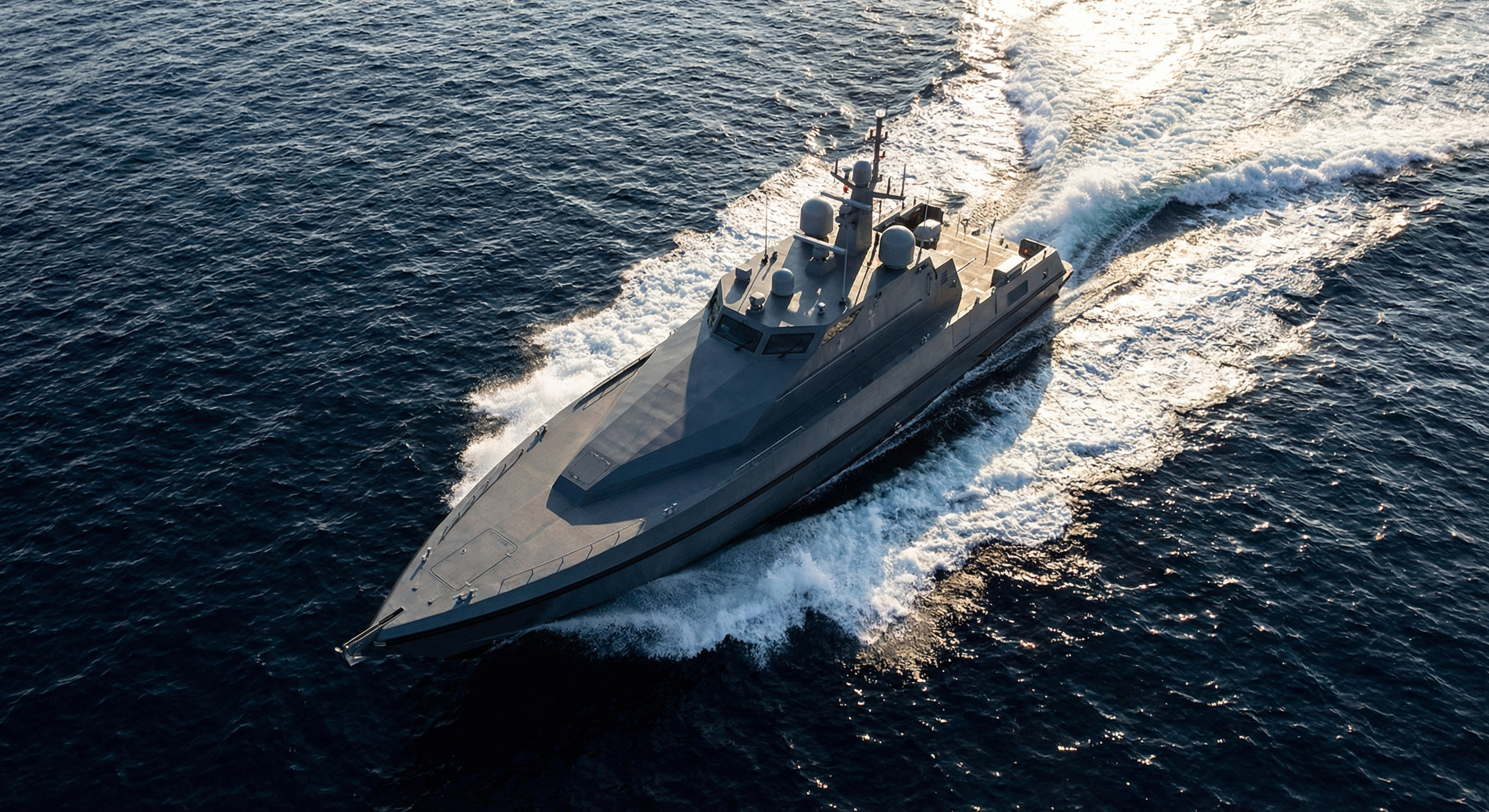
The GARC is an angular, roughly five-meter-long speedboat designed to operate autonomously on the surface, capable of sustained patrol missions without a crew aboard. It is built by BlackSea, a Maryland-based defense company that declined to comment on the deployment. The vessel can be equipped for either intelligence, surveillance, and reconnaissance (ISR) missions or configured for offensive applications — including as a kamikaze strike platform. In the Operation Epic Fury context, CENTCOM has only confirmed the ISR role.
What makes the disclosure significant isn't just the deployment itself — it's the timing. The U.S. Navy's autonomous surface vessel program has been plagued by setbacks for years. And yet when Iran operations required persistent maritime surveillance in contested waters, the GARC was the answer the fleet reached for.
Operation Epic Fury: What We Know
Operation Epic Fury began roughly a month before this disclosure, when U.S. and Israeli forces initiated strikes against Iranian targets. The operation has unfolded in the background of broader geopolitical tensions but has received limited public reporting compared to other concurrent conflicts. The deployment of autonomous vessels adds a significant new dimension to the public picture of how the operation is being conducted.
Iran has not been passive in the maritime domain. According to Defense News, Iran has deployed sea drones to attack oil tankers in the Gulf at least twice since U.S. and Israeli strikes began. That creates an asymmetric drone-on-drone dynamic in Persian Gulf waters: Iran using sea drones as offensive weapons, the U.S. deploying its own autonomous surface vessels for surveillance and domain awareness.
Hawkins declined to name any other unmanned systems currently deployed in the region, leaving open the possibility that additional autonomous platforms — air, surface, or subsurface — are also active in the theater. Given the Pentagon's broader unmanned systems push, that seems more likely than not.
A Platform Plagued by Problems
The GARC's operational debut should be understood against the backdrop of a genuinely troubled development history. Reuters reported last year that the vessel was involved in multiple performance and safety incidents, including a collision with another boat at speed during a military test. More recently, during a separate failed test in the Middle East, one GARC unit became inoperable entirely — details confirmed to Reuters by a source briefed on the incident.
These aren't minor footnotes. They reflect the fundamental challenge of deploying autonomous maritime platforms in real-world conditions: variable seas, GPS degradation, communications latency, and the unpredictable behavior of nearby vessels. Autonomous systems that perform adequately in controlled test environments routinely struggle in complex, high-traffic operational theaters like the Persian Gulf.
Despite those setbacks, the Navy pressed forward. The 450-hour, 2,200-nautical-mile operational record in an active theater is, by any measure, a more meaningful proof-of-concept than any pre-conflict test. The military has accepted a certain level of capability immaturity in exchange for operational data — and the intelligence picture that comes with persistent autonomous maritime surveillance. In that calculus, Hawkins' framing of the GARC as an "emerging capability" starts to make more sense. It's not a polished product being deployed at scale; it's a platform being refined in the fire of actual operations.
Ukraine Wrote the Blueprint
The deployment didn't emerge from a vacuum. Over the past two years, Ukraine has demonstrated in graphic, undeniable terms what uncrewed surface vessels can do to a larger naval force. Ukrainian explosive-laden drone speedboats have inflicted significant damage on Russia's Black Sea Fleet — sinking or disabling ships that should have been untouchable by a country with no meaningful surface navy. The attacks forced Russia to withdraw major assets from Sevastopol and fundamentally altered the balance of maritime power in the Black Sea.
The strategic lesson was not lost on U.S. defense planners: small, cheap, autonomous surface vessels can threaten large, expensive crewed warships. For a Navy stretched thin and facing the prospect of high-end peer conflict with China in the Pacific, that asymmetric calculus is enormously attractive. The question was never really whether the U.S. would deploy drone boats in combat — it was when and under what circumstances the first confirmed deployment would happen.
That moment is now on the record, and it occurred not in a simulated environment or a training exercise, but in an active theater against an adversary that was already using sea drones offensively.
The Golden Fleet Pivot: A New MUSV Marketplace
The combat confirmation arrived the same week the Navy officially announced a fundamental restructuring of how it acquires autonomous surface vessels. On Thursday, the service launched the Medium Unmanned Surface Vessel (MUSV) Family of Systems program — a new acquisition framework intended to accelerate production-ready vessels into service under Chief of Naval Operations Admiral Daryl Caudle's Golden Fleet initiative.
The approach is deliberately unconventional. Rebecca Gassler, the Navy's portfolio acquisition executive for robotic and autonomous systems, described it as a marketplace rather than a traditional procurement program. "Our goal is to create a regular and recurring marketplace, not just for the MUSV, but for other classes of vessels as well, over time, designed to match the growing demand for unmanned systems across a range of missions," Gassler said during a virtual media roundtable.
The MUSV solicitation, which closes April 17, requires companies to submit business plans, manufacturing plans, test plans, and technical designs. Selected vendors will then complete an on-water test by the end of the current fiscal year. If they pass, they move directly into production or a leasing agreement. The first production vessel is expected in fiscal year 2027.
The Navy simultaneously terminated the Modular Attack Surface Craft (MASC) program, which was launched in July 2025 and focused on developing non-exquisite USVs capable of carrying large containerized payloads, including systems compatible with the Mark 70 anti-ballistic missile delivery architecture. Gassler explained that MASC was purpose-built for a specific mission set and quantity, while the MUSV program is designed to serve a much wider range of operational requirements.
The financial backing is substantial. The One Big Beautiful Bill Act allocated nearly $5 billion for Navy unmanned programs, including $2.1 billion specifically for medium unmanned surface vessels. Navy Secretary John Phelan was direct in his endorsement: "This new approach will leverage private investment and accelerate the delivery of real capabilities to the Fleet. We will reward the companies who are able to deliver capability at the speed of relevance."
Why This Moment Matters Beyond the Headlines
The confluence of two events — the first confirmed combat deployment of U.S. autonomous surface vessels and the launch of the accelerated MUSV acquisition program — is more than coincidental. It reflects a deliberate shift in how the U.S. military is approaching autonomous naval power.
For the past decade, the DoD's autonomous maritime program operated in a cycle of test, failure, redesign, and repeat. Budgets were allocated, programs were launched, setbacks occurred, and congressional scrutiny followed. The result was a fleet that existed mostly on paper while adversaries moved faster. Ukraine's Black Sea campaign demonstrated what was possible with relatively simple autonomous technology. China has been quietly fielding autonomous surface and underwater vessels at scale. Iran is now using sea drones offensively in active combat.
The Navy's response — deploying imperfect-but-functional systems in live theater and simultaneously overhauling the acquisition framework to prioritize production-ready vessels — signals a meaningful departure from the development-first mindset that slowed the program for years.
The GARC's 2,200 nautical miles in the Persian Gulf won't transform Operation Epic Fury's outcome. But they represent something more strategically important: proof that the U.S. can generate real operational value from autonomous surface vessels in contested waters, even before the technology has been perfected. In the logic of modern military procurement, that operational precedent may matter more than any test result. The drone boats are no longer hypothetical. They're on patrol — right now, in a real conflict — and the Navy is building the industrial infrastructure to produce many more of them.
The age of autonomous naval warfare, for the United States, has officially begun.