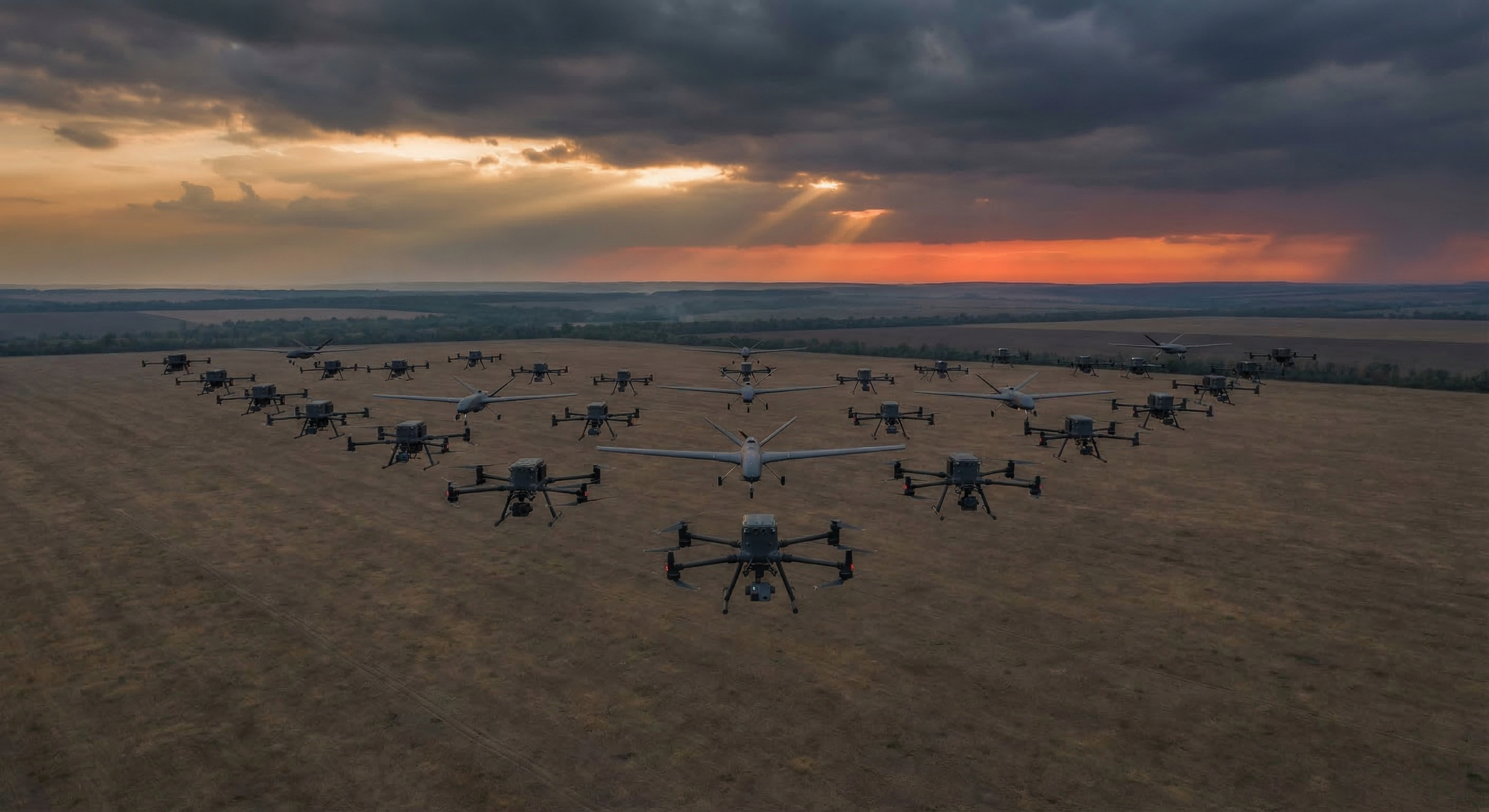
Ukraine just did something no military in history has attempted: it opened millions of real combat drone videos to allied governments and private defense companies to train AI targeting models. Not simulations. Not synthetic datasets. Footage from tens of thousands of actual combat missions — FPV drones diving on armored vehicles, surveillance craft tracking evasive targets, strike systems navigating contested airspace. On March 12, 2026, Ukraine's Defense Ministry announced a formal cooperation framework that turns four years of the bloodiest drone war ever fought into the world's most valuable military AI training dataset. The implications reach far beyond Ukraine's front lines.
The Announcement: What Ukraine Is Actually Offering
Ukrainian Defense Minister Mykhailo Fedorov announced the program on March 12, framing it in stark terms: "The future of warfare belongs to autonomous systems." The Ukrainian Cabinet of Ministers adopted a formal resolution establishing a new cooperation framework between the state, domestic defense companies, and foreign partners — the first of its kind in the world, according to Kyiv.
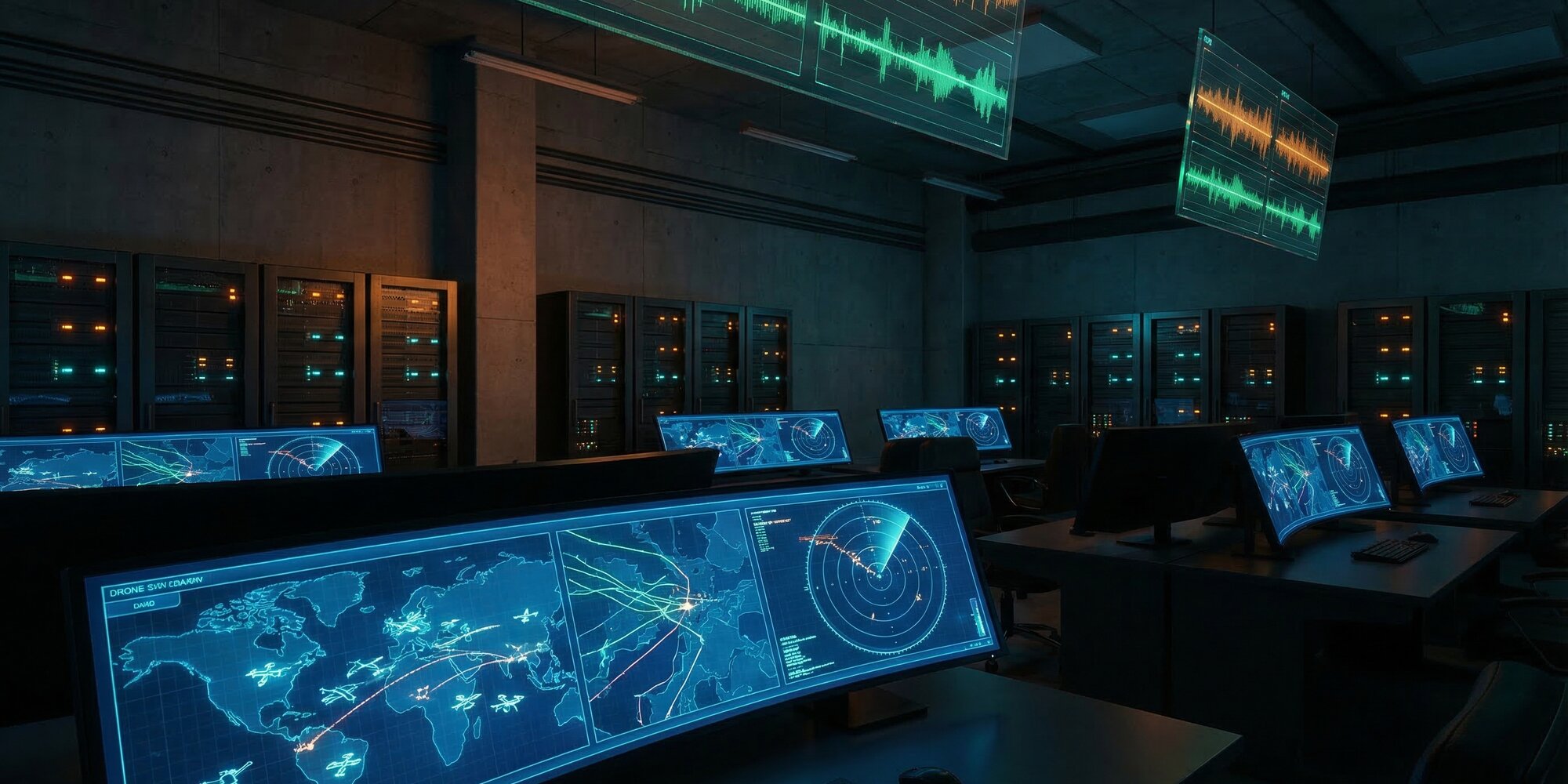
At the center of the program is a dedicated AI training platform built inside Ukraine's Ministry of Defense Center for Innovation and Development of Defense Technologies. The platform gives partners access to an extraordinary dataset: millions of annotated images and video recordings collected across tens of thousands of combat drone missions. The footage includes drone strike runs on vehicles, ground troops taking evasive action, aerial reconnaissance captures, and electronic warfare countermeasure scenarios — precisely the edge cases that determine whether an autonomous targeting system works in the real world or only in a lab.
Critically, companies cannot take possession of the raw footage. The platform operates as a managed access environment — partners train their AI models against the data without it ever leaving Ministry of Defense control. According to Deputy Defense Minister Lt. Col. Yuriy Myronenko, the platform's security architecture is built to U.S. National Institute of Standards and Technology (NIST) standards and is audited annually by Big Four consulting firms. It's a model designed to balance operational security — preventing raw combat intelligence from falling into adversary hands — with the speed of commercial AI development.
"Today, Ukraine has a unique array of battlefield data that is unmatched anywhere in the world," Fedorov wrote on Telegram. "This includes millions of annotated images collected during tens of thousands of combat flights. We are ready to work with partners on joint analytics, model training, and the creation of new technological solutions."
The Problem This Dataset Is Designed to Solve
To understand why this announcement matters, you need to understand the electronic warfare problem that has come to define drone combat in Ukraine. Russian EW systems have become prolific and sophisticated, capable of severing the radio link between a pilot and an FPV drone in seconds. When that link goes, the drone becomes a ballistic object — or, if it has basic autopilot, it returns to a preset waypoint. Either way, the mission fails.
The solution is AI that operates at the edge — inference running on hardware aboard the drone itself, with no cloud dependency and no need for a live pilot link. Several Ukrainian drone manufacturers have already fielded partial solutions: Vryiy's latest FPV drone incorporates an autonomy module that allows it to continue striking a target even after the operator loses the radio connection. But "continue to target" is not the same as "identify, select, and engage with precision." The latter requires models trained on enormous volumes of validated, real-world combat data.
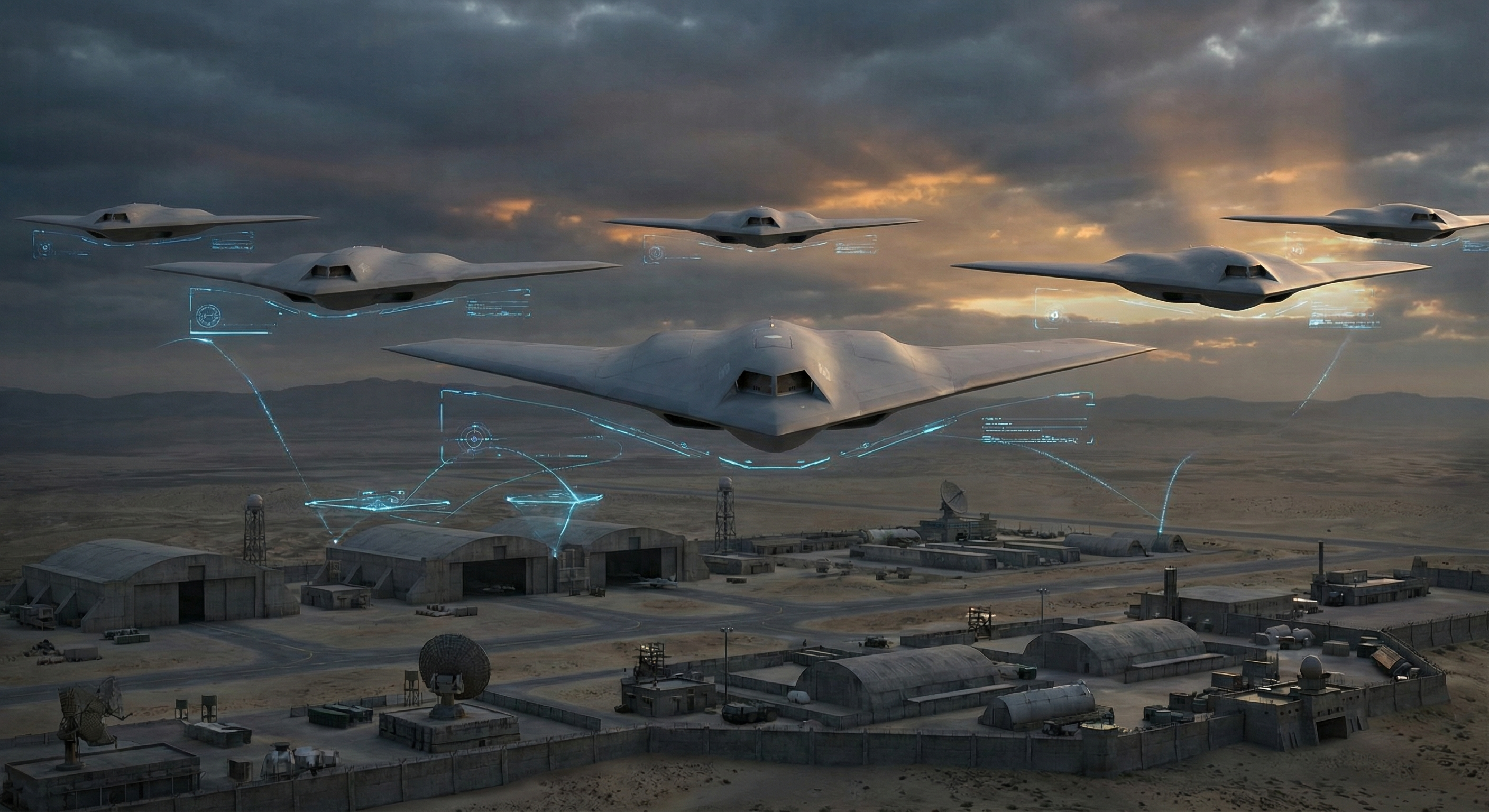
The Atlantic Council's analysis of the coming "compute war" in Ukraine illustrates the stakes sharply. Imagine a Ukrainian commander launching 800 autonomous drones in a coordinated swarm — air and ground systems programmed to suppress enemy air defenses, identify artillery positions, and exploit gaps in Russian lines. Eighteen minutes in, Russian EW severs the swarm's cloud uplinks. The drones don't abort — they continue on preprogrammed instructions. But they can't adapt. Russian forces move their artillery. The sensors detect the movement but can't retask strike systems without connectivity. What should be a precision operation devolves into hundreds of platforms executing obsolete instructions against targets that have already relocated.
That scenario hasn't played out yet at scale. Ukraine's new data-sharing program is specifically designed to close the gap before it does. The dataset is the raw material for building AI models that can handle target identification, re-acquisition, and engagement decisions locally — without a cloud link, without a pilot, without Russian EW having anything to cut.
The DELTA System: How This Data Already Works
Ukraine hasn't waited to prove the concept. The same combat dataset that will now be opened to allies already powers DELTA — Ukraine's cloud-based battlefield management system that has been running since 2022. DELTA uses neural networks trained on real combat footage to automatically detect ground and aerial targets in real time, feeding data to drone operators, artillery crews, and command posts simultaneously.
The scale of what DELTA manages makes Myronenko's comment to Military Times land with full weight: "You can control only with data. Otherwise, I don't even know how you can control such a number of drones, people, front lines, and such a number of resources. And so fast." Ukraine's military operates more drones per kilometer of front than any force in history. The idea that human operators are individually piloting all of them is already outdated. AI-assisted target detection and handoff is live and operational — and it runs on the data Ukraine is now offering to the world.
By mid-2022, Ukraine had migrated more than ten petabytes of government data to Western cloud infrastructure — a survival move driven by the constant threat of Russian missile strikes destroying domestic servers. That cloud migration preserved the Ukrainian state. Now that same digital infrastructure is being turned into a competitive advantage: a living, constantly updating training dataset that only gets more valuable the longer the conflict continues.
The Geopolitical Calculus
Ukraine's decision to share this data is not purely altruistic. It's a calculated geopolitical move by a country now in year five of a full-scale war, working to maintain allied interest, secure continued funding, and position itself as an indispensable partner rather than a perpetual supplicant.
The program operates as a classic supply-chain relationship: partners contribute development resources and engineering capacity; Ukraine provides what no ally can generate independently — verified, annotated combat data from the most drone-intensive conflict in history. For companies building autonomous targeting systems, real-world validated training data is the primary bottleneck. Synthetic datasets and testing range footage are useful; actual FPV combat footage of a driver swerving an armored vehicle at the moment of impact is invaluable.
Ukraine has been rapidly exporting this expertise through other channels too. The country sent anti-drone specialists to four Middle Eastern nations this week, at their request, to help counter Iran's barrages of Shahed UAVs — the same class of system Ukraine has spent four years defeating at scale. Kyiv is consciously positioning itself as the world's leading operational knowledge base for drone warfare, and the data-sharing program extends that position into AI model development.
For allied governments, the value is equally strategic. The DoD's FY2026 budget dedicates $13.4 billion to autonomy and AI systems — the first dedicated line item of its kind. But a budget line doesn't solve the fundamental problem: U.S. autonomous weapons programs lack the volume of validated real-world combat data that makes the difference between a model that performs in simulation and one that performs under fire. Ukraine's dataset is the closest thing available to closing that gap without fighting a war yourself.
The Ethics Question No One Has Answered
The International Committee of the Red Cross has been consistent and unambiguous: lethal autonomous systems that operate without meaningful human control over targeting decisions are incompatible with international humanitarian law. The problem is that "meaningful human control" is becoming increasingly difficult to define as AI-assisted targeting accelerates. If an operator approves an engagement zone but an AI model selects the specific target within that zone based on real-time sensor data, is there meaningful human control? If a drone operating under EW jamming re-acquires a target autonomously because the pilot link was severed, who is responsible for that targeting decision?
Ukraine's program doesn't answer these questions. It sharpens them. The dataset includes footage of exactly the scenarios that make autonomous targeting legally and ethically complicated — evasive action, combatants in close proximity to civilians, fast-moving targets in ambiguous environments. Training AI models on this footage will produce systems that handle these edge cases better than any previous autonomous system. Whether "handling" those cases better is the same as handling them legally remains unresolved.
Top Ukrainian commander Oleksandr Syrskyi said last week that the war had "entered a new phase" and that Ukraine must "increase the pace of development of effective unmanned vehicles." That urgency is real. So is the ethical minefield that lies beneath the technical progress. As allied defense companies begin training models on Ukraine's combat archive, the gap between technical capability and legal framework will widen further — and the pressure to define what meaningful human control actually means in a swarm environment will intensify accordingly.
What Comes Next
The immediate practical effect of Ukraine's data-sharing program will be felt in development timelines. Defense companies building autonomous targeting software have spent years and enormous sums trying to approximate real-world combat conditions in controlled test environments. Ukraine is offering something that cannot be bought, generated, or simulated: four years of actual combat footage, annotated, curated, and continuously updated as the war continues.
For the allied nations that have already sent engineers and AI researchers to Kyiv, the next step is integration — feeding Ukraine's datasets into development pipelines for edge-deployed inference models that can operate without cloud connectivity. The longer-term implication is a potential step-change in autonomous weapons capability among Ukraine's partners, driven not by any single technology breakthrough but by access to the only combat-validated training data source in existence.
Ukraine has spent four years becoming the world's most advanced drone warfare nation by necessity. With this announcement, it has formalized that knowledge as a geopolitical asset. The countries and companies that gain access to Ukraine's combat archive won't just build better AI models. They'll build models trained on the actual conditions of modern war — something no amount of investment or synthetic data generation can replicate. That asymmetry will shape the next decade of autonomous weapons development, regardless of how the conflict itself ends.