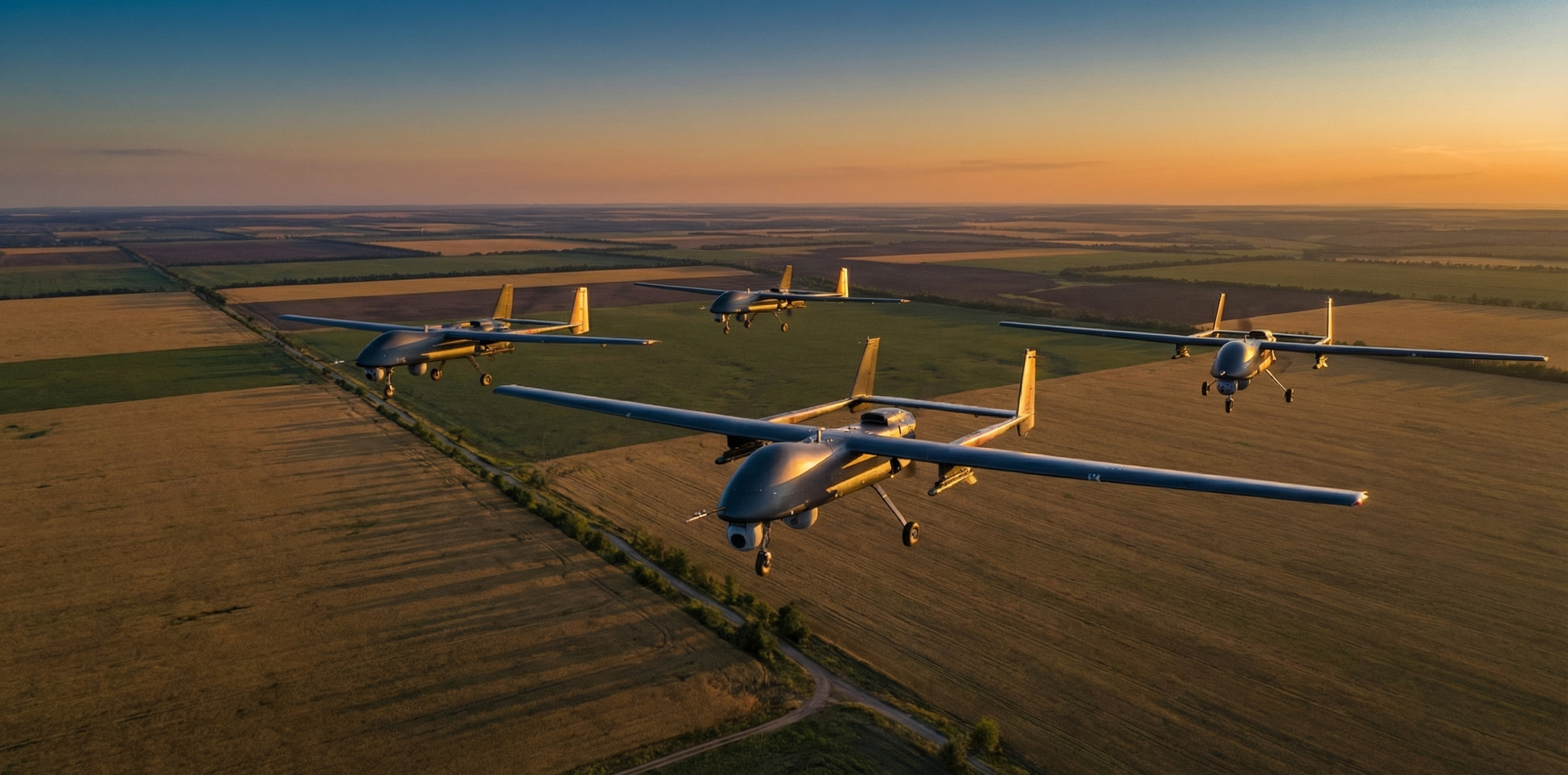
For twelve years, Western military instructors flew to Ukraine to teach basic soldiering. Now Ukrainian officers are flying to Germany to teach NATO armies how to fight with drones. The role reversal — once unthinkable — is now official policy. And it doesn't stop at training: Kyiv is simultaneously deploying 228 counter-drone specialists across five Gulf states, offering its hard-won interception expertise in exchange for the one thing Ukraine cannot produce at scale — Patriot missiles. Drone warfare expertise has become the most sought-after strategic commodity in the world, and Ukraine has a monopoly on it.
The Training Reversal That Reshaped an Alliance
The shift has been building for years, but it crystallized this month when Germany formally invited Ukrainian military instructors into its own army's training schools — a first for any NATO member state. A cadre of Ukrainian advisers is now embedded at German facilities, teaching drone warfare tactics, counter-UAS operations, and electronic warfare integration — subjects NATO armies have studied in doctrine for years but never tested under persistent combat conditions.
"We have high expectations," Lt. Gen. Christian Freuding, head of the German army, told Reuters. "The Ukrainian military is currently the only one in the world with frontline experience against Russia."
Ukraine's own General Staff is accelerating the transition. According to Yevhen Mezhivikin, deputy chief of the General Staff's Main Directorate of Doctrine and Training, the plan is to move all basic training back onto Ukrainian soil while keeping specialized courses abroad. The volume of troops sent abroad for basic training has "noticeably decreased over the past two years" — a deliberate consolidation, not a retreat. Britain was the first country to propose the shift, pushing to concentrate training within Ukraine and focus external courses only on specific technical lanes.
NATO's Supreme Allied Commander Transformation, Adm. Pierre Vandier, framed the logic bluntly during his first visit to Ukraine in late February. "Russia is very good at adapting, really, better than we are today," Vandier said. "So we need to put oil in all the gears." Ukraine's warfighting adaptation, he called "one of the strongest lessons" for the alliance — and acknowledged that Russia is absorbing those same lessons faster than NATO currently can.
Expertise as a Battlefield Economy
Ukraine's drone warfare knowledge isn't just being shared — it's being monetized. Kyiv is deliberately trading expertise for hardware in a diplomacy model unlike anything seen in modern defense history.
The most striking example is the Gulf. President Zelenskyy has deployed 228 counter-drone specialists across Jordan, Qatar, the UAE, Saudi Arabia, and Kuwait — precisely the countries that hold stockpiles of the PAC-3 Patriot interceptors Ukraine cannot obtain in sufficient quantity. The offer is explicitly transactional: "If they give them to us, we will give them interceptors," Zelenskyy told reporters, describing a PAC-3-for-drone-expertise swap.
The economic logic is brutal and clear. During the first three days of the Iran war, the United States and its Gulf partners burned through more than 800 Patriot interceptors — more than Ukraine received all winter — even as U.S. forces simultaneously struck over 2,000 targets across Iran. PAC-3 interceptors cost millions of dollars per shot. Ukraine's alternative is interceptor drones produced at roughly the cost of a used car, engineered for a single season before being replaced by a more advanced iteration. Kyiv claims it can produce around 2,000 interceptor drones per day — a volume that, if it can be sustained, dwarfs the annual output of most premium missile-defense production lines.
"Ukraine is offering what it has learned to do at scale," Ed Arnold, senior research fellow at the Royal United Services Institute, told Military Times. "Stop drones — while still scrambling for what it cannot manufacture fast enough: the interceptors that matter when the threat is ballistic."
The constraint is bureaucratic, not operational. Ukraine's wartime export restrictions haven't kept pace with global demand. Manufacturers cannot sell drone systems abroad without official approval, even as they receive purchase inquiries from dozens of countries. Deploying specialists — not hardware — is a workaround that exports capability while contracts and permits catch up.
The DELTA System: Ukraine's AI Battlefield Brain Goes Global
Ukraine's contribution to allied capability extends beyond drones and trainers. The DELTA system — its battlefield operating picture that fuses sensor feeds, tracks activity, and passes targeting data in near-real-time — has entered NATO's own training exercises.
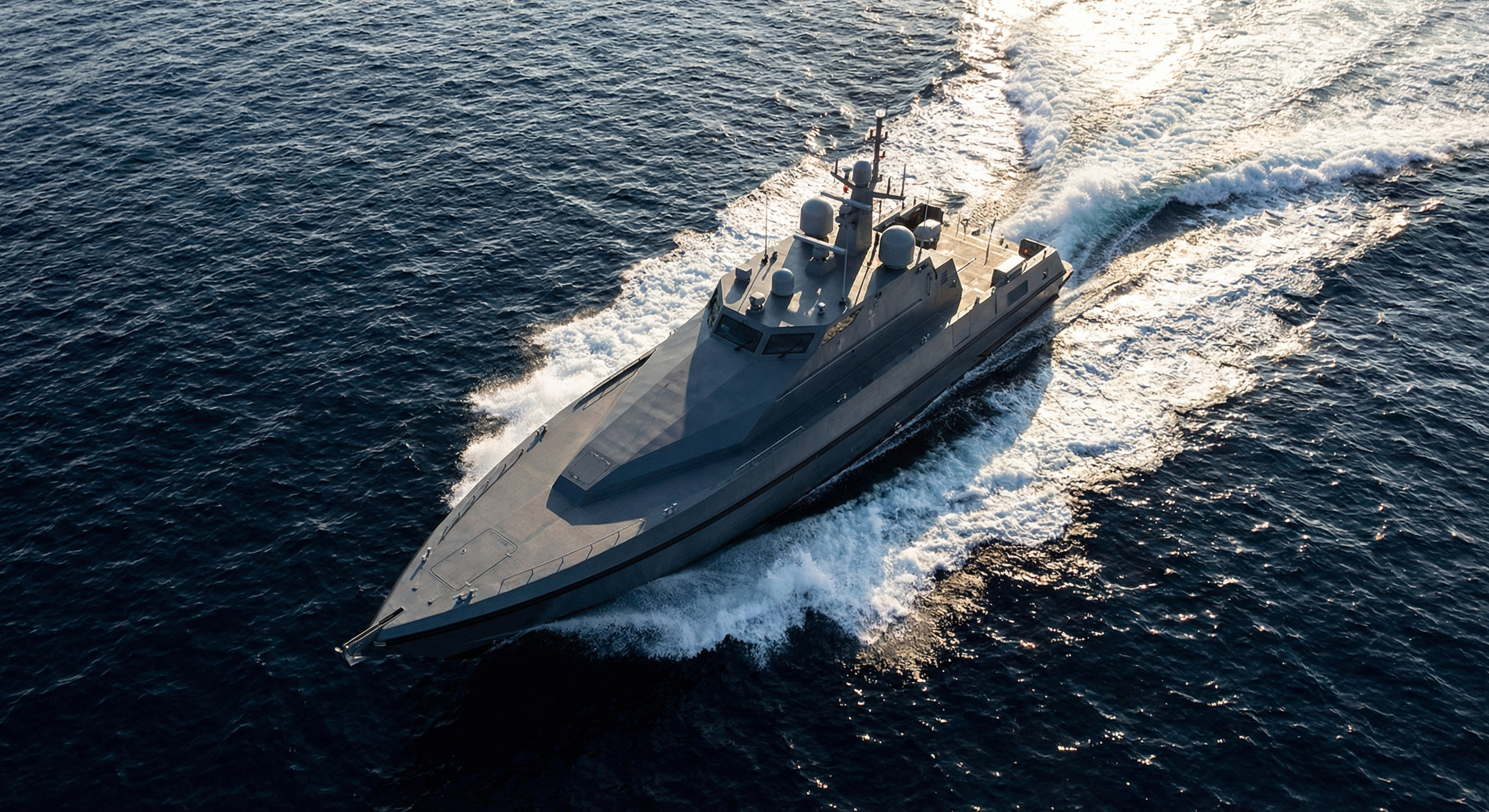
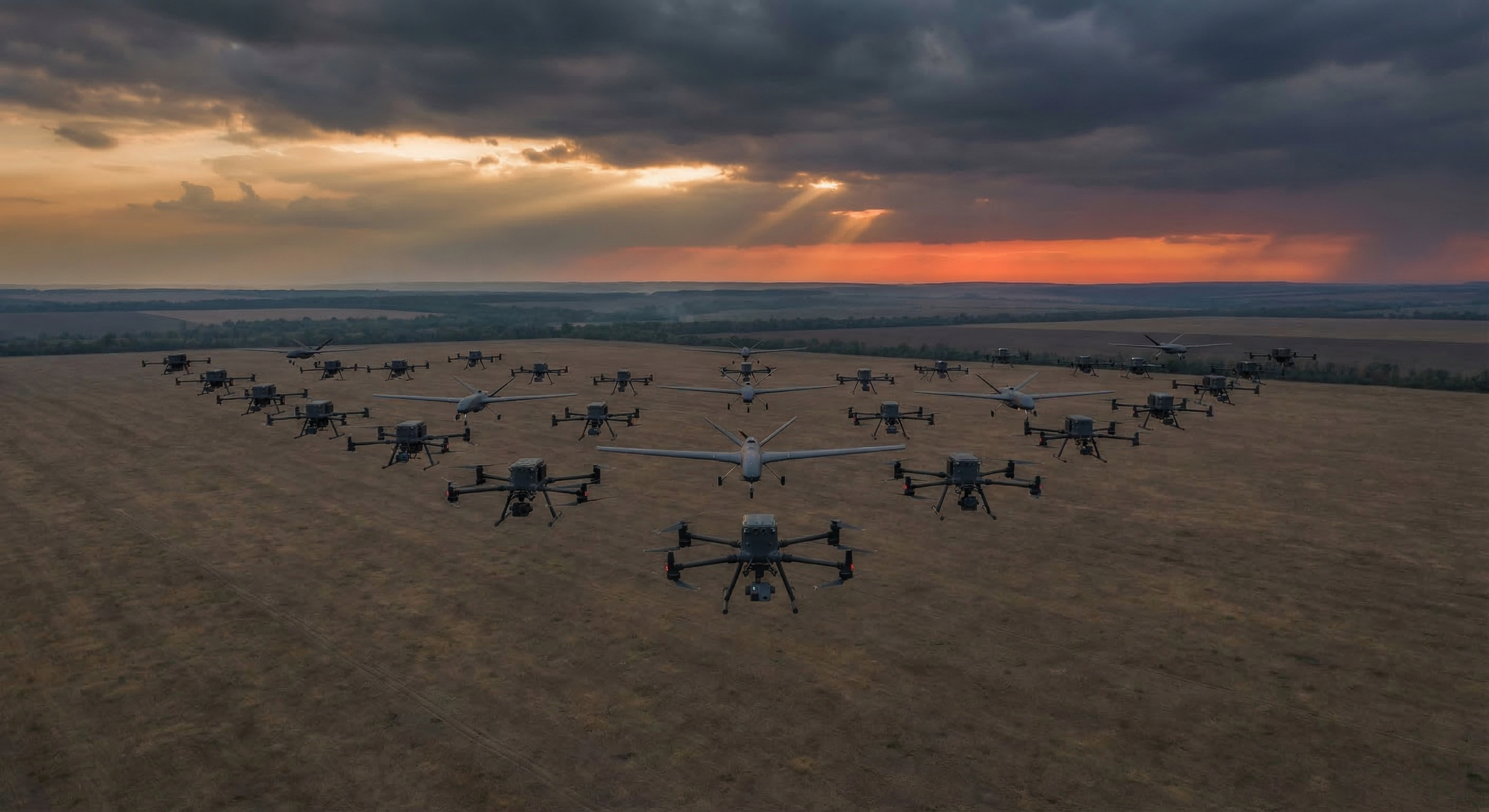
The Ukrainian Defense Ministry confirmed that DELTA served as the primary command platform for the Ukrainian "red team" during NATO's REPMUS 2025 unmanned-systems exercise in Portugal. The team won all five scenarios, coordinating more than 100 drones across maritime, air, ground, and underwater domains — and simulated the destruction of a NATO frigate whose detection systems failed to spot incoming Magura V7 naval drones in time.
In a separate exercise at Estonia's Hedgehog 2025, a small Ukrainian drone team playing opposing force used DELTA-integrated rapid-targeting analysis to render a mechanized NATO unit combat-ineffective in half a day — destroying 17 armored vehicles and roughly 30 additional targets before the exercise concluded, according to The Wall Street Journal. The lesson was unambiguous: Ukrainian tactical tempo and drone integration systematically outpace NATO's current response cycles.
That performance is why allied governments are now asking Ukraine to embed instructors rather than simply send observers. The doctrine isn't theoretical anymore — it's been proven under fire, on a live battlefield, against a nuclear-armed adversary.
The Baltic Incident: When Drones Lose Their Way
The accelerating integration of Ukrainian drone expertise into allied structures comes with a stark warning about the technology's limits — and the dangers of contested electromagnetic environments.
In a 48-hour window this past week, Ukrainian strike drones targeting Russian Baltic port infrastructure came down in all three Baltic NATO states — Estonia, Latvia, and Lithuania. The most serious incident struck the chimney of the Auvere power station in Estonia's Ida-Viru County, triggering an emergency government session and a nationwide alarm. Estonian authorities confirmed the drone was Ukrainian in origin, carried an explosive payload, and was not directed at Estonia.
The working explanation is Russian GPS jamming and spoofing. Russian transmitters are known to block and falsify GNSS signals from GPS and Europe's Galileo satellite constellation — causing drones to lose positional accuracy or veer toward falsified coordinates. At ranges of up to 1,000 kilometers from Ukrainian territory — some of the longest strikes Ukraine has attempted — minor navigational errors compound across flight time into significant course deviations.
Whether Russia is deliberately redirecting Ukrainian drones into NATO territory, or whether the incidents are collateral effects of electronic warfare protecting Russian infrastructure, remains unresolved. Western officials have so far described them as accidents. But Latvian Prime Minister Evika Silina drew an explicit connection: the incidents were intensifying "at a time when the attention of the West has been diverted by events in the Middle East."
None of the three Baltic states' air defense systems intercepted the drones. Estonian Defense Forces Commander Lt. Gen. Andrus Merilo acknowledged the tactical constraint: engaging drones near the Russian border carries escalation risk that constrains allied rules of engagement. It is a preview of the doctrinal knot NATO must untangle as Ukrainian long-range strikes become more frequent and more ambitious.
The Missile Industrial Crisis Behind the Diplomacy
Ukraine's drone diplomacy exists within a larger crisis: Western air-defense stockpiles are being consumed faster than they can be replaced. The Iran war has simultaneously stressed U.S. inventories in the Middle East and sharpened the case that premium interceptors are too expensive and too scarce to serve as the primary answer to cheap drone swarms.
The Pentagon moved this week to address the gap directly, announcing three framework agreements with Lockheed Martin, BAE Systems, and Honeywell Aerospace to surge missile and interceptor production. Under the agreements, Lockheed will quadruple output of the Precision Strike Missile — which saw its combat debut in Operation Epic Fury — while Lockheed and BAE jointly ramp THAAD seeker production fourfold. Honeywell will accelerate production of navigation systems, AMRAAM components, and missile actuators.
"Through this agreement, we are actively building the Arsenal of Freedom with speed and urgency," Michael Duffey, Under Secretary of Defense for Acquisition and Sustainment, said in the announcement. But quadrupling production from a constrained baseline still takes years to generate meaningful inventory. In the interim, every Patriot interceptor fired over the Middle East is one fewer available for Ukraine — or Taiwan.
Arnold at RUSI has argued that the United States should stop treating Ukraine's defense industry as a stopgap and start treating it as a capacity worth building. "If the U.S. is going to not be able to provide any long-range strike in the future, then actually invest in Ukrainian organic production," he told Military Times. The logic extends to air defense: a country that can manufacture 2,000 interceptor drones a day is an industrial ally, not just a recipient of aid.
What NATO's 2029 Clock Means for This Race
The urgency behind all of this training, diplomacy, and production acceleration is driven by a single intelligence assessment: Western analysts believe Russia could be positioned for a large-scale offensive against NATO as early as 2029. "That's almost the day after tomorrow," Lt. Gen. Freuding told Reuters. "We have no time — the enemy doesn't wait for us to declare we're ready."
Ukraine has three years of total war experience that NATO armies lack and cannot replicate in any exercise. The DELTA system, the interceptor drone economics, the electronic warfare countermeasures, the counter-UAS tactics refined across millions of live engagements — these are not things that can be learned from doctrine. They can only be learned from Ukraine.
That's the strategic logic behind the role reversal that is now formally underway. Ukraine is no longer just a recipient of Western military assistance. It has become the world's premier laboratory for drone warfare — and the only institution that can credibly prepare allied armies for the conflict that intelligence assessments say may be coming. The expertise pipeline now runs in both directions. The question is whether NATO can absorb it fast enough.