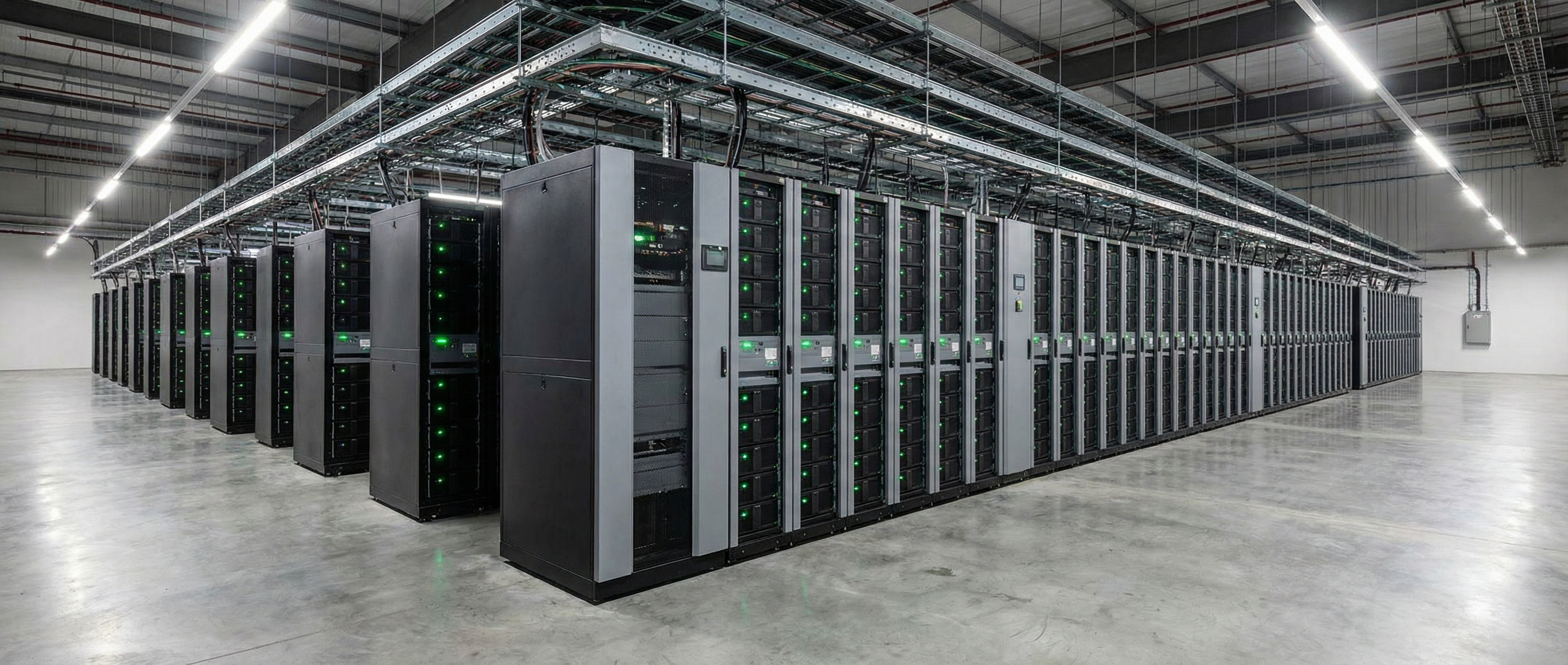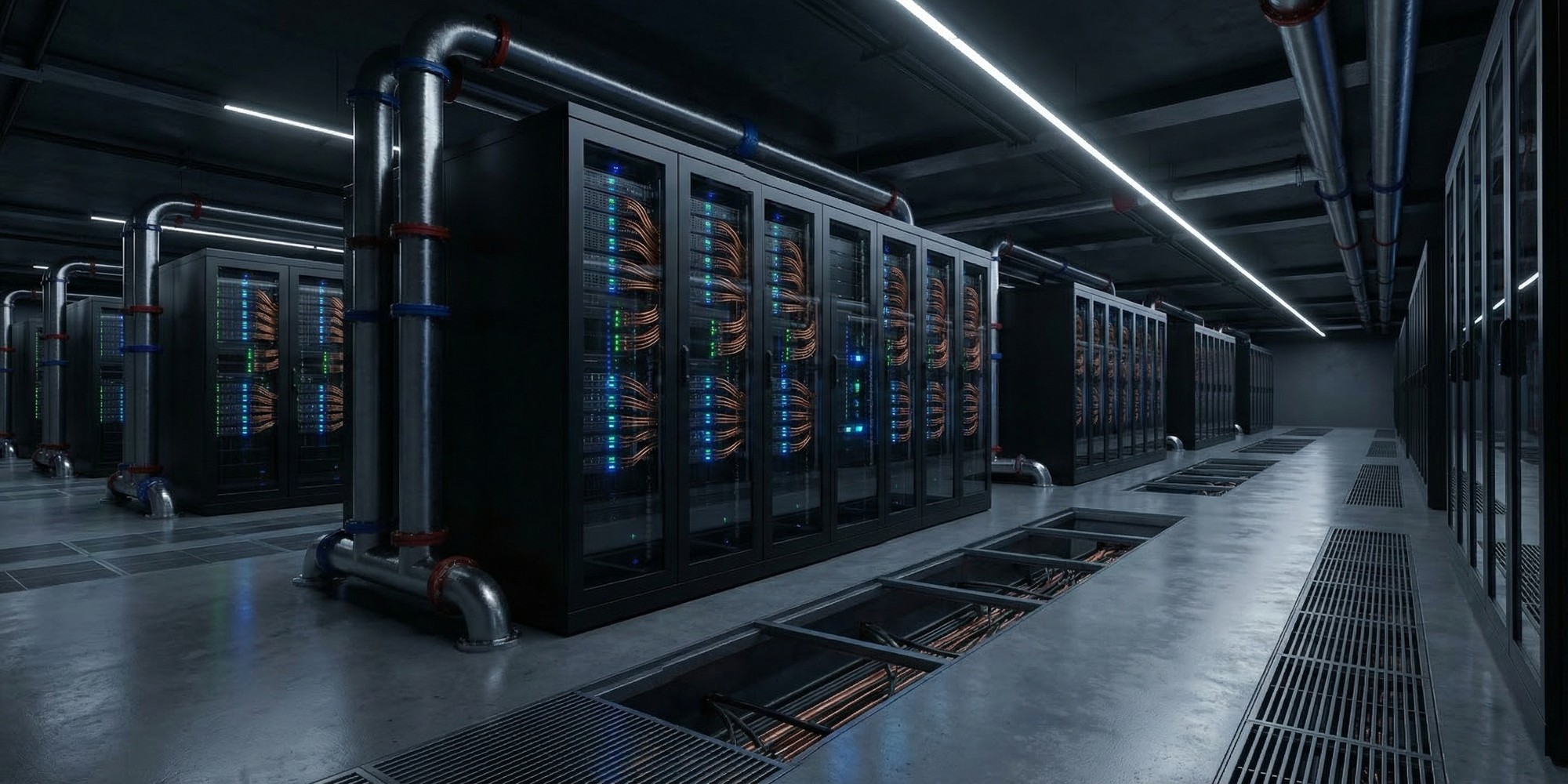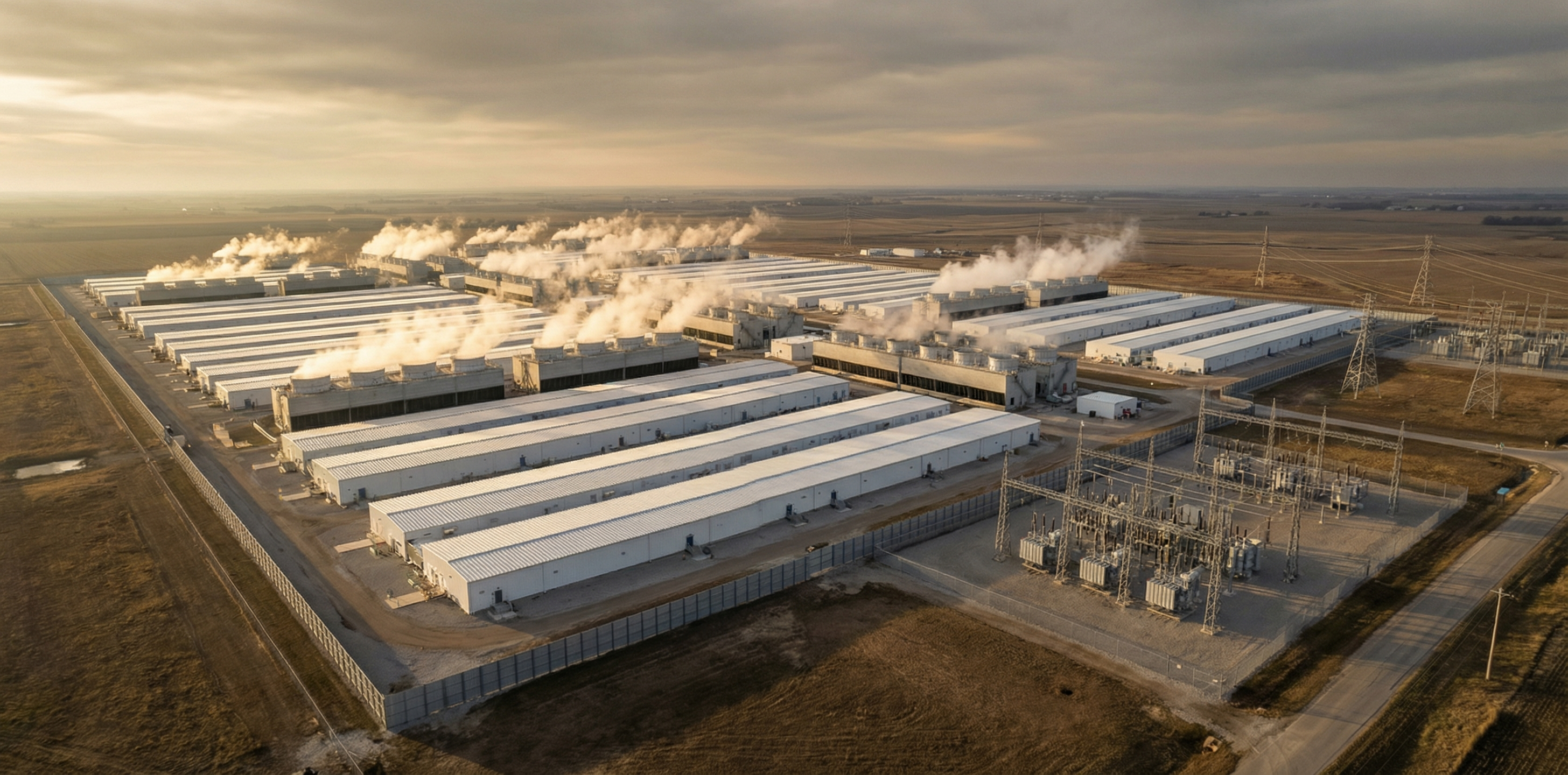
The data center building boom that has become synonymous with the AI revolution — the $500 billion Stargate initiative, the hyperscaler capex surge, the data centers lighting up former cornfields in Virginia and Texas — just acquired a new and powerful adversary. On March 25, 2026, Senator Bernie Sanders introduced a bill to halt the construction or upgrading of any AI-capable data center in the United States until Congress passes comprehensive AI safety legislation. Representative Alexandria Ocasio-Cortez is expected to introduce a companion bill in the House in the coming weeks. The legislation almost certainly won't pass. But it signals something significant: the political backlash against the AI infrastructure buildout has gone national, and the arguments it deploys have found traction across an unusually wide ideological spectrum.
What the Bill Actually Does
Sanders's bill places an open-ended moratorium on the construction or upgrading of new and existing AI data centers — defined by a specific energy threshold: any facility drawing more than 20 megawatts from the grid. That threshold is carefully chosen. It catches essentially all large-scale AI training and inference facilities while leaving small data centers, corporate servers, and non-AI workloads unaffected. This isn't a blanket data center freeze; it's targeted at the industrial-scale compute infrastructure fueling the AI buildout.
The moratorium would not expire on a fixed date. Instead, it ends only when Congress passes a suite of legislation meeting three conditions: laws preventing data centers from contributing to climate change, harming the environment, and raising electricity bills for consumers; laws preventing tech companies from producing AI products that harm "health and well-being of working families, privacy and civil rights, and the future of humanity"; and laws ensuring that wealth generated from AI is "shared with the people of the United States." The bill goes further still: a separate provision would forbid the export of computing hardware — including chips — to any country without equivalent laws on the books.
The legislation explicitly names four tech industry leaders: Elon Musk of xAI, Jeff Bezos of Amazon, Sam Altman of OpenAI, and Dario Amodei of Anthropic. Sanders's floor statement was characteristically direct: "A moratorium will give us the chance to figure out how to make sure that AI benefits the working families of this country, not just a handful of billionaires who want more and more wealth and more and more power. A moratorium will give us the time to figure out how to ensure that AI is safe and effective and prevent the worst outcomes. A moratorium will give us the time to figure out how to make sure AI does not harm our environment or jack up the electric bills that we pay."
The Backlash Has Numbers Behind It
This bill doesn't exist in a vacuum. The Pew Research Center found that nearly 40% of Americans believe data centers are bad for the environment and home energy costs, and 30% say data centers have a negative impact on quality of life for people living nearby. Those are significant numbers for an infrastructure type that barely registered in public consciousness five years ago.
The financial scale of community resistance is striking: according to reporting by Wired, an estimated $98 billion in data center projects were stalled or canceled in the second quarter of 2025 alone due to community pushback — not regulatory intervention, not financing problems, but organized local opposition. At least a dozen state legislatures introduced moratorium proposals in early 2026, spanning Georgia, Maryland, Minnesota, New Hampshire, New York, Oklahoma, Pennsylvania, South Dakota, Vermont, Virginia, Wisconsin, and Wyoming.
Sanders has been building toward this moment. In December 2025, he became the first national politician to publicly call for a federal moratorium, and 230 or more progressive groups signed a letter to Congress supporting that position. Mitch Jones of Food and Water Watch — one of the organizations at the center of the grassroots anti-data-center coalition — confirmed to Wired that his group has been working directly with Sanders's office: "It makes sense to me that his bill is going to focus primarily on that aspect."
Not Just the Left — The Unusual Bipartisan Dimension
Here's what makes this bill politically interesting rather than just symbolically significant: the opposition to AI data center expansion is not a left-wing phenomenon. It's a genuinely cross-ideological coalition, united by a shared grievance about who bears the costs of AI infrastructure and who captures its benefits.
Senator Josh Hawley (R-MO) and Democratic Senator Richard Blumenthal introduced legislation last month to insulate electricity customers from rate hikes caused by data center demand. Representative Thomas Massie (R-KY), often libertarian in his outlook, has been vocally questioning the buildout. In Georgia and Virginia, data center community opposition has influenced state elections with candidates from both parties. Oklahoma's moratorium bill was introduced by Republicans. Georgia's carries bipartisan sponsorship.
On the right, the rhetoric has been colorful. Florida Governor Ron DeSantis, speaking at an AI roundtable in February 2026, put it plainly: "I don't think there's very many people who want to have higher energy bills just so some chatbot can corrupt some 13-year-old kid online." DeSantis subsequently backed an AI Bill of Rights that passed the Florida Senate before dying in the House. Steve Bannon hosted a War Room segment titled "Data Centers Are Devouring Public Land."
These are not ideological allies of Bernie Sanders. But they're making variations of the same argument: the AI buildout is imposing visible, local costs — higher utility bills, land displacement, noise, water use — on ordinary Americans while concentrating the financial gains among a small group of technology companies and their investors. That framing travels across party lines in ways that most tech policy debates do not.
What the Data Center Industry Is Actually Being Asked to Justify
The core community grievances are measurable. Goldman Sachs projected in 2025 that data centers could account for up to 8% of total US electricity consumption by 2030, up from roughly 2–3% in 2023. That trajectory creates real consequences at the grid level: utility rate increases are being passed to residential customers in some regions as utilities build new generation capacity ahead of AI demand, and the construction timelines for transmission and generation infrastructure are measured in years, not months.
Water use is a second pressure point. Large hyperscale facilities in water-stressed areas — the Southwest, parts of the Mountain West — consume millions of gallons daily for evaporative cooling. Land rights are a third: data center developers frequently acquire agricultural or residential land with limited community input, relying on zoning exemptions and economic development incentives that bypass normal public deliberation processes.
The $690 billion in hyperscaler capital expenditure committed for 2026 — which TTN covered in detail earlier this month — means the scale of new construction is accelerating precisely as the political resistance is hardening. That's not a coincidence. The buildout is creating its own opposition.
The AI Safety Framing — A Significant Escalation
Previous moratorium proposals — at the local level, at the state level — were almost uniformly framed around concrete, measurable environmental and energy harms. Sanders's bill is different. It explicitly connects the physical infrastructure of AI to the existential risk debate, conditioning the moratorium's end on legislation preventing AI products from harming "the future of humanity."
That's not a standard environmental protection standard. It's a philosophical one, and it's effectively impossible to satisfy in the near term. No Congress in the foreseeable future is going to pass a law certifying that AI products no longer threaten human civilization. Which may be the point.
Read charitably, the bill is designed as leverage — a negotiating position and a public record of federal opposition, not a realistic piece of legislation. Its function is to create pressure on the tech industry and to give the national anti-AI-infrastructure movement a federal champion. Mitch Jones of Food and Water Watch confirmed to Wired that the bill is designed to force a broader conversation about AI governance, not merely environmental compliance.
Read skeptically, the AI safety framing also exposes the bill's weaknesses. By attaching the moratorium to conditions that could never plausibly be met — preventing AI from harming "the future of humanity" — the bill invites dismissal as performative politics. The industry and its allies in Congress will use that framing to avoid engaging with the more substantive energy and land-use arguments that have genuine public traction.
The $300 Billion Buildout at Stake — and What Changes
In the short term, nothing changes for data center developers. The Trump administration has explicitly positioned AI infrastructure as a national priority — the "AI action plan" executive order from January 2026 makes this clear — and the Republican Senate majority has no interest in passing a Sanders moratorium. The hyperscalers have utility agreements signed, real estate secured, and permits filed. Construction continues.
The Stargate initiative's $500 billion commitment, with Phase 1 deployments already underway, represents the kind of contractual and financial infrastructure that a legislative moratorium would be challenged in court immediately and expensively.
But the medium-term picture is more complicated. In states where Democrats control significant levers — New York, California, Vermont, Minnesota — the Sanders bill provides political cover for more aggressive state-level action. Local permitting battles, already intensifying as supply chain constraints have strained data center timelines, will face additional political friction in those markets.
The hyperscalers appear to have anticipated some version of this. Their strategic response — accelerating nuclear power purchase agreements, exploring offshore data center deployments, expanding international capacity in more permissive regulatory environments — is already underway. Microsoft, Google, and Amazon have all signed nuclear PPAs in the past twelve months. The energy-first AI infrastructure model has an inherent political vulnerability, and the industry has begun hedging against it.
Likelihood of Passage — and the Real Impact
Near-zero on the passage question. The tech industry's lobbying budgets in Washington have grown substantially in 2025–2026, with Alphabet, Microsoft, Amazon, and Meta all increasing their federal government affairs spending. Moderate Democrats who might otherwise be sympathetic to environmental concerns are also aligned with AI investment in their home states and districts.
The bill's political function, however, is distinct from its legislative one. It creates a public record of AI infrastructure opposition at the federal level for the first time. It gives the 230-plus progressive groups who signed December's letter to Congress a formal sponsor in the Senate. It puts tech companies on political defense ahead of the 2026 midterms, forcing them to respond publicly to the energy cost and environmental arguments. And it positions the progressive left for the moment — which may not be far off — when residential electricity bills make the connection between AI infrastructure and household energy costs undeniably visible to ordinary voters.
As TTN's earlier analysis of the Ratepayer Protection Pledge showed, the energy cost politics of AI infrastructure are already moving faster than the industry's voluntary commitments can address. The Goldman Sachs projection — 8% of US electricity consumed by data centers by 2030 — is not a fringe number. If that trajectory holds, the politics around it will shift. Sanders's bill plants a flag for that moment.
The AI data center buildout won't be stopped by a bill that has no path to passage. But the political landscape it operates in just got meaningfully more complicated — and the coalition opposing it is broader, stranger, and more durable than the tech industry's public statements have acknowledged.