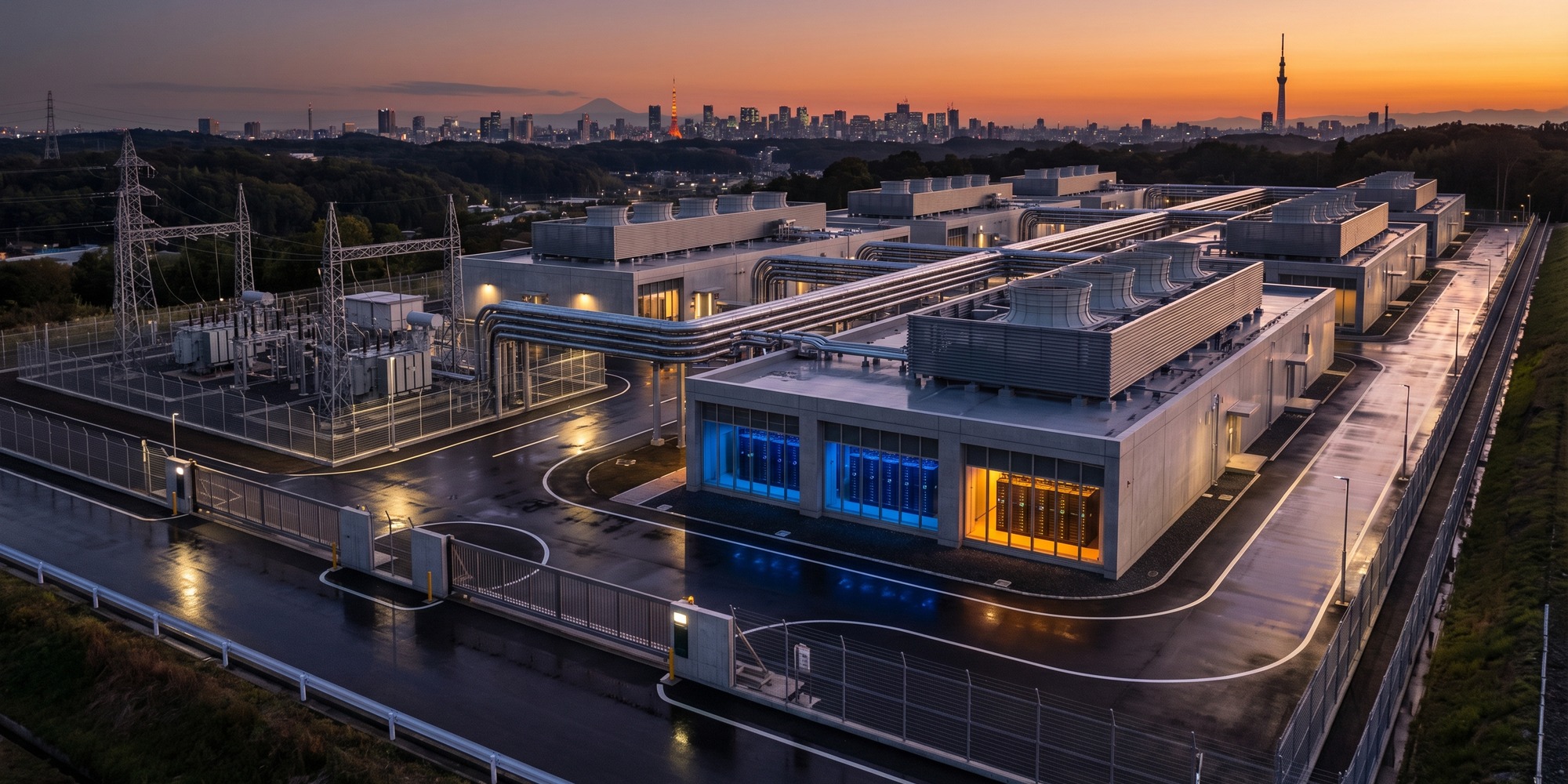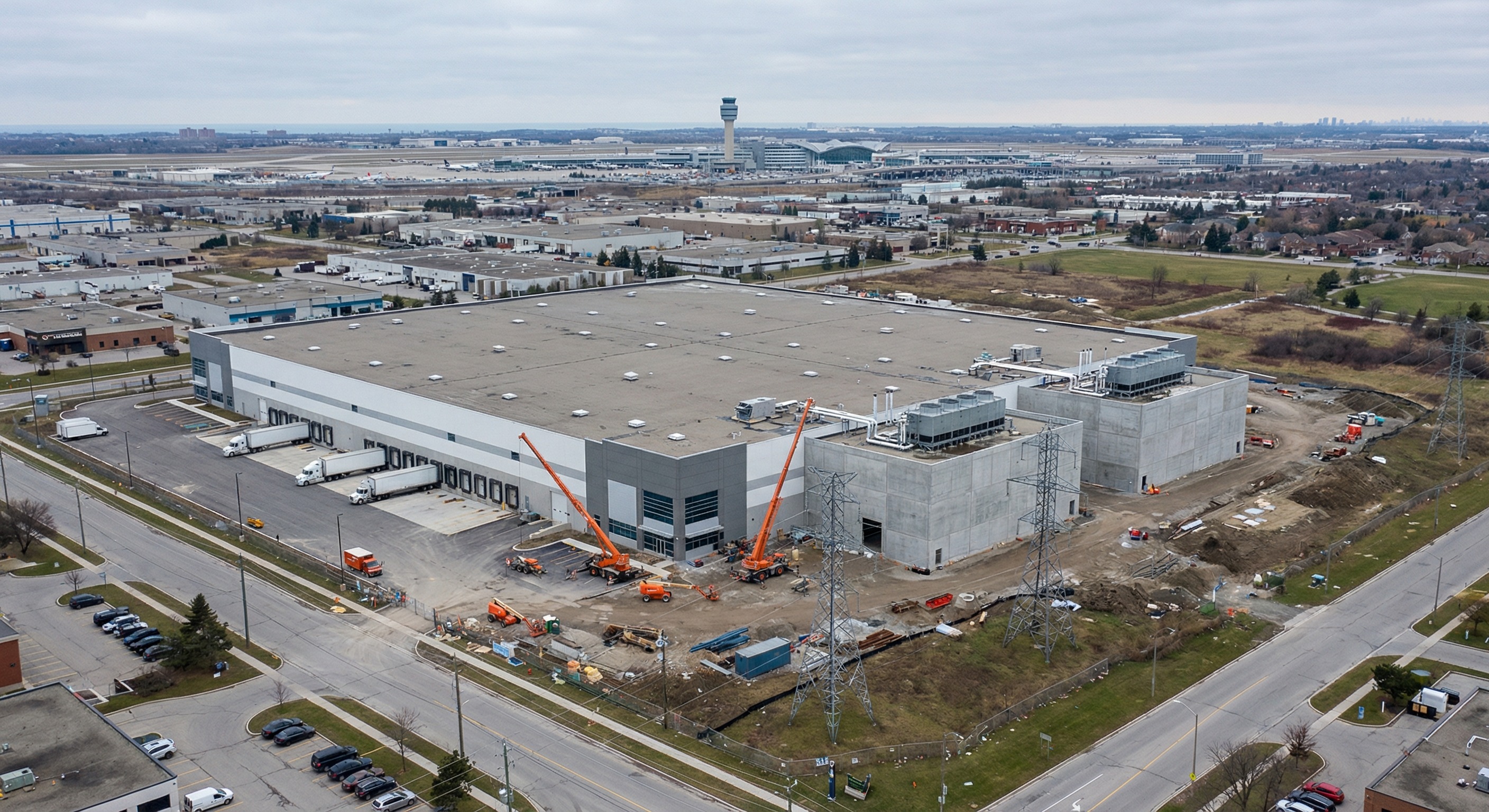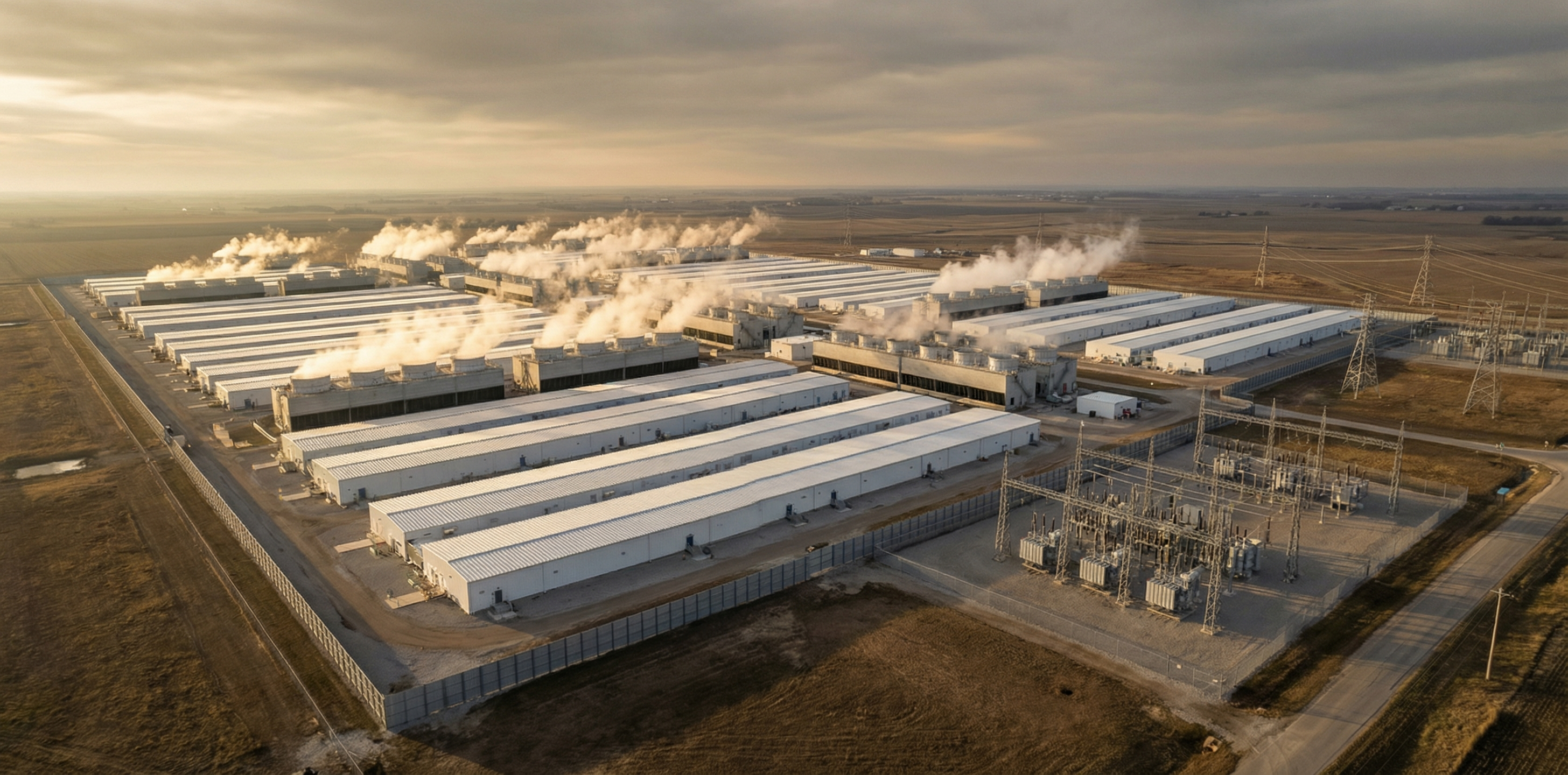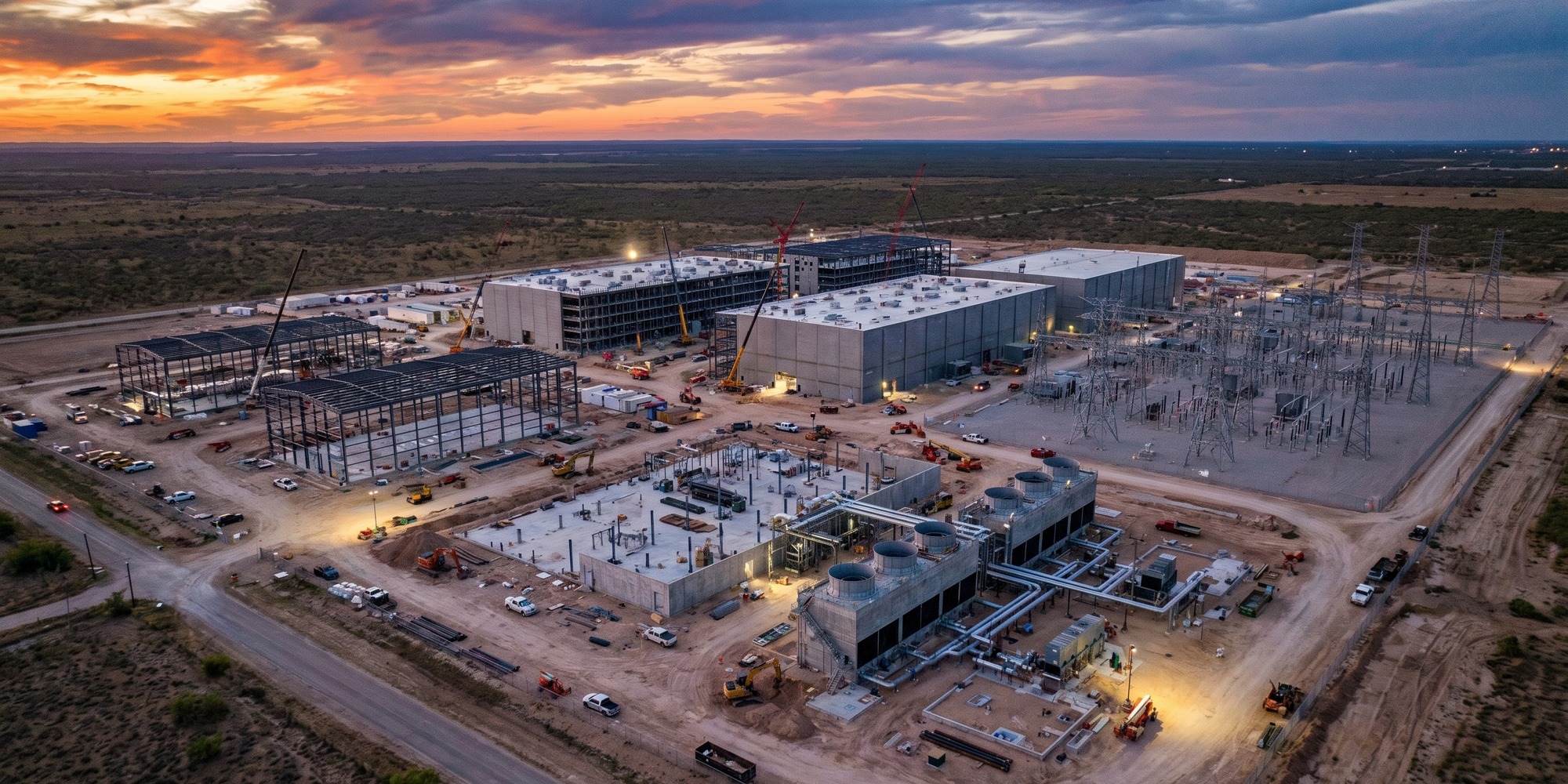
Stargate’s headline numbers keep getting bigger, but the decisive metric in AI infrastructure has changed. The winners in this cycle will not be the teams with the largest announced gigawatts. They will be the teams that can energize those megawatts on schedule, lock in enforceable cloud and offtake contracts, and convert planned capacity into sustained, commercially usable compute.
What the partners have publicly committed
The Stargate narrative began as a scale declaration. In January 2025, Reuters reported that OpenAI, SoftBank, and Oracle launched the initiative with an up-to-$500 billion framing, including an immediate $100 billion deployment commitment and large U.S. data center ambitions. That announcement set the tone for the current AI infrastructure race: capacity as geopolitics, power as strategy, and data center execution as the practical edge.
Partner disclosures since then have pushed targets higher. OpenAI later said that five additional U.S. sites, together with Abilene and related projects, bring Stargate to nearly 7 GW of planned capacity and over $400 billion in expected investment over three years, while maintaining a path to the broader 10 GW and $500 billion commitment. In isolation, those figures suggest an unprecedented expansion tempo.
But planned capacity and deliverable capacity are not interchangeable. A “planned GW” is still a bundle of assumptions: interconnection approvals, utility readiness, substation and transmission completion, generator adequacy, equipment delivery, and commissioning quality. If any one of those slips, AI compute supply slips with it. That distinction increasingly separates optimistic pipeline narratives from operational outcomes.
The market is now mature enough that this distinction matters for valuation and customer planning. Enterprise buyers signing multiyear AI contracts need confidence that training and inference capacity will be available on real dates, not just in long-range construction timelines. Investors funding campuses need confidence that megawatts can be monetized inside the underwriting window. Utilities need confidence that large-load forecasts reflect actual energization probabilities, not speculative queue pressure.
Contract structure became a story, not a footnote
A second shift, and a deeply important one, is that contract architecture itself became public strategy. In January 2025, Microsoft said OpenAI made a new large Azure commitment, while exclusivity on new capacity moved to a right-of-first-refusal model rather than absolute exclusivity. For AI infrastructure, that is not legal trivia. It is an allocation mechanism.
ROFR language changes the economics of marginal workloads. If one platform can match terms on new capacity, workload placement becomes a function of contract flexibility, cost-to-serve, power certainty, and deployment speed. That means cloud contracting terms are now directly linked to site selection decisions, where transmission upgrades get prioritized, and where scarce GPU clusters are first deployed.
This also affects financing behavior. Capital providers are more willing to back large facilities when demand rights and consumption pathways are clear. Conversely, ambiguous offtake pathways increase completion risk, especially for campuses that depend on phased energization over several utility milestones. As a result, the next two years are likely to reward infrastructure players that can combine legal clarity with construction and power discipline, not just those with the loudest growth guidance.
One implication for operators is straightforward: they need to report more than capex. They need to show how contractual rights map to physical capacity, and how physical capacity maps to billable workloads. Without that chain of evidence, “capacity under development” remains directionally interesting but economically incomplete.
Grid reality is tightening around large loads
This is where power-system physics imposes hard boundaries. NERC’s corrected 2024 Long-Term Reliability Assessment projects North American summer peak demand growth of 132 GW (15%) and winter growth of 149 GW (nearly 18%) over the next decade. NERC also warns that anticipated reserve margins fall below reference levels in 18 of 20 assessment areas by 2034. That is not a niche warning for utilities. It is a direct planning signal for every hyperscaler and AI platform operator.
The same report highlights large-load growth, including data centers, as a distinct reliability challenge because of the speed and size of interconnection demand. In ERCOT alone, NERC references more than 20 GW of newly contracted large loads by 2028. Even when reserve margins appear robust at a high level, localized constraints, weather risk, and delivery timing can still produce commissioning bottlenecks for individual campuses.
That means headline site announcements can outrun practical energization windows. Grid interconnection is not a single milestone. It is a sequence: studies, queue progression, substation and transmission works, protection and control integration, testing, and final energization. A project can be “on track” in corporate communications while still facing multi-quarter slippage at the utility interface.
For AI infrastructure specifically, this slippage is amplified by density. Modern training clusters can drive power intensity that far exceeds legacy enterprise patterns, so a campus may reach a partial-go-live state long before it reaches useful scale. In financial terms, this can produce an awkward middle phase where substantial capital is deployed but utilization and revenue lag because final power blocks are not yet available.
Commissioning risk: planned gigawatts versus deliverable compute
Independent reporting has consistently emphasized that execution risk. In July 2025, Reuters reported another 4.5 GW Stargate expansion while also noting unresolved questions around funding detail, partner alignment, and timeline realism. That mix, aggressive expansion plus open execution questions, has become the defining pattern of this market phase.
At the same time, demand-side evidence remains strong. Oracle’s FY25 Q4 disclosure reports OCI consumption revenue up 62% year over year, with ongoing expansion in multicloud and Cloud@Customer footprints. This matters because it confirms that the appetite for compute is not hypothetical. Enterprise and model-provider demand is already pulling forward infrastructure decisions.
The strategic tension is therefore not “real demand versus hype.” It is “real demand versus delivery friction.” Data center developers, utilities, and cloud operators are all under pressure to compress commissioning cycles without compromising reliability. Any mismatch between chip arrivals, building readiness, and energized capacity can leave high-value hardware stranded in staging phases, delaying the moment when infrastructure starts compounding revenue.
For analysts and operators, the cleaner KPI framework is now clear. First, energized megawatts with utility confirmation, not only contracted capacity. Second, installed and available accelerator inventory, not just procurement commitments. Third, sustained utilization tied to paid training and inference workloads. These three together tell you whether announced infrastructure has crossed from narrative to economics.
A fourth metric is emerging: time-to-ramp from first power to stable high utilization. In AI environments, that ramp includes thermal tuning, network fabric hardening, orchestration maturity, and software stack readiness. Projects that shorten this interval can earn out faster and withstand competitive pricing pressure better than projects that remain in extended optimization mode.
What to watch in the next two to three quarters
First, watch utility-side milestones more closely than capex headlines. Interconnection approvals, transformer and substation readiness, and transmission completion dates are the best indicators of near-term capacity that can actually be brought online. If those milestones slip, downstream compute delivery usually slips with them.
Second, track whether cloud contract updates reveal tighter alignment between legal rights and physical deployment. The Microsoft-OpenAI ROFR evolution is a signal that contractual architecture can redirect where incremental AI workloads settle. That, in turn, can reorder construction priorities across campuses that looked equivalent on paper.
Third, look for commissioning disclosures that combine power and compute detail in the same update. A site-level statement is more credible when it pairs energized MW with installed rack or chip counts, then links that to production workload activation. This is the reporting pattern that distinguishes dependable operators from narrative-first operators.
Fourth, monitor whether operators start publishing capacity quality indicators, not just capacity quantity. Quality indicators include uptime performance at high load, curtailment exposure, cooling envelope stability, and the share of capacity under long-term contracted demand. In a tight market, these attributes often determine real pricing power.
Fifth, watch the procurement chain for signs that physical deployment is matching power claims. OpenAI’s site update notes early NVIDIA GB200 rack deliveries in Abilene and early training and inference usage on Oracle infrastructure. If that pattern expands, the market should begin to see more evidence of synchronized progress across power delivery, rack installation, and workload activation, which is the true signal that capacity is converting into durable platform advantage.
Finally, watch whether policy and reliability planning begin to narrow the gap between data center growth assumptions and power-system planning horizons. NERC’s demand and reserve-margin warnings make clear that regulators, utilities, and large-load customers are entering a period where coordination quality matters as much as capital availability. Operators that engage early on queue realism, demand-response design, and phased energization are more likely to avoid late-cycle surprises that can delay monetization.
Stargate remains one of the most consequential infrastructure bets in AI. But this stage of the cycle is no longer about who can announce the largest number. It is about who can convert land, steel, power, contracts, and silicon into reliable compute output at scale, on time, and with enough operational discipline to keep utilization high. In that environment, execution physics beats narrative scale every time.