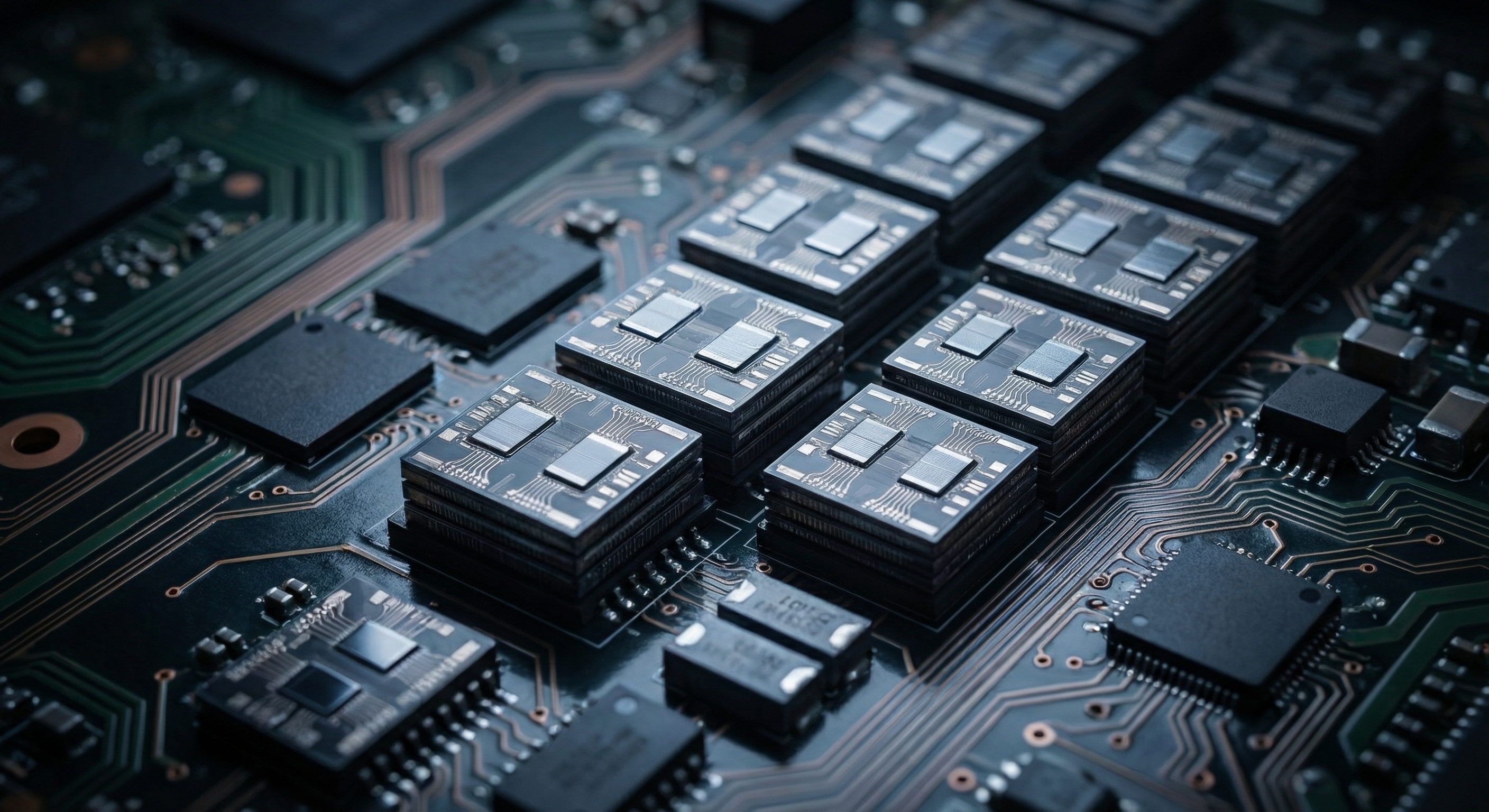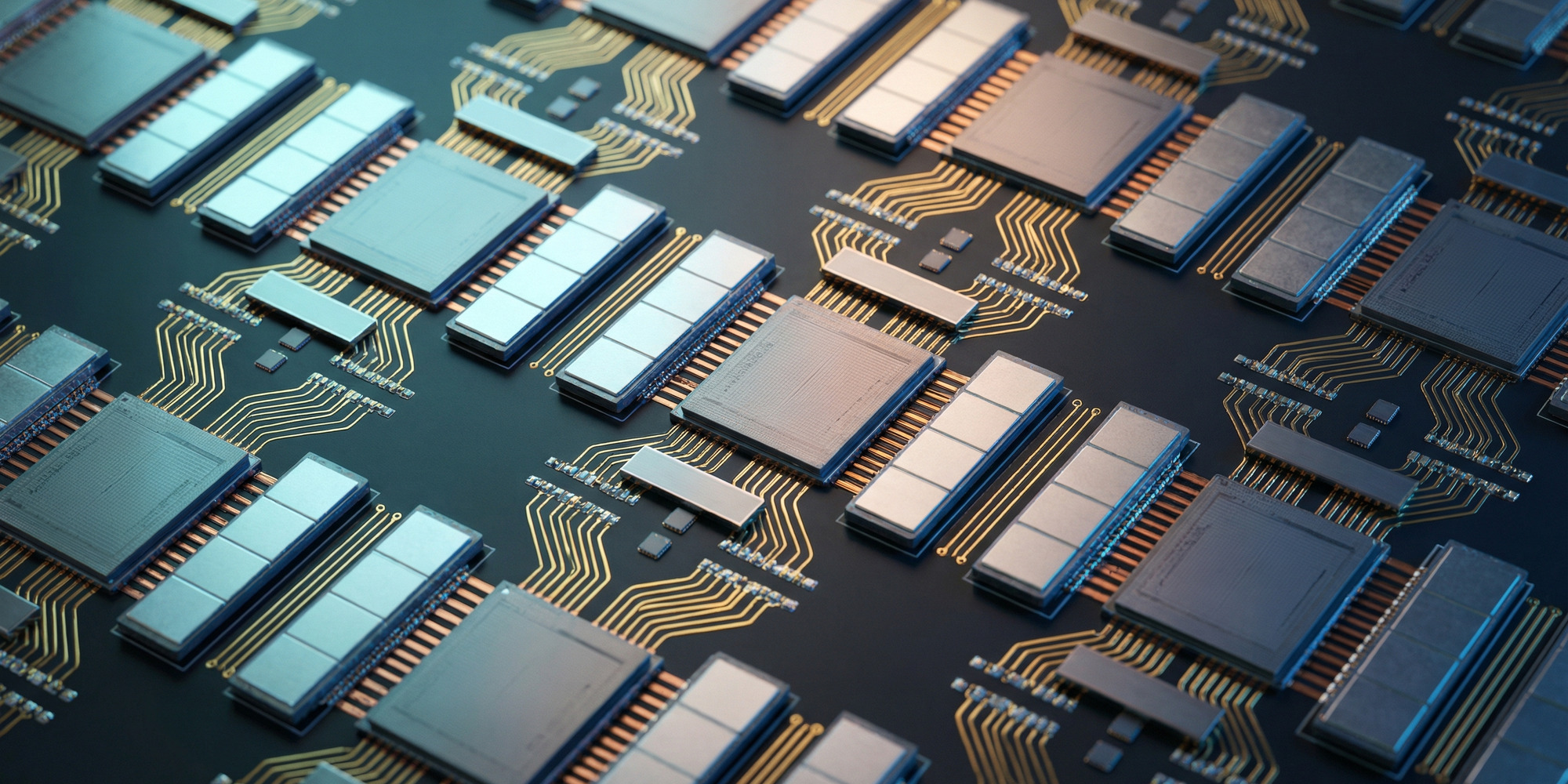
Google is deploying approximately 36,000 Ironwood TPU v7 racks in 2026 — a scale that puts its custom silicon program on a collision course with NVIDIA's data center GPU dominance. With Anthropic locked in for one million chips in what analysts estimate is a multi-year deal worth tens of billions of dollars, the question is no longer whether Google's vertical silicon strategy works. It's whether the rest of the industry can afford to keep ignoring it.
From Internal Tool to Industry Platform
Google's Tensor Processing Unit program began in 2016 as a tightly guarded internal accelerator — a way to run Google Search and translate workloads without paying an NVIDIA premium. For nearly a decade, the outside world only caught glimpses of its capabilities through benchmark disclosures and Google's own research papers. That era is over.
The seventh-generation Ironwood TPU, which Google introduced at Google Cloud Next in April 2025 and made generally available in late 2025, represents the first TPU generation explicitly architected for external deployment at hyperscale. Where prior generations were quietly made available to select cloud customers, Ironwood arrived with a strategic partner announcement that removed all ambiguity: Anthropic — Google's most technically sophisticated AI safety competitor — committed to accessing well over one million Ironwood chips beginning in 2026, bringing more than a gigawatt of dedicated capacity online in the process.
That single partnership announcement signals something fundamental: Google isn't just building silicon for its own AI models anymore. Ironwood has graduated from competitive moat to commercial infrastructure product — and the market for that product is enormous.
What Ironwood Actually Is
The technical architecture of Ironwood is worth unpacking, because the numbers are not incremental. According to Google's official specifications, Ironwood delivers more than four times the performance per chip for both training and inference workloads compared to Trillium, its sixth-generation predecessor. Each individual chip reaches a peak of 4,614 TeraFLOPs — and the architecture scales linearly to pod configurations of up to 9,216 chips.
At full pod scale, a single Ironwood cluster produces 42.5 ExaFLOPS of compute. For reference, El Capitan — currently the world's fastest traditional supercomputer — delivers 1.7 ExaFLOPS per pod. A single maxed-out Ironwood pod delivers more than 24 times that figure. VentureBeat reported that Google's internal documentation puts Ironwood Pods at 118x the FP8 ExaFLOPS of the next closest competitor, though that comparison depends heavily on what's being measured.
The coherence of that compute power comes from Inter-Chip Interconnect (ICI) networking operating at 9.6 terabits per second — a bandwidth that allows all 9,216 chips in a pod to share access to a shared pool of 1.77 petabytes of High Bandwidth Memory. That's not 1.77 petabytes per chip; that's 1.77 petabytes of memory accessible simultaneously by nearly ten thousand processors. The bottleneck of memory-to-compute, which plagues nearly every large language model inference deployment, is attacked directly at the architectural level.
Ironwood also introduces Optical Circuit Switching — a dynamic fabric technology that reroutes data traffic around hardware failures in milliseconds. Google reports that its liquid-cooled TPU fleet has maintained approximately 99.999% availability since 2020, a reliability track record that enterprise customers and AI companies increasingly factor into infrastructure decisions alongside raw performance.
The Inference Imperative
Google frames Ironwood's entire design philosophy around what it calls the "age of inference" — the industry transition from training large frontier models (a workload that happens occasionally at great expense) to serving those models to hundreds of millions of users continuously. This distinction matters because inference requirements are fundamentally different from training requirements: they demand low latency, high throughput per watt, and reliability at a scale that training clusters don't face.
As a March 2026 Alphabet analysis by Finterra noted, the industry shift from the "training phase" to the "inference phase" fundamentally changes the economics of chip procurement. Training clusters can tolerate higher latency and batch operations. Inference serving — particularly for agentic AI workflows that require tight coordination between compute, memory, and networking — cannot. Ironwood's architecture is explicitly tuned for this workload profile.
The implication for the competitive landscape is significant. NVIDIA's H100 and Blackwell GPUs are exceptional training accelerators, but they were designed as general-purpose AI compute engines. Google has spent years optimizing Ironwood specifically for inference-heavy workloads it encounters at planetary scale — Gmail, Search, YouTube, and now Gemini running for billions of users daily. That operational expertise is baked into the silicon.
The Anthropic Bet and What It Proves
Anthropic's decision to commit over one million Ironwood chips — and the infrastructure costs that come with them — deserves careful analysis. Anthropic is not a Google subsidiary. It has its own investors, its own leadership, and its own infrastructure procurement options. Amazon, which has invested billions in Anthropic, offers AWS and its own Trainium chips. NVIDIA counts Anthropic as a significant GPU customer. The choice to anchor next-generation Claude model serving on Google TPUs is a technical and commercial endorsement, not a foregone conclusion.
Industry analysts at SemiAnalysis, which first reported Anthropic's scale commitment in late 2025, estimated that a deal covering one million TPU chips with associated infrastructure, networking, power, and cooling likely represents tens of billions of dollars in value over the contract term. That makes it one of the largest known AI infrastructure agreements ever executed — and it was won not by NVIDIA but by a chip Google designs in-house.
The data points to a clear conclusion: Ironwood performs well enough on inference workloads that the most demanding external AI workloads in the world are willing to leave the GPU ecosystem to run on it.
The 2026 Deployment Numbers
The scale of Google's 2026 Ironwood rollout is staggering when viewed through a supply chain lens. Research firm Fubon estimates Google will deploy approximately 36,000 TPU v7 racks in 2026, each containing 64 chips, with clusters scaling to 144 racks. That adds up to more than two million chips in production this year — with total TPU unit production potentially reaching 3.2 million units when accounting for spares, replacements, and external customer deployments including Anthropic's gigawatt commitment.
The power demands of that fleet are not modest. Each Ironwood chip consumes an estimated 850 to 1,000 watts. At rack level, total power consumption can reach 100 kilowatts per cabinet. A 36,000-rack deployment at average rack power would approach several gigawatts of continuous draw — a figure that explains why Alphabet projected capital expenditure of up to $180 billion in 2026, up from the record $91.4 billion spent in 2025. You can't build a planetary-scale inference platform on cheap power budgets.
To manage thermal loads at this scale, Ironwood uses liquid cooling — a technology Google has employed for its ASIC fleet since 2018. Each pod also incorporates Optical Circuit Switching to interconnect racks, reducing latency, lowering per-connection power consumption, and enabling the stable high-bandwidth links that sustained AI training runs require.
The CUDA Moat, Reconsidered
The standard rebuttal to any challenge to NVIDIA's data center AI dominance is CUDA: the software ecosystem that took 15 years to mature, that most AI researchers write their code in, and that represents an enormous switching cost for any organization with existing GPU-based workflows. That rebuttal remains largely valid for most of the market. The vast majority of enterprise AI teams will not re-architect their inference stacks to run on TPUs in the next 12 months, regardless of Ironwood's performance profile.
But that argument applies less cleanly to the specific segment of the market Ironwood is targeting: frontier AI labs and hyperscalers that have the engineering depth to optimize directly for TPU architectures, and that operate at a scale where the economics of custom silicon versus third-party GPU procurement become decisively favorable. Google's own Pathways ML runtime enables distributed computation across hundreds of thousands of Ironwood chips — a software stack that Google has published extensively about and that partners like Anthropic have deep expertise in.
One additional factor: Ironwood was itself designed using AI. Google DeepMind's AlphaChip program uses reinforcement learning to generate superior chip layouts — a technique applied across the last three TPU generations, including Ironwood. That creates a feedback loop where Google's AI models improve chip design, and improved chips run better AI models — a compounding advantage that is structurally difficult for competitors without similar AI-chip co-development pipelines to replicate.
What This Means for the AI Hardware Map
Ironwood's mass deployment in 2026 doesn't displace NVIDIA. The GPU maker's Blackwell and forthcoming Vera Rubin architectures remain dominant for general-purpose AI compute, and CUDA's ecosystem lock-in is real. But Ironwood creates a credible, production-validated alternative at the highest scale tier of AI infrastructure — and that alternative is now commercially available to anyone willing to use Google Cloud.
The broader implication: the AI hardware market is stratifying. At the frontier, purpose-built inference silicon like Ironwood will handle the bulk of large-model serving for labs and cloud providers that can afford to optimize for it. At the enterprise tier, NVIDIA's GPU ecosystem retains near-total dominance for now. In the middle, AMD, Intel, and a cluster of custom ASIC startups are fighting for the workloads that don't fit either extreme.
Google just demonstrated that the top tier of that market is winnable — and that a decade of quiet internal chip development can produce an infrastructure platform that Anthropic would rather build its future on than any GPU alternative available today.