The most senior executive at OpenAI to ever publicly resign in protest walked out on Saturday — not over pay, not over a competitor, but over a classified military contract. Caitlin Kalinowski, who led OpenAI's robotics and consumer hardware division since November 2024, announced her departure citing the company's deal with the Pentagon, warning that the guardrails governing AI surveillance and lethal autonomy were never properly defined before the ink dried. Her resignation sends a fault-line through Silicon Valley's growing entanglement with the defense establishment — and raises an uncomfortable question that no AI lab has convincingly answered yet: who decides when the red lines are actually red?
A Deal Made in Haste
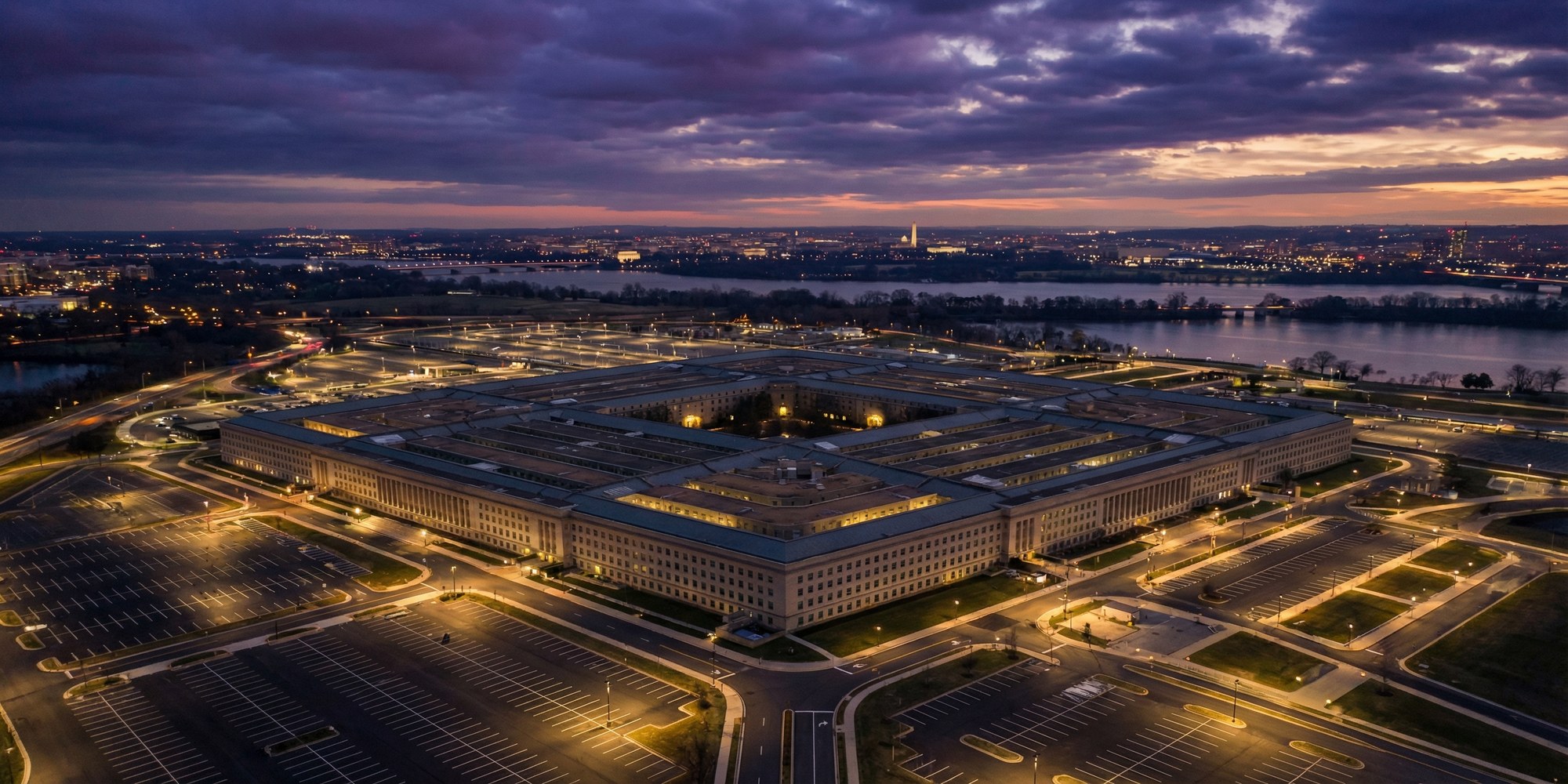
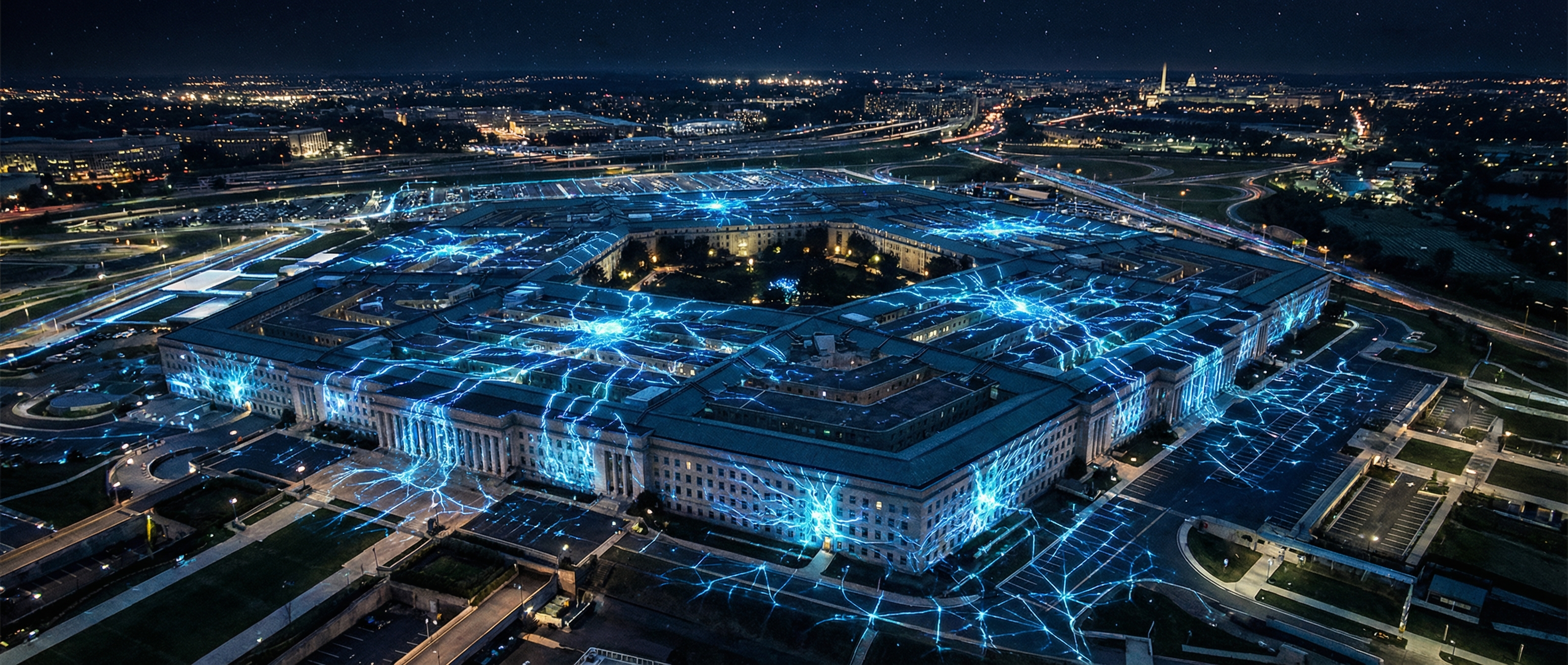
OpenAI's agreement with the U.S. Department of Defense — officially the Department of War under the current administration — was announced in late February, signed in a compressed window after negotiations between the Pentagon and Anthropic broke down. The deal authorizes OpenAI's "advanced AI systems" to operate within classified military environments, giving the armed forces access to frontier AI models in settings the public may never know about.
The timing was blunt. Within hours of Anthropic being formally designated a "supply chain risk" by the Pentagon — a bureaucratic blacklisting that effectively bars it from most defense contracts — OpenAI stepped into the vacancy. CEO Sam Altman announced the arrangement and the company described it as taking "a more expansive, multi-layered approach" that relies not merely on contract language but on technical safeguards to enforce its red lines: no domestic surveillance, no autonomous lethal weapons.
What followed was a clarification tour. OpenAI subsequently posted that its tools would "not be used to conduct domestic surveillance of U.S. persons" and would operate in accordance with the Fourth Amendment's protections against unreasonable searches and seizures. The reassurances landed poorly with at least one person inside the building.
Kalinowski's Line in the Sand
Kalinowski announced her resignation in a LinkedIn post on Saturday, framing her departure not as a rejection of AI's role in national security — she explicitly affirmed it — but as a protest against the process. "AI has an important role in national security," she wrote. "But surveillance of Americans without judicial oversight and lethal autonomy without human authorization are lines that deserved more deliberation than they got. This was about principle, not people."
In a follow-up post on X, she sharpened the critique into a governance complaint. "My issue is that the announcement was rushed without the guardrails defined," she wrote. "It's a governance concern first and foremost. These are too important for deals or announcements to be rushed."
The distinction matters. Kalinowski was not arguing that AI should never be used by the military. She was arguing that the process for determining how it gets used — the deliberation, the safeguards, the oversight mechanisms — was skipped in the rush to out-maneuver Anthropic and claim the Pentagon contract. The deal was announced before the rules were written.
Kalinowski joined OpenAI in November 2024 after leading the team at Meta that built Orion, the company's augmented reality glasses. Her hardware pedigree made her a significant hire for OpenAI's push into physical AI. She noted in her departure statement that she has "deep respect" for Sam Altman and the broader OpenAI team — making clear this was a values exit, not a personnel conflict.
What the Deal Actually Allows
OpenAI has been careful about what it will and won't say publicly about the Pentagon agreement's operational scope. The company confirmed the deal covers "advanced AI systems in classified environments" — language that is deliberately broad. It has stated its red lines: no domestic surveillance, no autonomous weapons. But it has not specified what classification levels are covered, what specific military missions AI may support, or what oversight mechanisms exist if those red lines are approached.
That opacity is partly by design — classified contracts don't permit detailed public disclosure — but it creates an accountability gap. If AI is being used in classified military operations, the standard democratic mechanisms for oversight (congressional hearings, FOIA requests, inspector general investigations) become substantially harder to apply. The public, and even OpenAI employees, must take the company's word that its red lines are being enforced.
Kalinowski's resignation makes explicit what many in the industry have been reluctant to say aloud: "taking the company's word for it" is not governance. It is trust extended in advance of accountability structures that don't yet exist.
The Anthropic Precedent
The proximate cause of OpenAI's Pentagon deal was Anthropic's refusal to sign a comparable one without legally binding safeguards. According to reporting by TechCrunch, Anthropic spent weeks in negotiations attempting to secure contract language that would prevent its technology from being used in mass domestic surveillance or fully autonomous weapons systems. When the Pentagon refused those terms, the talks collapsed — and Anthropic was subsequently officially designated a supply chain risk.
The designation carries real commercial consequences. It bars Anthropic from most DoD contracts and signals to other agencies that they should treat the company as a potential liability. Anthropic has announced it will challenge the designation in court. In the interim, its cloud partners — Microsoft, Google, and Amazon — have clarified they will continue making Claude available to non-defense customers.
The contrast between OpenAI and Anthropic's approaches is stark. Anthropic drew a hard line, took the commercial hit, and went to court. OpenAI signed the deal and then issued clarifications. Both companies are staffed by people who believe in AI safety. Their choices diverged on the question of whether safety commitments should be enforceable before or after a contract is signed.
The Market's Verdict
Public reaction to the Pentagon deal has been swift and measurable. ChatGPT uninstalls surged 295% in the days after the deal was announced. Claude, Anthropic's competing product, climbed to the top of the App Store charts. As of Saturday afternoon, Claude and ChatGPT remain the U.S. App Store's top two free apps — but the relative positioning represents a significant commercial reversal for OpenAI in the consumer market.
The dynamics illustrate a tension that AI companies are navigating with increasing difficulty: the defense market and the consumer market have different, sometimes incompatible, tolerance for opacity. Businesses and individuals who use ChatGPT for productivity, creativity, and research are now asking whether their data, their interactions, or the model they depend on could be part of a classified military architecture they cannot inspect or contest.
OpenAI has insisted the answer is no — that its military and consumer deployments are architecturally separated. But the company's credibility in making that argument is weaker after one of its most senior executives resigned to protest the insufficiency of the governance process.
A Governance Gap at the Frontier
Kalinowski's departure is a symptom of a structural problem that will outlast this particular contract. The speed at which commercial AI capabilities are being adopted by defense institutions has outpaced the development of legal and regulatory frameworks capable of governing those adoptions. The Arms Export Control Act, the International Traffic in Arms Regulations, and the existing framework of executive orders on AI are not purpose-built for frontier model deployments in classified military environments.
Congress has not passed comprehensive AI legislation. The AI Safety Institute — created under the Biden administration to provide independent technical evaluation of frontier models — has been significantly restructured under the current administration. The UN's efforts to establish norms around lethal autonomous weapons remain mired in diplomatic deadlock. The result is that the governance of AI in military contexts is being determined primarily by corporate contracts and bilateral negotiations between companies and defense agencies — exactly the process Kalinowski identified as inadequate.
OpenAI's statement on Saturday acknowledged the unresolved tension without fully confronting it. "We believe our agreement with the Pentagon creates a workable path for responsible national security uses of AI while making clear our red lines: no domestic surveillance and no autonomous weapons," the company said. "We recognize that people have strong views about these issues and we will continue to engage in discussion with employees, government, civil society and communities around the world."
That engagement, however, arrived after the deal was signed — not before. For Kalinowski, that sequencing was the problem. And she was willing to give up her job to say so.
What Comes Next
OpenAI has not announced a successor to lead its robotics division. The departure creates a leadership vacuum in one of the company's most strategically significant hardware bets — at a moment when the robotics landscape is accelerating rapidly, with humanoid platforms proliferating and defense applications for physical AI multiplying.
More immediately, the resignation adds pressure to a company already navigating significant turbulence: an amended Pentagon deal after Sam Altman's own public acknowledgment that the original was "sloppy," a 295% spike in app uninstalls, and the public positioning of Anthropic as the safety-first alternative. Whether that pressure translates into meaningful governance reform — or gets absorbed by the company's growth trajectory — will determine whether Kalinowski's departure marks a turning point or a footnote.
The answer, as always with AI governance, will arrive after the decisions have already been made.