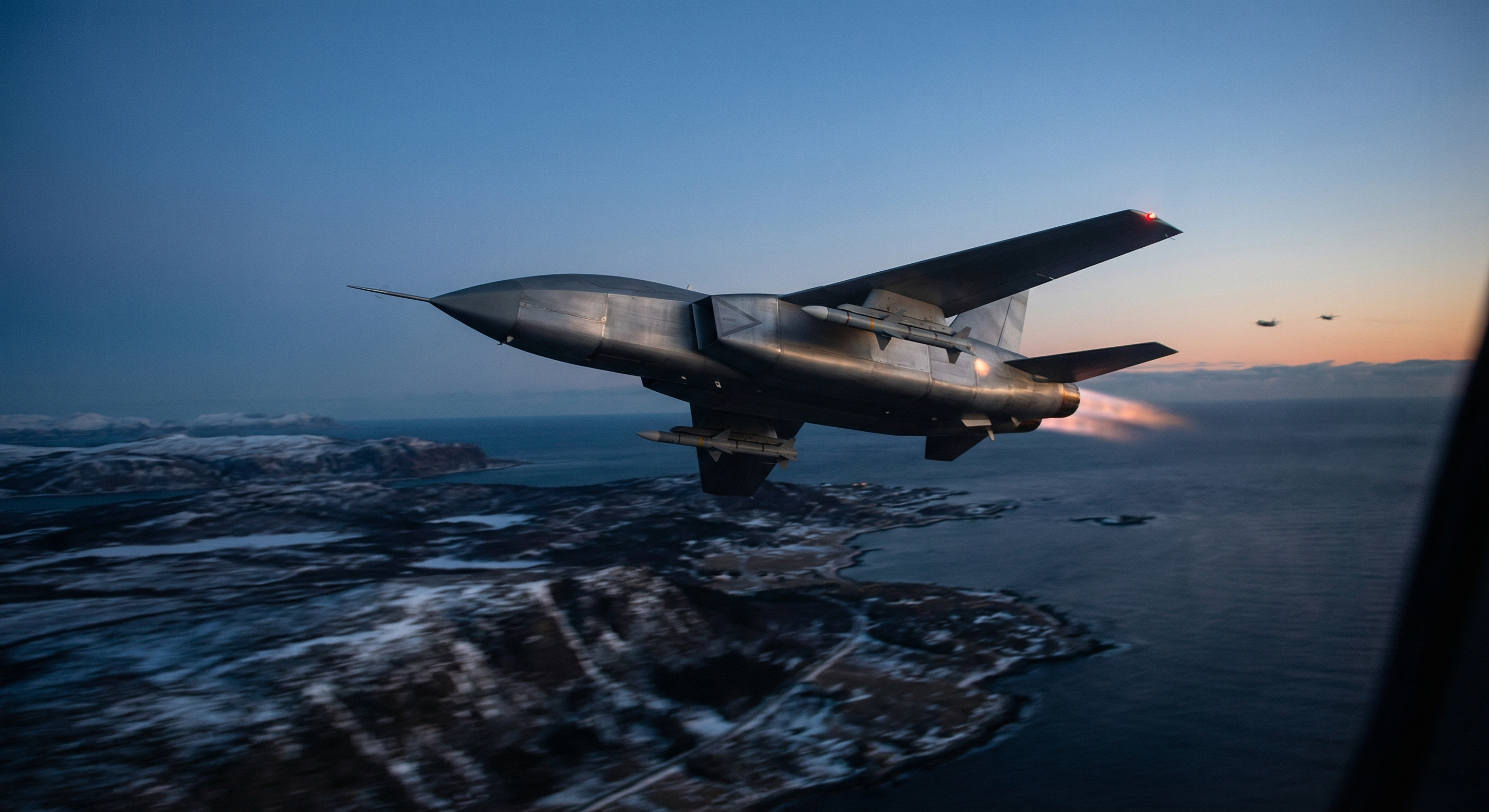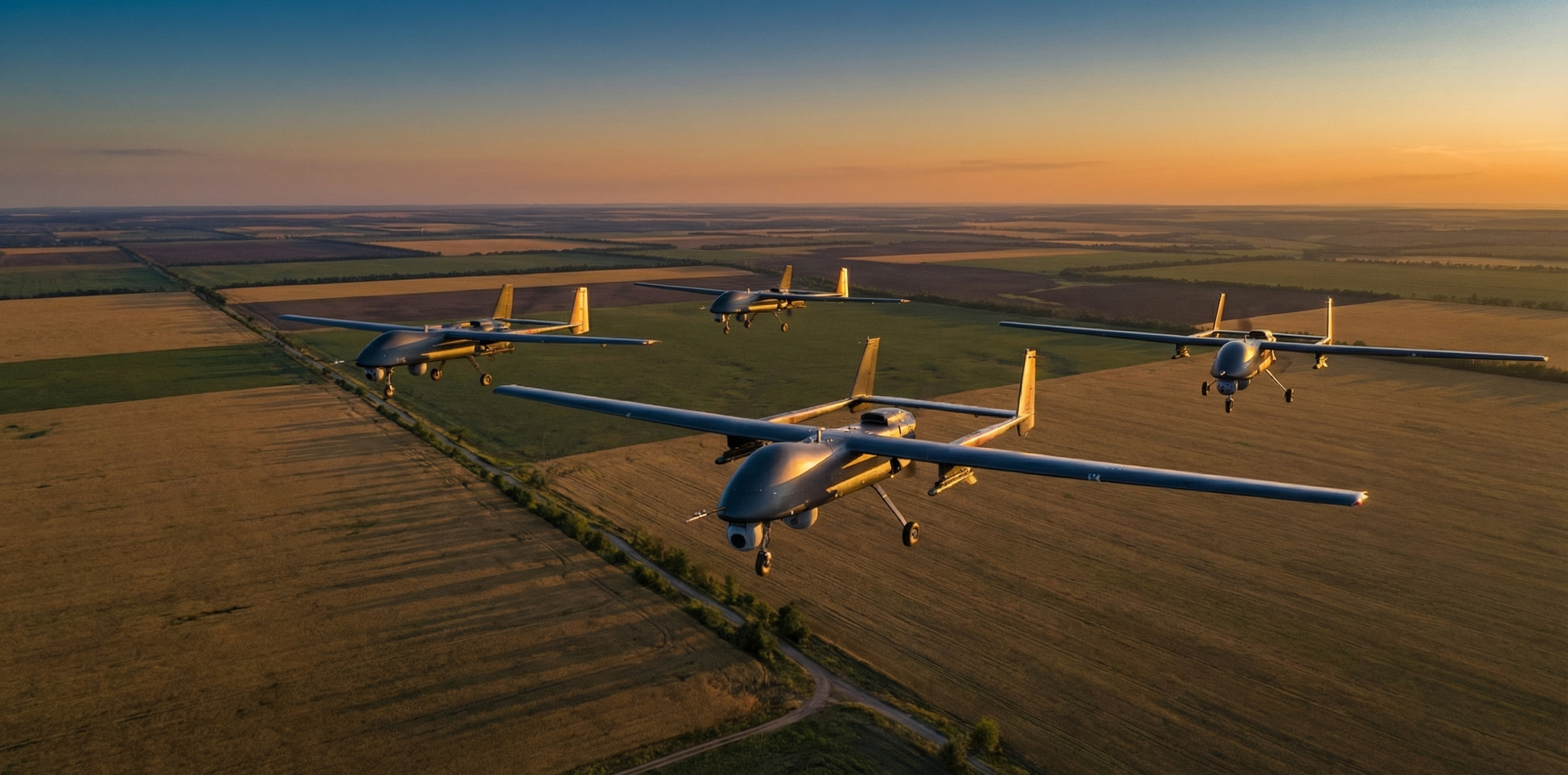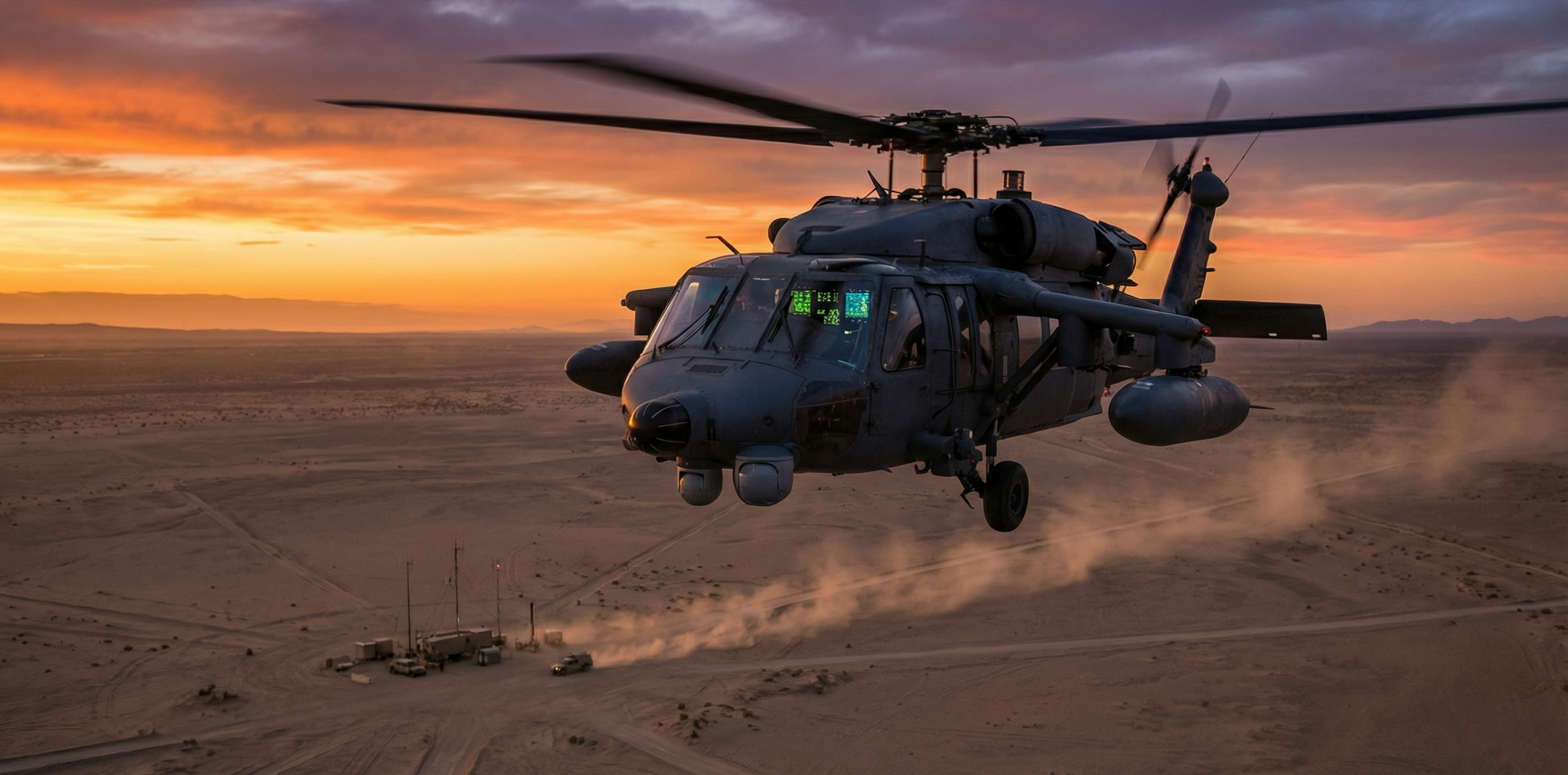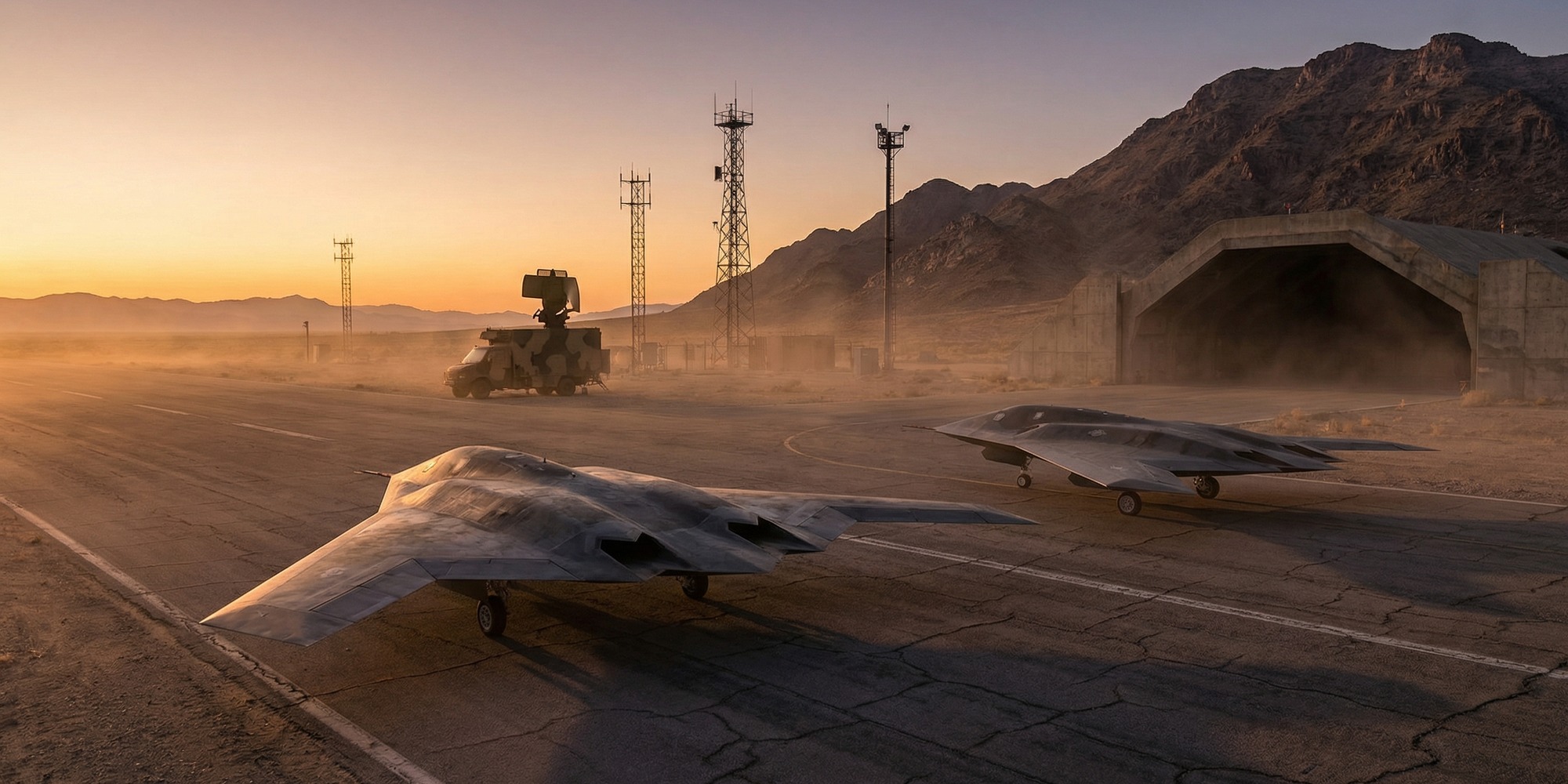
The U.S. Air Force has proven that AI can fly aggressive air-combat maneuvers. It has selected competitors for the first operational collaborative combat aircraft. It has even assigned official fighter-style designations. But in 2026, the program’s central risk has shifted: not whether autonomy is possible, but whether autonomy can be validated, fielded, and sustained at wartime scale without exploding cost or mission risk.
From Concept to Program of Record: CCA Has Entered a Harder Phase
The Air Force’s CCA effort moved from concept slides to acquisition reality when service officials narrowed the first increment to General Atomics and Anduril in April 2024. That downselect mattered because it shifted spending from exploratory architecture work toward production-representative test vehicles and integrated autonomy stacks.
A year later, the service formalized that momentum by assigning mission design series names — YFQ-42A and YFQ-44A — signaling that CCA was no longer a speculative “drone adjunct” project. The Air Force is treating these systems as core elements of future force structure, not a niche experiment.
Congress has tracked that shift closely. The Congressional Research Service’s CCA brief summarizes the operational concept plainly: uncrewed aircraft designed to team with crewed fighters, absorb risk in highly contested airspace, and increase sortie-level mass where pilot availability and aircraft cost are limiting factors. In other words, CCA is now central to U.S. air-superiority math, not peripheral to it (CRS IF12740).
The AI Piece Is Real — But It Was Never the Whole Problem
Autonomous combat behavior is no longer hypothetical. DARPA’s Air Combat Evolution program has demonstrated machine-learning agents executing within-visual-range maneuvers in representative flight-test environments, with the agency explicitly focused on trust calibration between humans and autonomy (DARPA ACE; DARPA April 2024 update).
That progress is important, but CCA is not just an AI benchmark. It is a military aviation system-of-systems challenge that combines autonomy software, secure mission computing, datalink resilience, electronic warfare survivability, maintenance throughput, and weapons integration. A model that performs in controlled evaluation is not the same as an aircraft that can launch repeatedly under jamming pressure and integrate into a mixed coalition air package.
This is where much of the public CCA conversation still lags reality. The attention economy rewards clips of autonomous dogfights. The acquisition risk sits in software assurance artifacts, hazard logs, mission-data updates, and regression testing cadence. Those aren’t cinematic. They are decisive.
Flight-Test Capacity Is Becoming the Scarcest Resource
The near-term bottleneck is test throughput. CCA development requires large numbers of hardware-in-the-loop runs, software drops, and live sorties to validate behavior across edge cases. Every additional mission autonomy feature multiplies test complexity because the Air Force has to verify not just nominal performance, but failure behavior under degraded conditions.
That matters strategically. If one vendor can generate flight-test evidence faster — without compromising safety or data quality — it can iterate faster, de-risk contracts faster, and move into low-rate production sooner. In a program explicitly built around iterative increments, test tempo can become market share.
The Air Force has already hinted at that industrial dynamic in briefings around Increment 1 and future increments. The program is not winner-take-all in the classic fighter sense; it is structured to preserve competition over time. But sustained competition still requires comparable evidence pipelines. The side with better instrumentation, simulation-to-flight correlation, and software CI/CD discipline will enjoy a compounding advantage.
The Economics Question: “Affordable Mass” Still Has to Be Proven
CCA’s core strategic promise is affordable mass: enough semi-autonomous aircraft to complicate enemy targeting, extend crewed platform survivability, and raise magazine depth without requiring F-35-level unit economics. Air Force leaders and defense reporting have repeatedly described target costs in the “significantly below manned fighter” range, often discussed as the tens-of-millions bracket rather than the high-cost curve of frontline crewed jets (Breaking Defense; Air & Space Forces).
But affordable mass is not a slogan; it is a supply-chain achievement. Engines, mission computers, secure communications modules, sensors, and autonomy processors all face availability constraints. If any one subsystem inherits fighter-like scarcity dynamics, the whole CCA affordability thesis weakens.
This is where defense startups and traditional primes will be judged differently over the next 18 months. Startups may move faster on software and architecture decisions. Primes may offer deeper manufacturing and sustainment muscle. The Air Force is effectively betting that competition can force both camps toward a middle ground: startup iteration speed with aerospace-grade reliability and support.
Command-and-Control Risk: Datalinks, EW, and Human Workload
Operationally, CCA succeeds only if human operators can direct multiple autonomous aircraft without collapsing cockpit workload. DARPA’s trust framework highlights the same issue: autonomy is useful only when humans can predict and shape system behavior at mission speed, especially under uncertainty.
That challenge compounds in contested electromagnetic environments. Opponents will target datalinks, navigation, and coordination pathways. So the program has to answer a hard doctrinal question: what does “graceful degradation” look like when aircraft lose bandwidth, experience spoofed inputs, or receive conflicting tasking across coalition networks?
If CCA aircraft require pristine connectivity to remain useful, they risk becoming fragile in exactly the scenarios they are meant to solve. If they are too autonomous, they create command-and-control and legal concerns. The long-term winner will likely be the architecture that can fluidly shift between centralized and distributed control modes while preserving mission intent.
What 2026 Will Actually Decide
In the near term, 2026 is less about grand unveiling moments and more about evidence: sortie counts, software maturity, reliability under stress, integration with existing battle-management systems, and maintenance burden per flight hour. Investors may care about press events. Operators care about repeatability.
Watch four indicators closely:
First, software update velocity with safety assurance. Teams that can push meaningful autonomy improvements while maintaining rigorous verification will compress timelines and cost.
Second, EW-resilient mission execution. Programs that demonstrate useful behavior under jamming and degraded communications will gain immediate credibility.
Third, production realism. Public prototypes are one thing; stable output rates with predictable quality are another.
Fourth, operator integration. The CCA concept lives or dies in squadron workflows, not conference demos. If pilots and mission commanders trust the aircraft’s behavior and can employ it without cognitive overload, adoption accelerates.
The U.S. military has now crossed the “can AI fly?” threshold. The next threshold is harder and more consequential: can the Department of the Air Force build a repeatable, auditable, and affordable autonomous airpower stack that survives contact with contested reality? That answer won’t come from one headline flight. It will come from thousands of boring, disciplined test events — and from whether the industrial base can keep pace with the software.
The Coalition Layer: CCA Is Also a NATO Interoperability Test
There is another under-discussed pressure on CCA development: coalition interoperability. The U.S. Air Force does not fight alone, and future high-end air campaigns will involve mixed networks, mixed rules of engagement, and mixed national legal standards around autonomous behavior. A CCA concept that performs cleanly inside one U.S.-only architecture may face friction when it has to exchange targeting context, deconfliction cues, and mission-state updates with allied systems running different software baselines.
That is why this program is also a standards and interfaces story. The side that defines the practical interface layer for crewed-uncrewed teaming in coalition operations will shape not only procurement outcomes, but doctrine. If U.S. CCA systems become the easiest to integrate into allied battle-management environments, they gain a strategic multiplier beyond the aircraft itself. If they remain technically capable but operationally isolated, partners may build alternate pathways that dilute the intended force-multiplication effect.
The implications reach the defense-industrial base, too. Interoperable autonomy stacks can create downstream export and sustainment opportunities across partner nations. Non-interoperable stacks can lock capability into narrow national architectures and increase lifecycle cost. In practical terms, CCA’s “open architecture” promises have to be measured by field integration, not slideware language.
Certification and Accountability Will Define Long-Term Legitimacy
Even if the technology and economics line up, CCA still has to clear legitimacy hurdles: certification, command responsibility, and battle-damage accountability. Autonomous systems that can recommend, prioritize, or execute tactical actions create complex chains of responsibility when something goes wrong. Military legal advisers have worked these issues for years, but operationalizing them inside high-tempo air combat remains difficult.
The Air Force will likely need a layered model: bounded autonomy for specific tactical behaviors, explicit human command intent at mission level, and robust audit trails after every flight. Those audit trails are not bureaucratic overhead — they are the backbone for trust, doctrine refinement, and allied confidence. Without them, each incident becomes a strategic communications vulnerability as much as an operational one.
This is also where CCA intersects with broader international debates over autonomous weapons governance. The global policy landscape remains unsettled, as reflected in ongoing UN discussions about limits, accountability, and meaningful human control in lethal systems. Programs that can demonstrate transparent safeguards and clear command boundaries will carry an advantage in both procurement politics and coalition acceptance (TTN: UN autonomous weapons deadline analysis).
Put differently: technical performance may win contracts; accountable autonomy wins staying power.
Related TTN coverage: read our analysis of the broader CCA strategic doctrine shift and the legal race around autonomous weapons governance.